
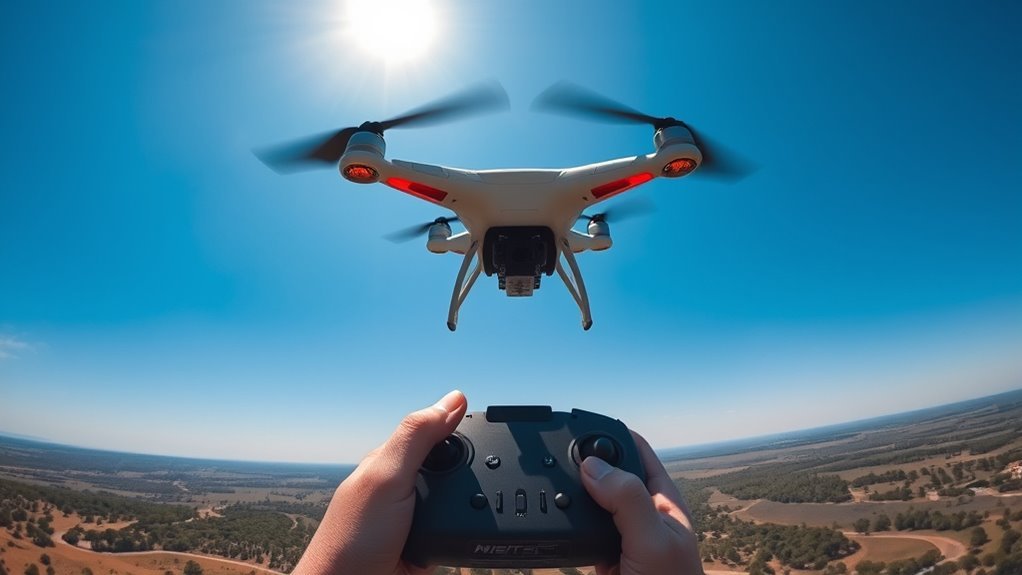
Headless mode in drones simplifies navigation by aligning the drone’s movements with your position rather than its orientation. This feature is great for beginners as it reduces disorientation and boosts confidence during flights. By activating headless mode, you can control the drone intuitively, making it easier to learn. However, it’s important to understand its limitations, like potential stability issues in windy conditions. Explore more about how to effectively leverage headless mode for your flying experience.
What Is Headless Mode?
When you fly a drone, steering can sometimes be tricky, especially if you’re not oriented to its direction. This is where headless mode basics come into play. In this mode, the drone’s front aligns with your controller, meaning forward is always toward you, regardless of the drone’s orientation. This simplifies navigation, especially for beginners.
To help with drone navigation, consider a few tips: first, practice in open spaces to build confidence. Second, familiarize yourself with the controller’s layout before takeoff. Ultimately, don’t rush your movements—smooth, deliberate inputs yield better results. By mastering headless mode, you’ll feel more in control and free to explore the skies without the stress of disorientation. Enjoy the experience and let your creativity soar!
How Does Headless Mode Work?
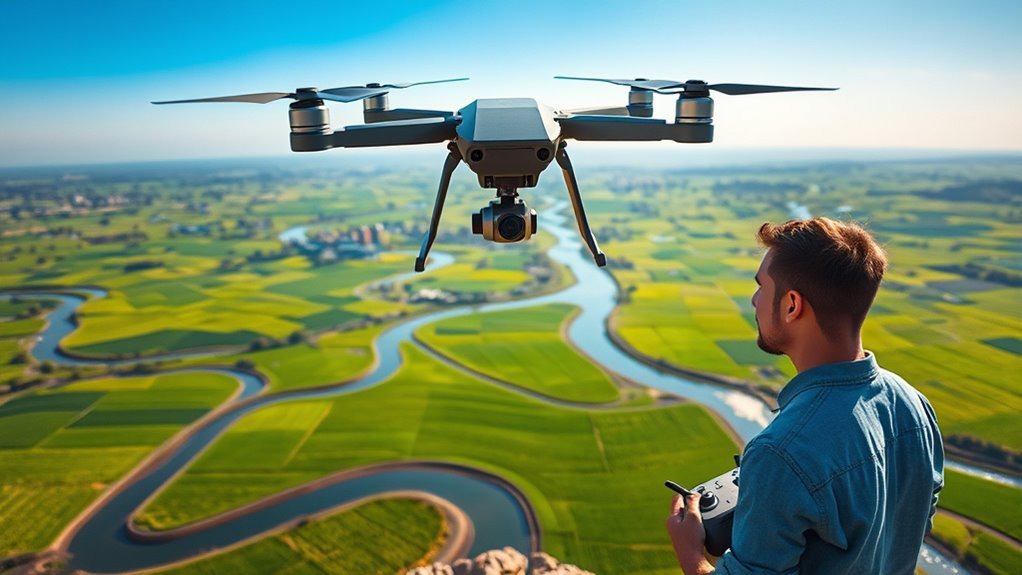
In headless mode, your drone’s orientation becomes irrelevant, allowing you to control it based on your position rather than its front. This feature simplifies navigation by aligning the drone’s movements with your input, making it more intuitive for pilots of all skill levels. Understanding how this mechanism works can enhance your flying experience and improve your control over the drone.
Orientation Independence Explained
Although many drone pilots enjoy the challenge of maneuvering their aircraft with traditional controls, headless mode simplifies the experience by eliminating orientation dependence. This means you can control your drone based on its position relative to you, rather than its front-facing direction. The orientation independence benefits include easier navigation and reduced disorientation, especially for beginners. However, there are orientation independence challenges as well; for example, it may be difficult to accurately gauge altitude and distance when you’re not focused on the drone’s front. Understanding how headless mode affects your control can enhance your flying experience, letting you explore the skies with greater confidence. Embrace the freedom of flying without the usual orientation constraints!
Control Simplification Benefits
Headless mode revolutionizes drone control by allowing you to pilot the aircraft without worrying about its orientation. This feature simplifies control ease, enabling you to focus on flying rather than constantly adjusting for the drone’s direction. In headless mode, the drone moves in relation to your position, meaning that forward thrust always sends it away from you, regardless of its front-facing direction. This reduces the mental load, boosting your flying confidence, especially as a beginner. You’ll find it easier to navigate complex environments and execute maneuvers that might otherwise be intimidating. With headless mode, you can fully embrace the freedom of flight, concentrating on your creative vision rather than the technicalities of orientation.
Pilot Input Mechanism
Understanding how headless mode operates is key to maximizing its benefits. In headless mode, the drone aligns its orientation with the pilot’s perspective, regardless of which way it’s facing. This means that when you push the joystick forward, the drone moves away from you, no matter its front direction. Your pilot controls become intuitive, allowing you to focus on maneuvering without worrying about directionality. Input devices like remote controllers are programmed to recognize your position, translating your commands into seamless flight actions. This technology simplifies operation, granting you the freedom to explore without the anxiety of losing control. Headless mode empowers you to enjoy flying, making it accessible for beginners and enhancing the overall experience.
Benefits of Using Headless Mode
When piloting a drone, you’ll find that using headless mode simplifies control, especially for beginners. This mode enhances your user experience by allowing you to focus on maneuvering without worrying about the drone’s orientation. Here are some benefits you’ll enjoy with headless mode:
- Intuitive Controls: Forward is always away from you, making it easier to navigate.
- Flight Stability: Reduces the chances of losing control during complex maneuvers.
- Faster Learning Curve: Helps you become proficient in flying without the stress of orientation.
- Increased Confidence: Allows you to explore your drone’s capabilities while minimizing the risk of crashes.
When to Use Headless Mode
If you’re new to flying drones, using headless mode can considerably enhance your experience during initial flights. It simplifies control, allowing you to focus on navigation rather than orientation. This is especially beneficial in beginner pilot scenarios, where you might feel overwhelmed.
Here are some headless mode applications you might consider:
| Scenario | Advantages | Considerations |
|---|---|---|
| Open Fields | Easier to maintain direction | Limited obstacles |
| Indoor Spaces | Reduces confusion | Restricted space |
| Beginner Training Flights | Builds confidence in control | May hinder learning traditional controls |
| Fast-paced Environments | Quick response to directional changes | Risks losing the drone |
Using headless mode can free you from the complexities of orientation so you can enjoy your flying experience.
How to Activate Headless Mode
To activate headless mode on your drone, first, locate the designated headless button on your remote control. Once found, press it to engage the mode, ensuring you’re oriented correctly. Finally, confirm that headless mode is active by checking the indicator light or on-screen display.
Locating the Headless Button
Locating the headless button on your drone is essential for activating headless mode, which simplifies navigation. This feature allows you to control your drone without worrying about its orientation, giving you the freedom to explore. Here’s how you can identify headless controls:
- Check the remote: Look for a button labeled “Headless” or an icon representing the mode.
- Refer to the manual: Your drone’s user guide will specify the headless button location.
- Inspect the drone body: Some models have the headless button on the drone itself, often near the power switch.
- Look for indicators: LEDs may signal when headless mode is activated, making it easier to recognize.
With these tips, you’ll be ready to take flight with confidence!
Activating via Remote Control
Activating headless mode on your drone is straightforward once you’ve located the right controls. First, verify your drone is powered on and connected to the remote control. Look for the designated headless mode button, often marked with an icon. Press this button to engage the mode.
For ideal drone maneuvering, keep your movements steady and gentle. Use remote control tips like maintaining a stable altitude and avoiding abrupt turns to guarantee a smooth flying experience.
When headless mode is activated, the drone will respond based on your orientation rather than its front-facing direction, giving you the freedom to fly without worrying about its alignment. Enjoy your flight, and embrace the ease of steering your drone in this mode!
Confirming Mode Engagement
How can you be sure that headless mode is properly engaged on your drone? Mode verification is essential for ensuring you can navigate freely without confusion. To confirm activation, look for clear signal confirmation through your drone’s LED indicators or remote display. Here are some tips to help you:
- Check the LED lights: A specific pattern usually indicates headless mode is active.
- Test orientation: Move the drone in different directions; it should respond based on your controller’s orientation, not its physical front.
- Perform a quick flight: If it maneuvers without reverting to its default direction, headless mode is engaged.
- Refer to the manual: Always consult your drone’s guide for specific mode verification steps.
With these checks, you can enjoy the freedom of flying confidently!
Limitations of Headless Mode
While headless mode offers a simplified flying experience, it comes with notable limitations that can impact your control and navigation. One major drawback is that it can compromise flight stability, especially in windy conditions. Without clear reference points, you might find it challenging to maintain a steady course, leading to potential safety concerns. Additionally, headless mode can create confusion when the drone moves in unexpected directions, which can be disorienting for beginners. You may also struggle with more complex maneuvers, as the intuitive nature of headless mode doesn’t lend itself well to advanced flying techniques. Understanding these limitations is essential for any pilot seeking to harness their drone’s full capabilities while ensuring a safer flying experience.
Tips for Flying in Headless Mode
Given the limitations of headless mode, mastering it can enhance your flying experience. Here are some essential flying tips to keep in mind:
- Calibrate your drone: Verify your drone is properly calibrated before takeoff to improve responsiveness.
- Practice orientations: Familiarize yourself with how your drone moves in relation to your position. This’ll help you navigate better.
- Use visual markers: Identify landmarks to maintain spatial awareness, which can be vital in headless mode.
- Start slow: Begin with gentle maneuvers, gradually increasing complexity as you gain confidence.
Common Misconceptions About Headless Mode
Many drone pilots mistakenly believe that headless mode eliminates the need for spatial awareness, but that’s far from the truth. While this user-friendly feature can simplify controls, it doesn’t make you immune to beginner mistakes. You still need to understand your drone’s orientation, especially in complex environments. Headless mode adjusts the drone’s response based on your position, but if you lose sight of it, you may struggle to regain control. Relying solely on this mode can lead to overconfidence and poor decision-making. Emphasizing spatial awareness is vital, even when using headless mode, as it’s not a substitute for understanding the dynamics of flight. Additionally, understanding the importance of battery life and endurance is crucial since it can affect how long you can operate your drone effectively. Furthermore, features like advanced stabilization technology can help maintain control and stability during flight, enhancing your overall experience. So, always keep your surroundings in mind to guarantee a safe and enjoyable flying experience.
Transitioning to Standard Flight Mode
After gaining confidence in headless mode, you’ll eventually want to switch to standard flight mode for more control and flexibility. Understanding the standard mode differences is essential for enhancing your piloting skills. Here are some shifting strategies to help you make the switch smoothly:
- Practice orientation: Familiarize yourself with the drone’s direction and how it responds to your controls.
- Start slowly: Begin with gentle maneuvers to regain comfort in standard mode.
- Use visual references: Identify landmarks to assist in maintaining your spatial awareness.
- Gradual increase in complexity: Progress to more complex maneuvers as your confidence grows.
Frequently Asked Questions
Can All Drones Use Headless Mode?
Not all drones can use headless mode; it varies by drone types and flight modes. While many beginner-friendly models include this feature, advanced drones may require traditional controls for precise maneuvering. Choose wisely!
Does Headless Mode Affect Flight Speed?
Headless mode doesn’t directly affect flight speed, but it can alter flight dynamics, influencing your user experience. You’ll find steering simpler, allowing you to focus on speed without worrying about orientation. Enjoy that freedom!
Is Headless Mode Suitable for Advanced Pilots?
Imagine a bird soaring freely; headless mode restricts that grace. For advanced pilots seeking intricate maneuvers, it might not fit their preferences. Mastery comes from understanding orientation, not relying on simplified controls. Embrace the challenge!
How Does Headless Mode Impact Battery Life?
Headless mode can impact battery efficiency by potentially reducing flight duration. When the drone’s orientation is disregarded, it may consume more power maneuvering, which might lead to quicker battery depletion during your flying sessions.
Can Wind Conditions Affect Headless Mode Performance?
Oh sure, the wind’s your best buddy, right? But really, wind resistance can mess with flight stability, making headless mode less reliable. So, if you’re flying in gusts, expect some unpredictable antics from your drone.
