
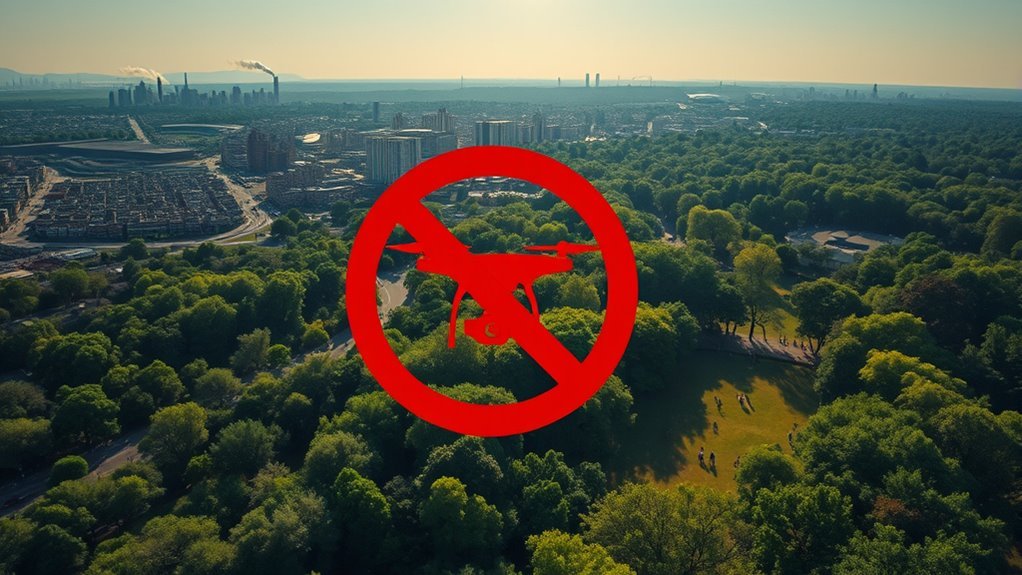
Drones are banned in certain U.S. areas mainly due to safety concerns and privacy issues. They pose risks to manned aircraft and can interfere with emergency operations. Privacy rights are often compromised, leading to public anxiety over surveillance. Additionally, drones may disturb wildlife and sensitive environments. Strict airspace regulations and local ordinances further restrict drone usage. Understanding these factors is essential, and there’s more to explore about the complexities surrounding drone regulations.
Safety Concerns in Urban Areas
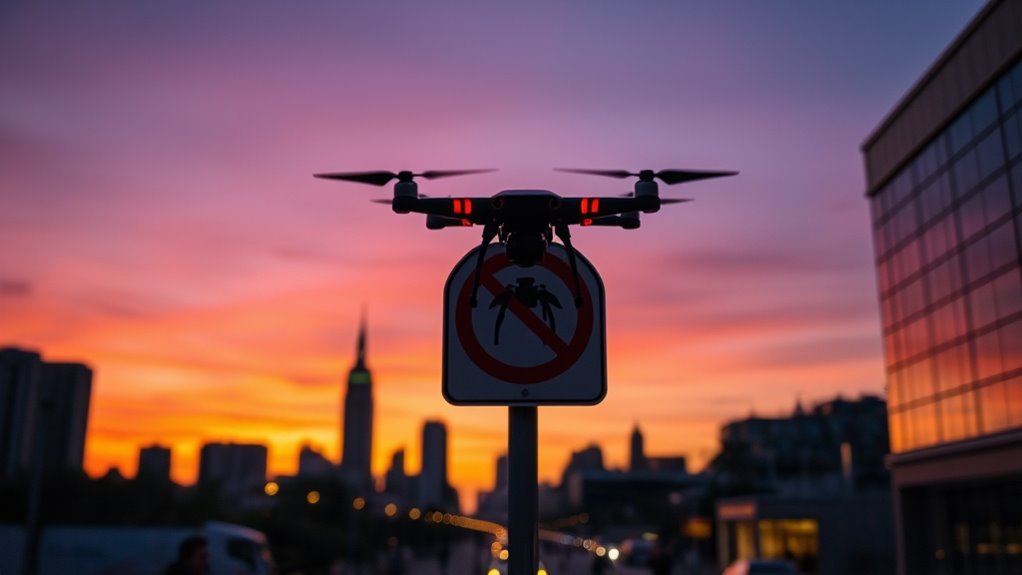
As urban areas continue to grow and evolve, the safety concerns surrounding drone usage become increasingly pronounced. You might find that urban noise levels are greatly impacted by the buzzing of drones, which can disrupt daily life and contribute to a chaotic environment. Additionally, the integration of drones into existing traffic management systems poses challenges; the skies above urban centers are already crowded, and adding drones could complicate airspace regulation. If drones aren’t carefully monitored, they could create hazards for both manned aircraft and pedestrians below. These safety issues necessitate a balanced approach to drone usage, ensuring that technological advancements don’t compromise the urban experience. Ultimately, addressing these concerns is essential for fostering a safe and harmonious coexistence in bustling city landscapes. Furthermore, compliance with drone regulations is crucial to mitigate risks and maintain public safety. To ensure responsible use, it is important to understand designated areas where drones can be operated safely.
Privacy Issues and Surveillance
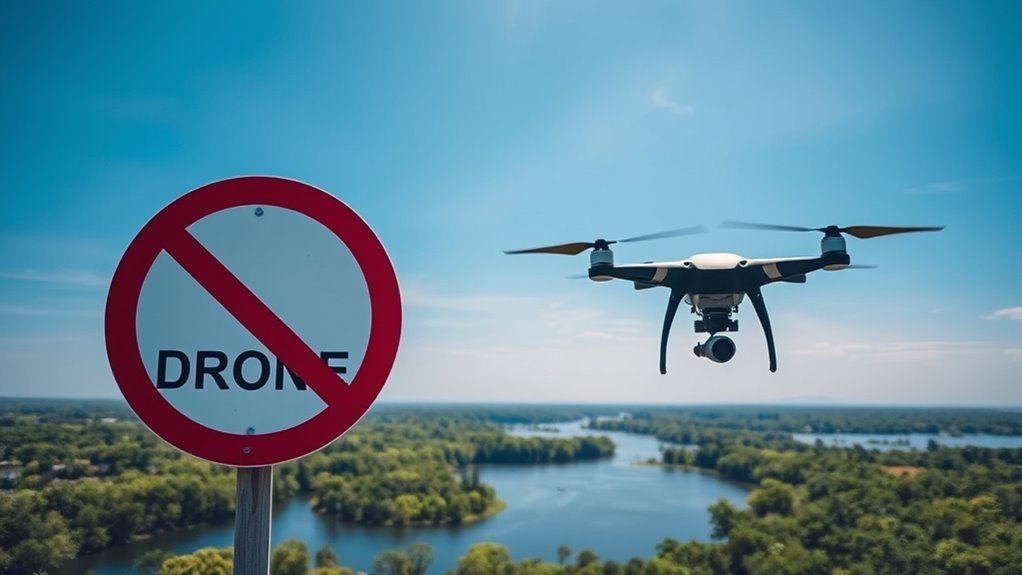
While drone technology offers numerous benefits, it also raises significant privacy concerns that cannot be overlooked. You might appreciate the advancements in aerial surveillance, but consider the implications for data protection and individual rights. Drones can easily infringe on personal privacy by capturing images and collecting data without consent. This surveillance can create a pervasive atmosphere of monitoring, leading to anxiety about who’s watching and for what purpose. The potential for misuse of collected information raises ethical questions about the balance between security and personal freedoms. As society navigates these challenges, it’s essential to establish clear regulations that protect individual rights while harnessing the benefits of drone technology. Federal statutes can also influence the development of privacy-focused regulations, ensuring that drone usage aligns with ethical standards. Your awareness and advocacy for privacy rights are vital in this evolving landscape.
Protection of Sensitive Infrastructure
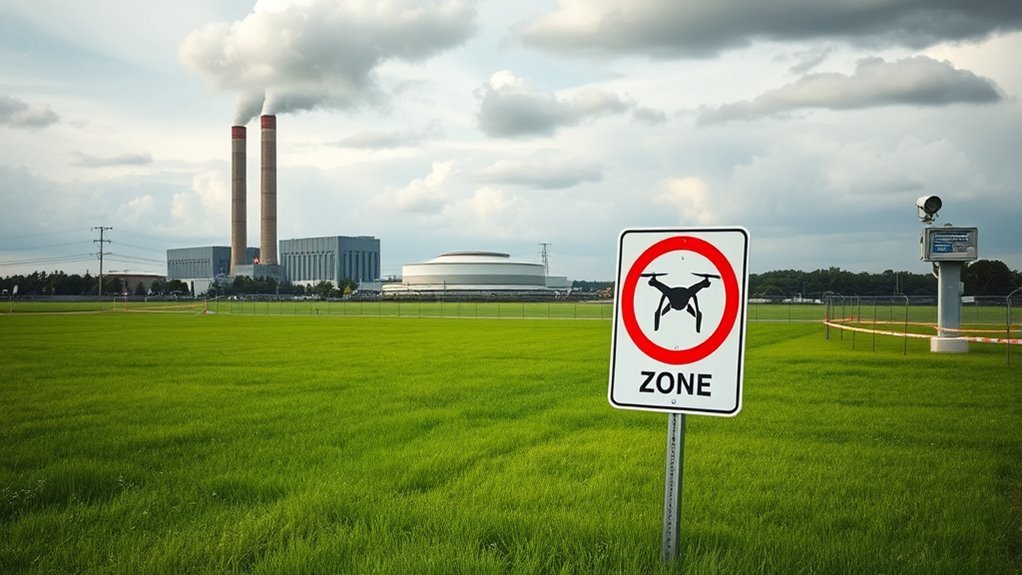
As you consider the protection of sensitive infrastructure, it’s important to recognize the national security concerns that arise with the use of drones. Unauthorized drone activity can pose significant risks to critical facilities, potentially exposing them to surveillance and other security threats. Addressing these issues is essential for ensuring both the security of infrastructure and the privacy of individuals. Additionally, real-time aerial surveillance can enhance situational awareness for security teams, helping to mitigate risks associated with unauthorized drone flights.
National Security Concerns
Given the increasing reliance on technology for national security, the protection of sensitive infrastructure has become paramount. Drones, while offering significant advantages in military operations and intelligence gathering, pose unique risks when used in restricted areas. Unauthorized drone activity can lead to intrusions into sensitive sites, potentially compromising security measures designed to safeguard critical assets. This concern is heightened by the potential for drones to collect data or conduct surveillance on military installations, energy facilities, and communication hubs. As threats evolve, the need for stringent regulations surrounding drone usage becomes clear. By restricting drones in these zones, authorities aim to maintain operational integrity and protect national interests, ultimately ensuring that security protocols remain effective against emerging challenges.
Privacy and Surveillance Risks
The proliferation of drones raises significant privacy and surveillance concerns, particularly in areas near sensitive infrastructure. As drone technology advances, the potential for unauthorized surveillance increases, leading to ethical dilemmas surrounding surveillance ethics. You might find that these devices can easily capture images or data without consent, infringing on personal privacy. This becomes especially problematic in regions like power plants, military bases, or government facilities where sensitive information is at stake. The balance between innovation and privacy rights is delicate. While drones offer valuable benefits, their unchecked use poses risks that could undermine public trust and safety. Understanding these implications is essential for traversing the evolving landscape of drone regulation and ensuring responsible use in sensitive locations.
Wildlife Conservation Efforts
While many people recognize the importance of wildlife conservation, the use of drones in these efforts has sparked debate, particularly in areas where their use is now restricted. Drones can be instrumental in monitoring wildlife populations and habitats, allowing for more effective species protection. However, concerns arise regarding habitat disturbance caused by drone flights, which may inadvertently stress animals or disrupt nesting behaviors. In sensitive areas, the potential negative impact on wildlife can outweigh the benefits of using drones. Striking a balance between technological advancement and ecological integrity is vital. For those passionate about conservation, understanding these dynamics is essential, as it enables you to advocate for responsible practices that protect both wildlife and the freedom to utilize innovative tools in environmental stewardship.
Airspace Regulations and Restrictions
Although many enthusiasts embrace the potential of drones for various applications, airspace regulations and restrictions play a significant role in determining where and how these devices can be utilized. The FAA categorizes airspace into classifications, such as controlled and uncontrolled, each with specific rules governing drone operations. For instance, flying in controlled airspace often requires drone licensing and adherence to strict altitude limits. These regulations guarantee safety, especially near airports and populated areas, where unauthorized drone flights could pose serious risks. Understanding these classifications is essential for any drone operator seeking to navigate the skies legally and safely. Ultimately, compliance with airspace regulations not only safeguards your freedom to fly but also promotes responsible use of drone technology. Moreover, being aware of signal attenuation is crucial for ensuring effective drone operations in various airspace environments.
Local Ordinances and Community Regulations
As drone usage continues to rise, local ordinances and community regulations have emerged as crucial factors influencing where you can fly these devices. Zoning laws often dictate specific areas where drone flights are permissible or prohibited, reflecting the community’s priorities and safety concerns. These laws can vary considerably from one locality to another, impacting your freedom to operate drones. Additionally, community input plays an essential role in shaping these regulations. Residents may express concerns about noise, privacy, or safety, leading to restrictions that limit your flying options. Understanding these local regulations is important for any drone enthusiast, as they can drastically alter where you can legally enjoy your passion while respecting the community’s wishes and maintaining harmony.
Frequently Asked Questions
Can I Fly a Drone at Night in Restricted Areas?
You can’t fly a drone at night in restricted areas without adhering to night flying regulations and restricted airspace guidelines. Understanding these rules is essential for maintaining safety and compliance while enjoying your drone experience.
What Are the Penalties for Violating Drone Bans?
When you’re flying high, know the risks; violating drone bans can lead to hefty fines and penalties. Legal repercussions could include criminal charges or loss of flying privileges, impacting your freedom to explore the skies.
Are There Any Exceptions for Drone Use in Banned Areas?
Yes, there are exceptions for drone use in banned areas, typically allowing authorized personnel like law enforcement or emergency responders to operate drones. These exceptions guarantee safety and compliance while addressing specific operational needs.
How Can I Report Illegal Drone Activity?
If you suspect illegal drone activity, familiarize yourself with drone regulations and follow established reporting procedures. Contact local authorities or the FAA, providing detailed information to guarantee appropriate action is taken against potential violations.
Do Drone Bans Apply to Hobbyists and Commercial Pilots Equally?
You might think drone bans only affect commercial pilots, but hobbyist regulations often mirror commercial restrictions. Both must navigate complex rules, ensuring safety and compliance, emphasizing the need for awareness in your flying endeavors.
