
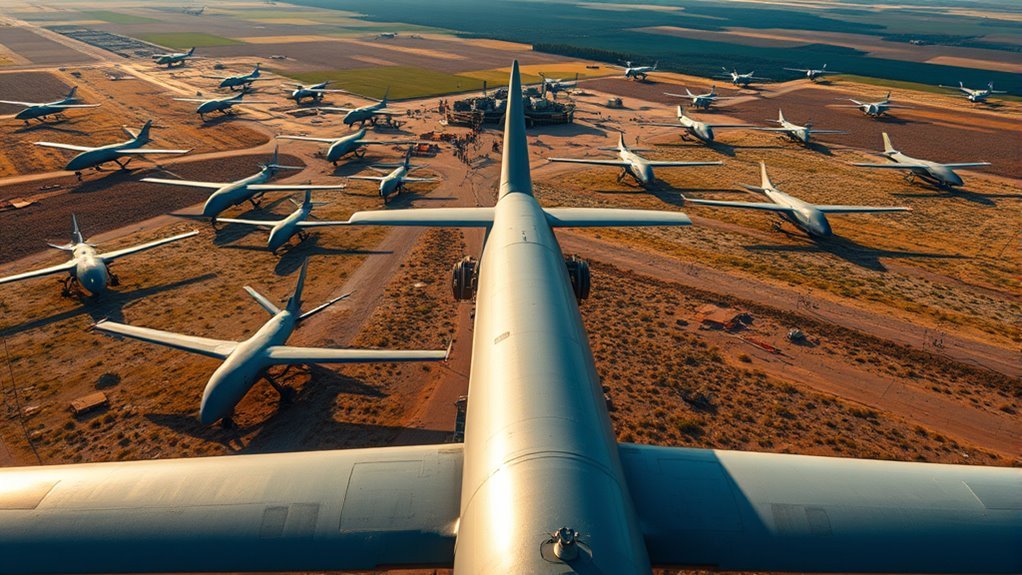
Russia operates a diverse drone inventory estimated to be several hundred to a few thousand units. These drones support various military applications, including surveillance, combat, and reconnaissance. With advancements in technology and strategic investments in their UAV capabilities, Russia is enhancing its military effectiveness. This expansion reflects broader geopolitical goals and the evolving dynamics of modern warfare. If you’re curious about the implications of these drones on military strategies, there’s much more to reflect upon.
Overview of Russia’s Drone Inventory
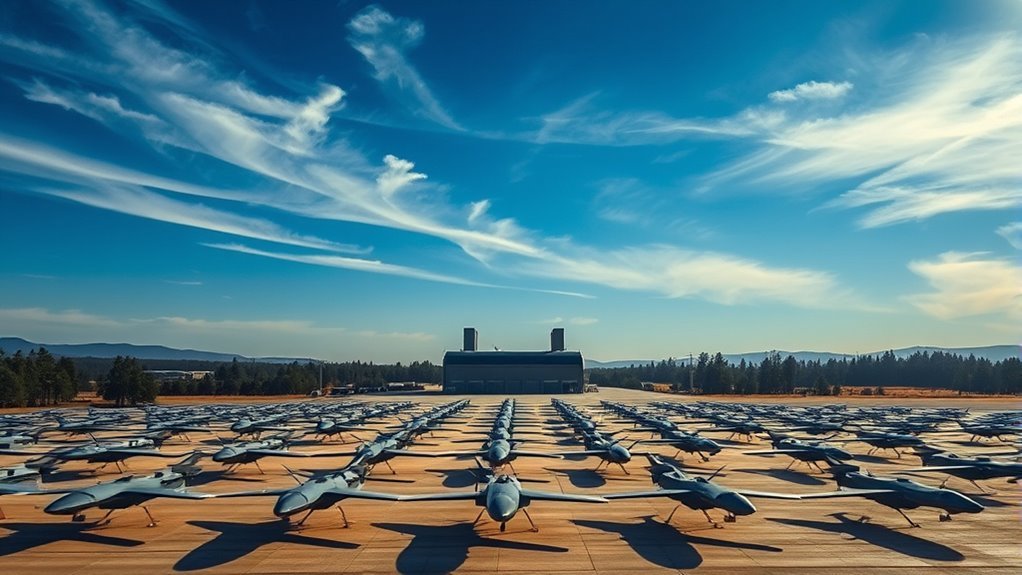
Russia’s drone inventory is diverse, comprising various types designed for surveillance, combat, and reconnaissance. This diversity reflects the nation’s strategic focus on enhancing its military capabilities through targeted drone procurement. By investing in advanced technologies and establishing military partnerships, Russia aims to bolster its operational effectiveness on the battlefield. These collaborations often involve knowledge exchange and joint development projects, allowing for more sophisticated drone systems tailored to specific needs. As you analyze this inventory, consider how these drones not only serve immediate military objectives but also contribute to broader geopolitical goals. Understanding the implications of Russia’s drone capabilities can provide insight into its intentions and strategies in the ever-evolving landscape of modern warfare.
Types of Drones in Russia’s Arsenal
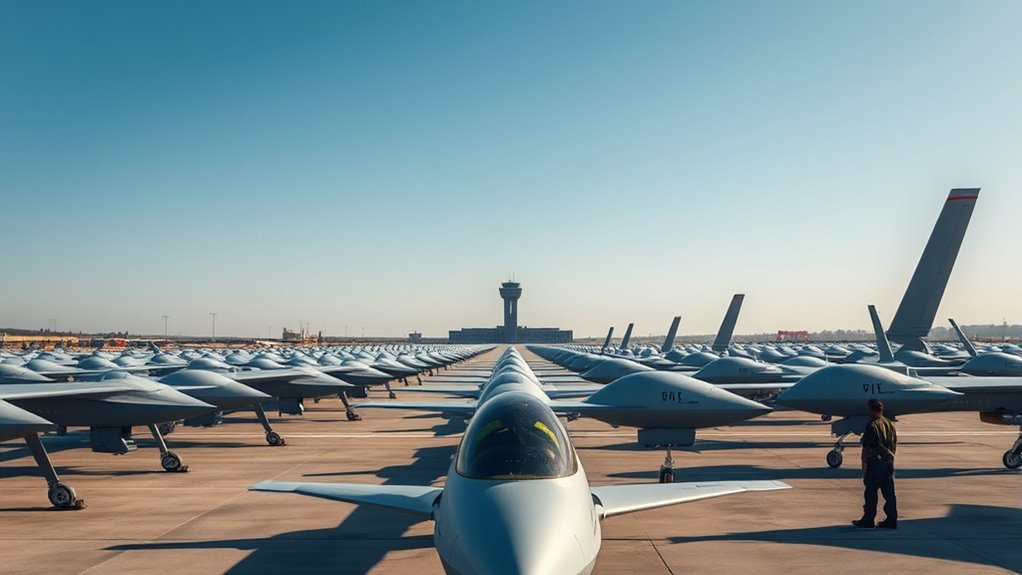
While examining the types of drones in Russia’s arsenal, you’ll find a mix of unmanned aerial vehicles (UAVs) tailored for specific military roles. Russia employs combat drones, such as the Orion and the Forpost, designed for precision strikes and tactical support. These drones enhance operational effectiveness on the battlefield, allowing for targeted engagements with minimal risk to personnel. In contrast, surveillance drones like the Takhion and the Zala provide critical reconnaissance capabilities, gathering intelligence and monitoring enemy movements. This combination of combat and surveillance drones enables Russia to maintain a strategic advantage, adapting to various combat scenarios while minimizing exposure. Understanding these types of drones is essential for grasping the broader implications of Russia’s military strategies.
Recent Developments in Drone Technology
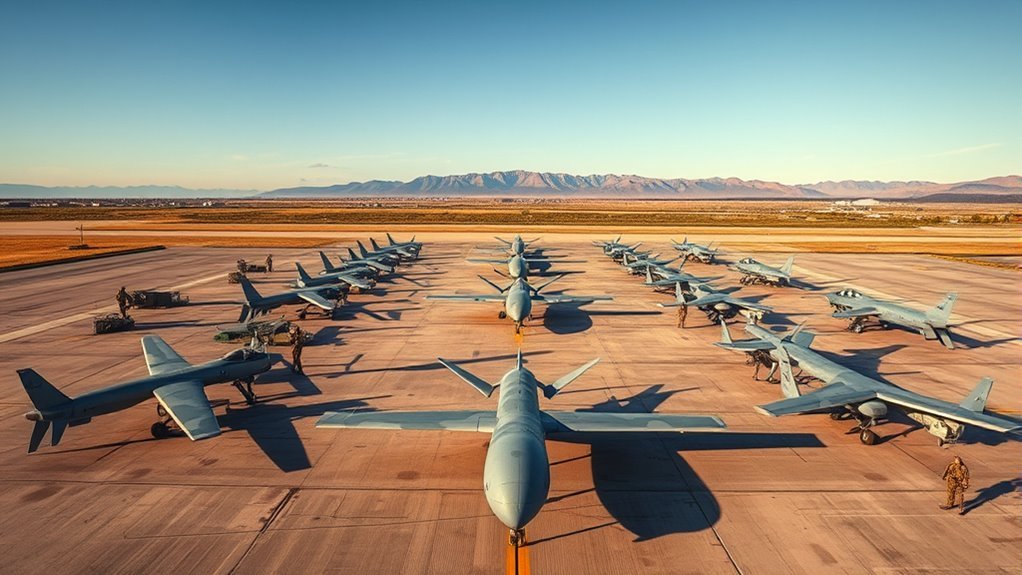
The advancements in drone technology have considerably influenced Russia’s military capabilities, particularly in enhancing the effectiveness of its existing UAVs. Emerging technologies are driving significant drone innovations, allowing for improved surveillance, targeting, and reconnaissance operations. These developments include advanced sensors, artificial intelligence, and enhanced flight autonomy, enabling drones to operate in complex environments with minimal human intervention. Consequently, Russia’s military has begun to integrate these innovations into its strategies, which can alter the balance of power in conflicts. As you analyze these changes, it’s essential to contemplate how they could impact not only Russia’s military operations but also the broader geopolitical landscape. The ongoing evolution of drone technology will likely continue to reshape the future of modern warfare.
Strategic Use of Drones in Military Operations
As drone technology becomes increasingly sophisticated, military operations are leveraging these capabilities to gain strategic advantages on the battlefield. You’ll notice that drone warfare has transformed traditional battlefield tactics, allowing for precision strikes and real-time intelligence gathering. By utilizing drones, military forces can conduct surveillance without risking personnel, enhancing operational effectiveness. Furthermore, these unmanned systems enable quick responses to evolving threats, adapting tactics on the fly. The ability to gather data on enemy movements and positions gives commanders a significant edge, allowing for more informed decision-making. As you analyze these developments, consider how the integration of drones reshapes military strategies, emphasizing the importance of adaptability in modern warfare and the potential for increased operational freedom.
Implications for Global Military Dynamics
Given the rapid advancement of drone technology, the implications for global military dynamics are profound. You’re witnessing a shift in military balance as nations increasingly invest in drone proliferation. This technology could redefine warfare, enabling smaller states or non-state actors to challenge traditional powerhouses effectively. As drones become ubiquitous, expect tensions to rise, with countries scrambling to enhance their aerial capabilities. The potential for asymmetric warfare will escalate, disrupting established military doctrines. Additionally, the reliance on drones might lead to ethical dilemmas regarding accountability and decision-making in combat. In this evolving landscape, nations must navigate a complex environment where technological superiority may dictate influence and security, ultimately reshaping alliances and global power structures.
Frequently Asked Questions
What Is the Cost of Russia’s Drones Compared to Other Countries?
When analyzing drone pricing, you’ll find Russia’s costs vary considerably compared to other nations. Its military expenditure reflects strategic priorities, while budget constraints influence affordability, ultimately impacting the effectiveness and quantity of their drone capabilities.
How Does Russia’s Drone Technology Compare to Nato’s?
You might think Russia’s drone technology lags behind NATO, but its military applications reveal competitive drone capabilities. While NATO excels in integration, Russia’s innovations are remarkable, particularly in electronic warfare and surveillance capabilities.
Are There Civilian Applications for Russia’s Drones?
Yes, Russia’s drones have civilian applications like agricultural monitoring, where they’re used for crop assessments, and disaster response, aiding in search and rescue operations. These uses enhance efficiency and safety in critical situations, promoting societal benefits.
What Is Russia’s Drone Production Capacity?
Russia’s drone production capacity hinges on its military investment and drone manufacturing capabilities. You’ll find that ongoing advancements aim to enhance operational efficiency, reflecting a strategic focus on both defense and potential civilian applications.
How Does Russia’s Drone Strategy Affect International Relations?
Russia’s drone strategy impacts international relations by employing drone diplomacy to strengthen military alliances. This approach can shift power dynamics, challenge Western influence, and provoke responses from nations prioritizing autonomy and regional security in their foreign policies.
