
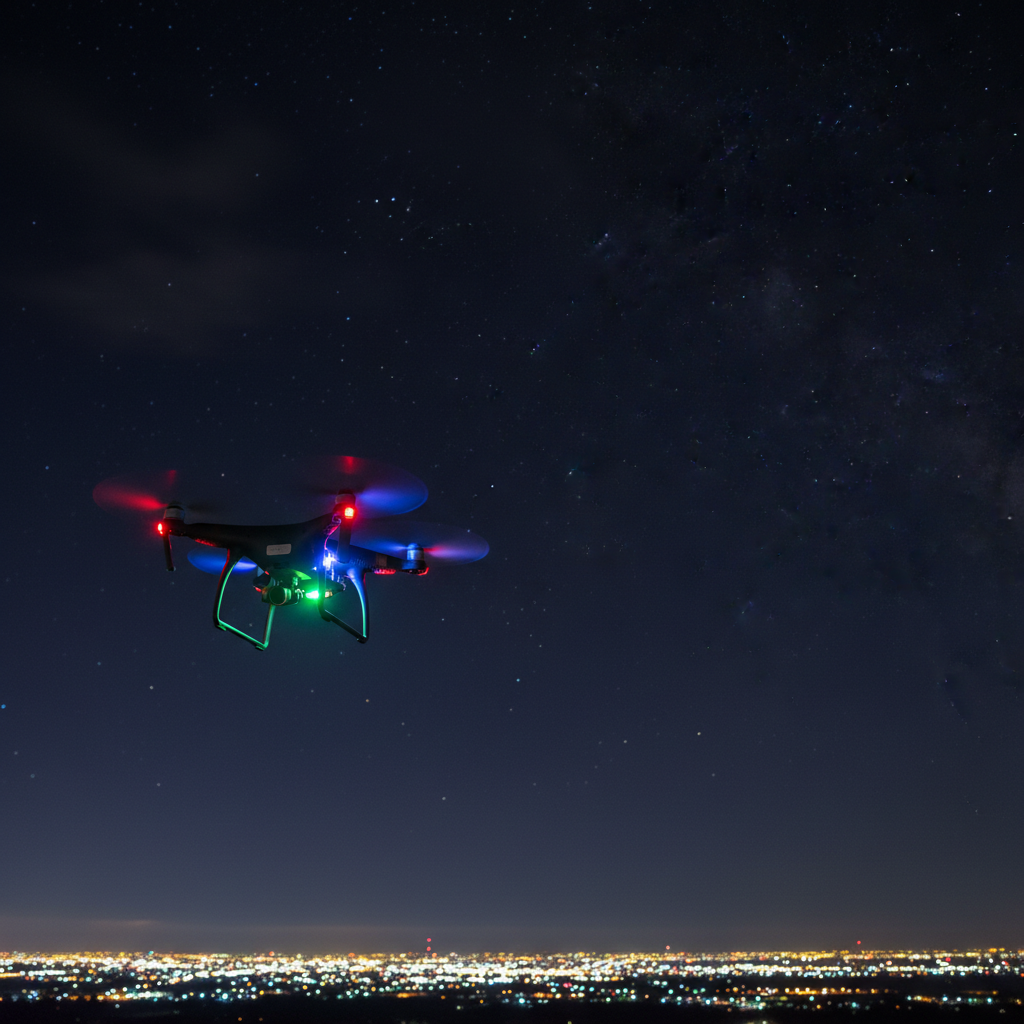
Drones in the night sky often resemble small, bright stars moving steadily across the darkness. Their LED lights can create a stunning visual display, making them look distinct from other flying objects. Understanding the characteristics of drones at night can enhance your appreciation for these technological marvels. As drones become increasingly prevalent in various sectors such as photography, agriculture, and surveillance, knowing how to identify them at night can enrich your experience and knowledge of this innovative technology.
The Visual Characteristics of Drones
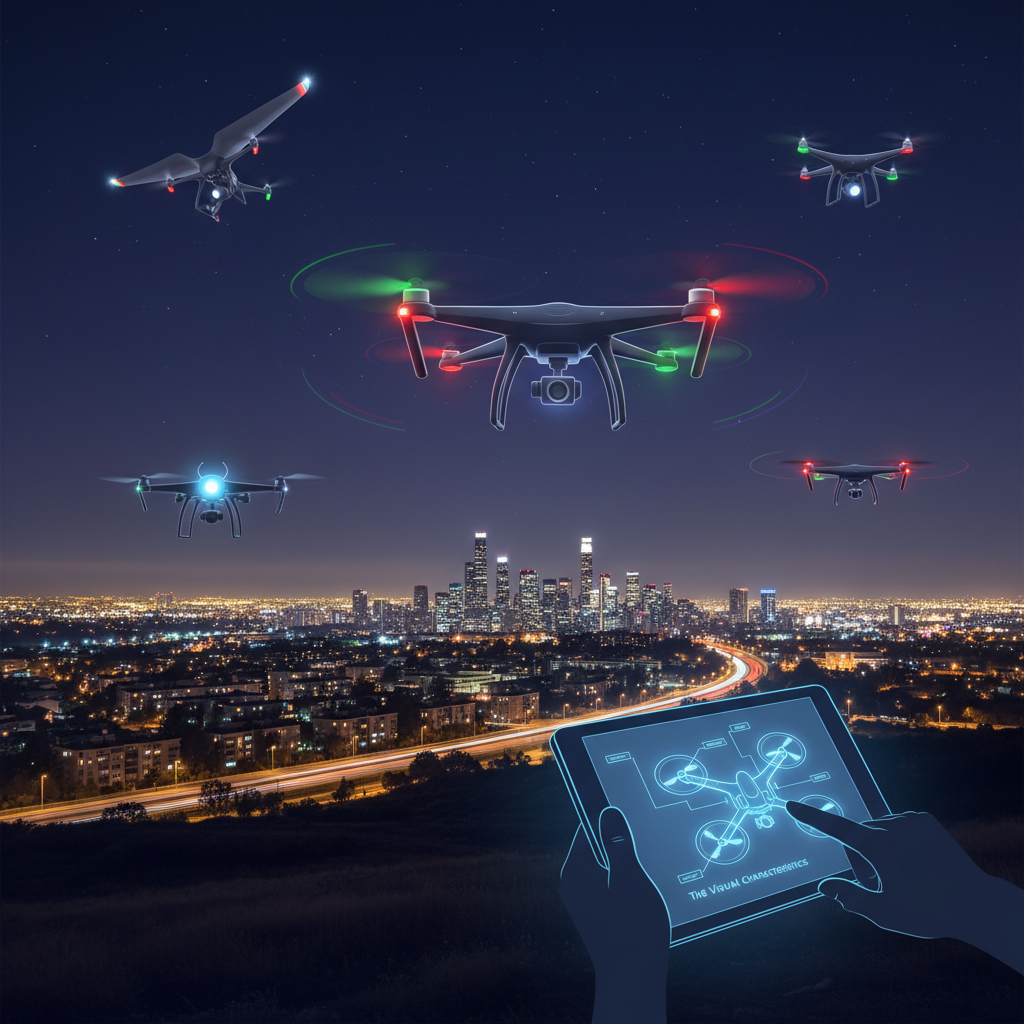
Drones are equipped with LED lights that serve multiple purposes, primarily enhancing visibility during low-light conditions. These lights can vary in color, often flashing or remaining steady, and are crucial for both safety and aesthetic appeal. For instance, many recreational drones feature bright green and red lights to indicate their orientation and ease piloting, while professional drones may utilize white lights for better visibility among other aircraft. This colorful display can create a captivating sight against the backdrop of the night sky, resembling a constellation of artificial stars.
In terms of size, drones typically range from small, palm-sized models to larger, professional-grade devices. However, they generally maintain a compact, boxy shape with propellers protruding from the main body. This shape is distinguishable from other flying entities such as birds or planes, which possess more fluid and aerodynamic silhouettes. For example, a DJI Phantom drone, a popular model used for aerial photography, has a recognizable quadcopter design, making it easy to spot against the dark canvas of the sky.
Movement Patterns of Drones
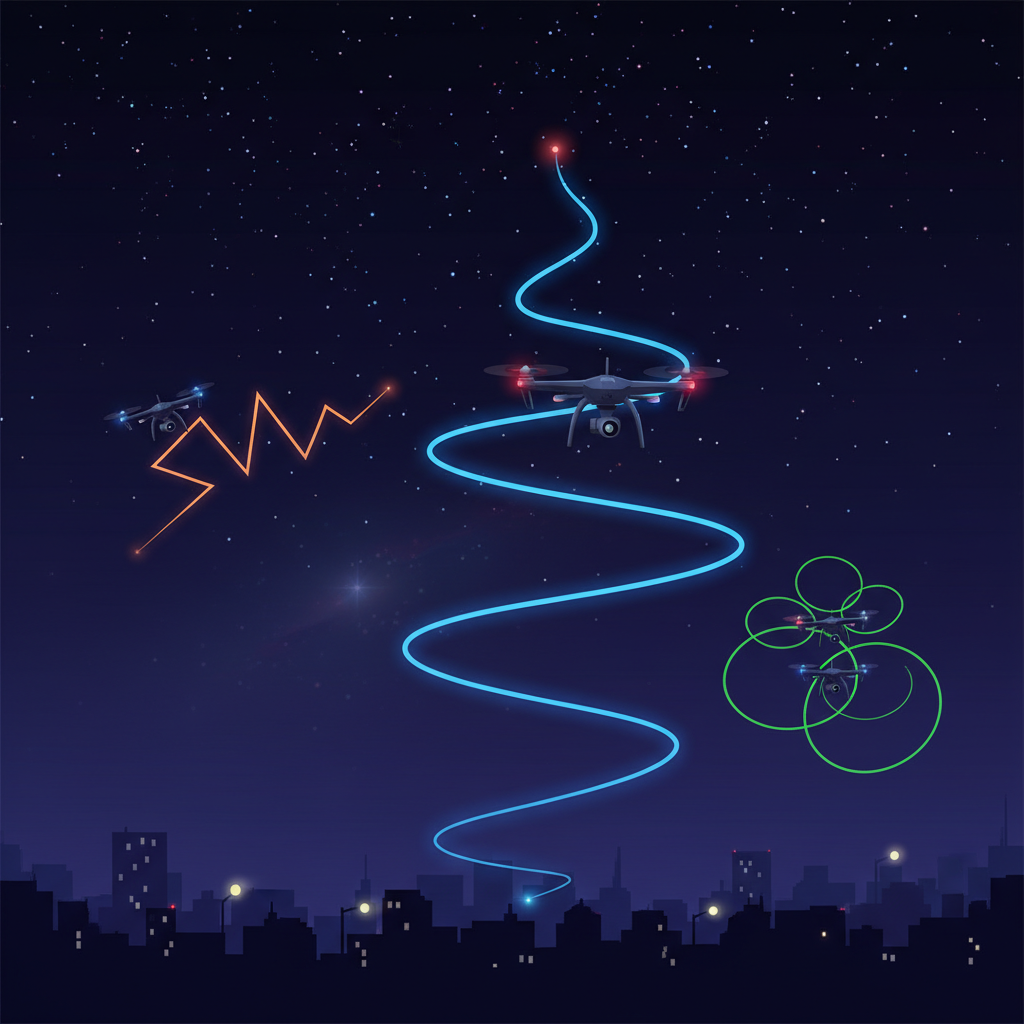
The movement patterns of drones are another defining characteristic that sets them apart from other aerial entities. Drones often fly in relatively straight lines or make sharp, sudden turns, creating a stark contrast with the smoother, more fluid flight paths of birds or traditional aircraft. This erratic movement can be attributed to the operator’s control, allowing for precise adjustments that enhance the drone’s operational capabilities.
One of the most striking features of drones is their ability to hover in place. This capability results in a stationary point of light that stands out against the night sky, often drawing the attention of onlookers. For example, during aerial light shows or drone displays, operators can synchronize multiple drones to create intricate patterns and formations, further enhancing the visual spectacle. Such exhibitions can leave spectators in awe, showcasing the remarkable potential of drone technology.
Factors Influencing Drone Visibility
Several environmental factors can influence how drones are seen from the ground at night. Weather conditions play a significant role; fog, rain, or low-hanging clouds can obscure visibility, making it challenging to spot a drone. For instance, a drone flying in heavy fog may become nearly invisible, while a clear night sky allows for optimal visibility of its lights.
Altitude is another critical factor affecting visibility. Drones can operate at varying heights, and those flying at greater altitudes may appear smaller and less distinct against the night sky. A drone hovering at 400 feet, the maximum altitude for many commercial operations, might look like a mere pinprick of light, whereas one operating at lower altitudes may be vividly visible. Understanding these factors can help enthusiasts and professionals alike better anticipate the sighting of drones at night.
Differences Between Drones and Other Flying Objects
When observing the night sky, distinguishing drones from other flying objects is essential for accurate identification. Unlike airplanes, which typically fly at much higher altitudes and follow established flight paths, drones operate at lower altitudes and can exhibit more erratic flight patterns. For example, a drone might zig-zag across the sky or hover in a specific location, behaviors that are atypical for traditional aircraft.
Helicopters, while capable of similar visual effects, can usually be distinguished from drones by their noise and operational height. Drones are often quieter than helicopters, especially when viewed from a distance, which can make them more difficult to identify unless one is keenly aware of their unique sound profile. Moreover, helicopters tend to maintain a consistent altitude and speed, unlike drones that can rapidly change both.
Legal and Safety Considerations
The increasing use of drones has prompted regulatory bodies worldwide to implement laws governing their operation, particularly at night. Many jurisdictions require drone operators to adhere to specific safety guidelines, such as maintaining visual line-of-sight and avoiding populated areas. Understanding these regulations can enhance your awareness of the presence of drones in the night sky and ensure that you are informed about their legal limitations.
In some regions, nighttime drone operations may require additional permits or certifications due to the increased risks associated with flying in low visibility conditions. For example, the Federal Aviation Administration (FAA) in the United States mandates that operators who wish to fly drones at night must adhere to certain requirements, including equipping their drones with anti-collision lights. This regulatory framework not only promotes safety but also allows enthusiasts to enjoy the visual spectacle of drones without compromising public safety.
Tips for Spotting Drones at Night
Spotting drones at night can be an engaging and rewarding experience if you know what to look for. Start by watching for bright, colorful lights that do not conform to typical flight paths. Drones often exhibit unique movement patterns, such as abrupt turns and hovering, which can help you differentiate them from airplanes or other flying entities.
Additionally, pay attention to sound. Drones tend to be quieter than airplanes or helicopters, especially when viewed from a distance. If you hear a soft buzz, it may indicate the presence of a drone flying nearby. Utilizing binoculars or a telescope can also enhance your ability to spot drones at night, allowing you to appreciate their design and functionality up close.
In conclusion, observing a drone at night can be a fascinating experience, characterized by its unique lights and movement patterns. By understanding these features and the factors that influence visibility, you can better appreciate the sight of drones gliding through the evening sky. If you’re curious to learn more, consider researching local drone regulations or even exploring drone technology yourself! Engaging with this cutting-edge technology not only heightens your understanding but also invites you to explore the remarkable possibilities drones offer in our modern world.
Frequently Asked Questions
What does a drone look like in the night sky?
In the night sky, drones often appear as small, bright lights that can vary in color depending on their LED indicators. Most consumer drones have white or colored lights that help with visibility and orientation. These lights can blink or remain solid, making drones distinguishable from stars or airplanes, especially when they are hovering or moving in a controlled pattern.
How can I identify a drone at night?
To identify a drone at night, look for blinking lights that are not consistent with the steady lights of aircraft or stars. Drones typically have multiple lights, including red and green indicators to signal their direction. Additionally, if you notice a light moving erratically or changing altitude, it’s likely a drone rather than a fixed-wing aircraft.
Why do drones have lights when flying at night?
Drones are equipped with lights for safety and visibility, especially when flying at night. The Federal Aviation Administration (FAA) regulations require drones to have anti-collision lights to ensure they are visible to other aircraft and people on the ground. These lights help prevent accidents by making it easier to spot drones in the dark sky.
What are the best practices for flying a drone at night?
When flying a drone at night, it’s crucial to adhere to local regulations, which often require appropriate lighting. Pilots should ensure that their drone has adequate illumination to maintain visual line of sight, typically using LED lights. Additionally, flying in open areas away from populated regions and maintaining a safe altitude can enhance safety and compliance while enjoying night-time aerial photography.
Which drones are best suited for night flying?
The best drones for night flying typically feature strong LED lighting systems, good battery life, and stable flight capabilities. Models like the DJI Mavic Air 2 and the Phantom 4 Pro come equipped with bright, adjustable lights and have excellent navigation features. It’s important to consider drones that also offer advanced camera systems, allowing for high-quality night photography and videography.
References
- https://en.wikipedia.org/wiki/Drone
- https://www.nytimes.com/2021/03/30/science/drones-night-sky.html
- https://www.sciencedirect.com/science/article/pii/S2352864821000620
- https://www.nasa.gov/mission_pages/technology/innovations/drone-night-sky.html
- https://www.faa.gov/uas/
- https://www.reuters.com/technology/drones-light-up-night-sky-2022-12-09/
- https://www.cnn.com/2022/12/07/tech/drone-light-show/index.html
- https://www.bbc.com/future/article/20200226-how-drones-are-changing-the-way-we-see-the-world
