
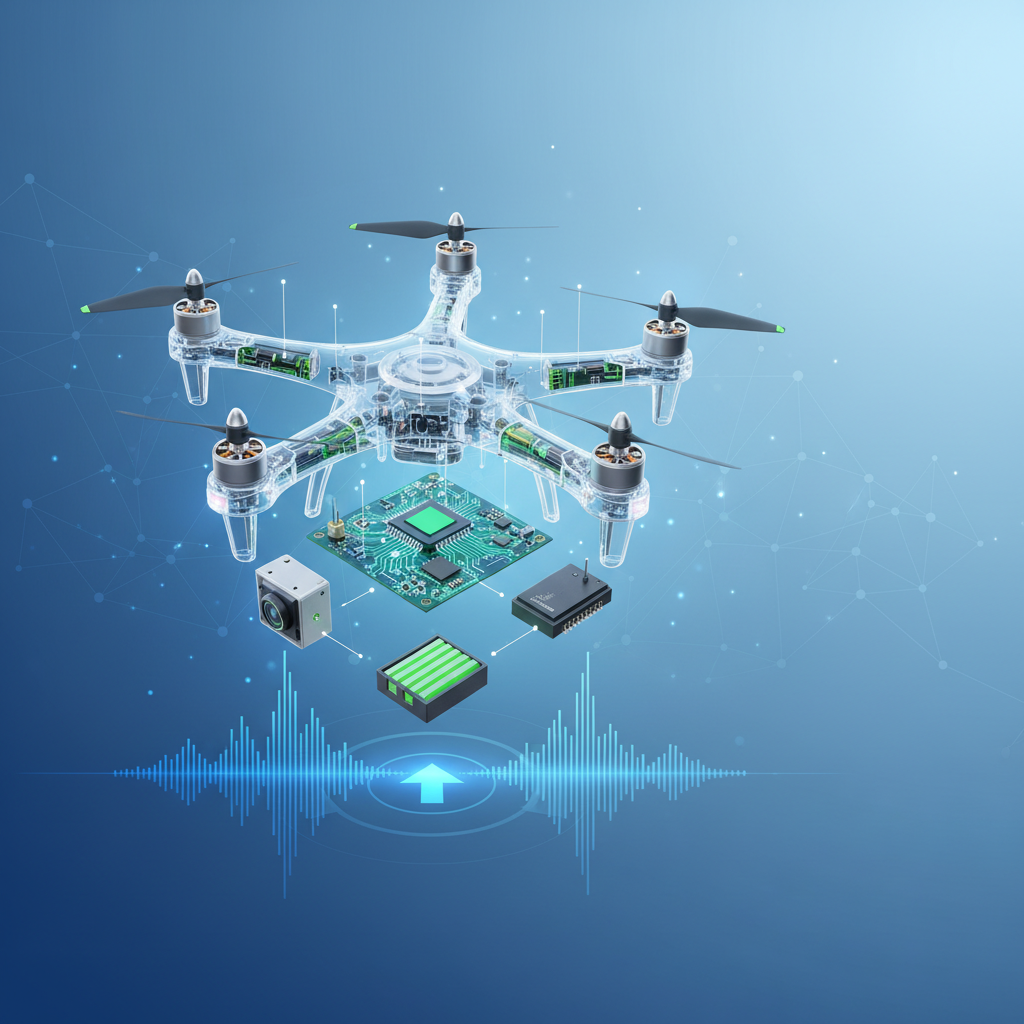
Drones operate through a combination of hardware and software that allows them to fly autonomously or be controlled remotely. The core components include rotors, sensors, and a control system that work together to enable flight and maneuverability. This article delves deeper into the mechanics behind how a drone functions, exploring its individual components, control systems, navigation technologies, power sources, communication methods, applications, and the future of drone technology.
The Basic Components of a Drone
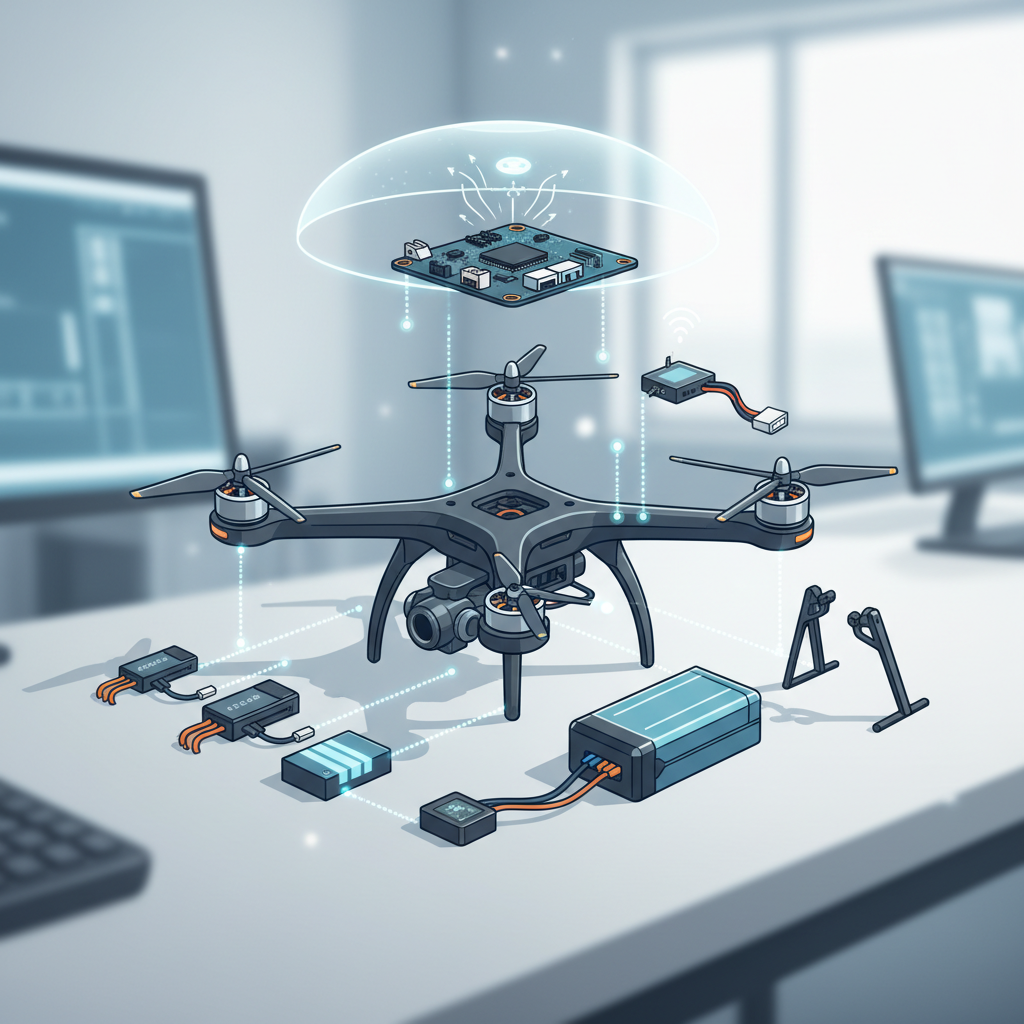
At the heart of every drone is its frame, which serves as the structural foundation. Typically constructed from lightweight materials such as carbon fiber or plastic, the frame is designed to withstand the stresses of flight while minimizing weight for enhanced performance. A well-designed frame not only supports the drone’s components but also contributes to its aerodynamics, enabling smoother flight.
Next, we have the motors and propellers, which are critical for generating lift and thrust. Most drones utilize multi-rotor designs, with quadcopters being the most common configuration featuring four rotors. The rotation of these propellers creates lift by displacing air downwards, allowing the drone to ascend. The precise control of motor speed allows for agile maneuverability, making it possible for drones to hover, ascend, descend, and change direction swiftly. For instance, a drone equipped with brushless motors can deliver improved efficiency and longevity compared to traditional brushed motors, enhancing overall performance.
Drone Control Systems
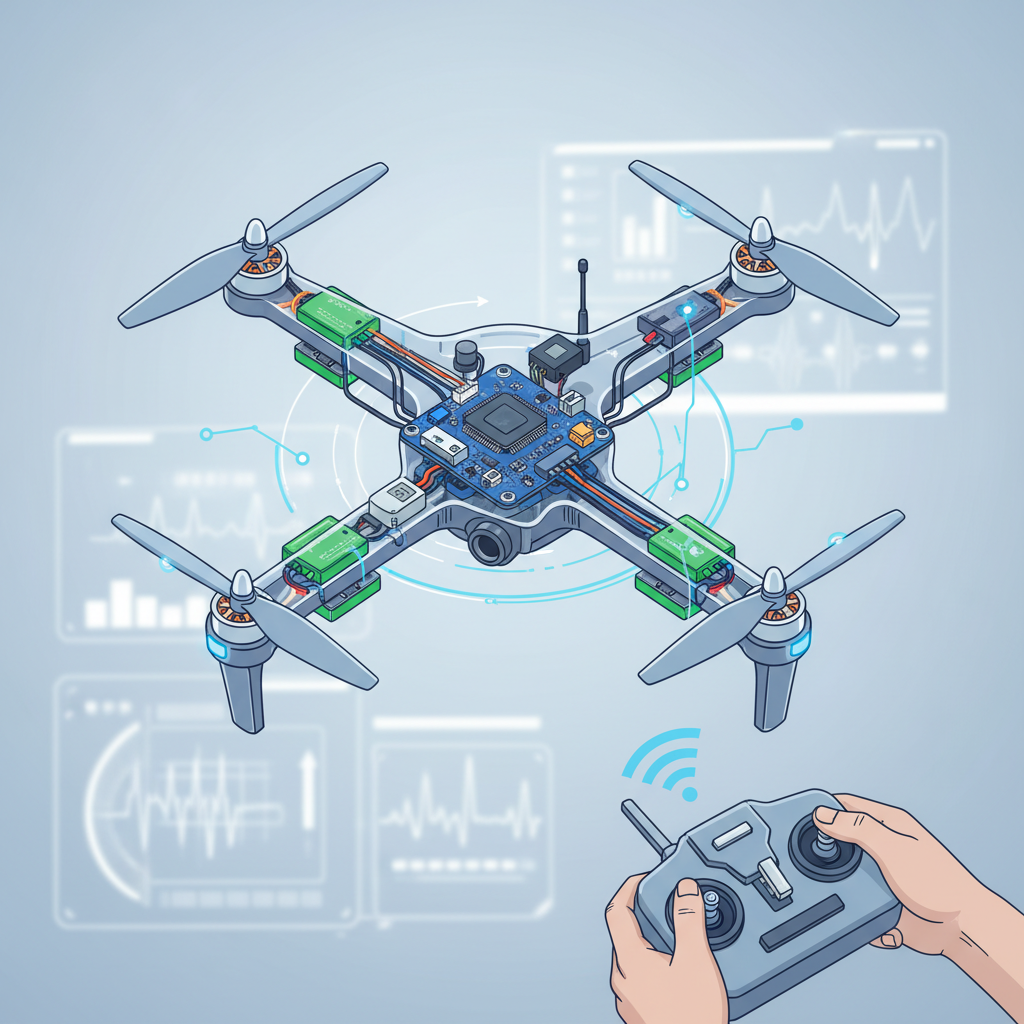
Drones can be operated in two primary ways: via remote control or through autopilot systems. Remote control involves a transmitter that allows users to manually operate the drone. This method provides immediate feedback and control over the drone’s movements, making it ideal for recreational flying or intricate aerial maneuvers. For instance, hobbyists can use handheld controllers to navigate their drones through obstacle courses or capture stunning aerial shots.
On the other hand, autopilot systems have revolutionized drone operation by enabling autonomous flight. These systems utilize GPS technology and pre-programmed flight paths to navigate without direct human intervention. This capability is particularly beneficial for applications like aerial surveying or agricultural monitoring, where precise flight paths are essential. For example, drones can be programmed to follow specific routes over vast farmland to gather data on crop health, which would be time-consuming and labor-intensive if done manually.
Sensors and Navigation
Drones rely heavily on sensors for navigation and stabilization. A GPS module is essential for providing real-time location data, allowing drones to accurately determine their position and altitude. This information is crucial for both manual and autonomous flights, as it ensures that the drone can navigate to specific coordinates with high precision.
Additionally, an Inertial Measurement Unit (IMU) is a key component that includes accelerometers and gyroscopes. These sensors work collectively to measure the drone’s orientation, velocity, and angular velocity. By continuously monitoring these parameters, the IMU helps to stabilize the drone in flight, compensating for disturbances caused by wind or other environmental factors. For instance, advanced drones can employ sensor fusion techniques, combining data from multiple sensors to improve flight stability and responsiveness.
Power Sources
Powering a drone is a critical aspect of its design, influencing flight time and performance. The most common power source for drones is lithium-polymer (LiPo) batteries, known for their high energy density and lightweight nature. These batteries provide the necessary energy for flight, with capacities ranging from a few hundred milliamp-hours (mAh) to several thousand, depending on the drone’s size and intended use. For example, a consumer drone may have a battery capacity of 3000 mAh, allowing for approximately 25-30 minutes of flight time.
In pursuit of longer flight durations, some innovative drone designs are exploring alternative energy sources. Solar panels can be integrated into drones for energy harvesting during flight, extending operational time. Fuel cells represent another alternative, converting hydrogen into electricity for longer missions, especially in applications requiring extended range, such as search and rescue operations. The development of these alternative power sources is crucial as the demand for drones in various industries continues to grow.
Communication Systems
Effective communication systems are vital for the seamless operation of drones. Radio signals typically facilitate communication between the drone and the operator, allowing for real-time control and monitoring. Most consumer drones operate on 2.4 GHz or 5.8 GHz frequency bands, which provide a balance between range and interference resistance. This communication link is essential for transmitting control commands and receiving telemetry data.
Telemetry systems further enhance communication capabilities by sending vital data back to the operator. This information includes battery life, altitude, speed, and location, ensuring that operators can make informed decisions during flight. For instance, many modern drones come equipped with smartphone applications that display real-time telemetry data, enabling users to monitor their drone’s status and adjust their flight plans accordingly.
Applications of Drones
The versatility of drones has led to their widespread adoption across various industries. One of the most popular uses is in aerial photography and videography, where drones provide unique perspectives and high-resolution imagery that would otherwise be difficult to achieve. Real estate agents, filmmakers, and event organizers leverage drones to capture stunning visuals, enhancing their marketing and storytelling efforts.
Beyond entertainment, drones are also employed in surveying and mapping. They can cover large areas quickly, capturing high-resolution images for topographic mapping, land assessments, and agricultural monitoring. For example, in agriculture, drones equipped with multispectral cameras can analyze crop health, enabling farmers to make data-driven decisions that optimize yield and resource use. The ability to gather data efficiently and accurately has made drones invaluable tools in many sectors.
Future of Drone Technology
Looking ahead, the future of drone technology is promising, with several trends likely to shape its evolution. One significant development is the integration of artificial intelligence (AI), which is expected to enhance the autonomous capabilities of drones. AI can enable drones to make real-time decisions based on environmental data, improving safety and efficiency during operation. For instance, AI algorithms can help drones avoid obstacles autonomously or optimize flight routes based on changing weather conditions.
Additionally, regulatory developments will play a crucial role in shaping how drones are utilized in public and commercial spaces. As drone technology advances, governments around the world are formulating regulations to ensure safety and privacy. These regulations will impact everything from where drones can fly to how they can be used commercially. For example, the introduction of remote identification requirements aims to enhance accountability and safety in drone operations, paving the way for broader integration into everyday life.
In conclusion, understanding how a drone works involves exploring its components, control systems, and various applications. The interplay between hardware and software enables drones to perform an array of tasks, from aerial photography to surveying. As technology evolves, the potential uses for drones will continue to expand, making them an integral part of modern innovation. If you’re interested in learning more about drones, consider exploring different models and their capabilities to see how they can benefit your specific needs.
Frequently Asked Questions
What are the main components that make up a drone?
A drone typically consists of several key components: the frame, which houses the structure; the motors and propellers that provide lift and propulsion; the flight controller that acts as the brain of the drone, processing inputs from sensors; and the battery that powers the entire system. Other components may include GPS for navigation, cameras for capturing images or video, and various sensors to enhance functionality and safety.
How does a drone achieve stable flight?
Drones achieve stable flight through a combination of gyroscopes, accelerometers, and advanced flight control software. The gyroscopes measure the drone’s orientation, while accelerometers detect changes in speed and direction. This data is processed by the flight controller, which adjusts the motor speeds in real-time to maintain balance and stability, allowing the drone to hover steadily or maneuver smoothly in the air.
Why do drones use GPS and how does it enhance their functionality?
Drones utilize GPS technology to determine their exact location, enabling features like waypoint navigation, return-to-home functionality, and geofencing. This enhances functionality by allowing users to program specific flight paths, ensuring the drone can autonomously navigate to predetermined points without constant manual control. GPS also helps prevent the drone from flying into restricted areas and ensures it can return safely if it loses connection with the remote controller.
What are the best practices for maintaining a drone to ensure its longevity?
To ensure the longevity of your drone, follow these best practices: regularly inspect and clean the drone, especially the propellers and sensors, to prevent dirt buildup; keep the battery charged between 40-60% when not in use to prolong battery life; and update the firmware to benefit from the latest improvements and safety features. Additionally, always store the drone in a dry, cool place and avoid flying in adverse weather conditions to minimize wear and tear.
Which types of drones are best suited for beginners?
For beginners, toy drones and basic camera drones are often the best choices. Toy drones are typically lightweight, easy to fly, and more affordable, making them ideal for learning the fundamentals of drone operation without a significant investment. Basic camera drones, like those from brands such as DJI or Holy Stone, also offer user-friendly features and stability, allowing new pilots to capture aerial footage while learning to control the drone effectively.
References
- https://en.wikipedia.org/wiki/Drone
- https://www.nasa.gov/centers/dryden/pdf/8805.pdf
- https://www.faa.gov/uas/resources/policy_library/
- https://www.sciencedirect.com/science/article/pii/S2351978917305527
- https://www.itu.int/en/ITU-T/focusgroups/ai4iot/Pages/default.aspx
- https://www.bbc.com/future/article/20200302-how-drones-work-and-what-they-do
- https://www.nist.gov/itl/iad/mig/drones-and-unmanned-aircraft-systems-uas
- https://www.abc.net.au/news/2021-03-16/how-drones-work-and-their-impact-on-the-future/13257178
