
Drones fly by utilizing a combination of lift, thrust, and advanced technology. The principles of aerodynamics and the mechanics of rotors or wings allow these unmanned aerial vehicles to navigate through the air effectively. Understanding how drones fly involves examining the scientific principles at play, the various types of drones, their components, and the technologies that enable their operation. This knowledge is crucial not only for enthusiasts but also for professionals looking to harness the potential of drones in various applications, from photography to delivery services.
The Science of Flight
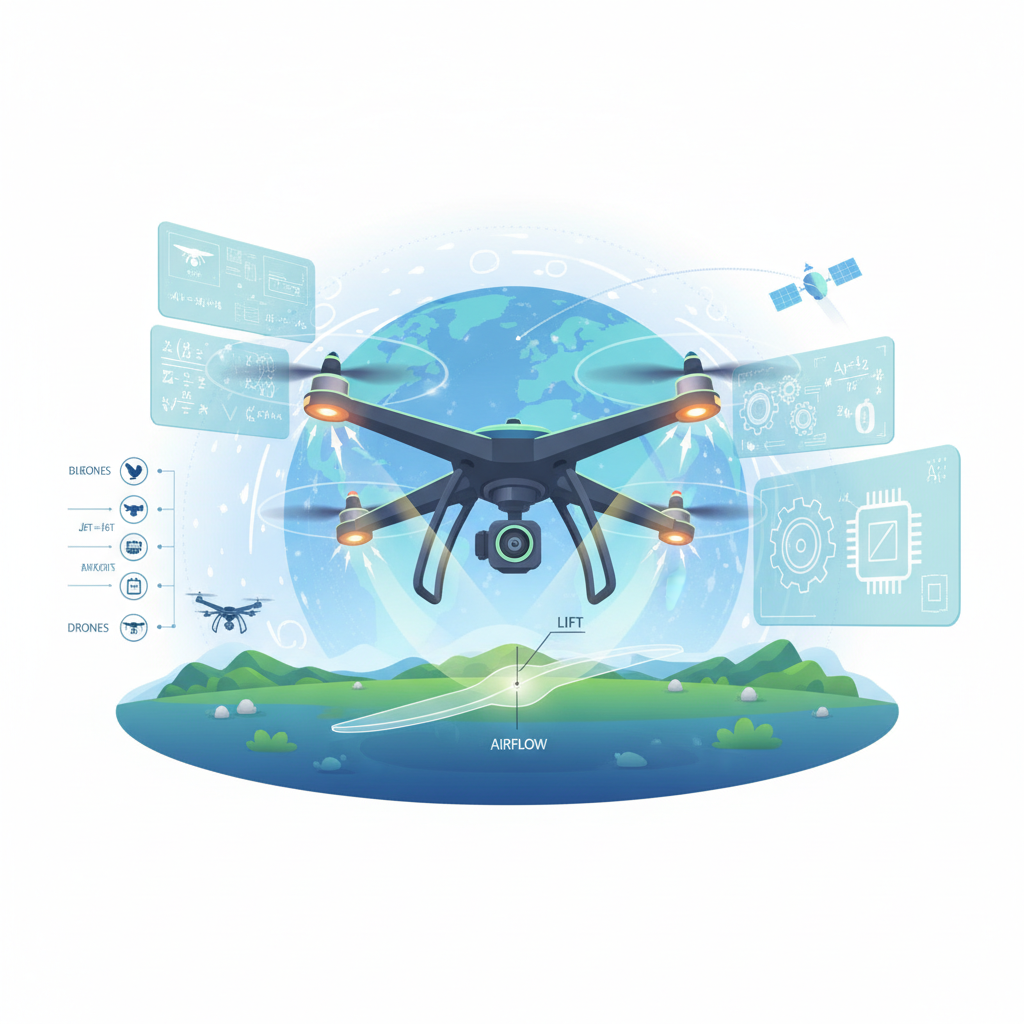
Drones rely on the four forces of flight: lift, weight, thrust, and drag. Lift is the force that allows a drone to rise into the air, generated by the rotor blades or wings. The rotors create a difference in air pressure above and below them, resulting in upward force. Weight, on the other hand, is the force of gravity acting on the drone, pulling it downward. For a drone to ascend, lift must overcome weight.
Thrust is produced by the rotors and is essential for forward motion. It propels the drone in the desired direction, and its magnitude can be controlled by adjusting the speed of the rotors. Finally, drag is the resistance force that opposes thrust, caused by the drone’s movement through the air. Understanding the balance between these forces is key to successful drone flight, as it enables pilots to maneuver their drones efficiently and safely.
Types of Drones and Their Mechanisms
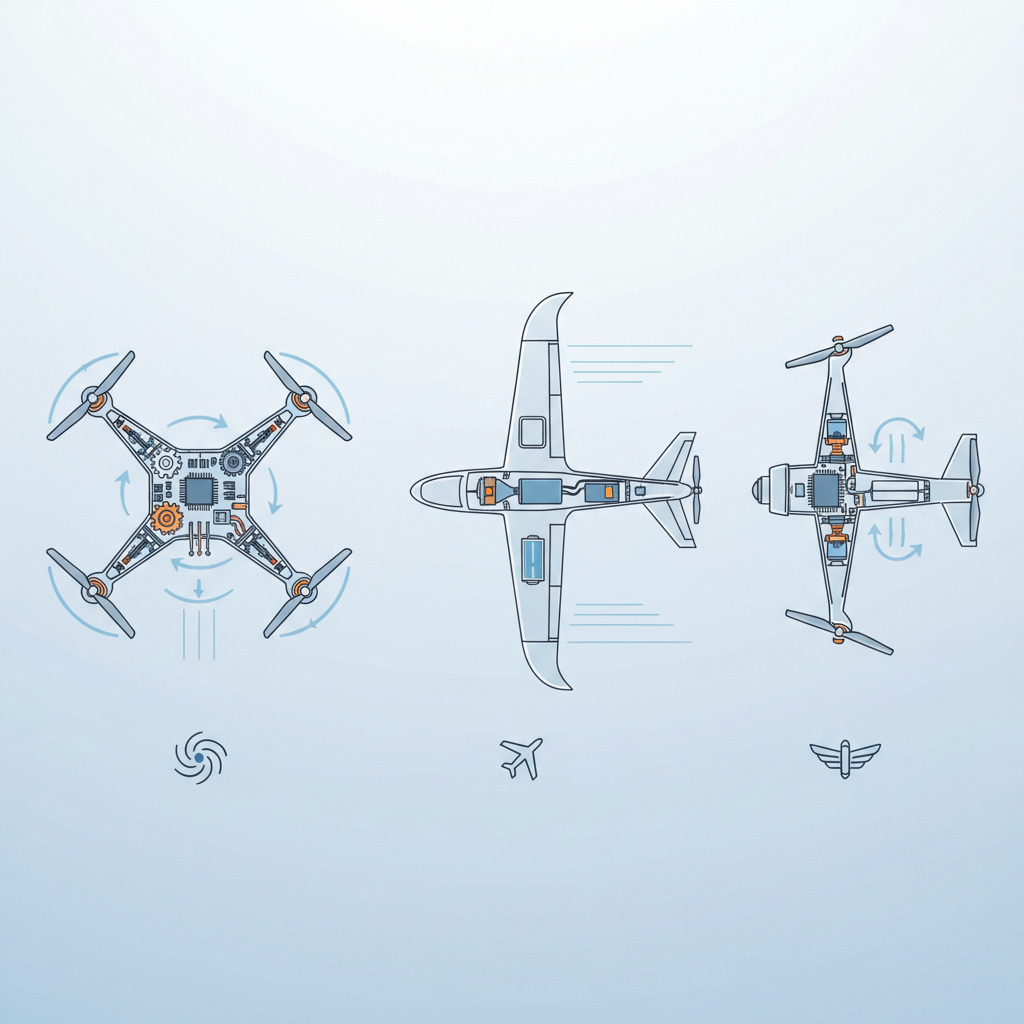
Drones can be categorized into several types, each with unique mechanisms tailored to specific uses. Multi-rotor drones, such as quadcopters, use multiple rotors to achieve flight. This design provides increased stability and control, making them particularly suitable for aerial photography, surveillance, and recreational flying. The redundancy of multiple rotors also enhances safety; if one rotor fails, the remaining ones can still maintain flight.
On the other hand, fixed-wing drones are built for long-distance flight and efficient energy use. These drones resemble traditional airplanes and rely on wings to generate lift. They are favored for applications requiring extensive range and endurance, such as agricultural monitoring and mapping. Fixed-wing drones can often cover larger areas and stay airborne longer than multi-rotor designs, making them ideal for specific professional tasks.
The Role of Propellers
Propellers play a crucial role in a drone’s flight by creating thrust. When the propellers spin, they push air downwards, which results in an upward reaction force due to Newton’s Third Law of Motion. The design and pitch of the propellers significantly affect the drone’s speed and maneuverability. For instance, larger propellers with a higher pitch can generate more thrust but may reduce efficiency at lower speeds.
Moreover, the material and shape of the propellers can influence performance. Carbon fiber propellers, for example, are lightweight and rigid, contributing to improved energy efficiency and responsiveness. Understanding the implications of propeller design is essential for optimizing a drone’s flight characteristics for specific applications, whether for fast racing or stable aerial photography.
Flight Control Systems
Modern drones are equipped with sophisticated flight control systems that enhance stability and maneuverability. These systems utilize onboard computers that process data from various sensors, including gyroscopes and accelerometers. Gyroscopes measure rotational motion, helping to maintain the drone’s orientation, while accelerometers track linear movement, allowing the drone to stay balanced during flight.
Advanced flight control algorithms enable drones to respond effectively to environmental changes, such as wind gusts or obstacles. For example, many drones feature autonomous flight modes that utilize these systems to execute predefined paths or perform complex maneuvers. Understanding these control systems is crucial for anyone looking to operate drones safely and effectively, as they form the backbone of drone navigation and stability.
Navigation and Control
Navigation and control of drones have become increasingly sophisticated, largely due to advancements in GPS technology. Drones equipped with GPS can achieve precise positioning, enabling them to follow pre-programmed flight paths or return to a designated home point autonomously. This capability is particularly beneficial for tasks such as aerial surveying, where accuracy is paramount.
In addition to GPS, many drones incorporate other technologies, such as visual sensors and LIDAR, which enhance their ability to navigate complex environments. Remote controllers and mobile apps further empower users to steer and control drone movements with precision. By understanding the various navigation systems and control interfaces, operators can maximize the capabilities of their drones while minimizing risks associated with flying.
Environmental Factors Affecting Flight
Environmental conditions play a significant role in drone flight performance. Wind speed and direction can greatly affect stability; high winds can cause drones to drift or become difficult to control. For this reason, many drone operators check weather conditions before flying.
Temperature and humidity also influence battery efficiency and flight time. Lithium polymer batteries, commonly used in drones, can lose power capacity in extreme temperatures, affecting the drone’s range and endurance. Operators must be aware of these factors to ensure optimal performance and safety during flight. Understanding the environmental aspects of flying drones is crucial for both hobbyists and professionals, as it can prevent accidents and enhance flight experience.
In conclusion, understanding how drones fly involves grasping the fundamental principles of aerodynamics and the technology behind their design. The interplay between lift, thrust, and control systems, as well as the impact of environmental factors, is essential knowledge for anyone interested in the field of drone technology. Whether you’re a hobbyist exploring aerial photography or a professional utilizing drones for commercial purposes, a solid foundation in these basics will enhance your appreciation and effectiveness in using drones.
Frequently Asked Questions
What are the main components that enable drones to fly?
Drones primarily rely on four key components for flight: the frame, motors, propellers, and flight controller. The frame provides the structure, while motors power the propellers that generate lift. The flight controller acts as the brain of the drone, processing data from sensors and controlling the motors to maintain stability and navigate in the air.
How do drones achieve lift and stay airborne?
Drones achieve lift through the rapid rotation of their propellers, which create a difference in air pressure above and below the blades. As the propellers spin, they push air downwards, resulting in an upward force known as lift. The combination of motor speed and propeller design plays a crucial role in determining how effectively a drone can ascend and maneuver in the air.
Why do drones need a flight controller to operate?
A flight controller is essential for drones as it manages the drone’s stability and navigation during flight. It processes inputs from various sensors such as gyroscopes and accelerometers, allowing the drone to adjust its orientation and maintain balance. Without a flight controller, drones would struggle to fly smoothly, making it difficult to control and increasing the risk of crashes.
Which types of drones are best suited for beginners?
For beginners, the best types of drones are typically classified as toy or mini drones, which are lightweight, easy to operate, and often equipped with basic features. Models like the Holy Stone HS210 or the DJI Tello are popular choices because they offer stable flight characteristics and user-friendly controls, making them ideal for those new to drone flying. Additionally, look for drones with features like altitude hold and one-key takeoff/landing to enhance the learning experience.
How do environmental factors affect drone flight?
Environmental factors such as wind, temperature, and precipitation can significantly impact drone flight. High winds can cause instability and difficulty in control, while extreme temperatures can affect battery performance and motor efficiency. Rain and snow not only pose risks of damage to the drone’s electronics but can also reduce visibility, making it essential for operators to understand and monitor weather conditions before flying.
References
- https://en.wikipedia.org/wiki/Drone
- https://www.nasa.gov/mission_pages/earth/news/earthdrone.html
- https://www.faa.gov/uas/getting_started/flight
- https://www.ausairpower.net/APA-Drugs-and-Drones.html
- https://www.sciencedirect.com/science/article/pii/S2352864817305039
- https://www.bbc.com/news/technology-57584401
- https://www.aaai.org/ojs/index.php/aimagazine/article/view/2703
- https://www.gao.gov/products/gao-20-494
- https://www.nist.gov/news-events/news/2020/08/nist-study-new-approach-drones-helps-them-fly-more-safely
