
To obtain your Part 107 drone license, you must pass the FAA’s knowledge test and meet specific eligibility requirements. This step-by-step guide will walk you through the process to secure your certification, allowing you to operate drones commercially in compliance with federal regulations.
Understanding the Part 107 License Requirements
Before you embark on your journey to obtain a Part 107 drone license, it’s crucial to understand the eligibility requirements set forth by the Federal Aviation Administration (FAA). The first requirement is that you must be at least 16 years old, which ensures that you have the maturity and cognitive ability needed to operate a drone safely.
Additionally, you must be able to read, speak, write, and understand English proficiently. This requirement is essential for ensuring that you can comprehend air traffic communications, understand safety instructions, and follow regulations effectively.
Lastly, you will need to pass a Transportation Security Administration (TSA) security background check. This check evaluates whether you pose any security threat to the national airspace system. Typically, this process is straightforward and involves submitting personal information for review.
Preparing for the Knowledge Test
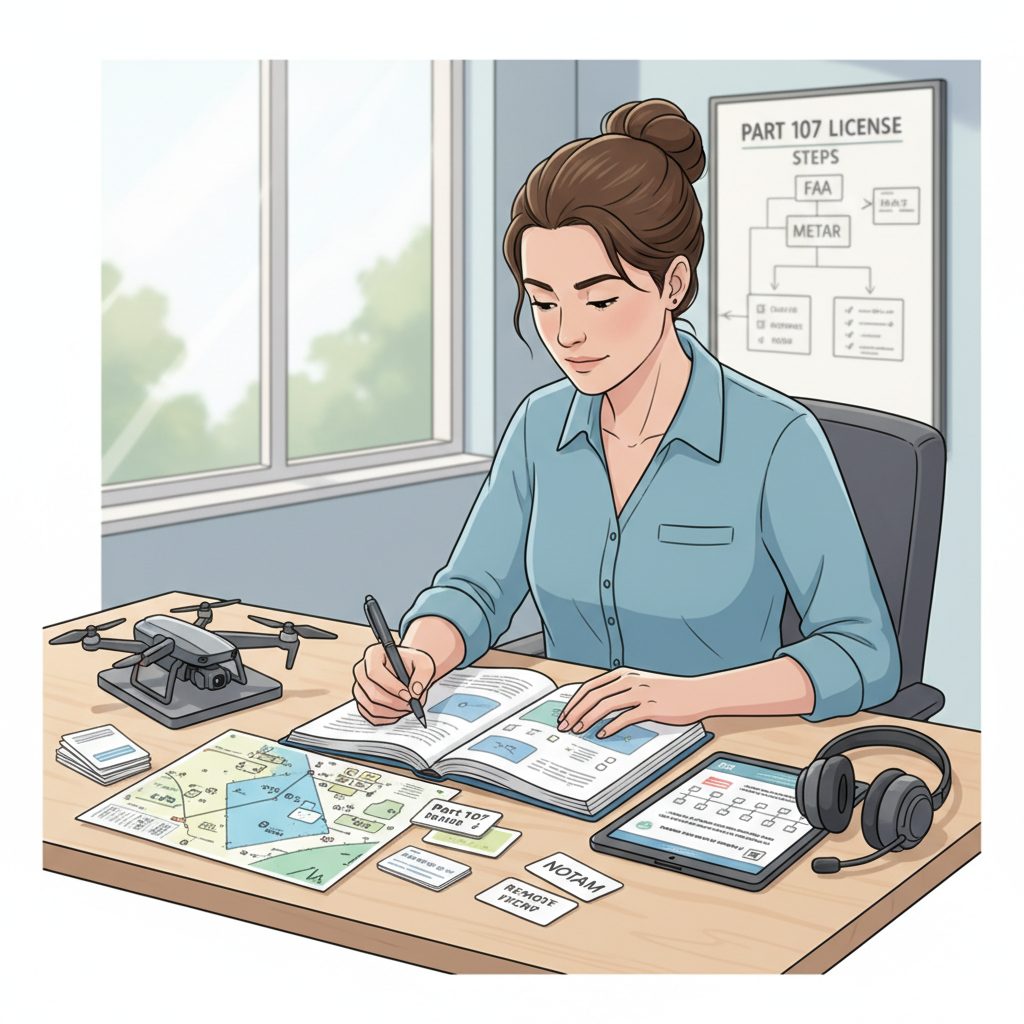
Preparation is key to passing the FAA’s knowledge test. Start by thoroughly studying the FAA’s Part 107 guidelines and regulations, which cover various topics including airspace classifications, flight restrictions, weather, and emergency procedures. The FAA provides official resources, including the “Remote Pilot – Small Unmanned Aircraft Systems Study Guide,” which is an invaluable tool in your preparation.
In addition to the official study materials, consider utilizing online courses or study guides specifically designed for the Part 107 test. Platforms like Remote Pilot 101 and UAV Ground School offer comprehensive courses that not only cover the necessary material but also provide interactive learning experiences.
Taking practice exams is another effective way to familiarize yourself with the test format. Websites and apps are available that simulate the actual test environment, allowing you to gauge your knowledge and identify areas that may require additional study.
Registering for the Test
Once you feel adequately prepared, the next step is to register for the knowledge test. Start by creating an account on the FAA’s Integrated Airman Certification and Rating Application (IACRA) website. This platform is essential for managing your application and accessing your test results.
Next, locate an FAA-approved testing center near you. The FAA provides a list of testing centers on their website, making it easy to find a convenient location. After selecting a center, you will need to schedule your test and pay the associated fee, which typically ranges between $150 and $200.
Be sure to make your appointment well in advance, as slots can fill up quickly, especially in urban areas.
Taking the Knowledge Test
On the day of your test, arrive at the testing center with proper identification, such as a government-issued ID. It’s important to check the requirements of your specific testing center ahead of time to ensure you have all necessary materials. In general, bringing a calculator or pen is recommended, although many centers provide these tools.
During the test, stay calm and focused. Time management is crucial, as you will have a limited amount of time to answer 60 multiple-choice questions. Read each question carefully and eliminate obviously incorrect answers to increase your chances of selecting the correct one.
If you find yourself struggling with a question, it can be helpful to move on and return to it later, ensuring you answer as many questions as possible within the allotted time.
Receiving Your Certificate
After successfully passing the knowledge test, you will receive a Temporary Certificate, which allows you to operate drones commercially immediately. However, your permanent certificate will be mailed to you after processing, which can take several weeks.
Once you receive your permanent certificate, take the time to thoroughly understand the limitations and responsibilities that come with your new license. This includes adhering to operational guidelines, maintaining a current knowledge of regulations, and ensuring the safety of your drone operations.
Continuing Education and Compliance
Obtaining your Part 107 license is just the beginning of your journey as a commercial drone operator. It is essential to stay updated on any changes to regulations, as the FAA periodically revises rules and guidelines to enhance safety and efficiency in the airspace.
Consider enrolling in additional training courses to expand your skills and knowledge base. Many organizations offer specialized training in areas such as aerial photography, surveying, and agriculture, which can enhance your professional capabilities.
Regularly reviewing the FAA guidelines will help you maintain compliance with operational standards. This diligence is crucial not only for your safety but also for the safety of others in the airspace.
Tips for Successful Drone Operations
To ensure success in your drone operations, always conduct a thorough pre-flight check of your drone. This includes inspecting the aircraft for any physical damage, checking battery levels, and ensuring that software updates are installed.
Maintaining situational awareness is another key aspect of safe drone operation. Be aware of your surroundings, adhere to airspace rules, and be mindful of other aircraft. It is also advisable to keep a log of your flights, documenting details such as the date, location, and purpose of each flight. This log will help you track your experience and ensure compliance with FAA regulations.
In addition, consider joining local or online drone communities. Networking with other licensed drone operators can provide valuable insights and tips that will enhance your flying experience.
In conclusion, obtaining your Part 107 drone license involves a series of crucial steps: understanding requirements, preparing for the knowledge test, registering, taking the test, receiving your certificate, and committing to ongoing education. By following these steps, you will be well-equipped to operate your drone safely and legally in the commercial sector. Start your journey today and unlock the vast potential that commercial drone flying has to offer!
Frequently Asked Questions
What is a Part 107 drone license and why do I need one?
A Part 107 drone license, officially known as the Remote Pilot Certificate, is issued by the Federal Aviation Administration (FAA) in the United States. It allows individuals to operate drones commercially for various purposes, such as aerial photography, real estate marketing, or agricultural monitoring. Obtaining this license is essential for compliance with federal regulations, ensuring safety in the airspace, and legitimizing your drone business to clients and customers.
How do I prepare for the Part 107 drone license exam?
To prepare for the Part 107 drone license exam, start by studying the FAA’s Remote Pilot – Small Unmanned Aircraft Systems Study Guide. Consider enrolling in a reputable online course or attending a local workshop that covers essential topics like airspace regulations, weather effects, and drone operations. Additionally, taking practice exams and utilizing online resources can help reinforce your knowledge and boost your confidence before the test day.
Which documents do I need to bring to the Part 107 exam?
When attending the Part 107 exam, you need to bring a government-issued photo ID, such as a driver’s license or passport, to verify your identity. Additionally, it’s helpful to have any study materials or notes, though they are not permitted during the exam itself. If you have previously held a medical certificate, bringing that documentation can also be beneficial, although it’s not a requirement for the Part 107 test.
Why is it important to maintain your Part 107 drone license?
Maintaining your Part 107 drone license is crucial for ensuring ongoing compliance with FAA regulations and for your reputation as a professional drone operator. The license must be renewed every two years, which involves passing a recurrent knowledge test to confirm your understanding of updated regulations and safety practices. Keeping your certification current not only protects you legally but also enhances your credibility with clients and partners in the drone industry.
What are the best resources for studying for the Part 107 exam?
Some of the best resources for studying for the Part 107 exam include the FAA’s official study guide, online courses from platforms like Udemy or Drone Pilot Ground School, and various mobile apps that offer practice questions and quizzes. Additionally, joining online forums or local drone clubs can provide valuable insights and tips from experienced pilots who have successfully passed the exam. Combining these resources will give you a well-rounded understanding of the material and increase your chances of success.
References
- https://www.faa.gov/uas/commercial_operators/part_107/
- https://www.faa.gov/uas/getting_started/
- https://www.nasa.gov/feature/nasa-and-faa-join-forces-to-promote-safe-drone-operations
- https://en.wikipedia.org/wiki/Part_107
- https://www.suasnews.com/2021/08/what-is-the-faa-part-107-drone-licensing-process/
- https://www.uvm.edu/extension/agriculture/faq/drone-licensing-faa-part-107
- https://www.nationalgeographic.com/science/article/drone-licensing-faa-part-107-guide
- https://www.dronepilotgroundschool.com/faa-part-107/
- https://www.aopa.org/news-and-media/all-news/2021/september/23/what-you-need-to-know-about-faas-part-107-drone-licensing
