
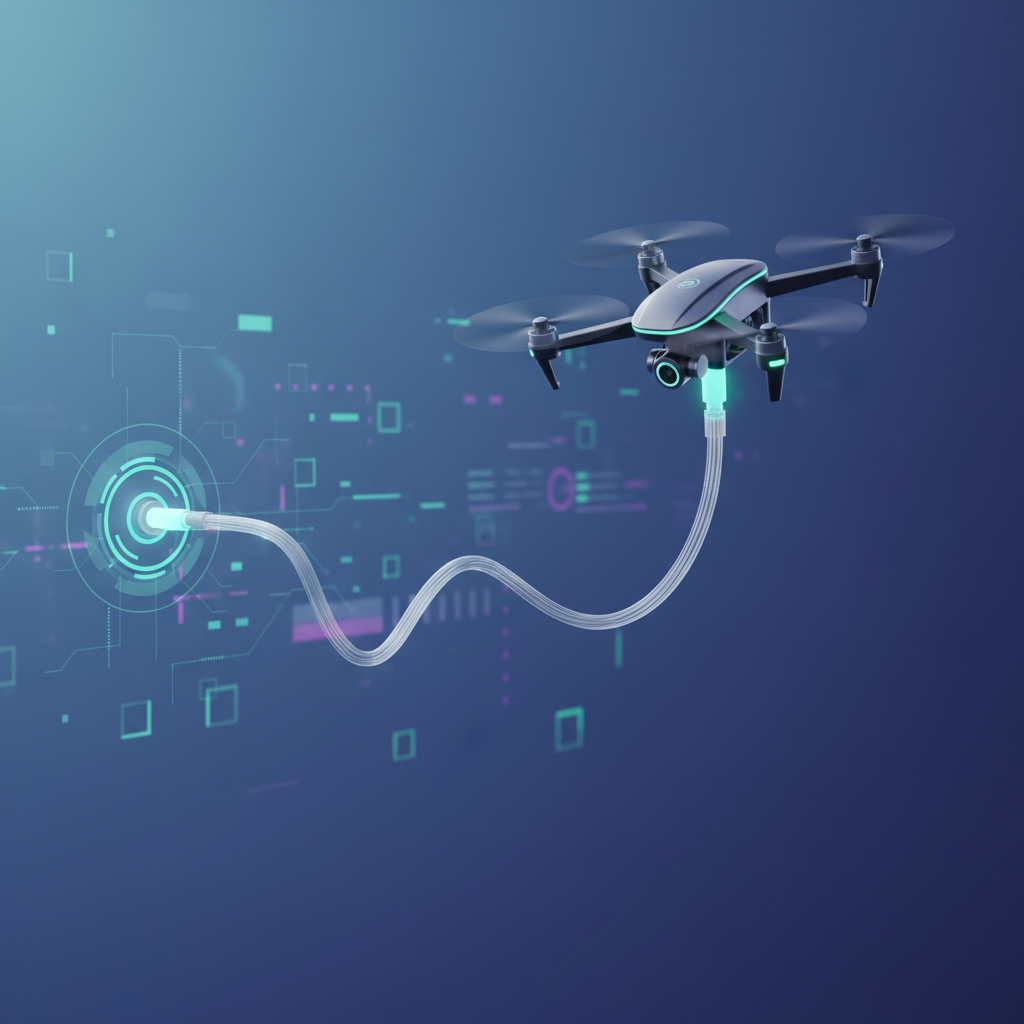
Fiber optic drones operate by utilizing advanced fiber optics technology to transmit data in real-time, facilitating high-speed communication and enhanced data collection. These drones are equipped with fiber optic cables that ensure efficient data transfer, making them ideal for a variety of applications such as surveillance, infrastructure inspection, and environmental monitoring. By combining drone technology with fiber optics, operators can achieve unprecedented levels of data accuracy and operational efficiency.
Understanding Fiber Optics

Fiber optics is a technology that employs light signals to transmit data over long distances with minimal signal degradation. At the core of fiber optics are thin strands of glass or plastic, known as optical fibers, which are surrounded by a layer called cladding. This core and cladding structure is designed to reflect light within the core, thereby minimizing signal loss and allowing for high-bandwidth data transmission. The use of multiple light wavelengths enables fiber optics to carry vast amounts of data simultaneously, making it a preferred choice for telecommunications and data networks. Fiber optics are not only known for their speed but also for their immunity to electromagnetic interference, which enhances the reliability of data transmission in challenging environments.
The Role of Drones in Data Collection

Drones play a pivotal role in modern data collection by offering aerial perspectives that significantly enhance the quality and scope of inspections. Unlike traditional ground-based methods, drones can quickly survey large areas and gather data from vantage points that may be difficult or dangerous to reach. For example, in the energy sector, drones equipped with high-resolution cameras and sensors can inspect power lines, wind turbines, and oil rigs, providing real-time imagery and data analytics. This capability allows for timely maintenance and reduces downtime, ultimately leading to cost savings. Moreover, drones can cover terrain that is inaccessible by vehicles, such as rugged mountains or densely populated urban environments, making them indispensable tools for sectors such as agriculture, construction, and emergency response.
How Fiber Optic Technology Integrates with Drones
The integration of fiber optic technology into drone systems is a game-changer, as fiber optic cables are both lightweight and flexible. This characteristic allows for easy incorporation into various drone designs without significantly increasing weight or reducing flight time. Fiber optics support real-time data sharing and communication, enabling drones to transmit high-definition video feeds or large datasets back to operators instantaneously. For instance, a drone conducting a bridge inspection can relay live images to engineers on the ground, facilitating immediate analysis and decision-making. This integration not only enhances operational efficiency but also improves the safety and effectiveness of inspections, as it reduces the need for human presence in potentially hazardous locations.
Applications of Fiber Optic Drones
The applications of fiber optic drones extend across multiple industries, showcasing their versatility and effectiveness. In infrastructure inspections, these drones are employed to assess the integrity of bridges, power lines, and pipelines. For example, utility companies utilize drones equipped with fiber optic technology to perform thermal imaging of power lines, identifying hotspots that may indicate electrical failures. In environmental monitoring, fiber optic drones are used for wildlife tracking and habitat assessments, providing researchers and conservationists with critical data without disturbing the ecosystem. Additionally, in disaster management, these drones can be deployed to survey areas affected by natural disasters, offering crucial information for emergency responders and recovery efforts.
Advantages of Using Fiber Optic Drones
The advantages of utilizing fiber optic drones are manifold, primarily revolving around high data transmission speeds and reliability. High-speed data transfer allows for more efficient data collection and analysis, enabling quicker response times in critical situations. For instance, in the event of a natural disaster, rapid imaging and data relay can significantly improve the effectiveness of search and rescue operations. Furthermore, fiber optic technology reduces the risk of data loss compared to traditional wireless methods, which can be susceptible to interference and signal degradation. This reliability is paramount in sectors such as telecommunications and public safety, where accurate and timely data can have far-reaching consequences.
Challenges and Limitations
Despite their many advantages, there are challenges associated with fiber optic drones that operators must consider. One major limitation is the fragility of fiber optic cables, which can be easily damaged if not handled with care. This fragility necessitates the use of robust protective casings and careful operational protocols, potentially increasing the cost and complexity of drone deployments. Additionally, the requirement for specialized equipment to manage and maintain fiber optic systems may limit accessibility for some operators. For instance, organizations without the necessary technical expertise or financial resources may find it challenging to implement fiber optic drone technology effectively.
Future Trends in Fiber Optic Drone Technology
The future of fiber optic drone technology is poised for significant advancements, particularly in the areas of miniaturization and artificial intelligence integration. As technology progresses, we can expect the development of more compact and efficient fiber optic systems that can be seamlessly integrated into even smaller drone designs. This miniaturization could enhance the operational capabilities of drones in confined spaces or sensitive environments. Furthermore, the increased integration of artificial intelligence and machine learning algorithms will enable smarter data analysis and decision-making. Drones equipped with AI could autonomously identify anomalies during inspections or predict maintenance needs based on historical data, transforming the landscape of data collection and analysis.
In conclusion, fiber optic drones represent a significant advancement in data collection technology, offering numerous benefits across various fields. They combine the speed and reliability of fiber optics with the versatility of drones, leading to enhanced operational efficiencies and improved data accuracy. As technology continues to evolve, we can expect even more innovative applications and enhanced capabilities in the future. By exploring the potential of fiber optic drones, organizations can better understand how to leverage this technology to meet their specific needs, ultimately staying ahead in a rapidly changing technological landscape.
Frequently Asked Questions
What are fiber optic drones and how do they work?
Fiber optic drones are unmanned aerial vehicles (UAVs) equipped with fiber optic technology to transmit data in real-time. These drones utilize fiber optic cables to send high-bandwidth data, such as video and sensor information, back to a control station with minimal latency. This technology enhances communication reliability and speed, making fiber optic drones ideal for applications such as surveillance, infrastructure inspection, and disaster response.
How are fiber optic drones different from traditional drones?
Fiber optic drones differ from traditional drones primarily in their data transmission capabilities. While standard drones often rely on radio frequencies for communication, fiber optic drones use physical fiber optic cables, allowing for higher bandwidth and increased resistance to electromagnetic interference. This results in clearer video feeds and faster data transfer, which is crucial for tasks that require real-time monitoring and data analysis.
Why would I choose a fiber optic drone for my surveying needs?
Choosing a fiber optic drone for surveying offers several advantages, particularly in terms of data quality and transmission speed. The use of fiber optics allows for the transmission of high-resolution imagery and detailed sensor data without degradation, even over long distances. This capability is especially beneficial in large-scale projects where accurate and timely data is essential, enabling professionals to make informed decisions quickly.
What are the best applications for fiber optic drones?
Fiber optic drones are best suited for applications that require high data transmission rates and real-time analytics. They excel in fields such as telecommunications, where they can monitor and assess fiber optic networks, as well as in search and rescue operations where live video feeds can provide critical situational awareness. Additionally, they are effective for environmental monitoring, infrastructure inspections, and defense applications, where quality data is paramount.
Which industries can benefit the most from using fiber optic drones?
Several industries can greatly benefit from fiber optic drones, including telecommunications, construction, agriculture, and emergency services. In telecommunications, they facilitate the inspection and maintenance of fiber networks. In construction and agriculture, they aid in site surveying and monitoring crop health. Emergency services leverage fiber optic drones for rapid assessment and real-time data during critical situations, enhancing response times and operational efficiency.
References
- https://en.wikipedia.org/wiki/Fiber_optic_communication
- https://www.sciencedirect.com/science/article/pii/S2352864814000189
- https://www.nist.gov/news-events/news/2019/02/connecting-fiber-optics-drones
- https://www.itu.int/en/ITU-T/focusgroups/5g/Documents/FG-5G-D1-WP2-5G-Drones.pdf
- https://www.researchgate.net/publication/331437036_Fiber_Optic_Drones_for_Communication_and_Sensing
- https://www.nasa.gov/mission_pages/drones/overview/index.html
- https://www.itu.int/en/ITU-T/focusgroups/5g/Documents/FG-5G-D1-WP2-5G-Drones.pdf
