
To obtain a 107 drone license, you need to pass the FAA’s Knowledge Test and meet specific eligibility requirements. This license, formally known as the Part 107 Remote Pilot Certificate, allows you to operate drones for commercial purposes legally. As the demand for drone services continues to rise across various industries, obtaining this certification can open doors to numerous opportunities, from aerial photography to agricultural monitoring. This guide will break down the necessary steps, resources, and tips to help you successfully acquire your license.
Understanding the 107 Drone License

The Part 107 license is essential for anyone wishing to engage in commercial drone operations in the United States. It was established by the Federal Aviation Administration (FAA) to regulate the use of unmanned aircraft systems (UAS) in commercial settings, ensuring safety and compliance with aviation standards. The importance of this license cannot be overstated; it not only legitimizes your operations but also provides you with the knowledge needed to operate safely in the national airspace.
To be eligible for the Part 107 license, you must meet several criteria. First, you must be at least 16 years old. Second, you must be a U.S. citizen or lawful permanent resident. Lastly, you must be able to demonstrate that you are in a physical and mental condition that allows you to operate a drone safely. This may involve obtaining a medical certificate or self-certifying that you do not have any disqualifying medical conditions.
Preparing for the FAA Knowledge Test
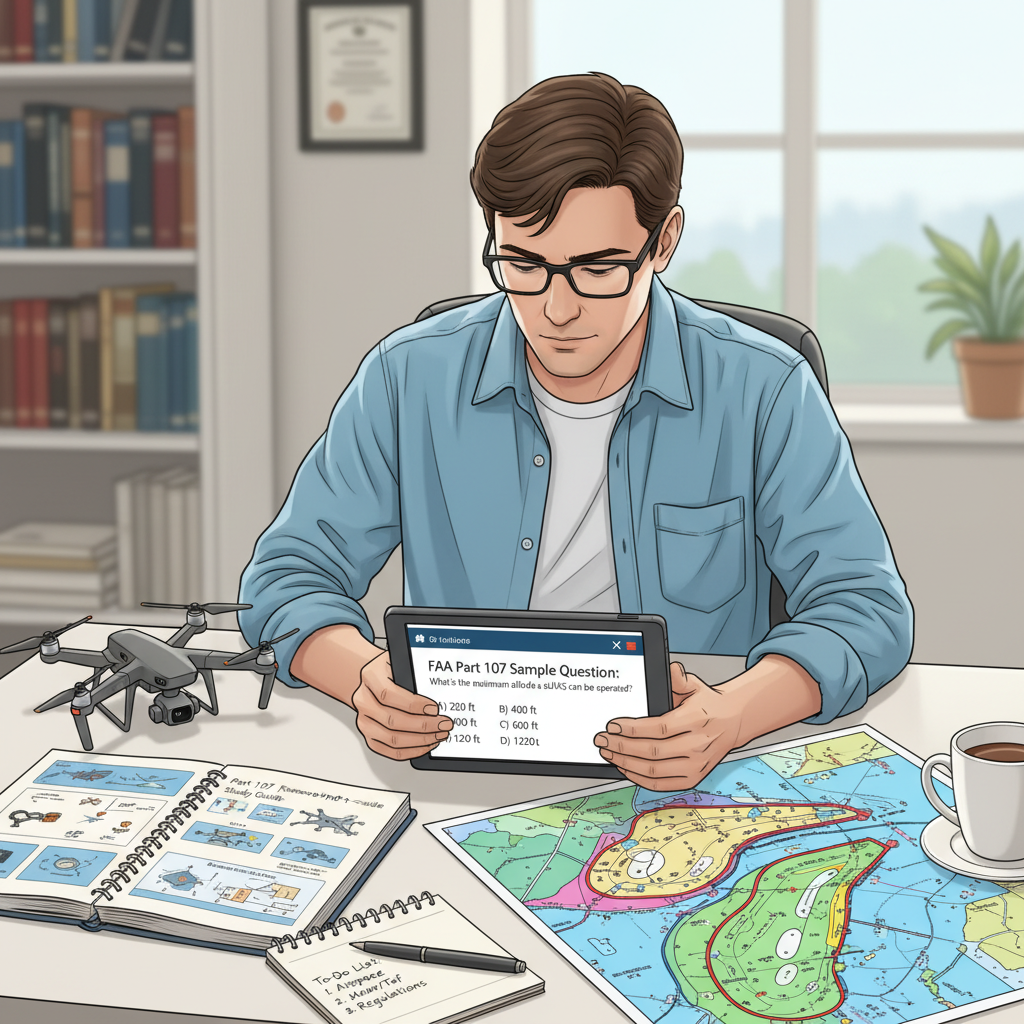
The FAA Knowledge Test covers a range of key topics crucial for safe drone operation. These include airspace classification, weather conditions, drone operations, and regulations. Understanding airspace is vital, as it helps you navigate where you can and cannot fly. Weather knowledge is equally important, as it influences flight safety and decision-making.
To prepare effectively, consider utilizing a variety of study materials. Online courses, such as those offered by organizations like Remote Pilot 101 or UAV Coach, provide comprehensive training tailored specifically for the Part 107 exam. Additionally, the FAA provides free resources, including the “Remote Pilot – Small Unmanned Aircraft Systems Study Guide,” which outlines the test’s content and format. Using these resources, you can equip yourself with the necessary knowledge and confidence to succeed.
Scheduling Your Knowledge Test
Once you feel prepared, the next step is to schedule your FAA Knowledge Test. To find an FAA-approved testing center near you, visit the FAA’s official website or the PSI Online website, which handles the scheduling and administration of the test. You can search for testing locations by entering your zip code, making it easy to find a center that is convenient for you.
After identifying a testing center, the next step is to register for the test. You will need to create an account on the PSI Online portal, select your preferred testing location, and choose an available date and time. Additionally, it is essential to confirm your appointment, as some centers may require a confirmation number or email. This ensures you have a designated time slot and helps avoid any potential scheduling conflicts.
Taking the Knowledge Test
On the day of the test, it is crucial to be well-prepared. Bring two forms of identification, one of which must be a government-issued photo ID. Arrive at the testing center early to allow yourself time to settle in and reduce any test anxiety. Familiarize yourself with the test environment and take a moment to breathe deeply and focus your thoughts.
The test consists of 60 multiple-choice questions that must be completed in 120 minutes. A minimum score of 70% is required to pass. Understanding the scoring system is vital; each question is worth one point, and there is no penalty for incorrect answers. Therefore, it is advisable to answer all questions, even if you are unsure about some, as guessing can increase your chances of achieving a passing score.
Applying for Your Remote Pilot Certificate
After passing the Knowledge Test, you can apply for your Remote Pilot Certificate through the FAA’s Integrated Airman Certification and Rating Application (IACRA) system. This online platform streamlines the application process, allowing you to submit your information and track your application status.
To complete your application, you will need to provide personal information, including your test results and proof of identity. Additionally, you may need to submit a copy of your driver’s license or passport, as well as an FAA Form 8710-13, which is the application for a remote pilot certificate. Be prepared to pay the associated fees, which are typically around $160. Once your application is submitted, the FAA will review it, and you will receive your Remote Pilot Certificate by mail if approved.
Maintaining Your 107 Drone License
Obtaining your 107 drone license is just the beginning; maintaining it requires ongoing commitment. The FAA mandates that you renew your certificate every 24 months. This renewal process includes completing a recurrent knowledge test, which helps ensure that you remain informed about the latest regulations, safety protocols, and technological advancements in the drone industry.
Staying updated on changes in drone laws and regulations is also crucial for compliance. The FAA frequently adjusts its policies based on advancements in technology and safety data. Participating in continuing education courses or workshops can be beneficial. Many organizations offer resources that keep you informed and enhance your skills as a drone pilot.
Additional Resources for Drone Pilots
Several organizations and websites provide valuable resources for aspiring and current drone pilots. The FAA’s official website is an excellent starting point, offering updates on regulations, safety guidelines, and educational materials. Additionally, online communities like the Drone Pilot Network and the UAV Coach forums allow you to connect with other pilots, share experiences, and gain insights from industry veterans.
For those looking to further enhance their skills, consider pursuing additional certifications. Programs like the Remote Pilot Certificate Renewal Training or specialized courses in aerial photography, surveying, or drone maintenance can provide significant value. These opportunities not only expand your knowledge but also enhance your marketability in a competitive field.
In conclusion, obtaining your 107 drone license involves a straightforward process of study, testing, and application. By following the outlined steps and utilizing the resources provided, you can become a certified drone pilot and open up new opportunities in the field. The journey to certification is not only about compliance but also about embracing a growing industry filled with potential. Start your journey today!
Frequently Asked Questions
What is a 107 drone license and why do I need one?
The 107 drone license, officially known as the Part 107 Remote Pilot Certificate, is issued by the Federal Aviation Administration (FAA) in the United States. It allows individuals to operate drones commercially, ensuring compliance with safety regulations and operational guidelines. Obtaining this license is essential for anyone looking to use drones for business purposes, such as aerial photography, surveying, or inspections, as it legitimizes their operations and helps avoid legal penalties.
How do I apply for a 107 drone license?
To apply for a 107 drone license, you must first pass the FAA Aeronautical Knowledge Test at an approved knowledge testing center. The exam covers various topics, including airspace regulations, weather, and drone operations. After passing the test, you need to complete a TSA security background check and submit your application through the FAA’s Integrated Airman Certification and Rating Application (IACRA) system to receive your certificate.
What are the requirements to obtain a 107 drone license?
To obtain a 107 drone license, you must be at least 16 years old, be able to read, write, and speak English, and pass the FAA Aeronautical Knowledge Test. Additionally, you must not have any disqualifying criminal offenses and must be in a physical and mental condition that allows you to operate a drone safely. Proper preparation and study of the FAA’s guidelines will help you meet these requirements successfully.
What is the best way to prepare for the 107 drone license test?
The best way to prepare for the 107 drone license test is to utilize a combination of online resources, study guides, and practice exams. Many flight schools and online platforms offer courses specifically tailored to the FAA Part 107 exam that cover essential topics in depth. Additionally, reviewing the FAA’s official study materials and taking practice tests can significantly enhance your understanding and confidence before the actual exam.
How long does it take to receive my 107 drone license after passing the test?
After passing the FAA Aeronautical Knowledge Test, you can expect to receive your 107 drone license within 3 to 6 weeks. The timeframe can vary depending on the processing time of the FAA, which includes the TSA security background check. It’s advisable to monitor your application status online through the IACRA system, where you can also access updates related to your certification progress.
References
- https://www.faa.gov/uas/getting_started/part_107/
- https://www.faa.gov/uas/getting_started/
- https://www.nasa.gov/aeroresearch/technology/aircraft/drone-research.html
- https://en.wikipedia.org/wiki/Drone_license
- https://www.usc.edu/libraries/locations/usc-robotics-research-lab/drone-research/
- https://www.dronepilotgroundschool.com/faq/what-is-a-part-107-license/
