
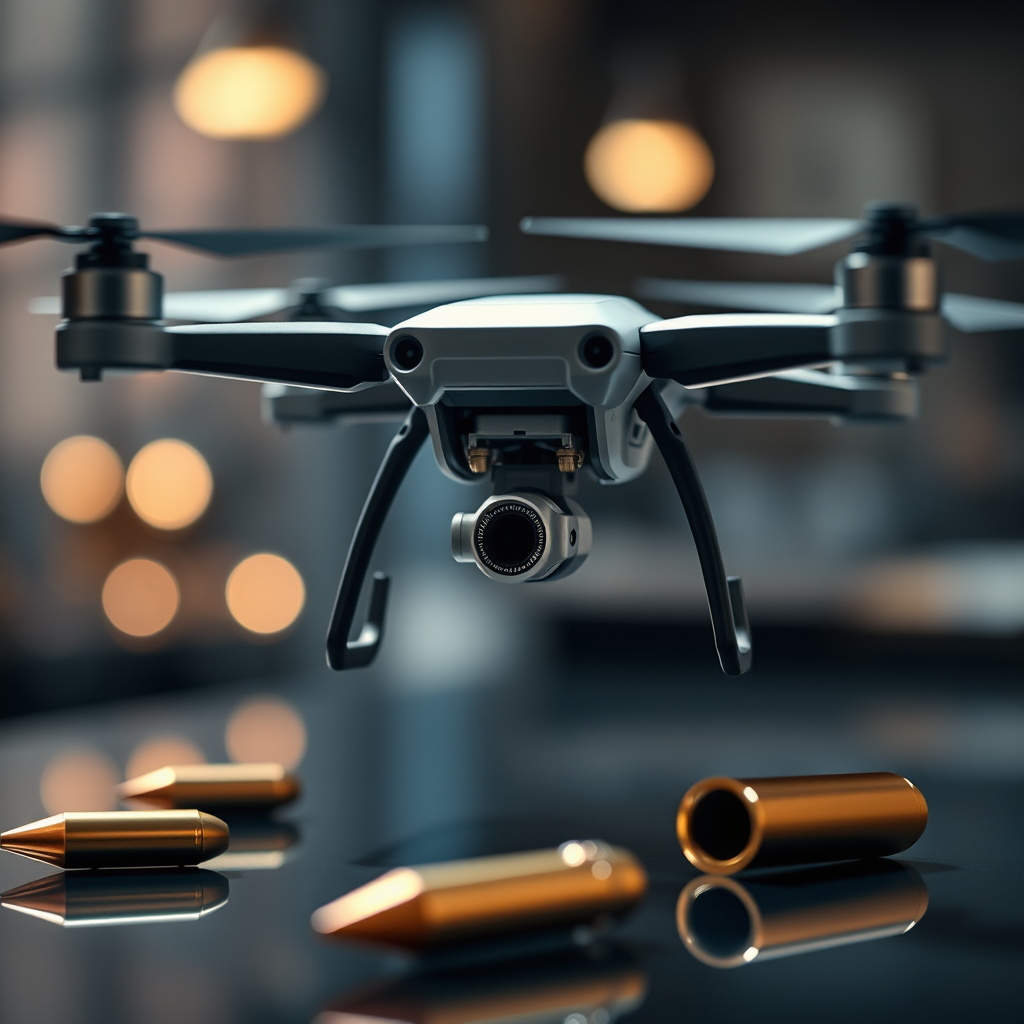
Yes, drones can be equipped to shoot bullets, but this capability raises significant legal, ethical, and technical considerations. As drone technology evolves, the potential for arming these unmanned aerial vehicles (UAVs) presents both innovative opportunities and daunting challenges. This article delves into the complexities surrounding the use of drones for armed purposes, providing a comprehensive overview of the implications for military, law enforcement, and civilian sectors.
The Basics of Drone Armament
Drones can be modified to carry and fire firearms. This capability has been explored in various military applications, with advancements in technology enabling the integration of weapon systems into drone platforms. Military drones, such as the MQ-1 Predator and MQ-9 Reaper, have been equipped with precision-guided munitions for targeted strikes. Additionally, commercial drones can be retrofitted with firearms, although this practice is less widespread due to regulatory and ethical concerns.
Various military and commercial drones have been tested for this capability. Research and development initiatives have seen prototypes capable of firing projectiles autonomously or remotely controlled by an operator. In some cases, drones are outfitted with non-lethal weapons for crowd control, but the potential for lethal applications raises questions about governance and accountability.
Legal Implications of Armed Drones
International laws regulate the use of armed drones in conflict. The use of armed drones must comply with international humanitarian law (IHL), which governs the conduct of armed conflict and seeks to protect those not participating in hostilities. The principles of distinction, proportionality, and necessity are critical to ensuring that any use of force is legally justified. The legality of drone strikes, particularly those conducted outside active conflict zones, has been a contentious issue, leading to calls for clearer guidelines and accountability.
Domestic laws vary widely by country regarding civilian drone weaponization. In the United States, for instance, the Federal Aviation Administration (FAA) imposes strict regulations on drone operations, including prohibitions on arming UAVs without special permissions and oversight. Other countries have differing stances; some may allow military drones to engage in combat operations, while others prohibit the weaponization of civilian drones altogether. The lack of a unified international framework for regulating armed drones complicates the landscape and raises concerns about arms proliferation and misuse.
Ethical Considerations
The use of drones to shoot bullets raises moral questions about remote warfare. One of the primary ethical dilemmas is the detachment of operators from the battlefield. Unlike traditional combat, where soldiers face direct risk, drone operators can engage in warfare from thousands of miles away, leading to debates about the desensitization to violence and the implications for just war theory.
Concerns over civilian casualties and accountability in drone strikes are paramount. High-profile incidents of unintended civilian deaths from drone strikes have sparked outrage and calls for greater transparency and oversight. The challenge lies in ensuring that drone operators can accurately discriminate between combatants and non-combatants, as the consequences of errors can be devastating. Ethical considerations also extend to the psychological impact on drone operators, who may experience trauma despite being physically removed from conflict zones.
Technical Challenges
Integrating firearms with drone technology presents engineering hurdles. The design of drones must accommodate not only the weight and recoil of firearms but also ensure stability and control during flight. Modifications to existing drone platforms require rigorous testing to maintain safety and operational reliability. Additionally, the development of dual-use technologies that can be employed for both civilian and military purposes complicates the technical landscape, necessitating careful consideration of how such technologies are regulated.
The need for accurate targeting systems to ensure precision and safety is critical. The integration of advanced targeting technologies, such as artificial intelligence and machine learning, could enhance the effectiveness of armed drones while also raising questions about the reliability of automated decision-making in life-and-death situations. As technology advances, the challenge will be to balance innovation with the imperative of accountability and ethical considerations.
Current Applications and Developments
Military forces around the world are exploring armed drone capabilities. Countries such as the United States, Israel, and China have developed sophisticated drone programs capable of conducting precision strikes in combat zones. Innovations in drone warfare are reshaping modern military strategies, emphasizing the need for countries to adapt to this evolving landscape. Furthermore, advancements in drone technology may lead to the proliferation of armed drones among non-state actors, raising security concerns on a global scale.
Some law enforcement agencies are also considering drones for tactical operations. Drones equipped with non-lethal weapons have been deployed in crowd control scenarios, while discussions around arming law enforcement drones with firearms continue to surface. This potential shift raises questions about the appropriateness of using armed drones for domestic policing, with advocates citing enhanced safety and efficiency and critics warning of the risks of militarizing the police force.
Future Prospects
Advances in drone technology may lead to more sophisticated weapon systems. The integration of artificial intelligence could enable drones to conduct autonomous operations, enhancing their operational capabilities but also introducing new ethical dilemmas. As technology continues to evolve, the potential for increased accuracy and reduced collateral damage may provide a pathway for armed drones to be used in more controlled and responsible ways.
Ongoing debates about regulation and ethical use will shape the future landscape. Stakeholders from government, industry, and civil society must engage in dialogues to establish comprehensive frameworks that govern the use of armed drones. Discussions about accountability, transparency, and international cooperation are essential for addressing the challenges posed by this emerging technology.
In conclusion, while drones can indeed shoot bullets, the implications of such technology are profound. The legal, ethical, and technical dimensions of armed drones require careful consideration as we navigate this rapidly evolving field. As the intersection of technology and warfare continues to develop, it is crucial to engage in informed discussions that balance innovation with responsibility, ensuring that the future of drone technology aligns with societal values and international norms.
Frequently Asked Questions
Can drones be equipped to shoot bullets?
While it is technically possible to equip drones with firearms or bullet delivery systems, this practice is highly restricted and illegal in many countries. Drones with the capability to shoot bullets pose serious safety and ethical concerns, leading to stringent regulations governing their use. Additionally, the technology for effectively integrating firearms into drones is still in its infancy, making it impractical for widespread application.
What are the legal implications of using armed drones?
The legal implications of using armed drones can vary significantly by country and jurisdiction. In most places, deploying drones with firearms is strictly prohibited without specific government authorization. Engaging in such activities could lead to severe legal consequences, including criminal charges, fines, or imprisonment, as well as potential liability for any harm caused.
How are drones currently used in military operations?
Drones are currently used in military operations primarily for surveillance, reconnaissance, and targeted strikes. Unmanned Aerial Vehicles (UAVs) like the MQ-9 Reaper can carry precision-guided munitions rather than traditional bullets, allowing for accurate targeting without risking pilot lives. These applications are heavily regulated and are typically conducted under strict military protocols to minimize collateral damage.
Why are drones considered a controversial technology in warfare?
Drones are considered controversial in warfare due to ethical concerns surrounding their use, including issues of accountability, civilian casualties, and the psychological impact on communities. Additionally, the potential for misuse—such as using drones for unlawful targeting or in domestic policing—raises significant moral questions and has led to debates over regulations and governance surrounding drone technology.
What alternatives exist for non-lethal drone applications?
There are several non-lethal drone applications that are gaining traction, including aerial surveillance, search and rescue operations, and delivering humanitarian aid. Drones can also be equipped with non-lethal deterrents, such as bean bag rounds or pepper spray canisters, for law enforcement purposes. These alternatives focus on enhancing safety and efficiency without the lethal implications associated with armed drones.
References
- https://en.wikipedia.org/wiki/Drone_usage_in_military_operations
- https://www.bbc.com/news/world-us-canada-46115495
- https://www.reuters.com/article/us-usa-drones-idUSKCN1VJ1F7
- https://www.nytimes.com/2021/04/29/us/politics/drones-military-weapons.html
- https://www.theguardian.com/us-news/2021/jun/28/us-drones-military-weapons
- https://www.lawfareblog.com/armed-drones-and-law-war
- https://fas.org/sgp/crs/natsec/R45119.pdf
- https://www.csis.org/analysis/armed-drones-and-us-national-security
- https://www.rand.org/pubs/perspectives/PE306.html
