
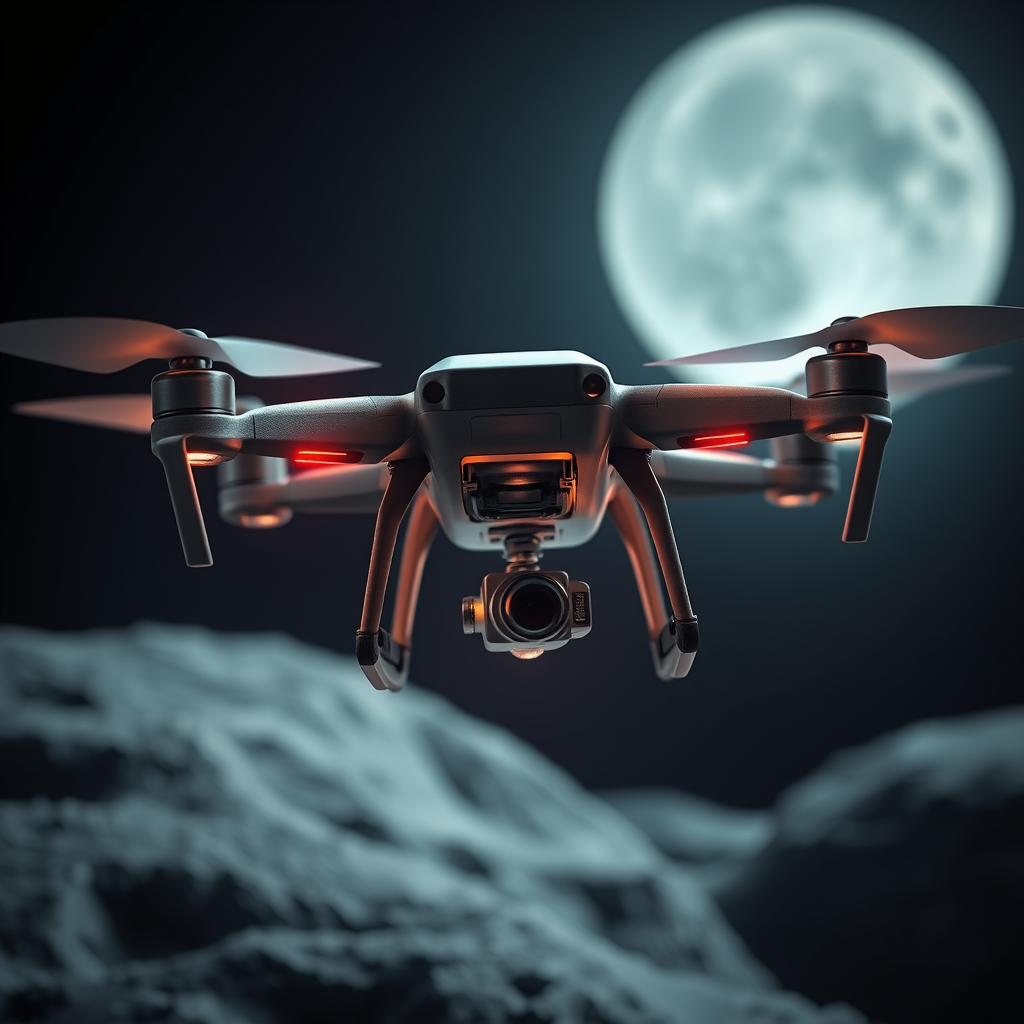
Yes, a drone can fly on the moon, but there are significant challenges that need to be addressed. The moon’s unique environment, characterized by its low gravity and absence of atmosphere, poses both intriguing opportunities and formidable obstacles for drone technology. As space agencies and private companies increasingly turn their attention to lunar exploration, understanding these nuances becomes crucial in determining how drones can be effectively utilized in such an extraterrestrial setting.
Understanding the Lunar Environment
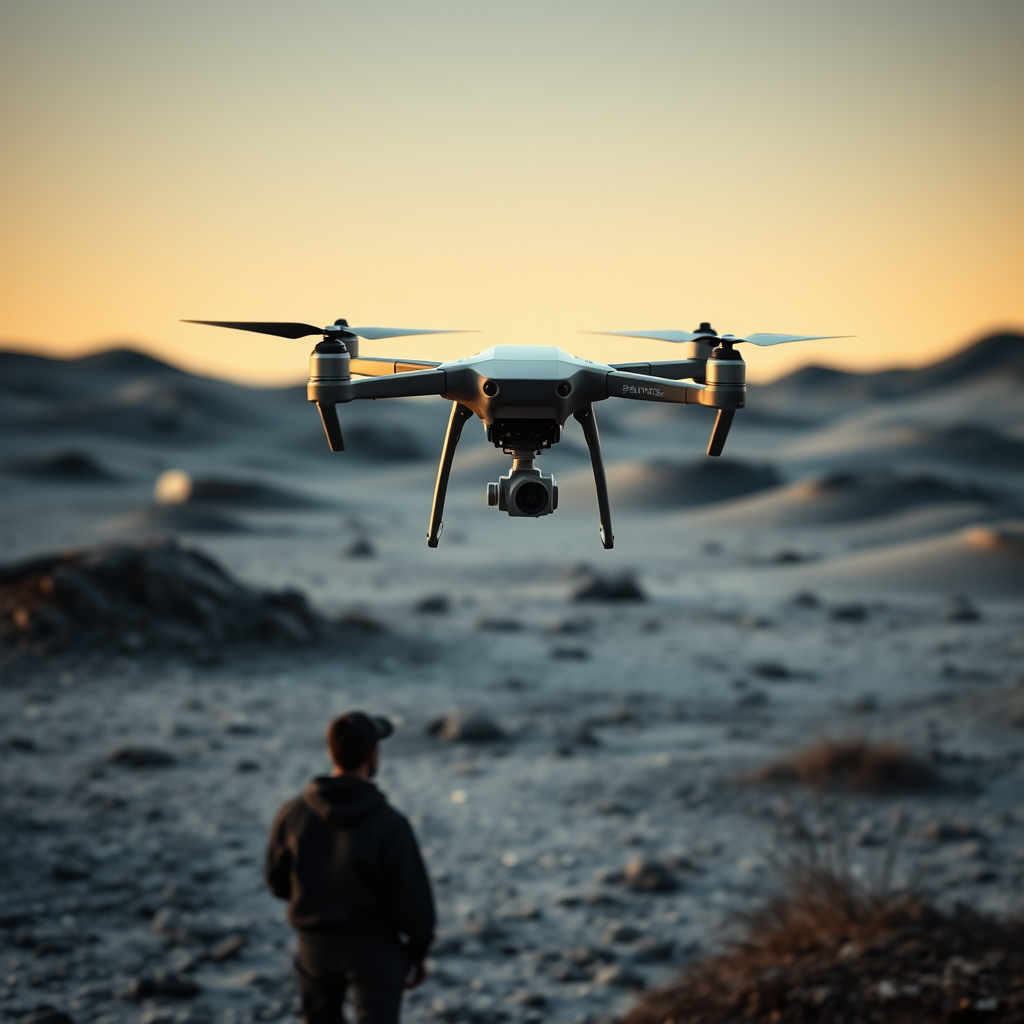
The lunar environment presents a range of characteristics that dramatically differ from those on Earth. One of the most notable features is the moon’s low gravity, which is only about 1/6th that of Earth. This reduced gravitational pull affects the flight dynamics of any aerial vehicle, including drones. For instance, drones designed for Earth typically rely on lift generated by rotor blades moving through air; however, in the moon’s gravitational field, the drone would require far less thrust to achieve flight.
Moreover, the moon has no atmosphere, which poses a significant challenge for traditional propulsion methods. On Earth, drones utilize the aerodynamic lift created by pushing air downwards. In the absence of an atmosphere, this method becomes ineffective. Consequently, lunar drones must be designed with alternative propulsion systems that can operate under these conditions. This unique environment also means that drones will need to rely on advanced technologies and materials to navigate the harsh lunar surface and its extreme temperatures.
Design Considerations for Lunar Drones
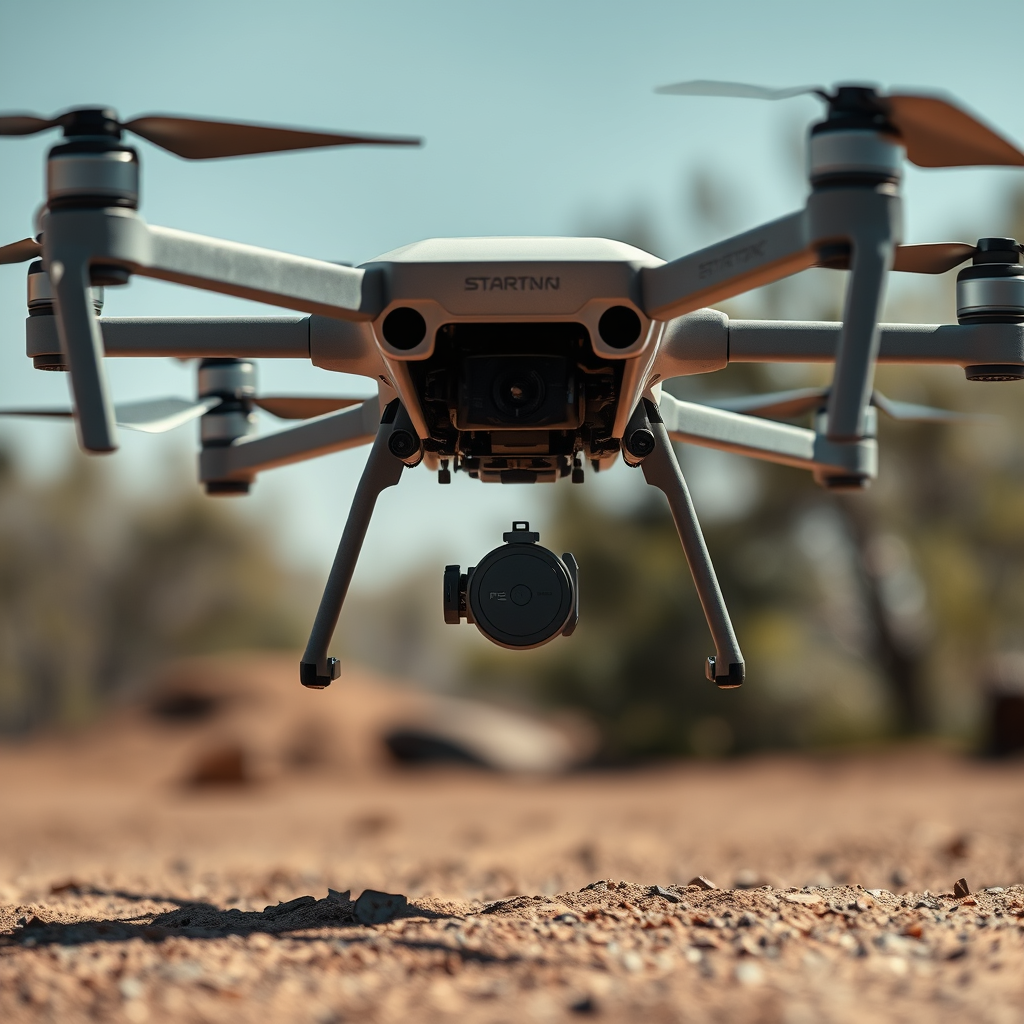
The design of drones intended for lunar exploration requires careful consideration of several critical factors. Firstly, drones must be lightweight to maximize their efficiency in low gravity while being robust enough to endure the moon’s harsh conditions, including extreme temperature fluctuations and radiation exposure. Materials such as carbon fiber and advanced composites could be employed to achieve this balance of strength and weight.
Secondly, alternative propulsion systems are essential. Given the lack of air, traditional rotor-based designs may not be suitable. Instead, engineers might explore options such as electric ion propulsion systems or even nuclear-powered drones that can generate the necessary thrust without relying on air. These innovative propulsion methods would allow drones to traverse the lunar surface effectively and carry out their intended missions.
Additionally, solar power could play a crucial role in the design of lunar drones. With the moon receiving an abundance of sunlight during its two-week-long lunar day, solar panels could provide a sustainable energy source for drones, enabling them to operate autonomously for extended periods. This renewable energy approach would enhance the feasibility of long-term missions and reduce the need for frequent resupply from Earth.
Potential Applications of Drones on the Moon
The applications for drones on the moon are vast and varied, offering significant potential for enhancing our understanding of lunar geology, topography, and resources. One primary application is reconnaissance and mapping of the lunar terrain. Drones equipped with high-resolution cameras and sensors could gather data on the moon’s surface, helping scientists identify areas of interest for further exploration or resource extraction.
Moreover, drones could assist in the transportation of materials crucial for establishing future lunar bases or missions. For instance, they could facilitate the movement of construction materials or scientific instruments between different locations on the moon, significantly improving the efficiency of lunar operations. This capability would be particularly valuable as plans for permanent lunar habitats progress, allowing for the construction of infrastructure necessary for sustained human presence.
Additionally, drones could play a role in conducting experiments and collecting samples from hard-to-reach areas. Their ability to fly over rugged terrain or into craters could provide scientists with insights into the moon’s composition, history, and potential resources, such as water ice, which is critical for future lunar colonization efforts.
Challenges of Operating Drones on the Moon
Despite the exciting possibilities, operating drones on the moon comes with a host of challenges that must be addressed. One of the primary obstacles is communication delays due to the considerable distance from Earth. The average distance between the Earth and the moon is about 238,855 miles, resulting in a communication lag of approximately 1.28 seconds for signals to travel one way. This delay can hinder real-time control and decision-making, necessitating the development of autonomous systems capable of operating independently without constant oversight from mission control.
Furthermore, the moon’s surface is covered in a fine, abrasive dust known as regolith, which can pose significant risks to drone components. Dust can accumulate on sensors and moving parts, potentially leading to malfunctions or decreased operational efficiency. Engineers will need to devise effective dust mitigation strategies, such as protective coverings or self-cleaning mechanisms, to ensure the longevity and reliability of lunar drones.
Additionally, the extreme temperature variations on the moon—ranging from scorching heat during the day to frigid cold at night—can further complicate drone operations. Materials and components must be carefully selected and tested to withstand these extremes, ensuring that drones can function effectively throughout the lunar day-night cycle.
Notable Projects and Research
Recognizing the potential of drone technology in lunar exploration, NASA and other space agencies are actively pursuing projects that incorporate drones into their missions. One notable initiative is the “Viper” mission, which aims to explore the moon’s south pole in search of water ice. As part of this mission, researchers are conducting tests to evaluate drone capabilities, including their ability to navigate the lunar surface and gather critical data.
Additionally, the European Space Agency (ESA) has proposed the Lunar Gateway, a space station that will orbit the moon and serve as a hub for lunar exploration. Drones could be integrated into this framework, allowing for extensive reconnaissance and resource scouting to support future crewed missions.
Private companies are also contributing to this field, with firms like Astrobotic and Intuitive Machines developing lunar landers and surface operations that may incorporate drone technology. Such collaborations between public and private sectors are expected to accelerate advancements in lunar drone capabilities and broaden the scope of potential applications.
Future of Drones in Lunar Exploration
The future of drones in lunar exploration looks promising, with continued advancements in technology poised to enhance their capabilities. As materials science, propulsion technology, and autonomous navigation systems evolve, drones will likely become increasingly sophisticated, allowing for more complex missions on the moon and beyond.
Moreover, potential collaborations between private companies and space agencies may foster innovation and speed up the development of lunar drones. With commercial interest in lunar resources and exploration on the rise, we can anticipate a surge in funding and research initiatives aimed at overcoming the challenges associated with lunar flight.
As we stand on the brink of a new era in space exploration, the integration of drones into lunar missions could revolutionize our approach to studying the moon. From scouting locations for future bases to conducting scientific research, the possibilities are vast and exciting.
Flying a drone on the moon is not only technically feasible but may soon become an integral part of our exploration efforts. As technology progresses and we address the inherent challenges, lunar drones could play a crucial role in expanding our understanding of the moon and paving the way for future human endeavors in space.
In conclusion, while the idea of flying a drone on the moon is technically feasible, it comes with complex challenges that need to be addressed. As technology progresses, lunar drones may play a crucial role in our exploration of the moon and beyond. Stay updated on advancements in space technology and consider how these innovations could change our understanding of extraterrestrial environments.
Frequently Asked Questions
Can a drone fly on the moon?
Yes, a drone can theoretically fly on the moon, but it would require significant modifications due to the moon’s unique environment. The moon has a very thin atmosphere, about 1/100,000th of Earth’s, which means traditional drones that rely on air for lift would not function as they do on Earth. Engineers would need to design a drone specifically for the moon, possibly utilizing rotor designs that can operate in low atmospheric pressure or employing alternate propulsion methods altogether.
What challenges would a drone face while flying on the moon?
A drone flying on the moon would encounter several challenges, primarily due to the lack of atmosphere and extreme temperatures. The absence of air means that conventional lift mechanisms, such as rotor blades, would be ineffective. Additionally, the lunar surface presents obstacles like dust and rocky terrain, while the wide temperature fluctuations—from -173°C at night to 127°C during the day—would require specialized materials and technology to ensure functionality and battery efficiency.
How could a drone be powered on the moon?
A drone on the moon would likely need to be powered by solar energy, given the abundance of sunlight there. Solar panels could be used to charge batteries during the two-week lunar day, allowing the drone to operate autonomously. Alternatively, nuclear power sources or radioisotope thermoelectric generators could provide a continuous energy supply, particularly during the prolonged lunar night when sunlight is not available.
Why haven’t we sent drones to the moon yet?
The primary reasons drones have not yet been sent to the moon include the high costs associated with lunar missions and the complexities of developing technology suited for the lunar environment. Most lunar missions have focused on rovers and landers, which are better suited for surface exploration. Furthermore, as we continue to innovate in space exploration, future missions may incorporate drones designed for lunar operations, but this requires extensive research and development.
Which technologies are being considered for lunar drone missions?
Several innovative technologies are being explored for potential lunar drone missions, including advanced robotics, autonomous navigation systems, and lightweight materials. Concepts like the use of hybrid propulsion systems, which combine rotor and jet technologies, are also under consideration to achieve flight in the moon’s thin atmosphere. Additionally, improved battery technologies and solar energy systems are critical for ensuring that a lunar drone can operate effectively in its harsh environment.
References
- https://en.wikipedia.org/wiki/Moon_exploration
- https://www.nasa.gov/mission_pages/robotics/overview/index.html
- https://www.sciencedirect.com/science/article/pii/S0094576518300665
- https://www.bbc.com/news/science-environment-55830993
- https://www.nasa.gov/press-release/nasa-s-perseverance-rover-to-test-drone-tech-on-mars
- https://www.theguardian.com/science/2021/apr/19/nasa-drone-mars-mission-perseverance
- https://www.technologyreview.com/2021/04/19/1023012/nasa-drone-mars-flight-perseverance-rover/
