
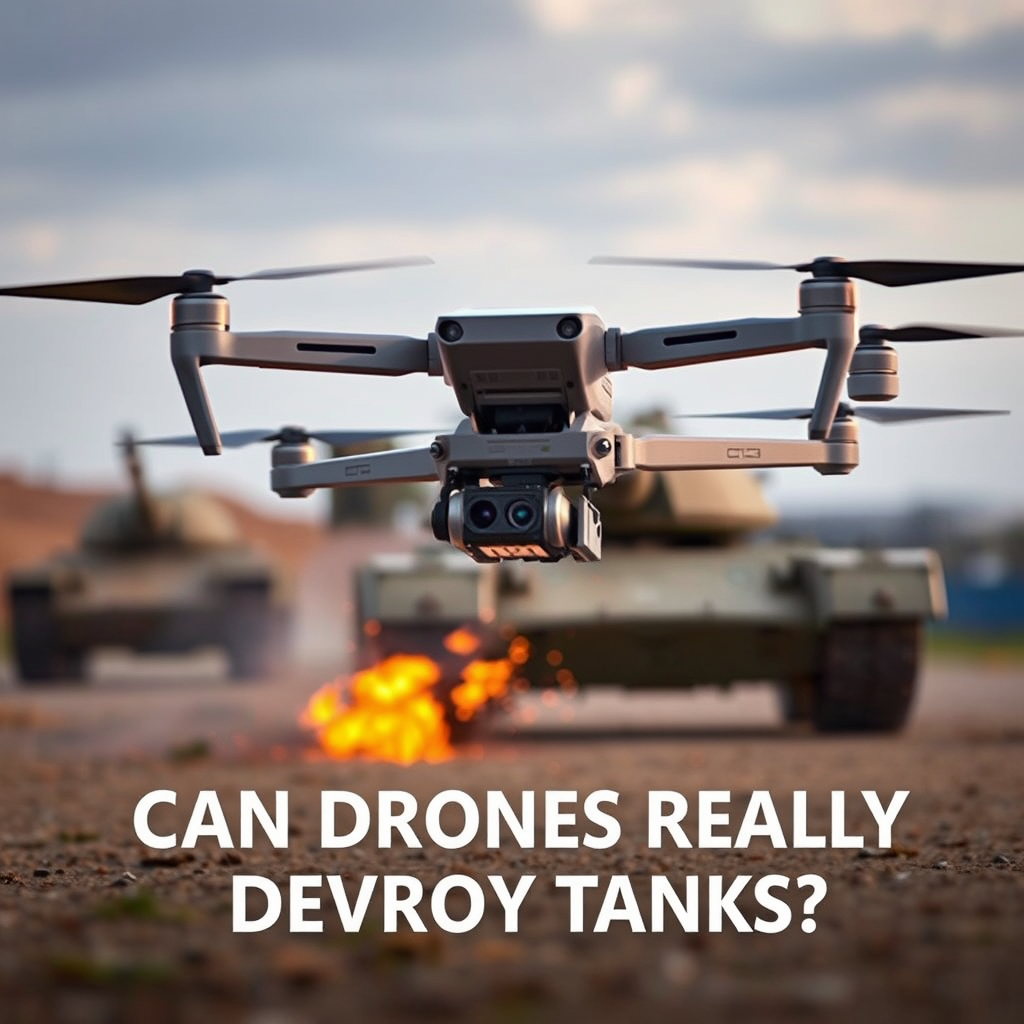
Drones have the capability to destroy tanks using precision strikes and advanced weaponry. However, their effectiveness can depend on various factors such as technology, tactics, and battlefield conditions. This article explores the potential of drones in tank destruction, examining their evolution, types, weaponry options, tactical advantages, challenges, real-world examples, and future prospects in anti-tank warfare.
The Evolution of Drones in Warfare
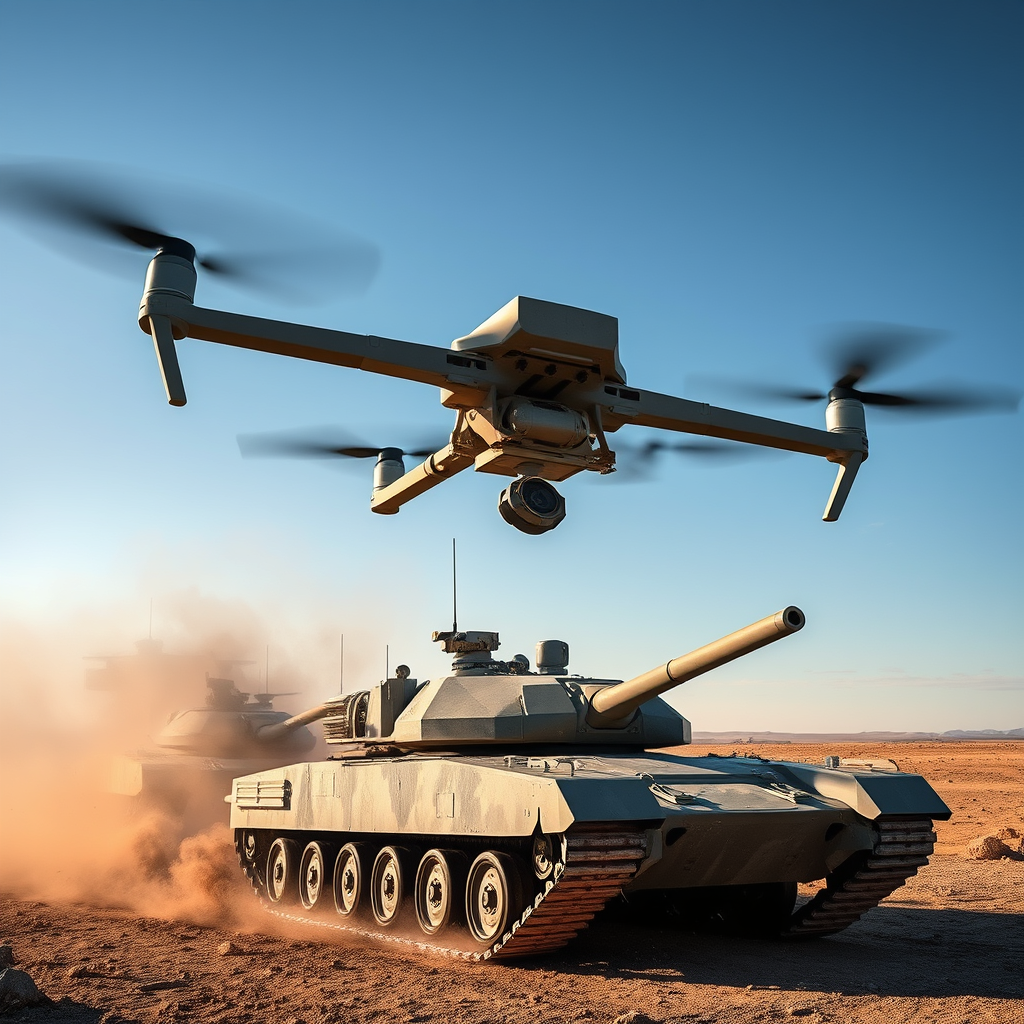
Over the past few decades, drone technology has undergone remarkable advancements, transitioning from rudimentary reconnaissance tools to sophisticated platforms capable of carrying out precision strikes. Early military drones, such as the Ryan Firebee, were primarily used for surveillance missions during the Cold War. As technology progressed, drones began to incorporate advanced sensors, improved flight capabilities, and increased payload capacities. The introduction of armed drones, like the MQ-1 Predator and MQ-9 Reaper, revolutionized aerial warfare, allowing for real-time intelligence gathering and precision strikes against ground targets, including armored vehicles.
Historically, the use of drones in military operations has evolved from passive observation to active engagement in combat scenarios. The U.S. military’s deployment of drones in Iraq and Afghanistan marked a significant shift, showcasing their effectiveness in targeting insurgent positions and high-value targets. This evolution has set the stage for employing drones against more formidable adversaries, such as tanks, thus presenting new tactical and strategic challenges in modern warfare.
Types of Drones Used Against Tanks
Drones can be categorized into two main types when it comes to their application against tanks: armed drones and surveillance drones. Armed drones are equipped with missile systems and bombs, allowing them to engage directly with ground targets. In contrast, surveillance drones primarily focus on reconnaissance and intelligence gathering, providing valuable information about enemy movements and positioning, which can be used to coordinate attacks by other forces.
Specific drone models have proven effective in anti-tank roles. For instance, the Israeli Heron TP and the American MQ-9 Reaper are armed drones capable of carrying anti-tank missiles, such as the AGM-114 Hellfire. These drones can loiter over the battlefield, waiting for the ideal moment to strike, significantly increasing their chances of damaging or destroying armored vehicles. Additionally, newer models, like the Turkish Bayraktar TB2, have demonstrated their effectiveness in recent conflicts, successfully targeting and neutralizing tanks with precision strikes.
Weaponry Options for Drones
The weaponry options for drones play a pivotal role in their ability to effectively engage and destroy tanks. Among the most notable missile systems utilized are the AGM-114 Hellfire and the Spike missile. The Hellfire missile, originally developed for the U.S. Army, is designed for precision strikes against armored targets, featuring laser guidance for enhanced accuracy. Its relatively small size allows it to be carried by various drone platforms, making it a versatile choice for anti-tank operations.
Another effective weapon system is the Spike missile, developed by Israel’s Rafael Advanced Defense Systems. The Spike family includes various versions, such as the Spike NLOS (Non-Line of Sight) and Spike LR (Long Range), which provide operators with multiple engagement options against armored vehicles. These missiles can be launched from drones, allowing for standoff capabilities, reducing the risk to the drone itself during operations.
Additionally, loitering munitions, often referred to as “kamikaze drones,” represent an innovative approach to engaging armored targets. These systems, such as the Israeli Harop and the U.S. Switchblade, are designed to loiter over an area and strike targets on command, providing a unique advantage in anti-tank warfare. By combining surveillance and strike capabilities, loitering munitions can effectively engage tanks while minimizing collateral damage.
Tactical Advantages of Using Drones
Drones offer several tactical advantages when it comes to engaging tanks on the battlefield. One of the most significant benefits is their enhanced reconnaissance capabilities, which facilitate better targeting and situational awareness. Drones can provide real-time intelligence on enemy positions, movements, and the operational status of armored units, enabling commanders to make informed decisions regarding engagement strategies.
Moreover, drones can strike targets without exposing ground troops to danger. This standoff capability allows military forces to neutralize threats from a distance, reducing the risk of casualties and damage to critical assets. The ability to conduct precision strikes while remaining out of reach of enemy fire underscores the strategic value of drones in modern warfare.
Additionally, drones can be deployed in swarms, allowing for coordinated attacks on armored units. This tactic complicates enemy defenses, as multiple drones can overwhelm air defenses and strike from various angles, increasing the likelihood of success in destroying tank targets.
Challenges and Limitations
Despite their potential, drones also face challenges and limitations in the context of engaging tanks. One significant limitation is the payload capacity of drones, which can restrict the type and number of munitions carried. Heavily armored tanks often require more powerful weaponry to penetrate their defenses effectively, posing a challenge for smaller drones with limited payload capabilities.
Furthermore, modern tanks are increasingly equipped with advanced countermeasures designed to defeat aerial threats. Active protection systems (APS), such as the Trophy system used by the Israeli Defense Forces, can intercept incoming projectiles, including missiles fired from drones. These countermeasures can significantly diminish the effectiveness of drone strikes against armored vehicles, necessitating the development of more sophisticated tactics and technologies.
Additionally, drones are vulnerable to electronic warfare tactics, such as jamming and spoofing, which can disrupt their communication and navigation systems. This vulnerability may hinder their operational effectiveness, especially in contested environments where enemy forces employ advanced counter-drone measures.
Real-World Examples
Several real-world examples illustrate the effectiveness of drones in targeting tank units. One notable case is the conflict in Nagorno-Karabakh in 2020, where Azerbaijani forces employed the Bayraktar TB2 drone to great effect against Armenian armor. Video footage showed the drone successfully striking tanks and other armored vehicles, leading to significant losses for Armenian forces.
Another example can be seen in the ongoing conflict in Ukraine, where both sides have utilized drones for reconnaissance and strike missions against armored targets. Ukrainian forces have reported successful engagements against Russian tanks using drone-delivered munitions, highlighting the evolving nature of warfare in the region.
Moreover, during the Syrian Civil War, the use of drones by various factions demonstrated their potential in asymmetric warfare settings. The deployment of armed drones, such as the Iranian Shahed-136, has been observed targeting armored vehicles, showcasing their adaptability in diverse operational contexts.
Future Prospects for Drones in Anti-Tank Warfare
Looking ahead, the future of drones in anti-tank warfare appears promising as technological advancements continue to emerge. Innovations in artificial intelligence (AI) and machine learning may enhance the targeting capabilities of drones, allowing for improved identification and engagement of armored threats. Additionally, advancements in materials science could lead to the development of lighter, more resilient drones capable of carrying larger payloads.
Strategically, military doctrines are likely to evolve to incorporate drones as integral components of combined arms operations. The integration of drones with traditional ground and air forces can provide commanders with flexible, multi-domain options for engaging enemy armor effectively. This shift in military thinking may lead to the development of new tactics that exploit the strengths of drone technology while mitigating their vulnerabilities.
Furthermore, as nations continue to invest in drone technology, we may witness an arms race in aerial warfare capabilities, prompting the development of counter-drone systems aimed at neutralizing these threats. The dynamic nature of warfare necessitates continuous adaptation and innovation to keep pace with emerging technologies.
In conclusion, while drones have proven to be effective against tanks in certain situations, their success relies on various factors including technology, tactics, and the evolving nature of warfare. As drone technology continues to advance, their role in anti-tank operations is likely to grow, making them a vital asset on the modern battlefield. The integration of advanced weaponry, tactical advantages, and ongoing innovations will shape the future of warfare and redefine the capabilities of military forces worldwide.
Frequently Asked Questions
Can drones effectively destroy tanks in modern warfare?
Yes, drones can effectively destroy tanks in modern warfare, particularly those equipped with precision-guided munitions. Military drones, such as armed UAVs, can deliver anti-tank missiles or bombs that can penetrate tank armor. Their ability to fly at low altitudes and avoid detection makes them a potent tool against heavily armored vehicles.
What types of drones are best suited for targeting tanks?
The best drones for targeting tanks are typically larger military-grade UAVs, such as the MQ-1 Predator or the MQ-9 Reaper, which are equipped with advanced targeting systems and anti-tank weaponry. Additionally, smaller drones like the Turkish Bayraktar TB2 have proven effective in recent conflicts, using laser-guided bombs to hit tanks with precision. These drones combine surveillance capabilities with strike potential, making them formidable in battlefield scenarios.
How do drones compare to traditional anti-tank weapons?
Drones offer several advantages over traditional anti-tank weapons, such as mobility and real-time intelligence. Unlike static missile launchers, drones can quickly reposition and strike from unexpected angles, making it harder for tanks to defend themselves. Furthermore, drones can gather reconnaissance data before an attack, allowing for more informed targeting and increased chances of success.
Why are drones becoming a preferred option for tank destruction?
Drones are becoming a preferred option for tank destruction due to their versatility, cost-effectiveness, and reduced risk to personnel. They can operate in environments where traditional ground forces might be at risk, and their ability to conduct surveillance and carry out strikes from a safe distance minimizes casualties. Additionally, advancements in drone technology have significantly improved their accuracy and payload capacity, making them highly effective in modern combat.
Which countries are leading in drone technology for anti-tank operations?
Countries like the United States, Turkey, and Israel are leading in drone technology for anti-tank operations. The U.S. military has developed advanced UAVs with sophisticated targeting systems, while Turkey’s Bayraktar TB2 has gained international attention for its success in recent conflicts. Israel also has a strong reputation for drone technology, utilizing UAVs in various combat scenarios to effectively target armored vehicles. These nations are at the forefront of integrating drones into their military strategies for enhanced battlefield effectiveness.
References
- https://en.wikipedia.org/wiki/Military_drone
- https://www.bbc.com/news/world-us-canada-66151634
- https://www.reuters.com/technology/ukraine-drone-strikes-aimed-at-russian-tanks-2022-10-18/
- https://www.armytimes.com/2021/07/20/tanks-vs-drones-the-next-great-military-showdown/
- https://www.defense.gov/Explore/News/Article/Article/2272594/modern-drone-warfare-changing-the-face-of-battlefield/
- https://www.sciencedirect.com/science/article/pii/S1877050919311894
- https://www.theguardian.com/world/2022/sep/22/ukraine-drone-strikes-russian-tanks
- https://www.nytimes.com/2022/08/01/world/europe/ukraine-drone-attack-russia.html
