
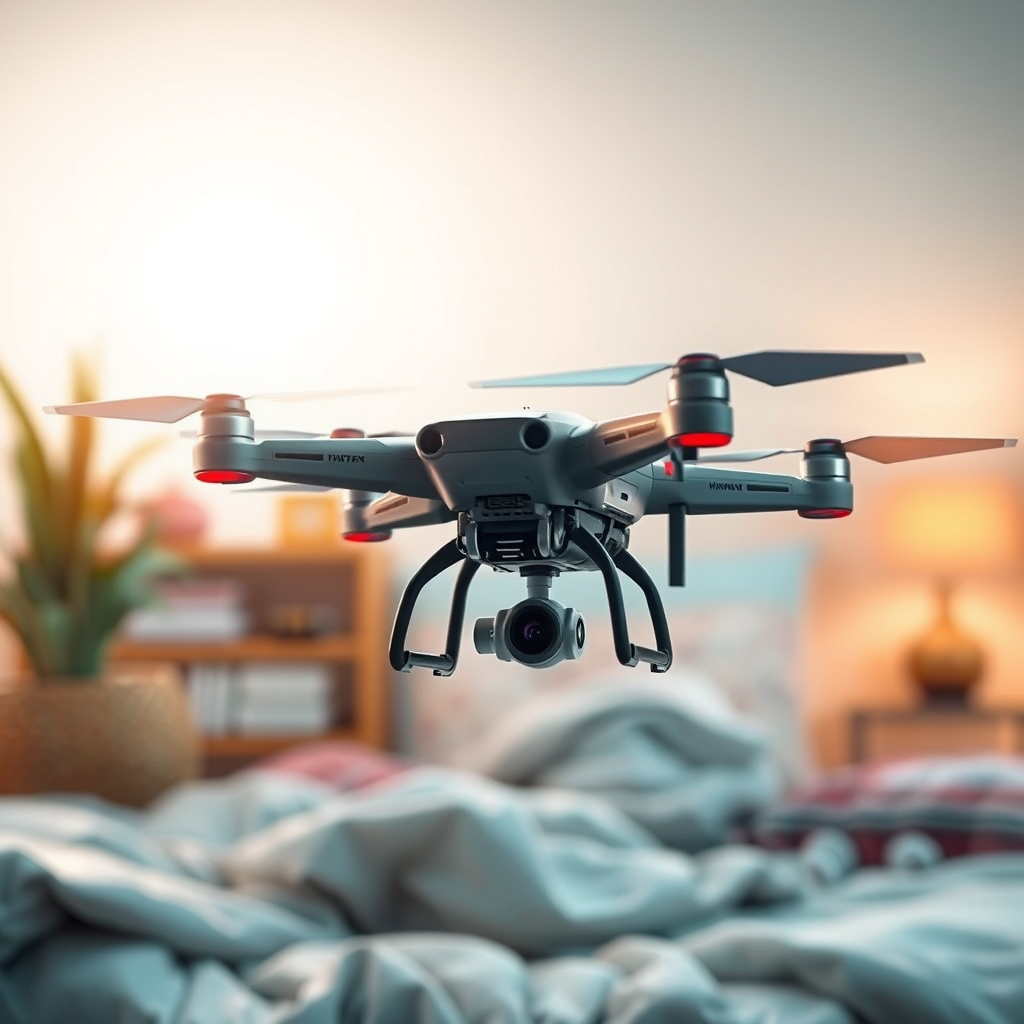
Yes, you can technically fly a drone in space, but there are significant challenges and limitations to consider. The lack of atmosphere and gravity makes traditional drone operation impossible; however, advancements in technology may pave the way for alternative solutions that could enable drones to function in space environments. Understanding the unique conditions of space and the innovations in drone technology can provide insights into how these unmanned aerial vehicles could play a role in future extraterrestrial exploration.
Understanding the Conditions of Space
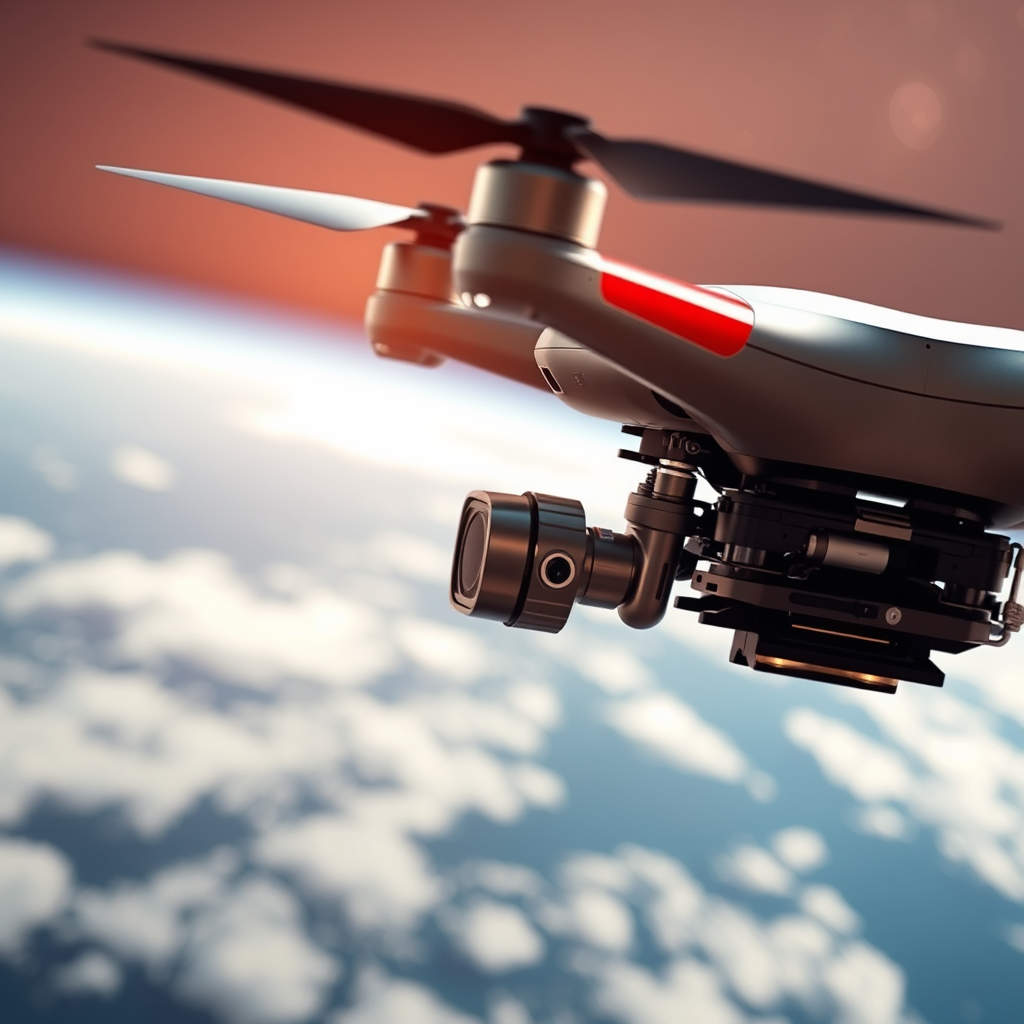
Space is characterized as a vacuum, which means it lacks the air necessary for traditional drone propellers to generate lift. On Earth, drones rely on the principles of aerodynamics, where blades spin to create differences in air pressure, resulting in lift. In the vacuum of space, with no air molecules to interact with, the conventional method of flight using propellers is rendered ineffective. This fundamental limitation requires a rethinking of how drones would operate beyond Earth’s atmosphere.
Additionally, the absence of gravity significantly alters the dynamics of movement. In space, objects float freely, and inertia becomes a dominant factor in motion. This means that once an object is in motion, it continues in that direction unless acted upon by another force. Consequently, the concept of controlling a drone via traditional maneuvering techniques would need to be adapted. Understanding these conditions is crucial for any future development of drones designed for space missions, as traditional flight mechanics simply do not apply.
Current Drone Technology
Most consumer and commercial drones are engineered specifically for Earth’s atmospheric conditions, where they utilize lift generated by spinning blades. These drones rely on a combination of propulsion and navigation systems tailored to operate within the planet’s gravitational field and air density. For space applications, however, entirely new designs and technologies would be necessary.
One promising avenue for space drones is the development of propulsion methods beyond conventional rotors. Concepts like ion propulsion, which uses electric fields to accelerate ions, may be adapted for drone-like devices in space. NASA’s experimental spacecraft, such as the Dawn spacecraft, which utilized ion propulsion to navigate the asteroid belt, showcases the potential of such technologies. A drone equipped with ion thrusters could maneuver in the microgravity environment of space, allowing for controlled exploration without the limitations of needing an atmosphere.
Potential Applications for Drones in Space
The potential applications for drones in space are vast and varied, ranging from scientific exploration to practical maintenance tasks. One of the most exciting prospects is using drones for surveying asteroids, which could provide crucial data for future mining operations or planetary defense strategies. For instance, missions like NASA’s OSIRIS-REx, which collected samples from the asteroid Bennu, could benefit from drone technology to enhance exploration and mapping efforts.
Moreover, drones could play a vital role in assisting with maintenance and repairs on space stations, such as the International Space Station (ISS). A drone designed to operate in low Earth orbit could perform routine inspections or manage equipment without the need for astronauts to conduct extravehicular activities (EVAs), thereby reducing risks and saving time. Furthermore, as humanity aims to explore other celestial bodies, drones could be invaluable for missions to Mars or the Moon, where they could scout terrain or analyze soil samples.
Challenges of Operating Drones in Space
Despite the exciting possibilities, several challenges complicate the operation of drones in space. One of the primary issues is communication delays due to the vast distances involved in space travel. For example, signals from Mars can take anywhere from 4 to 24 minutes to reach Earth, depending on their relative positions. This delay can hinder real-time control and operation of drones, necessitating autonomous navigation systems that can function independently of direct human input.
Additionally, power sources for space drones present another challenge. Solar panels, commonly used for energy in space, must be designed to withstand extreme conditions such as intense radiation and temperature fluctuations. Developing energy systems that are not only efficient but also resilient in the harsh environment of space is critical for any drone’s functionality. Furthermore, the need for robust materials that can endure space’s extreme temperatures and vacuum conditions adds complexity to the design process.
Future of Drone Technology in Space Exploration
As we look toward the future, ongoing research is focused on developing drones specifically tailored for space environments. Collaborations between space agencies, such as NASA and private tech companies, are driving innovation in this field. For instance, the European Space Agency (ESA) is exploring the use of autonomous drones for Mars exploration, which could enhance our understanding of the Red Planet significantly.
Moreover, advancements in artificial intelligence (AI) and machine learning are making it possible for drones to operate autonomously, adapting to their surroundings without the need for constant human oversight. These technologies could allow drones to make real-time decisions based on environmental data, making them far more effective in uncharted territories. As innovation continues, we may see a new generation of drones that not only survive but thrive in the challenges posed by space exploration.
In summary, the evolution of drone technology holds significant promise for future space exploration. The potential to deploy drones for tasks ranging from maintenance to exploration is exciting, but overcoming the inherent challenges will require groundbreaking innovations and collaborative efforts.
While flying a drone in space presents numerous challenges, the concept has potential for future exploration and utility. As technology advances, we may see drones playing a pivotal role in our understanding of space. Stay tuned for developments in this exciting frontier!
Frequently Asked Questions
Can you fly a drone in space?
No, you cannot fly a traditional drone in space as we know it. Drones rely on the Earth’s atmosphere to generate lift through their rotors, which push against the air. In the vacuum of space, there is no air to create lift, rendering conventional drones inoperable. However, specialized spacecraft equipped with thrusters and other propulsion systems can maneuver in space, but they do not function like typical drones.
What type of drones can operate in space?
Currently, there are no drones designed for conventional atmospheric flight that can operate in the vacuum of space. However, some robotic spacecraft, such as satellites or autonomous rovers on other planets, can perform drone-like tasks. These machines use different propulsion systems, like ion thrusters or chemical rockets, which allow them to navigate in space or on celestial bodies with thin atmospheres.
Why can’t drones fly in space despite being airborne vehicles on Earth?
Drones cannot fly in space because they depend on aerodynamic principles to generate lift. On Earth, drones use rotors to push down on the air, creating an upward force. In space, the absence of air means that this aerodynamic lift is impossible to achieve, which fundamentally limits the operation of drones as we know them in a vacuum environment.
How do space exploration vehicles differ from drones?
Space exploration vehicles, like rovers and spacecraft, differ from drones primarily in their design and operational environment. While drones are designed to navigate within an atmosphere using lift generated by rotors, space vehicles utilize propulsion methods suited for the vacuum of space. Additionally, space vehicles often have to withstand extreme conditions, including radiation and temperature variations, which are not factors for drones operating on Earth.
Which companies are developing drone technology for extraterrestrial environments?
Companies like NASA, SpaceX, and various aerospace startups are researching and developing drone technology for use in extraterrestrial environments. For example, NASA’s Ingenuity Mars Helicopter is an experimental drone designed to fly in the thin atmosphere of Mars, demonstrating the potential for drone-like vehicles to operate on other planets. Such developments focus on adapting drone technology to work efficiently in low-gravity or thin-atmosphere conditions.
References
- https://en.wikipedia.org/wiki/Drone#Applications
- https://www.nasa.gov/mission_pages/station/research/experiments/explorer/Facility.html
- https://www.scientificamerican.com/article/drones-in-space/
- https://www.reuters.com/article/us-space-drone-idUSKBN1X10G5
- https://www.nytimes.com/2020/05/22/science/spacex-drone.html
- https://www.space.com/space-drone-nasa-missions.html
- https://www.theguardian.com/science/2021/jun/10/nasa-drone-mars-helikopter-landing
