
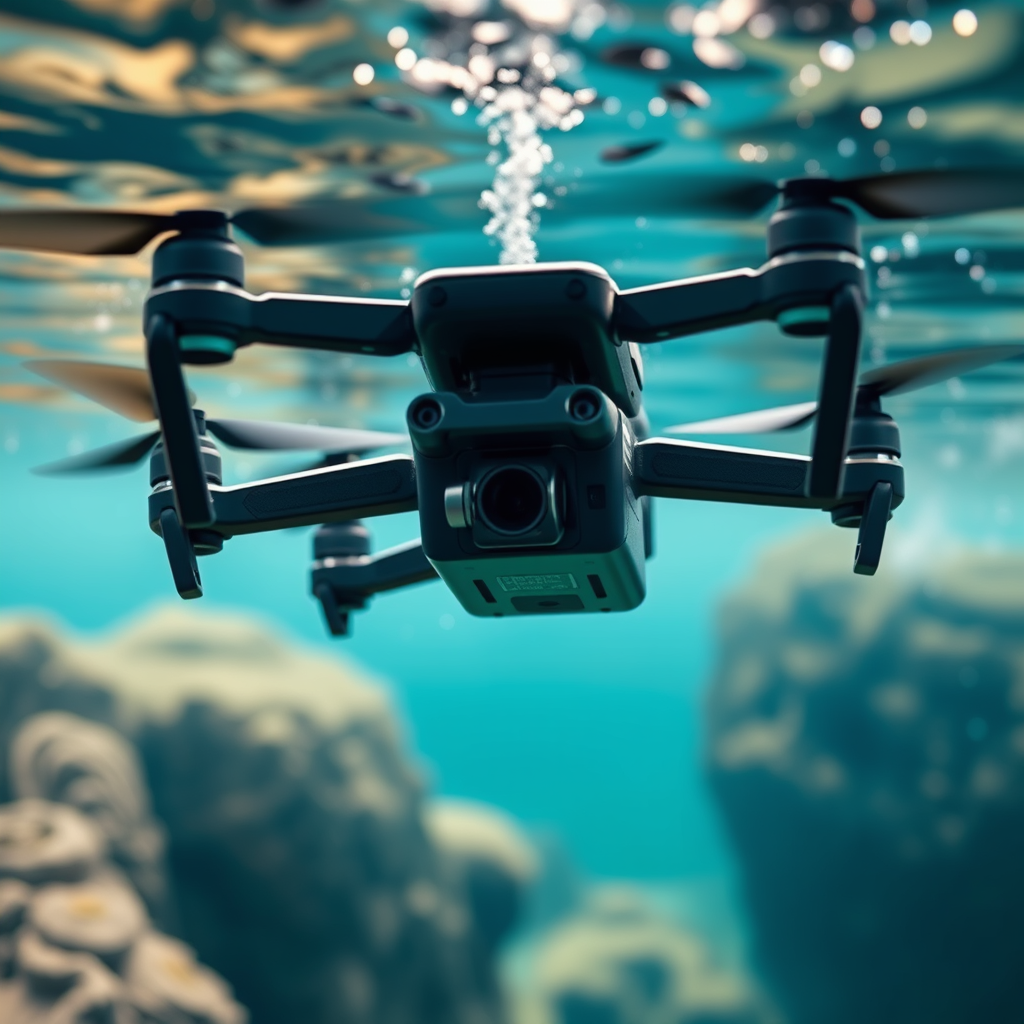
Underwater drones, or remotely operated vehicles (ROVs), are engineered to navigate the depths of our oceans and can dive to impressive depths ranging from 100 meters (328 feet) to over 11,000 meters (36,000 feet), depending on their design and specifications. These remarkable machines play a crucial role in various applications such as marine research, infrastructure inspection, and environmental monitoring. Understanding how deep these drones can go and the factors influencing their capabilities is essential for maximizing their potential in underwater exploration.
Understanding Depth Ratings
Depth ratings are critical specifications that indicate the maximum pressure an ROV can withstand during its operations. These ratings are typically expressed in meters and are derived from rigorous testing under controlled conditions. The pressure underwater increases by approximately one atmosphere for every 10 meters of depth, meaning that an underwater drone must be capable of resisting not just the sheer weight of the water above it, but also the associated pressure that can affect its structural integrity. Manufacturers often provide depth specifications based on these testing conditions, which include factors such as temperature, water salinity, and potential currents. Understanding these ratings is vital for operators to select the appropriate ROV for their specific diving needs and to avoid potential damage during missions.
Types of Underwater Drones
Underwater drones come in various categories, each designed to meet specific needs and depth capabilities. Consumer-grade drones are typically equipped for shallow dives, with depth limits ranging from 100 to 300 meters. These drones are often used by hobbyists and educational institutions for recreational exploration, underwater photography, and basic marine research.
In contrast, professional and industrial drones are engineered for more demanding tasks and can reach depths of 1,000 meters and beyond. These sophisticated ROVs are utilized in various sectors, including scientific research, search and recovery missions, and industrial inspections. For instance, the Ocean Infinity’s “Armada” ROV fleet can reach depths of up to 6,000 meters, making them suitable for deep-sea exploration and oil and gas operations. Understanding the different types of underwater drones can help users select the right tool for their specific project requirements.
Factors Affecting Depth Capabilities
Several factors contribute to the depth capabilities of underwater drones, primarily focusing on construction materials and design features. High-quality materials such as titanium and reinforced plastics enhance the durability and pressure resistance of ROVs. For deep-sea applications, drones are often constructed with pressure-resistant housings that can withstand extreme pressures found at significant depths.
Moreover, design elements such as buoyancy control systems are crucial for maintaining stability during dives. These systems ensure that the drone can adjust its buoyancy according to the underwater environment, allowing it to navigate effectively while maintaining structural integrity. Advanced engineering techniques, including the use of computational fluid dynamics in ROV design, further enhance performance by optimizing drag and stability at varying depths. Understanding these factors helps operators appreciate the engineering challenges that come with deep-sea exploration and the innovations required to overcome them.
Applications of Deep-Diving Underwater Drones
The applications of deep-diving underwater drones are vast and diverse, significantly contributing to our understanding of the ocean and its ecosystems. In ocean exploration and marine research, these drones are pivotal for studying marine biodiversity and habitats that are otherwise inaccessible. For example, the Schmidt Ocean Institute utilizes ROVs to conduct deep-sea research expeditions, contributing valuable data on uncharted marine environments.
In the oil and gas industry, underwater drones are essential for inspecting and maintaining underwater infrastructure, such as pipelines and drilling rigs. Their ability to operate at great depths minimizes the need for costly manned submersible missions, making inspections safer and more efficient. Companies like Oceaneering International have developed ROVs that can perform complex tasks such as underwater welding and repairs, demonstrating the practical applications of these technologies in maintaining underwater assets.
Innovations in Underwater Drone Technology
The field of underwater drone technology is experiencing rapid advancements that enhance their performance and capabilities. One significant innovation is the improvement in battery life, which allows drones to conduct longer missions at greater depths without the need for frequent retrieval. These advancements enable researchers and operators to collect extensive data during a single dive, providing more comprehensive insights into underwater environments.
Additionally, the integration of enhanced cameras and sensors has revolutionized data collection capabilities in extreme underwater settings. High-resolution imaging and advanced sonar systems enable operators to capture detailed visuals of underwater ecosystems, geological formations, and human-made structures. For instance, the use of 4K cameras and multi-beam sonar in ROVs like the Deep Discoverer has transformed marine research, allowing scientists to observe and document species and habitats with unprecedented clarity.
Safety and Limitations
Despite the remarkable capabilities of underwater drones, there are inherent risks and limitations associated with deep-sea operations. The risk of pressure-related failures increases significantly as depth increases, making it imperative for operators to adhere strictly to the specified depth ratings. Beyond the physical constraints, operating conditions such as temperature variations, strong currents, and underwater topography can also affect drone performance and navigation.
Moreover, communication with underwater drones can be challenging due to the limitations of radio signals in water. Many ROVs rely on tethered connections or acoustic communication systems, which can introduce delays or communication failures during critical operations. Understanding these safety measures and limitations is crucial for operators to mitigate risks and ensure the successful execution of underwater missions.
In conclusion, underwater drones exhibit a wide range of depth capabilities influenced by their design and intended applications. With advancements in technology, we can anticipate even greater depth capabilities and expanded applications in ocean exploration, research, and industrial operations. For those interested in underwater exploration or involved in marine industries, understanding these capabilities is essential for selecting the right drone for their specific needs and maximizing the benefits of these innovative tools.
Frequently Asked Questions
What is the maximum depth an underwater drone can reach?
The maximum depth an underwater drone can reach varies significantly based on its design and purpose. Consumer-grade underwater drones typically have depth ratings between 30 to 300 meters (100 to 1,000 feet), while professional-grade models used for scientific research or industrial applications can dive much deeper, often exceeding 1,000 meters (3,280 feet). High-end remotely operated vehicles (ROVs) can even reach depths of over 6,000 meters (19,685 feet), enabling exploration of the deepest ocean trenches.
How does the depth capability of an underwater drone affect its performance?
The depth capability of an underwater drone directly impacts its performance in several ways, including its stability, maneuverability, and the quality of data it can gather. Drones designed for deeper exploration often incorporate more robust materials and advanced pressure-resistant technology, which can affect their weight and agility. Additionally, operating at greater depths may limit the drone’s battery life and signal transmission capabilities, making it essential to consider the intended use when selecting an underwater drone.
Why is the depth rating of an underwater drone important for buyers?
The depth rating of an underwater drone is crucial for buyers because it determines the environments in which the drone can effectively operate. For hobbyists looking to explore shallow coastal waters, a lower depth rating may suffice, while marine researchers or commercial operators might require drones capable of deep-sea exploration. Understanding depth ratings helps ensure that the drone meets specific project requirements and prevents potential damage that could occur from exceeding its rated limits.
Which underwater drones have the best depth ratings for deep-sea exploration?
When looking for underwater drones with excellent depth ratings for deep-sea exploration, models like the Deep Trekker DTG3 (up to 305 meters) and the Blue Robotics BlueROV2 (up to 100 meters) stand out for their reliability and advanced features. For extreme depths, the Ocean Infinity’s HUGIN AUV can reach depths of over 6,000 meters, making it suitable for scientific and commercial deep-sea missions. These drones are designed with specialized engineering to withstand high pressure, ensuring safety and functionality at great depths.
How can I ensure my underwater drone is safe when operating at depth?
To ensure the safety of your underwater drone during deep operations, start by thoroughly understanding its depth rating and adhering strictly to it. Regular maintenance is also vital; inspect seals and housings for any signs of wear or damage before each dive. Additionally, using high-quality batteries and monitoring the drone’s buoyancy can help prevent accidents. It’s also advisable to conduct test dives in controlled environments before attempting more challenging underwater missions to familiarize yourself with the drone’s capabilities and limitations.
References
- https://en.wikipedia.org/wiki/Underwater_drone
- https://www.nationalgeographic.com/science/article/underwater-drones-exploration
- https://www.usgs.gov/mission-areas/water-resources/science/underwater-drones
- https://www.researchgate.net/publication/311092310_A_review_of_underwater_drones_and_their_applications
- https://www.sciencedirect.com/science/article/pii/S0079612317300504
- https://www.bbc.com/future/article/20210119-how-underwater-drones-are-revolutionising-exploration
- https://www.semanticscholar.org/paper/Underwater-Drones-Applications-and-Challenges-Chen-Wang/1d4eaaef5e7d2f6d5c0b2a6f9d1a0e9b7b6e2a64
- https://www.noaa.gov/ourplanet/underwater-drones-in-ocean-exploration
