
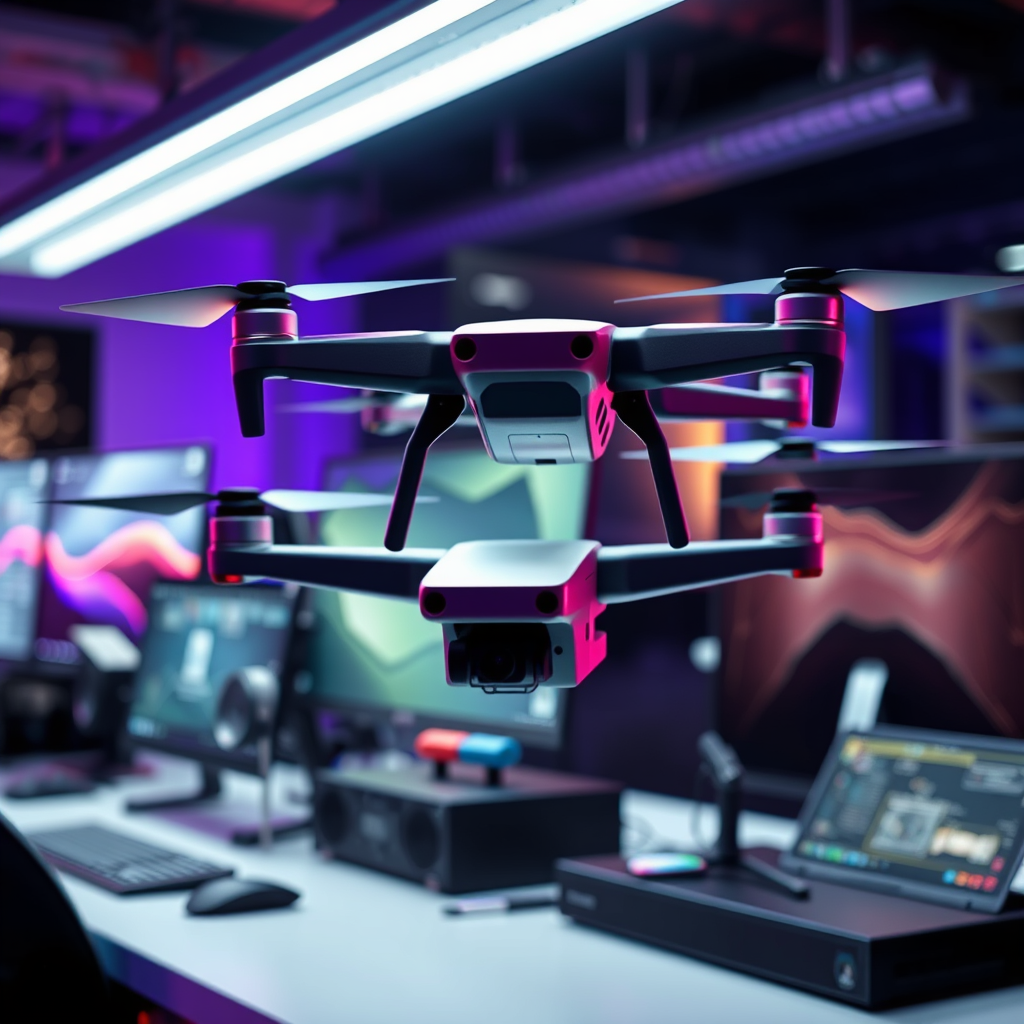
Drones can typically be controlled at distances ranging from a few hundred meters to several kilometers, depending on the type of drone and its technology. Various factors, such as signal strength, battery life, and regulatory restrictions, play crucial roles in determining the maximum control distance. This article delves into the specifics of how far drones can be controlled and what influences those limits.
Understanding Drone Control Ranges

Drones come equipped with different control systems that affect their operational range. The technology behind these systems varies significantly across models, influencing how far a drone can fly while still being effectively controlled by its operator. Most consumer drones operate effectively within a range of 1 to 5 kilometers, which is often sufficient for recreational use, such as aerial photography or racing. In contrast, more advanced models, particularly those designed for professional use, can achieve control ranges up to 10 kilometers or more, mainly due to enhanced transmission technologies and better antennas. For instance, drones employed in agricultural monitoring or search-and-rescue operations often utilize robust communication systems that allow for extended ranges, ensuring that they can be deployed over large areas without losing connectivity.
Factors Affecting Control Distance
The control distance of a drone is impacted by several factors, with signal frequency being one of the most significant. Drones typically operate on either 2.4GHz or 5.8GHz frequencies. The 2.4GHz frequency, while more common and capable of penetrating obstacles better, is also more prone to interference from other devices, such as Wi-Fi networks and Bluetooth signals. On the other hand, 5.8GHz signals can provide better range in open areas with less interference but offer reduced penetration through obstacles. This means that a drone flying in an urban or wooded environment may experience a decrease in control distance due to signal degradation.
Environmental obstacles also play a critical role in determining how far a drone can be controlled. Buildings, trees, and varying terrain can interfere with the line of sight between the drone and the controller, which is essential for maintaining a strong signal. For example, flying a drone in a densely populated city may lead to significant signal loss compared to operating the same drone in an open field. This factor is crucial for drone operators to consider, as it can dramatically influence the drone’s effective range and operational capabilities.
Types of Drones and Their Ranges
Drones can be categorized into various types based on their intended use, and this categorization significantly influences their control ranges. Consumer drones, which are primarily designed for personal use, typically have shorter ranges of about 1 to 5 kilometers. These drones are often equipped with features aimed at ease of use and safety, such as GPS-assisted flight modes that keep the drone within a designated area.
In contrast, professional drones are engineered for longer distances and can achieve ranges of up to 10 kilometers or more. These drones are used in various industries, including agriculture, surveying, and emergency services, where extended operational range is crucial. For instance, the DJI Matrice series is renowned for its long-range capabilities, making it a popular choice among professionals who require reliable and extended flight performance. Understanding the differences between these types of drones is essential for potential buyers and operators, as it ensures that they select a model that meets their specific needs.
Battery Life and Its Impact
Battery life is another critical factor that directly affects the maximum distance a drone can be flown. The capacity of the battery not only determines how long the drone can remain airborne but also influences how far it can travel during that time. Longer ranges typically require more energy, which can lead to quicker battery depletion, especially if the drone is carrying additional payloads, such as cameras or sensors.
For example, a drone designed for professional use might have a flight time of up to 30 minutes under optimal conditions. However, when flying at maximum range, the drone might consume energy faster, reducing the total distance it can cover before needing to return to its launch point. Operators must therefore plan their flights carefully, considering the battery life and ensuring that there is ample reserve power for safe return. Investing in high-capacity batteries or utilizing drones with efficient power management systems can help maximize flight durations and extend operational ranges.
Regulatory Considerations
Local regulations play a significant role in determining the maximum distance a drone can be operated. Various countries have specific laws governing drone usage, often stipulating restrictions on altitude and distance. In the United States, for instance, the Federal Aviation Administration (FAA) requires that drone pilots maintain visual line of sight with their drones at all times, effectively limiting their operational range to a few miles under normal circumstances.
Understanding airspace classifications is vital for safe drone operation. Certain areas, such as near airports or in urban zones, may have stricter rules that further restrict operational distances. For drone operators, staying informed about these regulations is essential, as non-compliance can lead to fines or other penalties. Moreover, some regions may have temporary restrictions in place due to events or emergencies, so continuous awareness of the regulatory landscape is crucial for safe and responsible drone operation.
Future Technology and Range Expansion
As technology continues to evolve, so too do the capabilities of drones, particularly concerning control distances. Advancements in communication technologies, such as 4G and 5G networks, are paving the way for drones to achieve longer ranges and more reliable connections. These technologies can potentially allow drones to operate beyond visual line of sight (BVLOS), which would dramatically expand their operational capabilities across various industries.
Additionally, research into new battery technologies, such as lithium-sulfur or solid-state batteries, holds the promise of extending operational ranges significantly. These innovations could lead to drones that not only fly further but also carry more payload for longer durations, making them indispensable tools in fields like logistics, agriculture, and public safety.
Best Practices for Maximizing Control Distance
To maximize control distance and ensure optimal drone performance, operators should adhere to several best practices. Regular maintenance is crucial; keeping the drone’s components clean and in good working order ensures reliable performance and minimizes the risk of signal loss. Additionally, operators should familiarize themselves with the drone’s specifications and limitations, including understanding the ideal flying conditions for maximum range.
Planning flights carefully, taking environmental factors into account, and setting realistic expectations based on the drone’s capabilities can significantly enhance the flying experience. Utilizing features such as waypoint navigation can also help in covering large areas efficiently while maintaining control.
In conclusion, while the control distance of a drone can vary greatly based on several factors, understanding these elements is essential for optimal operation. From signal frequency and environmental obstacles to battery life and regulatory considerations, each aspect plays a significant role in determining how far a drone can be effectively controlled. Whether you are a hobbyist or a professional, being informed about the capabilities and limitations of your drone can enhance your flying experience and ensure safe, responsible operation.
Frequently Asked Questions
What is the maximum distance a consumer drone can be controlled?
The maximum control distance for consumer drones typically ranges from 1,000 feet to several miles, depending on the model and local regulations. For instance, popular models like the DJI Mini series can achieve ranges of up to 4 miles under optimal conditions. However, factors such as signal interference, obstacles, and environmental conditions can significantly impact this distance.
How does the drone’s frequency affect its control range?
The control range of a drone is greatly influenced by the frequency it operates on, usually 2.4 GHz or 5.8 GHz. Drones operating at 2.4 GHz generally offer longer ranges but can be more susceptible to interference from other devices. In contrast, 5.8 GHz may provide better video transmission quality and less interference but typically has a shorter range. Understanding these frequency characteristics can help users choose the right drone for their needs.
Why do some drones have a limited control range?
Limited control range in drones can be attributed to several factors, including battery life, signal strength, and the technology used in the drone’s controller. Additionally, regulatory restrictions in certain areas may limit the distance a drone can be flown for safety and privacy reasons. Understanding these limitations can help users operate their drones more effectively and responsibly.
What are the best practices for maximizing a drone’s control range?
To maximize a drone’s control range, users should ensure a clear line of sight between the drone and the controller, avoid flying in areas with high electromagnetic interference, and maintain optimal battery levels. Additionally, firmware updates and using high-quality antennas can enhance signal strength, allowing for longer flight distances. Following these best practices can significantly improve the drone flying experience.
Which drones offer the longest control range for professional use?
For professional use, drones such as the DJI Mavic 3 and the Autel Robotics EVO Lite offer some of the longest control ranges, reaching up to 7 miles or more. These drones are equipped with advanced transmission systems like OcuSync and Lightbridge, which help maintain strong connections over long distances. Selecting a drone with robust technology and features tailored for professional applications can enhance operational efficiency and effectiveness.
References
- https://en.wikipedia.org/wiki/Drone
- https://www.faa.gov/uas/resources/policy_library/
- https://www.nytimes.com/2021/06/15/technology/drone-regulations.html
- https://www.reuters.com/technology/how-far-can-drones-fly-2021-10-08/
- https://www.sciencedirect.com/science/article/pii/S2352864821001900
- https://www.nationalgeographic.com/science/article/how-far-can-drones-fly-and-how-high-can-they-go
- https://www.itu.int/en/ITU-T/focusgroups/ai4good/Pages/drones.aspx
- https://www.technologyreview.com/2020/07/17/1005086/drones-remote-control-distance-limits/
