
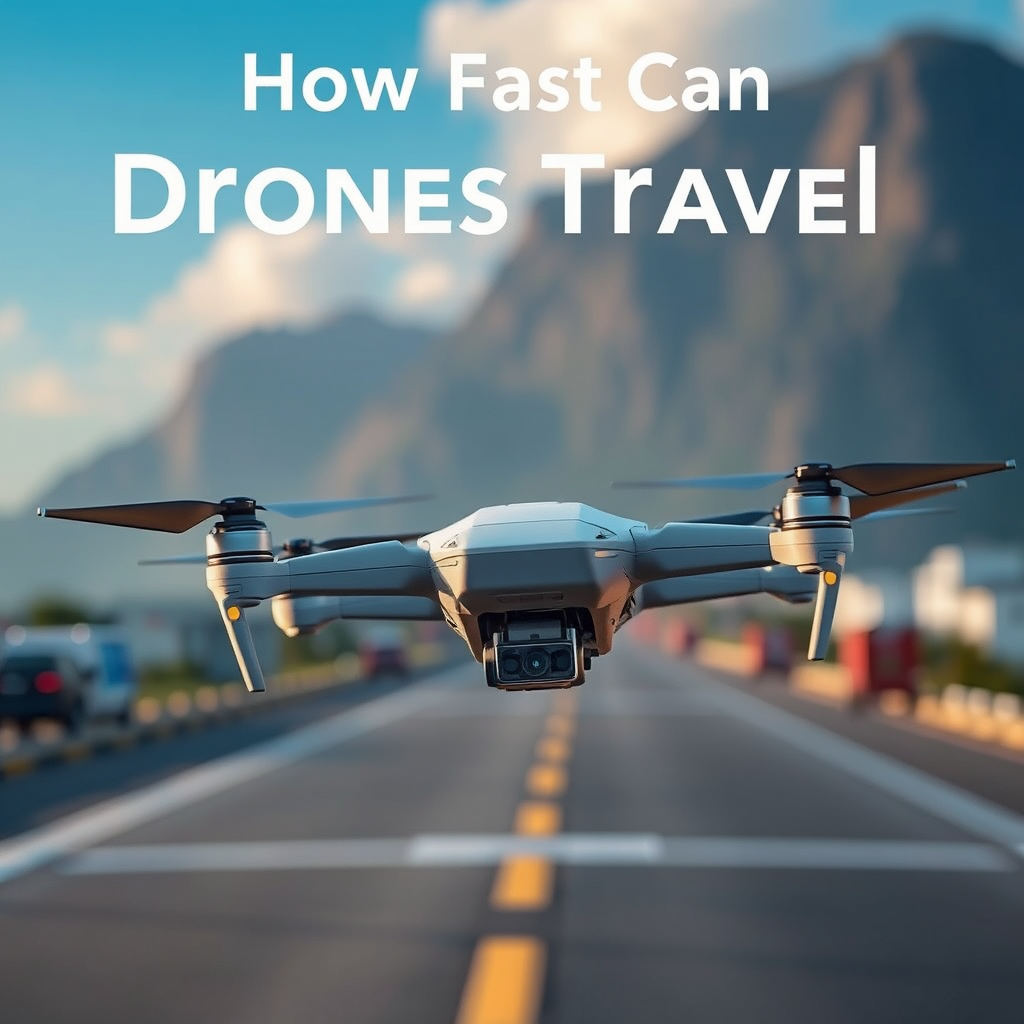
Drones can travel at speeds ranging from 15 mph for hobbyist models to over 200 mph for racing drones. The speed of a drone greatly depends on its type, design, and intended use. As advancements in technology continue to evolve the capabilities of these flying machines, understanding their speed limits and influencing factors becomes crucial for consumers, enthusiasts, and professionals alike. In this article, we’ll explore the various categories of drones and the factors that influence their speed.
Types of Drones and Their Speeds
Drones can be classified into several categories, each designed with specific functionalities and performance metrics in mind. Understanding these classifications is essential for anyone looking to choose the right drone for their needs.
– Consumer Drones: These drones, often used for recreational purposes, typically travel at speeds between 15 to 30 mph. Designed primarily for photography, videography, and leisure flying, consumer drones provide stability and user-friendly controls. For example, the DJI Mavic Air 2 can reach speeds of up to 42 mph, showcasing a balance of speed and camera functionality, making it popular among hobbyists.
– Racing Drones: Built for agility and competitive flying, racing drones can achieve impressive speeds ranging from 60 to 100 mph. These drones are lightweight and optimized for quick maneuverability, often featuring enhanced motors and streamlined designs. The Emax Hawk 5, for instance, can reach speeds of over 80 mph, making it a favorite among racers who seek both performance and excitement.
– Military Drones: Military-grade drones are engineered for high-stakes missions, often exceeding speeds of 200 mph. These drones, such as the MQ-9 Reaper, are used for reconnaissance, surveillance, and combat operations. Their speed is a critical factor in their effectiveness, allowing them to cover vast distances quickly and evade potential threats.
Factors Influencing Drone Speed
Several factors play a significant role in determining how fast a drone can travel. Understanding these elements can help users optimize their drone’s performance for specific tasks.
– Weight: The weight of a drone is a critical factor in its speed capabilities. Heavier drones may experience slower acceleration due to increased drag and gravitational pull. This is particularly relevant for payload-carrying drones, where additional weight can significantly impact flight dynamics. For instance, a drone carrying an extra camera or equipment may struggle to reach its maximum speed.
– Battery Life: The relationship between speed and battery life is a balancing act. Higher speeds consume more battery power, which can limit flight duration. For instance, a racing drone flying at top speed may only achieve a flight time of 5-7 minutes, while cruising at lower speeds could extend that time significantly. Users must consider their operational needs and battery management strategies to maximize efficiency.
– Design: The aerodynamic design of a drone significantly influences its speed. Drones with streamlined shapes can cut through the air more efficiently than bulkier models. For example, fixed-wing drones, such as the Parrot Disco, utilize a design that allows for higher speeds compared to multi-rotor drones, which must generate lift vertically and are often less efficient in horizontal flight.
Speed Comparisons Among Drone Categories
Examining the speed capabilities across different drone categories reveals interesting insights, particularly when comparing consumer and professional-grade models.
– Hobbyist vs. Professional: Professional drones often incorporate advanced technology, allowing for faster speeds and more stable flight characteristics. For instance, while a typical hobbyist drone may reach speeds of 20 mph, a professional-grade drone like the DJI Phantom 4 Pro can achieve speeds close to 45 mph, showcasing the technological advancements that contribute to enhanced performance.
– Fixed-Wing vs. Multi-Rotor: In general, fixed-wing drones tend to travel faster than multi-rotor drones due to their design. Fixed-wing models, which resemble traditional airplanes, can maintain higher speeds over longer distances. In contrast, multi-rotor drones excel in hovering and vertical takeoff but often have lower maximum speeds, making them more suitable for tasks requiring precision, such as aerial photography.
Impact of Technology on Drone Speed
Technological innovations have significantly influenced the speed capabilities of modern drones, leading to faster and more reliable flight.
– Motor Efficiency: Advances in motor technology have resulted in the development of more powerful and efficient motors, which directly contribute to faster drone speeds. Brushless motors, for instance, provide greater torque and efficiency compared to traditional brushed motors, enabling drones to accelerate quickly and sustain higher speeds with less energy consumption.
– Software Improvements: Enhanced flight controllers equipped with sophisticated algorithms can optimize speed and stability during flight. Features such as GPS-assisted flight and real-time telemetry allow for better management of speed and navigation. Drones like the Autel Robotics EVO Lite utilize advanced software to enhance flight performance, ensuring that speed is maximized without compromising safety.
Real-World Applications of Drone Speeds
The varying speeds of drones have led to a multitude of real-world applications, each benefiting from the unique speed capabilities of different models.
– Delivery Services: Companies like Amazon and Google are developing drones capable of traveling at optimal speeds to ensure timely deliveries. These delivery drones need to balance speed with safety and battery life, often targeting speeds between 30 to 50 mph to efficiently navigate urban environments while adhering to regulatory constraints.
– Search and Rescue: In emergency situations, drones with high speeds can cover vast areas quickly, making them invaluable for search and rescue operations. For instance, UAVs used in disaster response can travel quickly to assess damage, locate victims, and deliver supplies, significantly enhancing the overall efficiency of rescue missions.
Future Trends in Drone Speed
The future of drone technology promises exciting developments that could further enhance speed capabilities and operational efficiency.
– Innovations in Materials: The use of lightweight materials, such as carbon fiber and advanced composites, may allow for faster drones without sacrificing durability. These materials can reduce the overall weight of the drone, enabling higher speeds and longer flight durations while maintaining structural integrity.
– Increased Regulatory Support: As drone regulations evolve, there may be more opportunities for drones to operate at higher speeds in various airspaces. Enhanced regulatory frameworks could facilitate the deployment of high-speed drones in commercial applications, paving the way for innovations in logistics and transportation.
In conclusion, the speed of drones varies widely based on their type and design, with some capable of impressive velocities that open up new possibilities for various applications. As technology continues to advance, we can expect even faster drones in the future, driving innovation in multiple sectors. If you’re interested in understanding more about drone capabilities, keep exploring the latest trends and innovations!
Frequently Asked Questions
How fast can consumer drones travel?
Consumer drones typically have a maximum speed ranging from 15 to 50 miles per hour (24 to 80 km/h), depending on the model and manufacturer. For instance, popular models like the DJI Mavic Air 2 can reach speeds of up to 42 mph (68 km/h). It’s essential to consider that factors such as battery life, wind conditions, and payload can impact a drone’s speed.
What is the fastest drone currently available on the market?
As of October 2023, the fastest drone available for commercial use is the DRL RacerX, which has been clocked at speeds exceeding 179 miles per hour (288 km/h). This racing drone is designed for competitive environments, emphasizing agility and speed over stability and flight time. However, it’s important to note that such speeds are not typical for recreational or professional photography drones.
How does a drone’s design affect its speed?
A drone’s design significantly affects its speed due to various factors such as weight, aerodynamics, and motor power. Lightweight materials and streamlined shapes reduce drag, allowing drones to cut through the air more efficiently. Additionally, more powerful motors provide the necessary thrust to achieve higher speeds, making design considerations crucial for performance-oriented drones.
Why are racing drones faster than typical quadcopters?
Racing drones are specifically engineered for speed and agility, making them faster than typical quadcopters. They are often equipped with high-performance motors, lightweight frames, and minimalistic designs that prioritize speed over stability. Furthermore, racing drones use advanced flight controllers that allow for rapid adjustments, enhancing their responsiveness and overall velocity in competitive settings.
Which factors can limit a drone’s maximum speed during flight?
Several factors can limit a drone’s maximum speed, including battery level, wind conditions, and altitude. When battery levels are low, a drone may automatically reduce its speed to conserve energy and ensure safe landing. Additionally, strong winds can create resistance, slowing down the drone, while flying at higher altitudes may affect performance due to thinner air, making it crucial for operators to consider these elements when flying.
References
- https://en.wikipedia.org/wiki/Drone
- https://www.faa.gov/uas/
- https://www.ncbi.nlm.nih.gov/pmc/articles/PMC6462034/
- https://www.reuters.com/technology/drone-deliveries-are-quickly-becoming-reality-2021-02-05/
- https://www.sciencedirect.com/science/article/pii/S187705091931212X
- https://www.nytimes.com/2021/01/27/technology/drone-deliveries.html
- https://www.bbc.com/news/technology-48654139
