
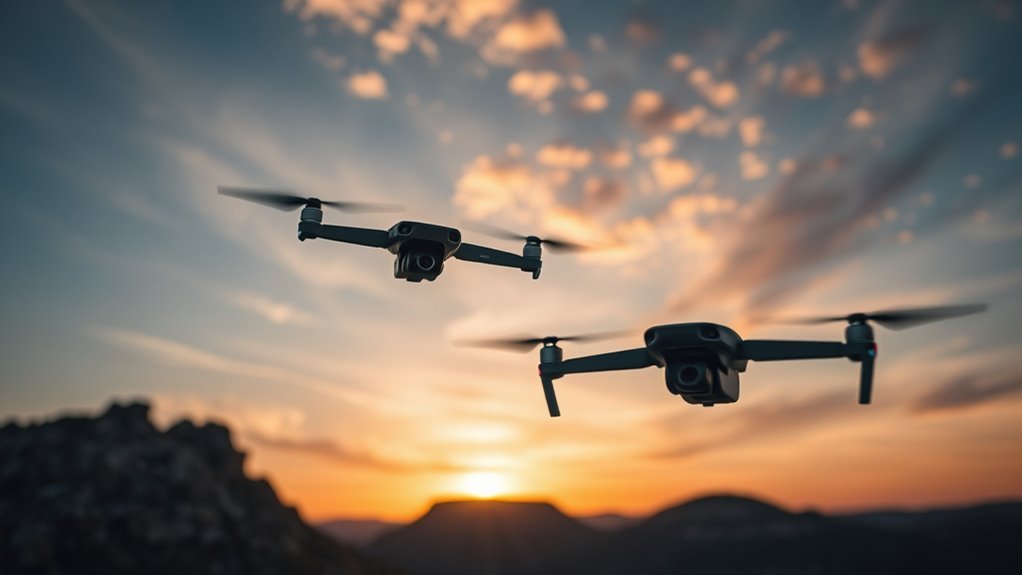
When you’re deciding between the DJI Mavic 3 Pro and HoverAir X1 Pro Max, you’ll notice the Mavic’s 43-minute flight time outpaces the X1’s 28 minutes, ideal for extended explorations. You’ll value DJI’s Hasselblad camera and advanced stability for professional videography, while HoverAir’s compact design suits quick selfies and casual outings. Based on your needs, it’s a choice between depth and convenience, with more insights awaiting in the details.
Flight Duration Comparison
When comparing the flight durations of the DJI Mavic 3 Pro and HoverAir X1 Pro Max, you’ll notice a clear disparity in performance. The DJI Mavic 3 Pro delivers up to 43 minutes of flight time, thanks to its efficient drone battery, giving you the freedom to explore vast areas without constant interruptions. In contrast, the HoverAir X1 Pro Max offers around 28 minutes, which may curtail your aerial outings and demand more frequent returns.
This difference stems from how each drone’s battery design impacts endurance. The DJI’s advanced technology maintains better flight stability during extended sessions, allowing smoother operation and less energy waste. You’ll appreciate this stability, as it lets you focus on capturing the world from above, unburdened by quick drains. For those valuing autonomy in the skies, the DJI’s longer runtime and stable performance provide a clear advantage, empowering your adventures while the HoverAir’s shorter span reminds you of practical limits. Additionally, DJI excels with advanced sensor size that enhances image quality, making it an even more compelling choice for serious drone enthusiasts. Ultimately, evaluating drone battery and flight stability highlights how these factors shape your overall flying freedom.
Key Features and Performance
Moving from flight duration, you’ll find that the DJI Mavic 3 Pro and HoverAir X1 Pro Max differ markedly in key features and performance. The DJI Mavic 3 Pro boasts superior camera capabilities, with its Hasselblad camera system delivering 4K HDR video and a 28x hybrid zoom, empowering you to capture expansive, professional-grade footage from afar. In contrast, the HoverAir X1 Pro Max focuses on compact design aesthetics, offering a foldable, lightweight build for effortless portability, though its camera is more suited for quick selfies and casual shots.
- Camera Capabilities: DJI’s advanced sensors provide cinematic quality with better low-light performance, giving you the freedom to explore creative horizons, while HoverAir’s simpler setup prioritizes ease for spontaneous adventures. Additionally, DJI’s advanced gimbal-based image stabilization ensures smooth footage, even in dynamic conditions, enhancing your filming experience.
- Design Aesthetics: The Mavic 3 Pro’s robust, aerodynamic frame enhances stability in windy conditions, allowing you to fly with confidence, whereas the X1 Pro Max’s sleek, minimalist design emphasizes portability for on-the-go liberation.
- Performance Metrics: DJI excels in obstacle avoidance and flight precision, offering you reliable control in complex environments, compared to HoverAir’s agile but less sophisticated navigation for freer, hands-off experiences.
Best Use Cases for Each Drone
While the DJI Mavic 3 Pro suits demanding tasks like professional videography and aerial surveys due to its advanced camera and stability, you’ll find the HoverAir X1 Pro Max ideal for casual outings, such as travel vlogging or spontaneous shots, thanks to its compact design and ease of use. For aerial videography, the Mavic 3 Pro empowers you to capture cinematic landscapes with precision, making it perfect for expansive landscape photography projects where stability and high-resolution imaging let you explore freely. In contrast, the X1 Pro Max gives you the freedom to document everyday adventures effortlessly, ideal for quick aerial videography during hikes or social events without bulky setups. If you’re into professional-grade outputs, the Mavic’s robust features guarantee reliable performance in challenging conditions, while the X1 Pro Max’s portability lets you seize spontaneous moments, enhancing your creative liberty on the go. Ultimately, your choice depends on whether you prioritize depth in landscape photography or the ease of capturing life’s unscripted scenes. Additionally, the DJI Mavic 3 Pro’s image stabilization technology ensures minimal shake during maneuvers, making it a reliable choice for capturing high-quality footage.
Frequently Asked Questions
What Is the Price Difference Between Them?
You won’t believe the jaw-dropping price gap that’ll make your wallet do a double-take! When you’re diving into this price comparison between the DJI Mavic 3 Pro and HoverAir X1 Pro Max, you’ll find the Mavic rings in at about $2,000, while the HoverAir costs around $500—a $1,500 difference. Budget considerations are essential; this empowers you to choose freely, balancing features with your financial freedom for an informed, liberating decision.
Do They Include Carrying Cases?
When you’re asking if drones include carrying cases, a carrying case comparison reveals key portability features. You’ll find the DJI Mavic 3 Pro typically comes with a sturdy, included case, letting you travel freely without extra buys. In contrast, the HoverAir X1 Pro Max often lacks one, pushing you toward third-party options for seamless mobility and adventure-ready setups. This impacts your on-the-go freedom objectively.
How Long Is the Warranty Period?
You’re probably enthusiastic to uncover the warranty period for your drone, building suspense as it directly impacts your flying freedom. When exploring warranty coverage, most models offer a standard 1-year period, providing analytical peace of mind through objective assessments. Coupled with robust customer support, you’re empowered to resolve issues swiftly, ensuring uninterrupted adventures and informed choices for maximum aerial independence.
Are Accessories Sold Separately?
You’re asking if accessories are sold separately for drones like the DJI Mavic 3 Pro or HoverAir X1 Pro Max. Yes, they’re typically offered that way, giving you the freedom to pick what’s best for your needs. With various accessory options available, such as batteries and cases, you’ll enjoy enhanced accessory compatibility, ensuring seamless integration while keeping costs flexible and choices wide open for your aerial adventures.
Can They Be Used in Rainy Weather?
You might coincidentally encounter rainy weather just as you’re gearing up for your aerial adventure, making you wonder if your drone can handle it. When evaluating rain resistance and weather durability, both models offer limited protection—DJI Mavic 3 Pro with an IP54 rating and HoverAir X1 Pro Max with basic safeguards—but they’re not fully waterproof. For your freedom to explore safely, avoid flying in heavy rain to prevent damage and guarantee reliable performance.
