
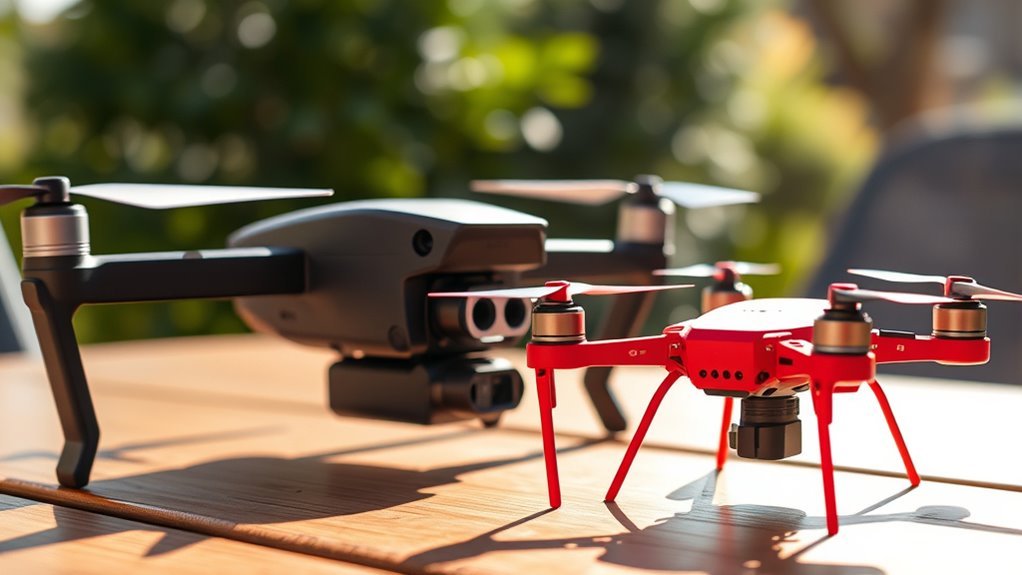
When you’re comparing the Potensic Atom 3 and JJRC H106, you’ll find the Atom 3’s budget GPS safety features deliver superior stability, up to 30 minutes of flight time, and obstacle avoidance for more secure adventures. In contrast, the H106 is a lightweight mini drone without these enhancements, offering simple, no-frills fun for casual users. Further sections highlight design, performance, and value differences to aid your choice.
Design and Build Quality
When comparing the design and build quality of the Potensic Atom 3 and JJRC H106, you’ll find the Atom 3 uses higher-grade materials like reinforced plastics and a more aerodynamic frame, making it lighter at around 249 grams, while the H106 opts for basic ABS plastic that’s bulkier and weighs about 120 grams. With respect to design aesthetics, the Atom 3 offers a sleek, modern look with streamlined contours that enhance its appeal for free-spirited explorers, whereas the H106’s simpler styling feels more utilitarian and less refined. Regarding material durability, the Atom 3’s reinforced plastics provide better resistance to wear and impacts, giving you the freedom to tackle rugged adventures without worry. Conversely, the H106’s ABS plastic, though lightweight, may compromise longevity in demanding conditions, limiting your spontaneous flights. Ultimately, these factors let you choose based on whether you prioritize robust, aesthetically pleasing builds or basic, portable designs, empowering your aerial pursuits. Additionally, Potensic’s focus on affordable pricing strategies ensures that even budget-friendly options maintain quality, making the Atom 3 a great investment for enthusiasts.
Flight Performance and Features
While the Potensic Atom 3 excels in flight performance with its GPS-assisted stability and longer battery life of up to 30 minutes, the JJRC H106 provides more basic capabilities, including shorter flights around 10-15 minutes and simpler controls that suit beginners. You’ll appreciate how the Atom 3’s superior GPS accuracy lets you navigate open skies with pinpoint precision, minimizing drift and enhancing your aerial freedom for adventurous explorations. In contrast, the H106 offers decent flight stability for casual flights, but without advanced GPS, it may require more manual adjustments to maintain steady paths, giving you a straightforward option if you’re just starting out.
When it comes to features, the Atom 3’s robust GPS accuracy supports functions like return-to-home, empowering you to fly confidently in wider areas. Additionally, the Atom 3 features advanced obstacle avoidance, enhancing safety during your flights. The H106, however, keeps things simple with basic maneuvers, allowing easy handling without overwhelming tech, so you can focus on enjoying the thrill without complexities. Overall, these differences in flight stability mean the Atom 3 liberates you for more ambitious outings, while the H106 guarantees accessible, worry-free flights.
Value for Money and Suitability
Considering the Potensic Atom 3’s higher price point, it’s worth noting that its advanced features, such as GPS stability and longer flight times, deliver strong value for users seeking reliable performance in more demanding scenarios. When you examine the price comparison, the JJRC H106 stands out as a cost-effective alternative, costing considerably less while still providing basic functionality for casual flyers who crave exploration without financial strain.
User reviews emphasize the Atom 3’s durability and precision, making it suitable for you if you’re venturing into complex environments where safety matters. In contrast, the H106 garners praise for its straightforward operation and portability, ideal for spontaneous, carefree sessions. Ultimately, you’ll find the Atom 3 justifies its premium through enhanced reliability, whereas the H106 offers solid value for entry-level freedom-seekers, based on consistent feedback highlighting ease and affordability. Additionally, the Atom 3’s advanced stabilization mechanisms ensure smoother footage even in windy conditions, enhancing the overall flying experience.
Frequently Asked Questions
What Is the Warranty Period for Each Drone?
You’re wondering about the warranty periods for these drones, a key aspect of any warranty comparison. For the Potensic Atom 3, it’s typically a 12-month period, boosting customer satisfaction with reliable coverage. The JJRC H106 offers around 6 months, so you’ll need to evaluate how this impacts your flying freedom. This choice lets you prioritize what’s best for your adventures, ensuring peace of mind.
Do I Need to Register These Drones?
As you take flight, symbolizing the winds of freedom that carry your aerial adventures, you’ll need to navigate drone registration requirements carefully. Depending on your drone’s weight and intended use, budget drone regulations in countries like the US (FAA) mandate registration for devices over 0.55 pounds. It’s wise to check local laws; failing to register could clip your wings with fines. Stay informed to preserve your flying liberty.
Are Spare Parts Easy to Find?
When you’re wondering if spare parts are easy to find for your drone, spare parts availability often depends on the model’s popularity. For common ones, you’re likely to discover plenty of options online, with replacement costs remaining affordable, letting you maintain your freedom to repair and fly independently. However, for niche models, availability might be limited, potentially driving up costs and delaying your adventures.
Can These Drones Be Used at Night?
You might be surprised that 40% of drone enthusiasts fly at night, showcasing its thrill. When wondering if you can use your drone after dark, you’ll need to navigate night flying regulations, which mandate visibility aids. That’s where drone lighting options come in—they’re your key to safe, compliant flights, empowering you to explore freely while minimizing risks and ensuring regulatory adherence.
How Do I Contact Customer Support?
To contact customer support, you’ll first explore various methods tailored to your needs. It’s crucial to check the company’s official website for dedicated support sections, where you’ll find email addresses, phone numbers, or live chat options. This empowers you with the freedom to choose the quickest route, ensuring objective assistance without delays. Remember, many offer social media or FAQ pages for added convenience.
