

When it comes to mapping solutions, the Wingtra One Gen II and DJI Mavic 3 Enterprise stand out as top contenders, each offering unique advantages. The Wingtra One Gen II excels in its LTE connectivity over a range of 10 kilometers, while the DJI Mavic 3 Enterprise boasts O3 technology, enabling a remarkable 15km range. This comparison will delve into various critical aspects of both drones, including connectivity options, mapping performance, flight endurance, usability, cost, and ideal applications, providing you with the insights needed to make an informed choice for your specific mapping needs.
Overview of the Drones
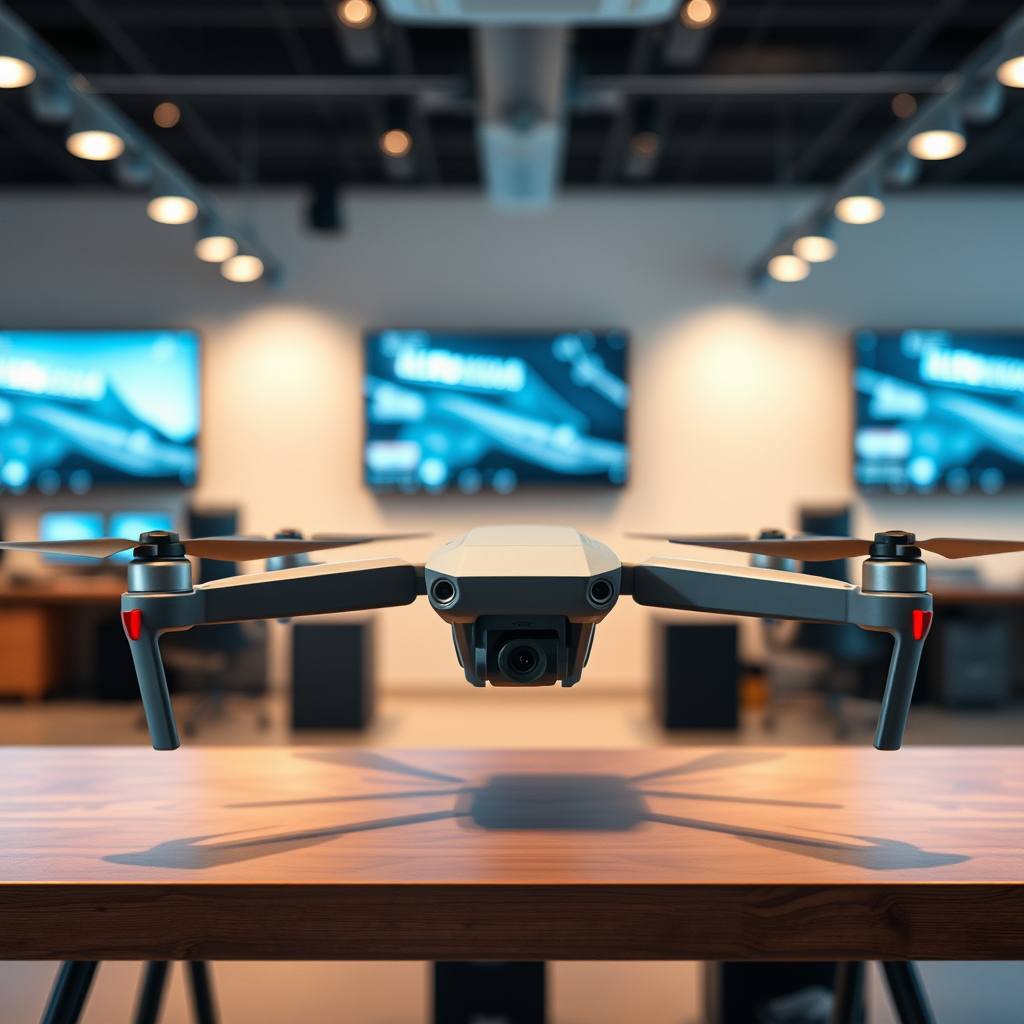
The Wingtra One Gen II is a vertical take-off and landing (VTOL) drone designed specifically for mapping and surveying applications. Its unique design allows it to transition between hover and forward flight seamlessly, enabling it to cover large areas efficiently. Equipped with a high-resolution camera, the Wingtra One Gen II captures detailed aerial imagery suitable for a variety of applications, from agriculture to construction and mining. Its robust build quality and advanced flight capabilities make it a reliable choice for professionals in need of precise geospatial data.
On the other hand, the DJI Mavic 3 Enterprise is a versatile quadcopter that combines powerful imaging capabilities with advanced flight technologies. It features a dual-camera system consisting of a 48MP wide-angle lens and a 12MP thermal camera, making it suitable for diverse applications like search and rescue, infrastructure inspection, and environmental monitoring. The Mavic 3 Enterprise is compact and foldable, providing great portability without compromising on performance, making it an ideal choice for professionals who require a drone that can be easily transported to various job sites.
Connectivity Options

The Wingtra One Gen II is equipped with a 10km LTE capability, allowing it to transmit data and receive commands in real-time, even over long distances. This connectivity ensures that operators can monitor the drone’s performance and make adjustments on-the-fly, enhancing the efficiency of mapping tasks. The LTE connection is particularly beneficial for surveying large areas, as it allows for seamless data transfer and remote operation, reducing the need for manual intervention.
In contrast, the DJI Mavic 3 Enterprise utilizes O3 technology, which provides a remarkable 15km transmission range. This technology enhances the drone’s connectivity by utilizing advanced algorithms to optimize the signal and reduce interference. The extended range allows operators to maintain a stable connection even in challenging environments, which is critical for applications that require real-time data collection and monitoring. Both connectivity options provide flexibility for operators, but the choice between them may depend on the specific requirements of the mapping project.
Mapping Performance
Mapping accuracy and resolution are paramount for any drone used in surveying and mapping applications. The Wingtra One Gen II boasts exceptional mapping performance, with its 24MP Sony RX1R II camera capable of capturing high-resolution images with remarkable detail. Its advanced software algorithms ensure that the images are processed into accurate orthomosaics and 3D models, making it a preferred choice for professionals requiring precise geospatial data.
The DJI Mavic 3 Enterprise also delivers impressive mapping capabilities, with its 48MP camera providing high-resolution images that can be utilized in various mapping applications. However, while the Mavic 3’s imaging technology is advanced, it is primarily designed for versatility rather than specialized mapping functions. The integration of thermal imaging adds unique value for specific applications but may not match the dedicated mapping capabilities of the Wingtra One Gen II. Additionally, the connectivity impact on mapping efficiency is notable; the Wingtra’s LTE capability allows for continuous data transmission, which can significantly streamline the mapping workflow compared to the Mavic 3’s reliance on O3 technology.
Flight Time and Endurance
The Wingtra One Gen II offers a commendable flight time of up to 59 minutes under optimal conditions, which is particularly advantageous for extensive mapping projects. This extended flight duration allows operators to cover large areas without the need for frequent battery changes, enhancing operational efficiency and reducing downtime during mapping sessions.
Conversely, the DJI Mavic 3 Enterprise provides a flight time of around 46 minutes, which, while impressive, may require more frequent landings and battery swaps for larger mapping areas. The difference in flight duration can be crucial for professionals working in expansive environments, where every minute counts. The Wingtra One Gen II’s superior endurance makes it a more suitable option for comprehensive mapping tasks, especially in rural or expansive terrains.
Usability and Software Integration
User-friendliness is a critical factor when selecting a drone for mapping tasks. The Wingtra One Gen II features an intuitive interface that simplifies operations for users, regardless of their experience level. The accompanying WingtraPilot software allows for easy mission planning and data management, enabling operators to focus on collecting high-quality data rather than grappling with complex controls.
The DJI Mavic 3 Enterprise also offers a user-friendly experience, with its DJI Pilot app providing robust mission planning and data analytics tools. The app integrates seamlessly with existing systems, making it easy to incorporate into workflows in various industries. However, the Mavic 3’s complexity in managing its dual-camera system and advanced features may require a steeper learning curve for users compared to the streamlined operation of the Wingtra One Gen II.
Cost and Value Proposition
When considering the cost of these drones, the Wingtra One Gen II is priced at a premium due to its specialized mapping capabilities and advanced features. The investment is justified for professionals who require high precision and reliability in their mapping tasks, especially in industries where accuracy is paramount.
In contrast, the DJI Mavic 3 Enterprise is more competitively priced, making it an attractive option for businesses looking for a versatile drone that can serve multiple functions beyond just mapping. The value proposition for the Mavic 3 lies in its dual-camera system and portability, which can provide additional benefits in various operational scenarios. Ultimately, the decision on which drone offers better value will depend on the specific needs and budget constraints of the user.
Use Cases and Ideal Applications
The Wingtra One Gen II is particularly well-suited for industries that require high-precision mapping, such as agriculture, construction, and land surveying. Its ability to capture detailed aerial imagery and generate accurate topographical maps makes it invaluable for professionals in these sectors. For instance, agricultural planners can utilize the drone for crop monitoring and analysis, while construction managers can rely on it for site surveys and progress tracking.
For the DJI Mavic 3 Enterprise, ideal applications include infrastructure inspection, emergency response, and environmental monitoring. Its dual-camera system allows for versatile data collection, enabling professionals to switch between high-resolution and thermal imaging based on the task at hand. Additionally, the Mavic 3’s compact design makes it a go-to option for urban environments where portability is essential.
In summary, the choice between the Wingtra One Gen II and DJI Mavic 3 Enterprise depends largely on your specific mapping needs and preferences regarding connectivity and performance. Consider factors like range, usability, and budget to make the best decision for your mapping projects. For more detailed comparisons and insights, explore further options or consult with experts in the field.
Frequently Asked Questions
What are the key differences between Wingtra One Gen II and DJI Mavic 3 Enterprise in terms of mapping capabilities?
The Wingtra One Gen II is specifically designed for mapping and surveying tasks, with a vertical takeoff and landing (VTOL) design that allows it to cover large areas efficiently, thanks to its high-resolution camera and long flight times. In contrast, the DJI Mavic 3 Enterprise features advanced imaging capabilities and obstacle avoidance technology, making it suitable for a variety of applications, including mapping. However, the Wingtra One excels in providing detailed topographical data over larger distances, making it a preferred choice for larger-scale mapping projects.
How does the LTE connectivity of the Wingtra One Gen II compare to the O3 transmission system of the DJI Mavic 3 Enterprise?
The Wingtra One Gen II utilizes 10km LTE connectivity, which allows for real-time data transfer and remote monitoring, making it particularly advantageous for operations in remote areas where Wi-Fi or traditional signal might be weak. On the other hand, the DJI Mavic 3 Enterprise employs the O3 transmission system, providing a 15km range with enhanced video transmission and lower latency, ideal for live-streaming applications. While both systems are robust, the choice depends on the specific needs of the user, such as data transmission requirements versus live streaming capabilities.
Which drone is better for large-scale agricultural mapping: Wingtra One Gen II or DJI Mavic 3 Enterprise?
For large-scale agricultural mapping, the Wingtra One Gen II is typically considered the better option due to its VTOL capability and ability to cover vast areas in a single flight. Its mapping-specific design ensures high-quality aerial imagery and data collection that is crucial for precision agriculture. While the DJI Mavic 3 Enterprise offers versatile functionality and impressive imaging, it is generally better suited for smaller areas or detailed inspections rather than extensive agricultural surveys.
Why should I choose the Wingtra One Gen II over the DJI Mavic 3 Enterprise for my surveying needs?
If your primary goal is surveying and mapping large areas with high accuracy, the Wingtra One Gen II is the superior choice due to its specialized design, longer flight endurance, and capability to generate orthomosaics and 3D models. Its LTE connectivity enhances operational flexibility in remote locations. Conversely, if you require a versatile drone for various applications beyond mapping, including inspections or live video feeds, the DJI Mavic 3 Enterprise may be more suitable, though it may not match the Wingtra’s efficiency in large-scale surveys.
How do the flight times of Wingtra One Gen II and DJI Mavic 3 Enterprise impact their performance in mapping applications?
The Wingtra One Gen II boasts impressive flight times of up to 59 minutes, allowing it to cover extensive areas in a single flight without frequent battery changes, which is a significant advantage in mapping applications. Meanwhile, the DJI Mavic 3 Enterprise typically offers around 46 minutes of flight time, which is adequate for smaller mapping tasks but may require more frequent landings for battery swaps in larger projects. Consequently, the longer flight time of the Wingtra One Gen II makes it more efficient for extensive mapping operations.
References
- https://www.wired.com/story/what-is-drone-mapping/
- https://www.researchgate.net/publication/329290501_A_comparative_analysis_of_the_performance_of_drones_in_mapping_and_monitoring
- https://www.nytimes.com/2021/02/26/technology/drones-mapping.html
- https://www.sciencedirect.com/science/article/pii/S2351978921000012
- https://www.geospatialworld.net/blogs/the-role-of-drones-in-mapping-and-surveying/
- https://www.nasa.gov/feature/nasa-drones-collect-data-to-help-keep-maps-accurate
- Unmanned Aircraft Systems (UAS) | Federal Aviation Administration
- https://www.nrcan.gc.ca/science-data/science-research/earth-sciences/geography/geospatial-data/10722
