
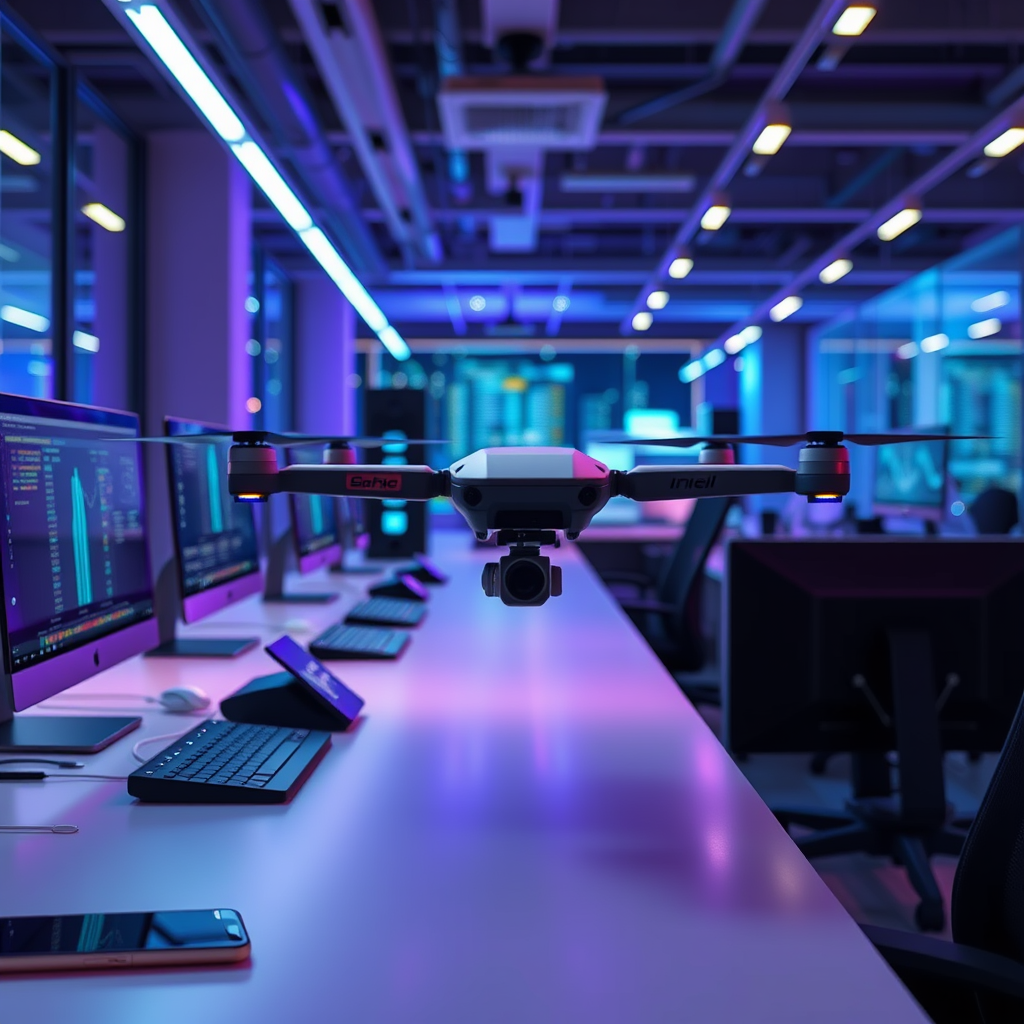
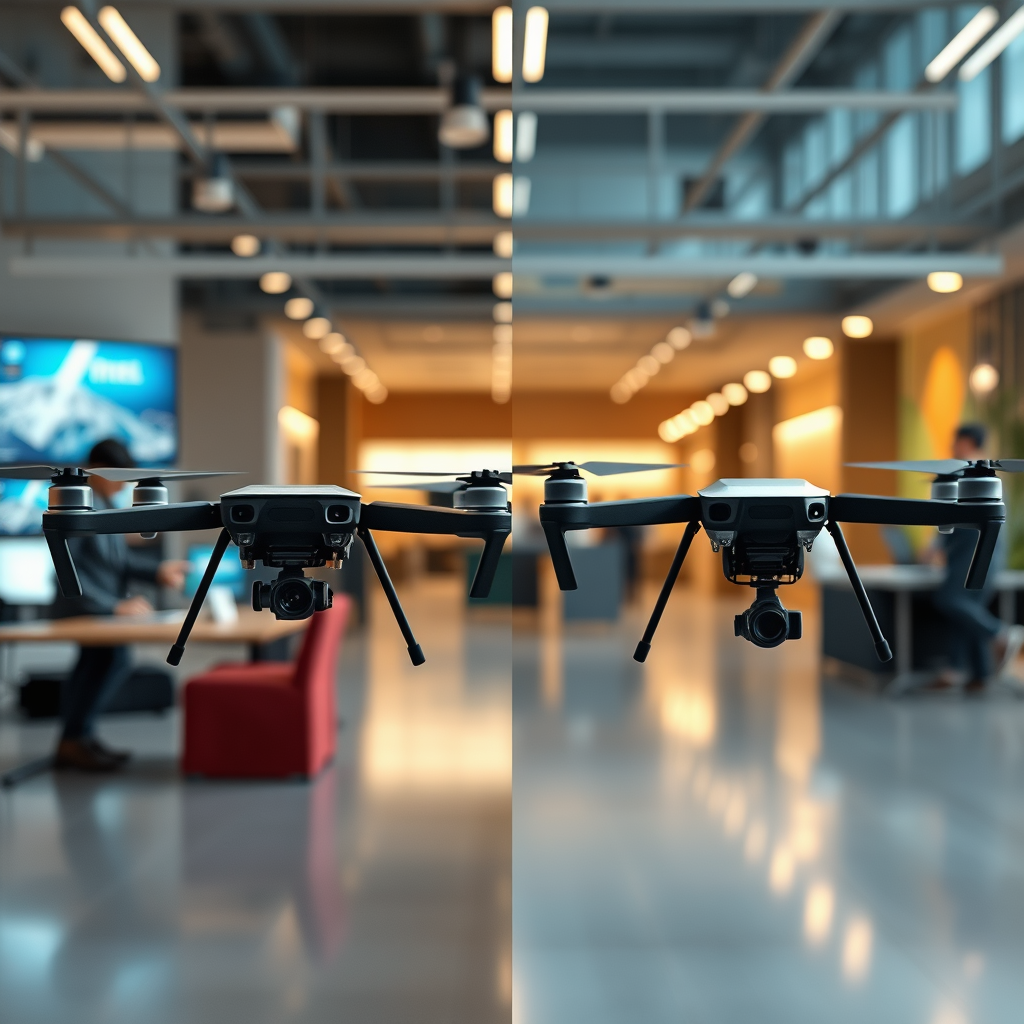
The Intel Shooting Star 2 and Wingtra One cater to distinctly different needs in the drone market, with the former specializing in short-range swarm technology for entertainment and the latter excelling in long-range mapping for various industries. This article delves into their features, applications, and performance metrics, enabling you to identify which drone aligns best with your specific mapping requirements.
Overview of the Intel Shooting Star 2
The Intel Shooting Star 2 is a drone specifically designed for aerial light shows, showcasing a remarkable ability to operate in swarms. This technology allows multiple drones to work in harmony, creating synchronized displays that captivate audiences. Each unit is equipped with LED lights that can produce a kaleidoscope of colors, making it ideal for events like concerts, festivals, and corporate gatherings. However, the Shooting Star 2 has a limitation of a 1km operational range, which confines its use to localized events rather than expansive mapping tasks. This short range makes it optimal for artistic showcases rather than extensive data collection over large areas.
Overview of the Wingtra One
In contrast, the Wingtra One is a hybrid drone that seamlessly merges vertical takeoff and landing (VTOL) capabilities with the efficiency of fixed-wing flight. This unique design allows the Wingtra One to cover large areas quickly and efficiently, boasting an impressive LTE range of up to 10km. Its ability to fly longer distances makes it particularly suitable for comprehensive mapping projects in agriculture, construction, and environmental monitoring. The Wingtra One captures high-resolution images and data, enabling users to conduct detailed surveys and analyses of vast terrains, making it a crucial tool for professionals in various fields.
Key Features Comparison
When comparing the key features of both drones, the distinctions become clear. The Intel Shooting Star 2 primarily emphasizes real-time coordination and creative displays, leveraging multiple drones to execute complex aerial light shows. This feature is particularly appealing for event organizers looking to enhance the visual impact of their events. On the other hand, the Wingtra One focuses on high-resolution mapping capabilities. It is engineered for longer flight durations, allowing it to gather extensive data over large geographical areas. The Wingtra One’s dual capabilities of VTOL and fixed-wing flight ensure that it can take off and land in varied environments while maintaining high efficiency during mapping operations.
Use Case Scenarios
The use case scenarios for these two drones further highlight their unique applications. The Intel Shooting Star 2 is ideally suited for live events, entertainment, and artistic showcases. Its ability to create stunning visual displays makes it a favorite among event planners and production companies. For instance, the drone has been used in various high-profile events, including the Super Bowl halftime shows, where it delivered breathtaking performances that left audiences awestruck.
Conversely, the Wingtra One is favored for surveying, agriculture, and environmental monitoring. Its extended LTE range allows it to cover vast agricultural fields or large construction sites efficiently, enabling accurate data collection and analysis. For example, farmers can utilize the Wingtra One to monitor crop health, assess land conditions, and optimize resources, leading to increased productivity and sustainability.
Performance Metrics
In terms of performance metrics, the Intel Shooting Star 2 excels in rapid deployment and visual precision during synchronized shows. The drones can be launched quickly, and their swarm technology ensures that the displays remain coordinated, creating a mesmerizing experience. This makes the Shooting Star 2 a top choice for events that require immediate setup and execution.
On the other hand, the Wingtra One provides superior data accuracy and efficiency in mapping large geographical areas. Its ability to capture high-resolution images from varying altitudes allows for detailed topographical mapping, which is invaluable for industries such as construction, where accurate site assessments are crucial. The drone’s advanced GPS capabilities and onboard sensors ensure that the data collected is precise, enabling users to make informed decisions based on the insights gathered.
Cost and Accessibility
When evaluating cost and accessibility, the Intel Shooting Star 2 may present a lower entry point for users, particularly those focused on event entertainment. However, to fully leverage its swarm capabilities, an investment in multiple units is necessary, which can increase overall costs. Event organizers should consider this aspect when planning their budgets.
The Wingtra One, while more expensive upfront, offers extensive capabilities that can significantly enhance large-scale projects. Its advanced features and the ability to cover large areas make it a worthy investment for professionals in surveying, agriculture, and environmental monitoring. The return on investment can be substantial, as the data provided by the Wingtra One can lead to enhanced operational efficiencies and cost savings in the long run.
Conclusion of Findings
In summary, the Intel Shooting Star 2 is ideal for artistic performances, leveraging swarm technology to create captivating displays, while the Wingtra One excels in comprehensive mapping with its longer range and high-resolution capabilities. Depending on your specific needs—whether for entertainment or extensive mapping—you can choose the drone that best fits your requirements. For those in search of innovative drone technologies, exploring further reviews and comparisons will provide valuable insights into the rapidly evolving landscape of aerial solutions.
Frequently Asked Questions
What are the main differences between Intel Shooting Star 2 and Wingtra One for event mapping?
The Intel Shooting Star 2 is designed primarily for aerial light shows and event mapping, utilizing a swarm of drones that can operate within a 1km radius, making it ideal for short-range displays. In contrast, the Wingtra One is a fixed-wing drone capable of covering larger areas, with a range of up to 10km, which makes it better suited for comprehensive mapping and surveying projects. Ultimately, the choice depends on the specific needs of the event or mapping project, such as scale and desired outcomes.
How does the flight range of Intel Shooting Star 2 impact its usability for event mapping?
The 1km flight range of the Intel Shooting Star 2 limits its usability primarily to localized events where a dense and visually engaging display is needed. This shorter range allows for precise coordination in performances, but it may not be suitable for larger areas requiring extensive coverage. For events that spread over a larger geographical area, alternative drones like the Wingtra One, with its 10km LTE capability, would be more effective in delivering comprehensive mapping solutions.
Why should I choose the Wingtra One over Intel Shooting Star 2 for aerial surveys?
If your primary focus is on aerial surveys and mapping large areas, the Wingtra One is the better option due to its advanced fixed-wing design, which enables efficient long-range flights. Its ability to cover distances of up to 10km allows for extensive data collection with fewer flights, resulting in higher efficiency and lower operational costs. Additionally, the Wingtra One offers high-resolution imagery and advanced mapping software, making it highly suitable for professional surveying needs.
Which drone is better for creating engaging light shows: Intel Shooting Star 2 or Wingtra One?
The Intel Shooting Star 2 is specifically engineered for creating engaging light shows, making it the clear choice for this purpose. Its swarm capability allows for synchronized performances that can deliver stunning visual effects over short distances. In contrast, the Wingtra One is not designed for entertainment but rather for precision mapping, so it would not be suitable for light shows or similar aerial performances.
What considerations should I keep in mind when choosing between a 1km swarm and a 10km LTE drone for my project?
When choosing between a 1km swarm like the Intel Shooting Star 2 and a 10km LTE drone like the Wingtra One, consider factors such as the scale of the area you need to cover, the type of data or experience you wish to create, and the specific operational requirements of your project. If you require high levels of coordination for visual displays in a confined space, the Shooting Star 2 is optimal. Conversely, for extensive mapping tasks that require a broader reach and detailed data collection, the Wingtra One is the superior choice.
References
- Intel Shooting Star
- Get survey data in hours with Wingtra
- https://www.theguardian.com/technology/2021/jun/30/drone-mapping-technology
- https://www.reuters.com/technology/drones-are-becoming-more-important-mapping-and-surveying-2021-07-15/
- https://www.sciencedirect.com/science/article/abs/pii/S2351978917302075
- https://www.nytimes.com/2022/03/15/technology/drone-mapping.html
- https://www.techcrunch.com/2021/09/28/what-is-drone-mapping/
