

The Wingtra One Gen II outshines the Potensic Atom 3 in aerial mapping with its superior 10km LTE range, while the Potensic Atom 3 offers a more accessible 7.5km FPV option. This article delves deeper into the intricacies of these two drones, providing a comprehensive comparison based on performance, mapping capabilities, battery life, connectivity, pricing, and user experience. By the end, you will have a clearer insight into which drone aligns best with your mapping requirements.
Performance Comparison
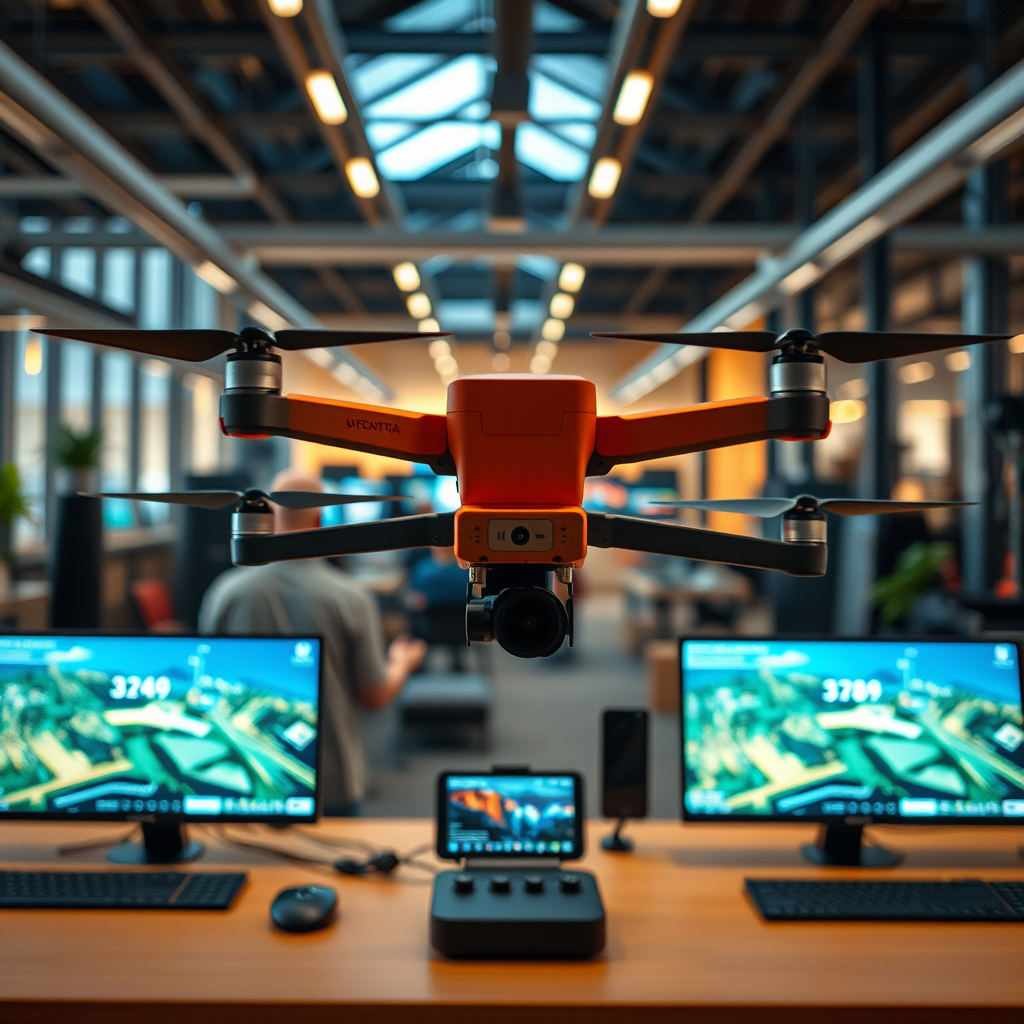
The Wingtra One Gen II is designed for professional-grade operations, featuring advanced flight capabilities that include enhanced stability and a longer operational range. Its vertical take-off and landing (VTOL) design allows for efficient aerial surveys, enabling users to navigate complex terrains with ease. The drone is equipped with a powerful autopilot system that ensures precise flight paths, reducing the risk of human error and enhancing data accuracy. Ideal for large-scale projects, the Wingtra One Gen II can cover vast areas in a single flight, making it a top choice for surveying firms and agricultural applications.
Conversely, the Potensic Atom 3 is tailored for beginners and hobbyists, focusing on user-friendliness rather than extensive capabilities. While its 7.5km range may be limiting for professional use, it provides a smooth flying experience for those new to aerial mapping. The Atom 3 integrates intuitive controls and automated flight features that simplify operation, allowing users to focus on capturing quality images without the steep learning curve associated with more complex drones.
Mapping Capabilities

When it comes to mapping, the Wingtra One Gen II clearly excels. It is capable of producing high-resolution orthomosaics and 3D models, making it ideal for detailed surveys in fields such as agriculture, construction, and environmental monitoring. The drone’s advanced camera options can capture imagery at resolutions exceeding 42 megapixels, ensuring that even the smallest details are visible in the final output. This capability is crucial for professionals who require precise data for analysis and reporting.
On the other hand, the Potensic Atom 3, while offering decent mapping quality, serves primarily as an entry-level option. It provides satisfactory results for casual users, such as hobbyists documenting landscapes or small-scale projects. The mapping capabilities, while functional, do not match the high standards set by the Wingtra One Gen II. However, for those not needing top-tier specifications, the Atom 3 offers a budget-friendly solution that still allows users to engage with aerial photography and mapping.
Battery Life and Flight Time
Battery life is a critical factor in drone performance, especially for mapping applications that require extensive coverage. The Wingtra One Gen II boasts an impressive flight time of up to 59 minutes, which allows it to cover large areas efficiently in a single flight. This extended battery life minimizes the need for frequent recharges, enhancing productivity during extensive mapping sessions. Its high-capacity battery is particularly advantageous for professional users who need to maximize the amount of data collected in one outing.
In contrast, the Potensic Atom 3 has a shorter flight duration of approximately 30 minutes. While this may suffice for smaller projects or casual use, it can prove to be a limitation for users looking to conduct comprehensive surveys. More frequent battery changes may disrupt workflow and require additional planning for larger mapping tasks. However, for hobbyists or those with less demanding needs, the Atom 3’s battery life can be adequate.
Connectivity and Control
The Wingtra One Gen II features a robust 10km LTE capability, enabling reliable data transmission over long distances. This connectivity ensures that users maintain control and receive real-time feedback while flying, which is essential for precise mapping operations. The LTE connection allows for seamless integration with various software platforms, facilitating efficient data processing and analysis post-flight. This feature is particularly advantageous for professionals who rely on timely data delivery for critical decision-making.
On the other hand, the Potensic Atom 3 employs FPV (First-Person View) technology, which enhances the real-time control experience. While this technology improves the pilot’s ability to navigate and avoid obstacles, it inherently limits the operational range to 7.5km. The focus on FPV is particularly appealing for recreational users seeking an immersive flying experience. However, for those prioritizing extensive mapping capabilities, the limited range of the Atom 3 may pose challenges.
Price and Value Assessment
In terms of pricing, the Wingtra One Gen II occupies a premium segment, reflecting its high-end features and professional-grade performance. The investment is justified by the superior mapping capabilities, extended range, and robust support offered to users. For businesses and professionals requiring reliable data for critical applications, the cost of the Wingtra One Gen II can be considered a worthwhile investment given its return in quality and efficiency.
Conversely, the Potensic Atom 3 is positioned as a budget-friendly option, appealing to casual users and hobbyists. While it may lack the advanced features of the Wingtra One Gen II, it provides essential mapping functionalities at a fraction of the cost. This affordability makes the Atom 3 an attractive choice for those just starting in the world of drone mapping or for individuals who require a basic tool for personal projects.
User Experience and Support
The user experience associated with the Wingtra One Gen II is enhanced by the extensive support and resources provided for professional users. The company offers comprehensive training materials, customer support, and maintenance services, ensuring that operators can maximize the drone’s capabilities. This emphasis on user support is particularly beneficial for organizations incorporating drone technology into their workflows for the first time.
In contrast, the Potensic Atom 3 is designed with simplicity in mind, featuring a straightforward interface that appeals to novice users. The intuitive controls make it easy for beginners to learn how to operate the drone effectively and start mapping their surroundings. However, while the user experience is streamlined, it may lack the depth of resources available for more advanced drones. This difference highlights the target audience for each product, with the Atom 3 catering to those seeking a no-fuss entry into drone mapping.
Final Thoughts on Use Cases
Ultimately, the Wingtra One Gen II is the ideal choice for professionals who require high-quality data and extensive coverage for mapping projects. Its superior capabilities, extended flight time, and robust support make it suitable for industries such as surveying, agriculture, and construction. For users who prioritize data accuracy and efficiency, the investment in the Wingtra One Gen II is well worth it.
In contrast, the Potensic Atom 3 serves as an excellent option for hobbyists and casual users looking for an affordable yet reliable mapping solution. Its user-friendly design and decent mapping capabilities enable newcomers to engage in aerial photography and mapping without a steep financial commitment. For those who do not require professional-grade features, the Atom 3 can effectively meet their mapping needs.
By evaluating the key differences and strengths of the Wingtra One Gen II and Potensic Atom 3, you can make an informed decision tailored to your specific mapping requirements and budget constraints. Each drone offers unique advantages that cater to different audiences, allowing users to choose the best fit for their needs.
Frequently Asked Questions
What are the key differences between the Wingtra One Gen II and Potensic Atom 3 in terms of mapping capabilities?
The Wingtra One Gen II excels in high-precision mapping with its 10km LTE connectivity, making it ideal for large-scale surveying projects, while the Potensic Atom 3 offers a 7.5km FPV mapping option that is more suited for hobbyists or smaller mapping tasks. The Wingtra One Gen II’s advanced technology allows for better elevation mapping and higher resolution imagery, whereas the Atom 3 provides a more budget-friendly solution but may lack the same level of detail and accuracy required for professional applications.
How does the flight time of the Wingtra One Gen II compare to the Potensic Atom 3?
The Wingtra One Gen II boasts a flight time of up to 59 minutes, allowing for extensive coverage in a single mission, especially useful for larger areas. In contrast, the Potensic Atom 3 has a shorter flight time, typically around 20-25 minutes, which may require multiple flights to complete a mapping project. This difference can significantly impact project efficiency, especially for users who need to cover large areas quickly.
Why is LTE connectivity important for drone mapping, and how does it affect the Wingtra One Gen II’s performance?
LTE connectivity is crucial for drone mapping as it allows for real-time data transmission and remote control over long distances, which significantly enhances operational flexibility and safety. The Wingtra One Gen II’s 10km LTE capability enables users to monitor and adjust flight paths or collect data more efficiently, leading to improved mapping accuracy and reduced downtime compared to drones like the Potensic Atom 3, which rely on shorter-range FPV connections.
Which drone is better for beginners, the Wingtra One Gen II or Potensic Atom 3?
For beginners, the Potensic Atom 3 is generally the better option due to its user-friendly interface and lower price point, making it accessible for those new to drone mapping. It offers essential features without the complexity and cost associated with professional-grade drones like the Wingtra One Gen II, which, while offering superior performance and capabilities, may be overwhelming for novices and requires a steeper learning curve.
What are the best use cases for the Wingtra One Gen II compared to the Potensic Atom 3?
The Wingtra One Gen II is best suited for professional applications such as agricultural monitoring, construction site surveys, and environmental assessments due to its superior mapping accuracy and long-range capabilities. Conversely, the Potensic Atom 3 is ideal for casual users and hobbyists who want to explore drone mapping for fun or for small projects, such as capturing basic aerial imagery or recreational mapping in local parks.
References
- Robotic mapping
- https://www.nasa.gov/feature/nasa-uses-drones-to-help-map-disaster-impacts
- https://www.sciencedirect.com/science/article/pii/S0303243418302079
- https://www.techrepublic.com/article/what-is-drone-mapping-and-how-it-works/
- https://www.geospatialworld.net/blogs/drone-mapping-a-game-changer-in-the-geospatial-industry/
- https://www.abc.net.au/news/2021-06-16/potensic-atom-3-drone-mapping/100226136
- Unmanned Aircraft Systems (UAS) | Federal Aviation Administration
- https://www.wired.com/story/drone-mapping/
