
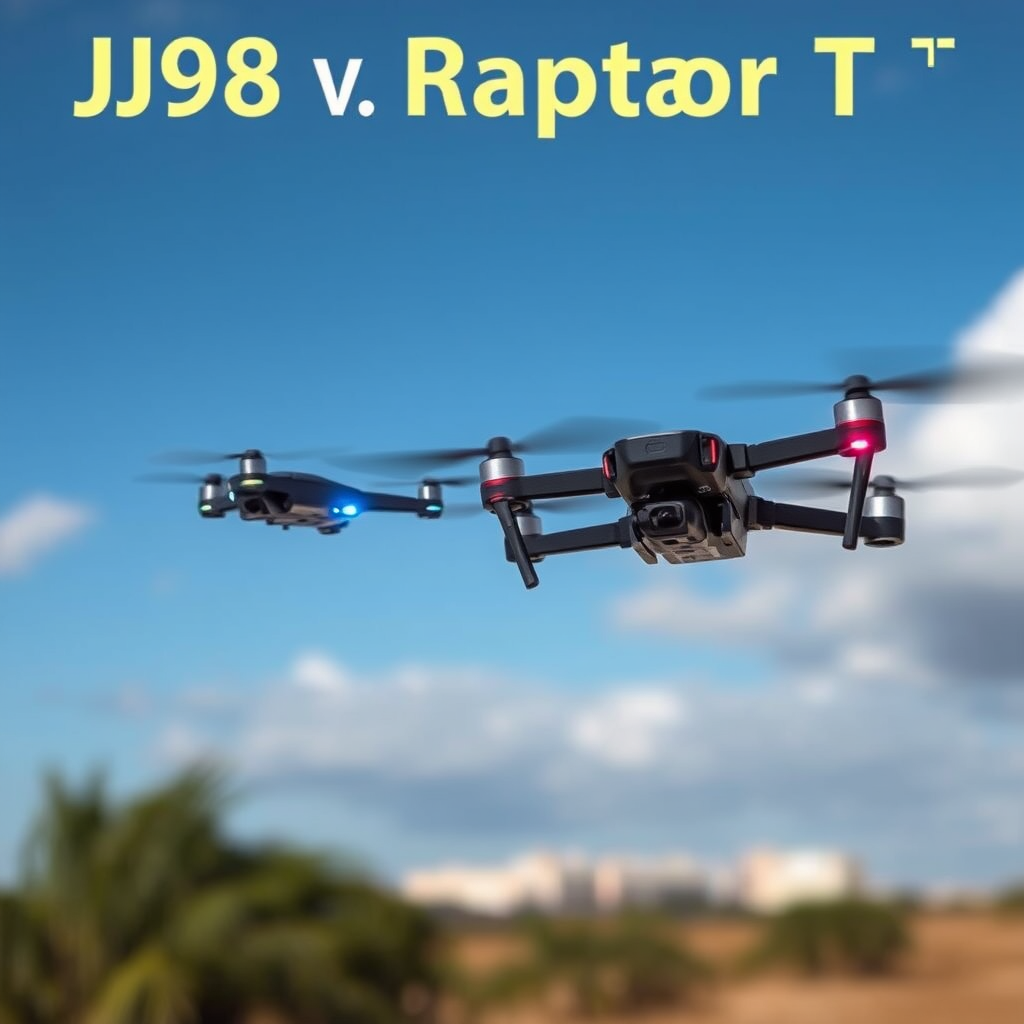
When it comes to selecting the right mini drone, the JJRC H98 and Anzu Raptor T present distinct advantages catering to different user needs. The JJRC H98, with its 1km Wi-Fi range, is perfect for casual flyers and indoor use, while the Anzu Raptor T boasts a remarkable 7km range under NDAA regulations, making it a superior choice for outdoor enthusiasts and professionals. This comparison will help you decide which mini drone best suits your needs based on range, features, and overall performance.
Range Comparison
The range of a drone significantly influences its usability, and here, the differences between the JJRC H98 and Anzu Raptor T are stark. The JJRC H98 is designed primarily for close-range use, catering well to hobbyists who enjoy flying in confined spaces or within their backyard. With a maximum Wi-Fi range of 1km, this drone excels in indoor environments or small outdoor areas, making it an ideal choice for beginners who are still learning the ropes of drone operation.
In contrast, the Anzu Raptor T is engineered for exploration beyond the ordinary. Its impressive 7km range allows seasoned pilots to venture further from their starting point, making it suitable for outdoor adventures, surveying tasks, or capturing expansive landscapes. This long-range capability opens up opportunities for professional drone operators seeking to gather data or imagery over larger areas. The choice between these two drones ultimately hinges on how and where you intend to fly—whether in confined spaces or wide-open terrains.
Performance and Stability
When evaluating performance and stability, both drones cater to different user experiences. The JJRC H98 provides decent stability, particularly useful for beginners. Its user-friendly controls and responsive flight mechanisms facilitate easy navigation, making it less daunting for those new to drone flying. This drone often comes equipped with features such as altitude hold and one-key takeoff and landing, enhancing the overall user experience for novices.
On the other hand, the Anzu Raptor T excels in stability and performance, especially at longer distances. It is equipped with advanced GPS and stabilization technology that allows for precise control, even in challenging wind conditions. The drone’s ability to maintain a steady flight path is crucial for capturing high-quality images and videos, particularly when flying at extended ranges. For experienced pilots, the Raptor T’s sophisticated features offer a level of control and reliability that can significantly enhance their flying experience.
Camera Quality
Camera quality is a pivotal factor for many drone enthusiasts, especially those interested in aerial photography or videography. The JJRC H98 typically features a basic camera that is adequate for casual photography and videos, making it suitable for hobbyists who do not require high-definition imagery. This drone often comes with a 720p HD camera, which provides decent image quality for social media sharing or home videos.
In stark contrast, the Anzu Raptor T often includes higher resolution capabilities, including options for 4K video and high-definition still images. This makes it an excellent choice for professionals seeking to capture stunning aerial footage or conduct detailed inspections. The advanced camera features, combined with the drone’s long-range capabilities, allow users to document their adventures or projects in greater detail and quality. For those serious about aerial imaging, the Anzu Raptor T clearly stands out as the superior option.
Battery Life and Flight Time
Battery life and flight time are crucial considerations for any drone user, particularly those planning to engage in longer flights. The JJRC H98 generally has a shorter flight time, typically ranging from 10 to 15 minutes per charge. While this is adequate for a quick indoor flight or short outdoor excursions, frequent recharging can become tedious for users looking to maximize their flying experience.
In contrast, the Anzu Raptor T often boasts extended flight times, averaging between 20 to 30 minutes, depending on conditions and usage. This extended battery life is essential for long-distance flights, allowing users to explore larger areas without the constant need to land and recharge. The improved battery efficiency of the Raptor T not only enhances user satisfaction but also expands the possibilities for aerial photography and data collection, making it a more practical choice for serious drone enthusiasts and professionals.
User Experience and Difficulty
User experience varies significantly between the JJRC H98 and the Anzu Raptor T, primarily due to their respective target audiences. The JJRC H98 is particularly well-suited for beginners, featuring intuitive controls and a straightforward setup process. This drone’s design focuses on ease of use, making it an excellent entry point for those new to drone flying, enabling them to build confidence as they learn the basics of aerial navigation.
Conversely, the Anzu Raptor T may present a steeper learning curve due to its advanced features and capabilities. While it offers seasoned pilots greater control and versatility, it may intimidate those unfamiliar with drone technology. This drone is designed for experienced users who appreciate the nuances of flight dynamics and wish to leverage sophisticated functionalities such as waypoint navigation and custom flight paths. For pilots seeking a challenge and an opportunity to refine their skills, the Raptor T provides a compelling platform.
Price and Value
Pricing plays an essential role in the decision-making process when selecting a drone. The JJRC H98 is generally more affordable, appealing to hobbyists and casual users who may be hesitant to invest heavily in drone technology. Its lower price point makes it accessible for individuals looking to explore drone flying without a significant financial commitment.
On the other hand, the Anzu Raptor T, while priced higher, offers a wealth of advanced technology and features that justify the investment for serious users. The significant difference in price reflects the Raptor T’s superior range, camera quality, and overall performance. For professionals or dedicated enthusiasts, the value of the Anzu Raptor T is evident in its ability to deliver high-quality results and extensive functionality, making it a worthwhile investment for those who demand more from their drone experience.
In summary, both drones cater to different needs: choose the JJRC H98 for casual, short-range fun or the Anzu Raptor T for serious long-distance flying and professional use. Regardless of your choice, it’s crucial to assess your flying goals, budget, and experience level to ensure you select the best mini drone for your requirements. Explore your options and take your drone experience to the next level today!
Frequently Asked Questions
What are the key differences between the JJRC H98 and the Anzu Raptor T in terms of Wi-Fi range?
The JJRC H98 offers a Wi-Fi control range of approximately 1km, making it suitable for casual flyers and beginners who want to explore their surroundings without venturing too far. In contrast, the Anzu Raptor T boasts an impressive 7km range, which is ideal for more experienced pilots and those looking to capture expansive aerial footage over larger areas. This significant difference in range can greatly influence your choice depending on your intended use case.
How does the NDAA compliance affect the Anzu Raptor T compared to the JJRC H98?
The Anzu Raptor T is designed to comply with NDAA regulations, which means it is suitable for government and military applications, as well as for users who prioritize data security and privacy. On the other hand, the JJRC H98 does not have NDAA compliance, which may be a concern for users seeking a drone that adheres to stringent security standards. This factor can be critical for professional users who need to ensure their equipment meets federal guidelines.
Which drone is best for beginners: JJRC H98 or Anzu Raptor T?
The JJRC H98 is generally considered the better option for beginners due to its user-friendly features and shorter Wi-Fi range of 1km, which makes it easier to control and manage. The Anzu Raptor T, while offering advanced capabilities and a longer range, may be more suitable for experienced pilots who are familiar with drone navigation and operation. Therefore, novices should start with the JJRC H98 to build their skills before considering more advanced models like the Anzu Raptor T.
Why is Wi-Fi range important when choosing between the JJRC H98 and Anzu Raptor T?
Wi-Fi range is crucial because it determines how far you can fly your drone while maintaining control and video transmission. A longer range, like the 7km offered by the Anzu Raptor T, allows for more extensive exploration and creative shooting opportunities, while the 1km range of the JJRC H98 may restrict your flying area. Understanding your needs—whether for recreational flying or professional aerial photography—will help you select the drone that best fits your requirements.
What features should I consider when comparing the JJRC H98 and Anzu Raptor T?
When comparing these two drones, consider factors such as camera quality, battery life, flight time, ease of use, and additional functionalities like GPS and obstacle avoidance. The JJRC H98 is typically more straightforward with basic features, making it beginner-friendly, while the Anzu Raptor T may offer advanced capabilities such as higher-resolution cameras and longer flight times, catering to serious enthusiasts and professionals. Evaluating these features relative to your experience level and intended use will help you make an informed decision.
References
- https://en.wikipedia.org/wiki/Drone_usage_in_the_United_States
- https://www.bbc.com/news/technology-56928763
- https://www.reuters.com/technology/us-drone-regulations-2021-05-05/
- https://www.theguardian.com/technology/2020/aug/12/us-drone-regulations-privacy-issues
- https://www.nytimes.com/2021/06/24/technology/drones-us-regulations.html
- https://www.techcrunch.com/2021/02/25/us-drone-regulations-and-the-ndaa/
- https://www.wired.com/story/national-defense-authorization-act-2021-drone-regulations/
