
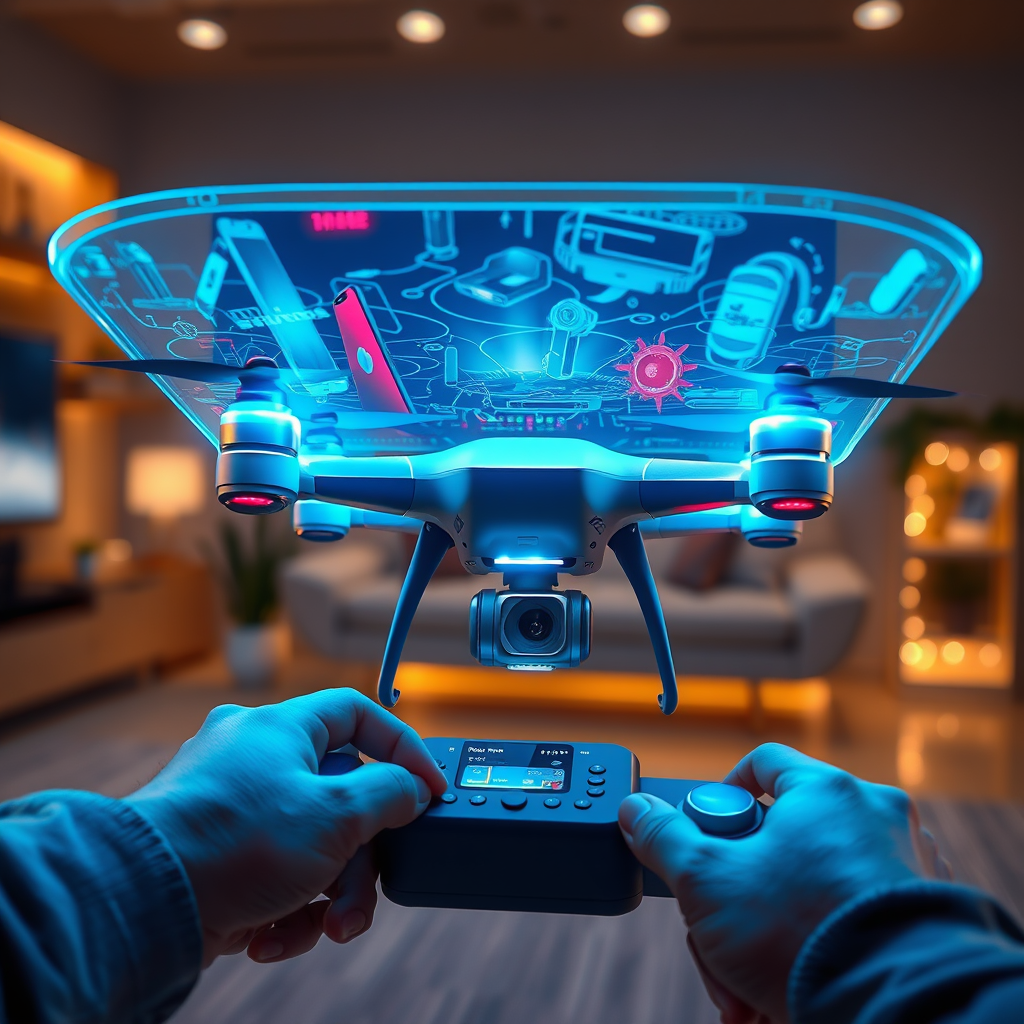
Holographic displays are set to transform drone control by offering operators an immersive and intuitive interface that dramatically improves situational awareness. This advanced technology allows for real-time visualization of critical flight data and navigation systems, facilitating the management of complex missions and enhancing operational efficiency. As the development of holographic displays continues to evolve, it is essential to understand their advancements, potential applications, and the challenges that must be addressed for widespread adoption in the drone industry.
Advancements in Holographic Technology
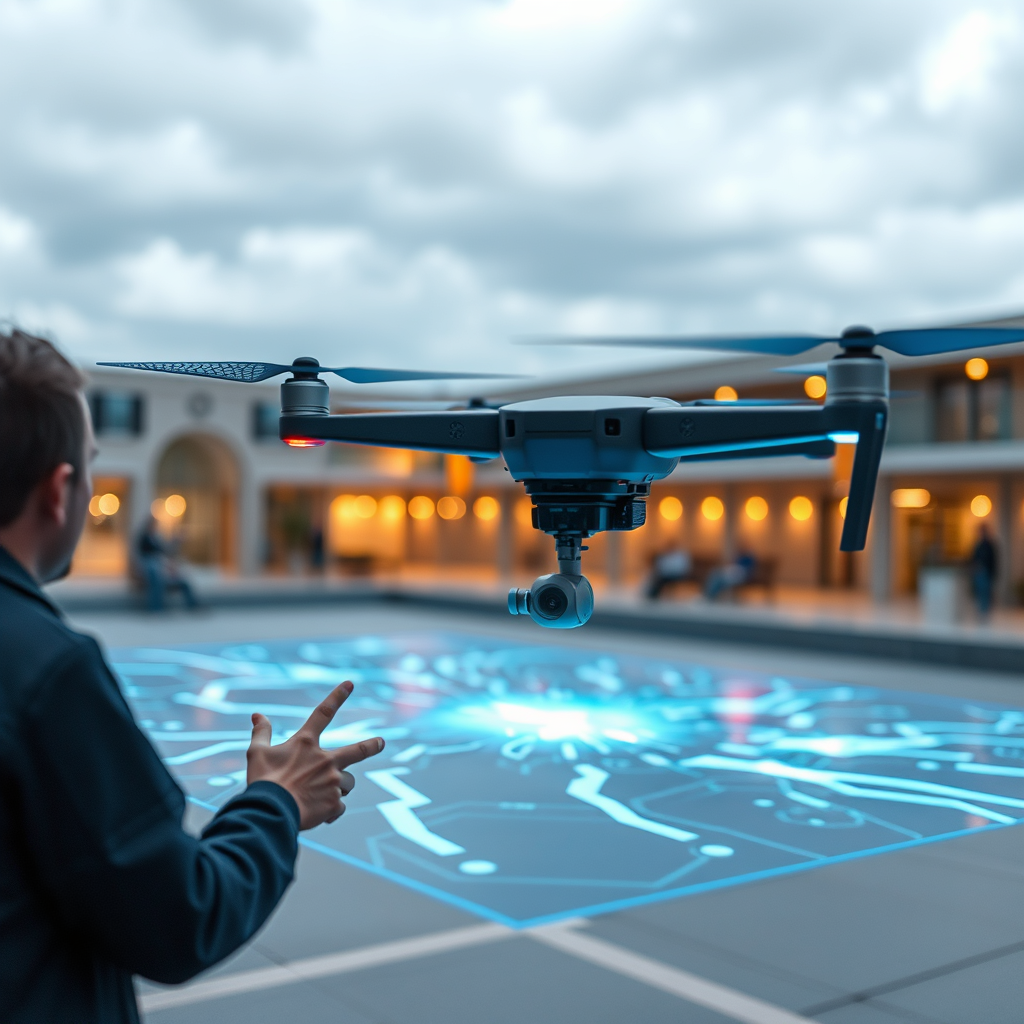
Recent strides in holographic technology have led to the creation of lightweight and portable holographic projectors, which are essential for drone operators who require mobility and ease of use. These projectors utilize advanced optics and digital light processing to create three-dimensional images that can be viewed from various angles, making them suitable for dynamic environments. For instance, the development of compact holographic displays, such as those by companies like Looking Glass Factory, has made it possible to project detailed 3D models and real-time data overlays without the need for cumbersome equipment.
Moreover, advancements in resolution and color accuracy have significantly enhanced the clarity of visualizations, allowing operators to perceive intricate details during drone missions. High-resolution displays can present flight paths, terrain information, and environmental data in vivid color, increasing the operator’s ability to analyze and respond to changing conditions. For example, the integration of high-definition holographic displays can enable drone pilots to visualize even the slightest variations in landscape, which is crucial for tasks such as surveying or mapping.
Benefits for Drone Operators
One of the primary benefits of using holographic displays in drone control is the marked improvement in situational awareness through 3D mapping and data overlays. By visualizing flight data in a three-dimensional space, operators can better understand their drone’s surroundings, including obstacles, terrain features, and other aircraft. This enhanced perspective supports informed decision-making, particularly in complex environments such as urban areas or disaster zones.
Furthermore, holographic displays can significantly reduce the cognitive load on operators. Traditional interfaces, often cluttered with information and controls, can overwhelm pilots, especially during high-stress situations. Holographic technology simplifies interaction by allowing operators to focus on critical data while providing context through intuitive visualizations. This reduction in cognitive burden enables more efficient multitasking, allowing operators to manage multiple drones or tasks simultaneously without compromising performance.
Applications in Various Industries
Holographic displays hold promising applications across various industries that utilize drones. In agriculture, for example, farmers can employ holographic technology for crop monitoring and management. By visualizing growth patterns and soil health in 3D, farmers can make data-driven decisions that enhance yield and efficiency. The ability to overlay real-time data on crop conditions can also facilitate targeted interventions, improving overall agricultural sustainability.
In the realm of search and rescue missions, holographic displays can provide critical area visualization, enhancing situational awareness for teams in the field. For instance, during a disaster response scenario, holographic projections can illustrate the layout of the affected area, highlight obstacles, and pinpoint locations of interest such as survivors or hazardous materials. This capability not only improves the effectiveness of rescue operations but also enhances safety for rescue personnel.
Integration with Existing Drone Systems
The successful integration of holographic displays with existing drone systems is essential for maximizing their potential. Compatibility with current drone software and hardware will allow operators to adopt this technology without overhauling their entire operational setup. Holographic displays can be designed to interface seamlessly with popular flight control software, enabling operators to visualize flight paths and mission data within their familiar systems.
Additionally, the potential for augmented reality (AR) features to enhance navigation presents an exciting opportunity. By overlaying holographic information directly onto the pilot’s view of the environment, operators can receive real-time guidance, obstacle avoidance alerts, and other critical information without diverting attention from the drone’s flight. This integration could redefine how pilots interact with their drones, making operations more intuitive and efficient.
Challenges and Limitations
Despite the numerous advantages of holographic displays, several challenges and limitations must be addressed for successful implementation. Technical hurdles such as latency in display response and clarity in outdoor environments can hinder the effectiveness of holographic technology. Operators require instant feedback and high-quality visuals to make split-second decisions during missions, which poses a challenge for current display technologies.
Cost implications also represent a significant barrier to widespread adoption, particularly among small operators and startups. The investment required for advanced holographic systems may be prohibitive for many in the industry. To overcome this challenge, manufacturers and developers must focus on creating cost-effective solutions that maintain high-quality performance, thereby broadening accessibility.
Future Prospects and Innovations
Looking ahead, emerging trends in user interface design for holographic displays promise to further enhance their utility in drone control. Innovations in gesture recognition and voice commands could allow operators to interact with holographic interfaces more naturally, reducing reliance on traditional controls. These advancements could lead to more fluid and intuitive interaction models, making drone operation more accessible to a broader audience.
Moreover, potential collaborations between tech companies and drone manufacturers may drive the development of integrated systems that combine the best of both worlds. By leveraging expertise in software development, optics, and drone technology, these partnerships can accelerate the creation of robust holographic solutions tailored specifically for drone applications.
In conclusion, the advancements in holographic displays represent a significant leap forward in drone control technology. As these systems become more accessible and integrated into everyday operations, drone operators will benefit from enhanced capabilities, improved situational awareness, and more efficient mission outcomes. Staying informed about these developments and considering how holographic technology could transform your own use of drones will be crucial as the industry continues to evolve.
Frequently Asked Questions
What are holographic displays and how can they improve drone control?
Holographic displays are advanced visual technologies that project three-dimensional images, enabling users to interact with digital content in a more immersive manner. In drone control, these displays can enhance situational awareness by providing a 360-degree view of the drone’s surroundings, allowing operators to visualize data in real-time, make quicker decisions, and reduce the risk of crashes or miscalculations.
How will holographic displays change the way we pilot drones in the future?
Holographic displays will revolutionize drone piloting by providing intuitive interfaces that allow operators to manipulate flight paths and monitor environmental conditions with ease. By overlaying critical flight data directly onto the pilot’s field of view, drone operators can engage in more complex maneuvers and multitasking, ultimately leading to safer and more efficient flight operations.
Why are holographic displays considered a game-changer for commercial drone applications?
Holographic displays are considered a game-changer for commercial drone applications due to their ability to enhance data visualization and interaction. They can be particularly beneficial in industries like agriculture, logistics, and surveying, where real-time data can be overlaid on live images, allowing for better analysis and decision-making. This technology can also facilitate remote collaboration, enabling teams to work together seamlessly regardless of location.
What are the best holographic display technologies currently available for drone control?
Some of the best holographic display technologies for drone control include Microsoft HoloLens and Magic Leap, both of which offer mixed-reality experiences by blending virtual objects with the real world. These technologies provide high-resolution graphics, gesture recognition, and spatial mapping, making them ideal for drone operators looking to enhance their control interfaces and improve situational awareness.
Which industries are most likely to benefit from holographic displays in drone operations?
Industries such as agriculture, construction, search and rescue, and surveillance are most likely to benefit from the integration of holographic displays in drone operations. In agriculture, for example, farmers can analyze crop health and optimize resources using real-time data visualizations. In construction and search and rescue, professionals can overlay critical information in their field of view, improving coordination and effectiveness during complex operations.
References
- https://en.wikipedia.org/wiki/Holography
- https://www.sciencedirect.com/science/article/pii/S0360835217301361
- https://www.nasa.gov/feature/nasa-s-holographic-technology
- https://www.techrepublic.com/article/holographic-displays-how-they-work-and-what-they-mean-for-the-future/
- https://www.bbc.com/news/technology-56394862
- https://www.researchgate.net/publication/330765989_Holographic_displays_and_their_applications_in_drone_control
- https://www.nist.gov/news-events/news/2021/07/nist-researchers-use-holograms-drones-visualize-3d-space
- https://www.itu.int/en/ITU-T/focusgroups/ai4good/Documents/Ai4Good-WhitePaper-Holograms.pdf
