
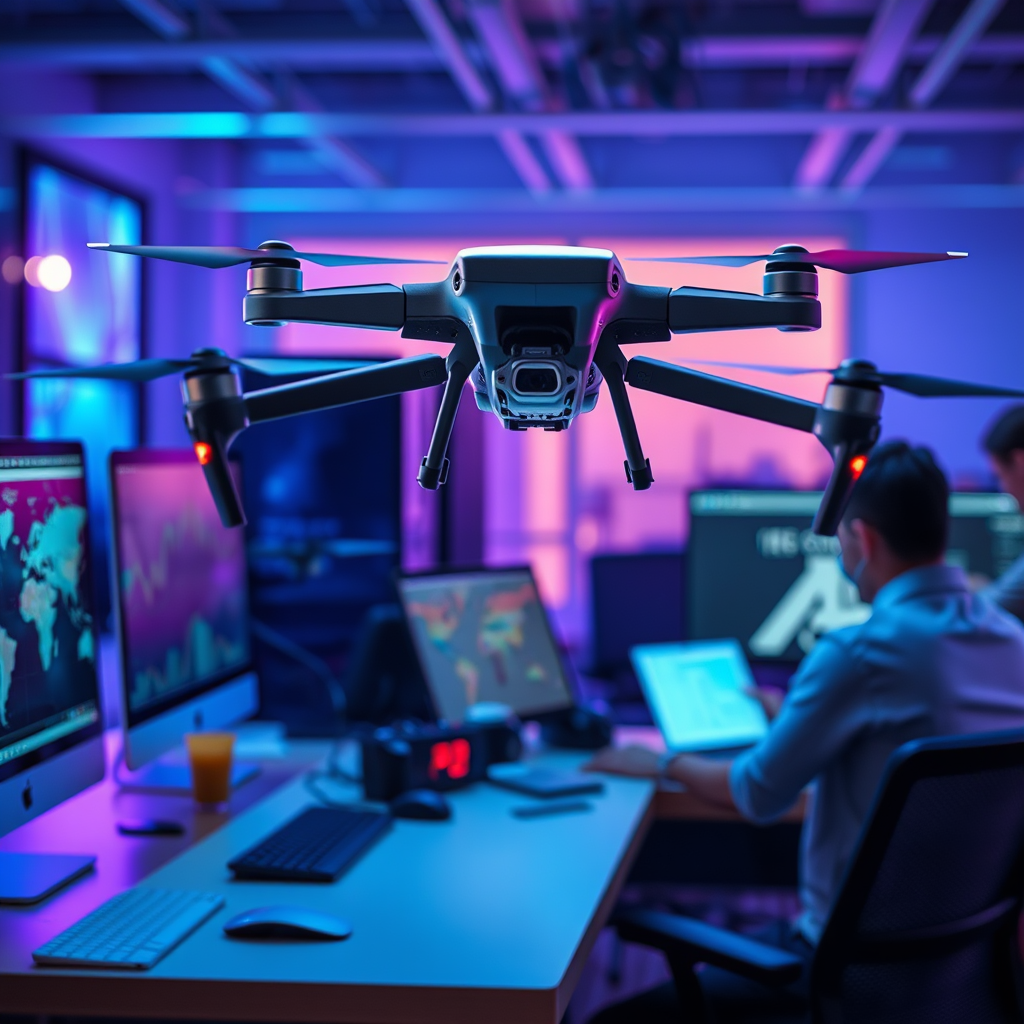
Drones are revolutionizing industries by utilizing artificial intelligence for predictive analytics, enabling them to gather and analyze data more effectively than ever before. This combination allows for smarter decision-making in sectors such as agriculture, logistics, and disaster management. In this article, we will explore how drones leverage AI technologies to forecast trends and improve operational efficiency.
Understanding Predictive Analytics
Predictive analytics refers to the use of statistical algorithms and machine learning techniques to identify the likelihood of future outcomes based on historical data. This form of data analysis is crucial in today’s data-driven decision-making landscape, allowing organizations to anticipate trends, optimize operations, and mitigate risks. By analyzing large volumes of data, businesses can make informed decisions that enhance productivity and drive growth.
Predictive analytics is increasingly applied across various industries, including finance for credit scoring, healthcare for patient outcome predictions, and marketing for consumer behavior forecasting. In each of these sectors, the ability to predict future events based on past behaviors can lead to improved strategies and enhanced resource allocation.
The Role of AI in Drones
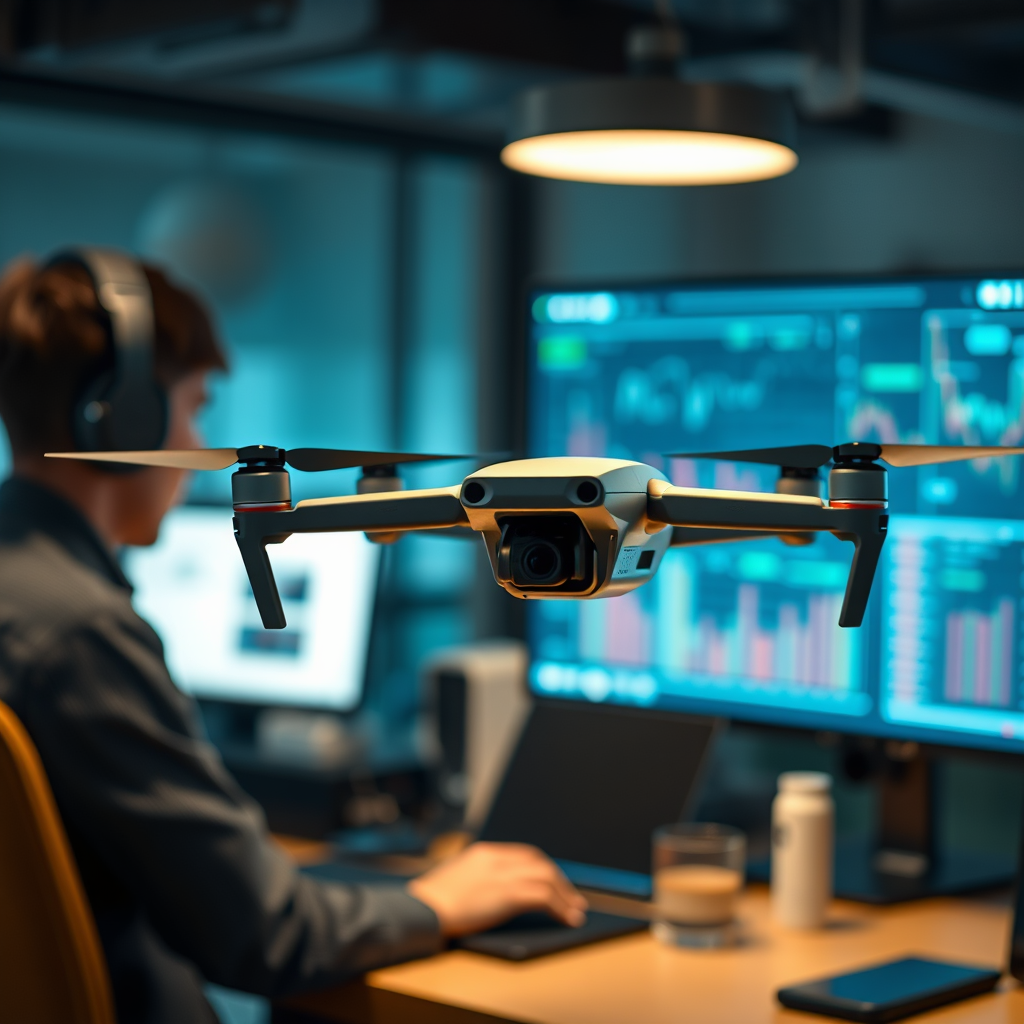
Artificial intelligence plays a pivotal role in enhancing the functionality of drones, enabling them to perform complex data analysis tasks that were previously unfeasible. Key AI technologies utilized in drones include machine learning, which allows the drone to learn from data patterns and improve its predictions over time, and computer vision, which enables the drone to interpret visual information from its surroundings.
Through the integration of AI, drones can analyze vast amounts of data collected from their sensors, cameras, and other onboard tools. For example, a drone equipped with computer vision can identify specific crop diseases by analyzing images captured during flight, thus informing farmers about the health of their fields in real-time. This AI-enabled capability significantly enhances the drone’s data collection and analytical abilities, making it a powerful tool for various applications.
Applications of Drones in Agriculture
In the agricultural sector, drones are transforming traditional farming practices by providing precise data on crop health, soil conditions, and yield predictions. Utilizing multispectral and thermal imaging, drones can assess crop vitality and detect issues such as pest infestations or nutrient deficiencies. This capability allows farmers to take corrective actions promptly, ultimately leading to improved yields and reduced waste.
Real-time data analysis facilitated by AI enhances precision farming techniques. For instance, a farmer can deploy a drone to survey their fields and receive immediate insights on which areas require irrigation or fertilization. By leveraging this data, farmers can make timely decisions that optimize resource use and maximize profit margins, showcasing how drones equipped with AI can revolutionize agricultural practices.Enhancing Logistics and Supply Chain Management
Drones are increasingly being adopted in logistics and supply chain management to streamline operations and enhance efficiency. With predictive analytics, drones can optimize delivery routes by analyzing traffic patterns, weather conditions, and customer demand. Companies like Amazon are exploring drone delivery systems that not only promise faster shipping times but also reduce transportation costs by optimizing delivery pathways.
Moreover, predictive analytics can aid in inventory management by forecasting demand trends. For example, a retail company can utilize drones to conduct inventory checks in their warehouses, analyzing stock levels and customer purchasing patterns to predict when to reorder products. This proactive approach minimizes stockouts and overstock situations, ultimately leading to more sustainable inventory practices.
Disaster Management and Emergency Response
In the realm of disaster management, drones equipped with predictive analytics can provide critical insights during emergencies. They are capable of quickly assessing damage in affected areas, mapping out hazardous zones, and predicting potential disaster outcomes based on current data. For instance, during natural disasters such as hurricanes or wildfires, drones can be deployed to collect real-time data, enabling emergency responders to allocate resources more effectively.
Successful deployments of drones in emergency situations have been witnessed in various instances, such as the use of drones during the 2017 hurricane season in Puerto Rico. Drones were deployed to assess the extent of damage, providing crucial information that informed recovery efforts. This application underscores the potential of drones as essential tools for enhancing response strategies in disaster scenarios.
Challenges and Limitations
Despite the significant advancements in drone technology and AI, several challenges and limitations remain. Data privacy concerns are paramount, as the use of drones for data collection raises issues regarding surveillance and personal privacy. Regulatory challenges also exist, with varying laws governing drone flights and data usage across different regions, which can complicate operations for businesses.
Additionally, technical limitations persist in current drone technology. Issues such as battery life, data processing capabilities, and the need for robust communication systems can hinder the effectiveness of drones in predictive analytics. As technology progresses, addressing these challenges will be essential for maximizing the potential of drones in various applications.
Future Trends in Drone Technology and AI
The future of drones and AI in predictive analytics is poised for significant transformation, driven by emerging technologies. Innovations such as improved sensor technology, enhanced machine learning algorithms, and advancements in data processing will likely reshape how drones operate and analyze data. The integration of 5G technology will also facilitate real-time data transmission and processing, enabling drones to operate more efficiently in dynamic environments.
Predictions for the next decade suggest a growing reliance on autonomous drones equipped with advanced AI capabilities. These drones will not only gather data but will also process and analyze it in real-time, leading to even more sophisticated predictive analytics applications. Businesses that embrace these advancements will be well-positioned to enhance their operational efficiency and gain a competitive edge in their respective markets.
Summarizing the powerful synergy between drones and AI in predictive analytics illustrates the potential for transformative change across multiple sectors. As technology continues to evolve, embracing these advancements will be key for businesses and organizations looking to stay ahead. Explore how you can integrate drone technology into your operations today for enhanced insights and efficiency.
Frequently Asked Questions
What are the benefits of using AI-driven drones for predictive analytics?
AI-driven drones enhance predictive analytics by processing vast amounts of data quickly and accurately. They can identify patterns and trends in real-time, enabling businesses to make informed decisions. For instance, in agriculture, drones equipped with AI can predict crop yields and detect diseases early, ultimately leading to increased efficiency and reduced costs.
How do AI algorithms improve the data collection process in drone technology?
AI algorithms optimize the data collection process by enabling drones to analyze and interpret data on-the-fly. This means drones can autonomously adjust their flight paths based on real-time feedback, ensuring comprehensive coverage of the area being surveyed. This efficiency not only speeds up data gathering but also increases the accuracy of the analytics derived from that data.
Why is predictive analytics important in industries that utilize drones?
Predictive analytics is crucial in industries using drones because it allows for proactive decision-making and risk management. For example, in construction, drones can predict equipment maintenance needs, reducing downtime and unexpected costs. By anticipating future trends through predictive insights, businesses can streamline operations and enhance overall productivity.
What industries are currently benefiting from AI-powered drones and predictive analytics?
Several industries are reaping the benefits of AI-powered drones and predictive analytics, including agriculture, construction, environmental monitoring, and logistics. In agriculture, drones predict crop health and yield; in construction, they monitor project progress and safety; and in logistics, they optimize delivery routes. Each application showcases the transformative impact of integrating AI with drone technology for more efficient operations.
Which AI technologies are most commonly used in drones for predictive analytics?
The most commonly used AI technologies in drones for predictive analytics include machine learning, computer vision, and deep learning. Machine learning algorithms help drones learn from data patterns, while computer vision allows them to interpret visual information captured through their cameras. Deep learning enhances the ability to analyze complex datasets, making drones more effective in various applications, from surveying landscapes to monitoring wildlife.
References
- Drone
- https://www.nasa.gov/mission_pages/technology/innovation/ai_drone.html
- https://www.sciencedirect.com/science/article/pii/S2352864817300954
- https://www.researchgate.net/publication/329567234_Artificial_Intelligence_in_Drones
- https://www.forbes.com/sites/bernardmarr/2020/01/14/how-drones-are-using-ai-to-transform-businesses/?sh=3c36d7f41b6e
- https://www.bbc.com/future/article/20201203-how-drones-are-revolutionising-agriculture
- News | American Association for the Advancement of Science (AAAS)
- https://www.igi-global.com/chapter/the-use-of-drones-and-artificial-intelligence-in-disaster-management/239138
