
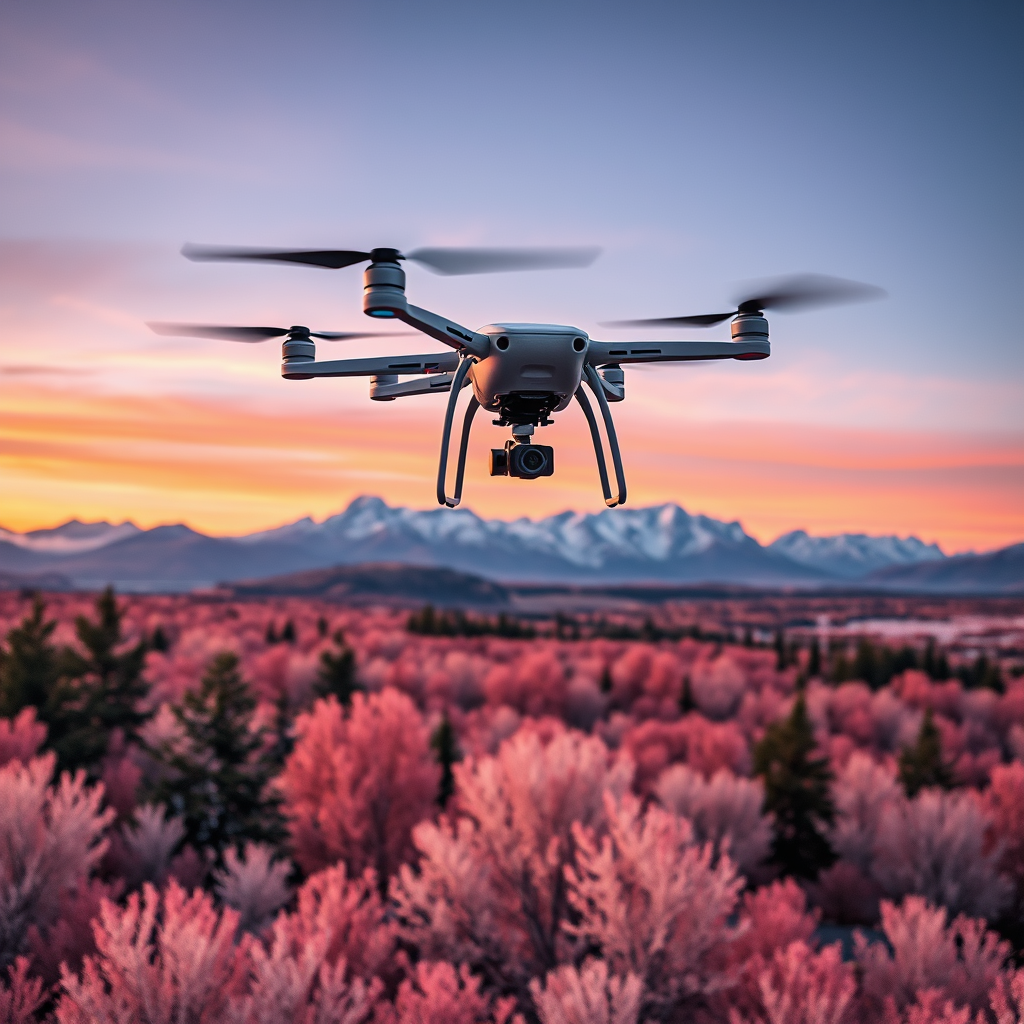
Infrared drone photography is becoming increasingly popular because it provides a unique perspective that transcends traditional photography, allowing users to capture unseen details and gather critical information across multiple sectors. This advanced imaging technology unlocks the potential to visualize heat patterns and variations in the environment, making it invaluable for fields ranging from agriculture to environmental monitoring. In this article, we will explore the reasons behind the growing interest in infrared drone photography, delving into its advantages, applications, and future trends.
The Advantages of Infrared Photography
One of the most significant advantages of infrared photography is its ability to enhance visibility of heat patterns. This capability is especially beneficial for thermal analysis, as it allows users to detect variations in temperature that are not visible to the naked eye. For instance, infrared imagery can reveal heat loss in buildings, helping in energy audits and improving insulation strategies. Furthermore, infrared photography excels at capturing intricate details in landscapes, such as the health of vegetation and moisture levels in soil. By analyzing these features, users can make informed decisions based on the condition of crops or natural habitats.
Additionally, infrared photography can penetrate obstacles like foliage and smoke, enabling users to visualize landscapes in ways that traditional photography cannot. This feature is particularly advantageous for monitoring ecosystems, providing insights into plant health and identifying areas that may require intervention. The ability to capture these nuances has made infrared photography a preferred choice for professionals across various fields, enhancing both the aesthetic and functional aspects of visual documentation.
Applications in Agriculture
Infrared drone photography has revolutionized agricultural practices by facilitating precise monitoring of crop health. Farmers can employ thermal imagery to identify irrigation issues, as variations in temperature can indicate areas where water stress is present. For example, crops that are overheating may require additional irrigation, while cooler patches may indicate areas that are adequately hydrated. This real-time data allows for more efficient water management, ultimately leading to increased yield and reduced waste.
Moreover, early detection of pests and diseases is another critical application of infrared drone photography in agriculture. By analyzing thermal images, farmers can identify stressed plants that may be suffering from infestations or diseases before they become widespread. This proactive approach enables timely interventions, minimizing crop loss and reducing the need for chemical treatments. The integration of infrared technology in agricultural practices not only enhances productivity but also contributes to sustainable farming by promoting more efficient resource use.
Use in Environmental Monitoring
The role of infrared drone photography in environmental monitoring cannot be overstated. It serves as a powerful tool for tracking temperature changes in ecosystems, providing vital data that can help assess the impacts of climate change. For instance, researchers can monitor thermal variations in water bodies, which can indicate shifts in aquatic ecosystems and help predict the effects of rising temperatures on fish populations.
Additionally, infrared photography is instrumental in analyzing land use changes and their effects on local wildlife habitats. By capturing data on vegetation health and density, environmental scientists can evaluate how urbanization, deforestation, or agricultural expansion impacts biodiversity. This information is crucial for developing conservation strategies and ensuring that ecosystems remain resilient in the face of human activity.
Contributions to Search and Rescue Operations
Infrared drone photography has also made significant contributions to search and rescue operations, particularly in challenging environments where visibility is limited. The ability to identify warm bodies even in low-light or obscured conditions can drastically improve the chances of locating missing persons. For example, emergency responders can deploy drones equipped with infrared cameras to search vast areas quickly, pinpointing the location of individuals who may be trapped or in distress.
In addition to locating individuals, infrared drone imagery aids in assessing disaster-stricken areas. After natural disasters such as earthquakes or floods, drones can be used to survey affected regions, identifying hotspots of activity or damage. This rapid assessment allows rescue teams to prioritize their efforts, making it easier to locate survivors or deliver essential aid to those in need.
Advancements in Drone Technology
The growing popularity of infrared drone photography can be attributed in part to significant advancements in drone technology. Improvements in sensors and imaging capabilities have enhanced the quality and accuracy of infrared photography, making it more reliable for various applications. High-resolution infrared cameras can now capture detailed images, allowing for precise analysis of temperature variations and other critical data.
Moreover, the increased accessibility and affordability of drones have democratized the use of infrared photography. Both hobbyists and professionals can now invest in drones equipped with infrared capabilities, leading to a surge in interest and innovation in this field. This accessibility has encouraged a diverse range of users to explore and experiment with infrared photography, contributing to its growing popularity.
The Rise of DIY Photographers
The rise of DIY photographers has further fueled the popularity of infrared drone photography. Online communities have emerged, providing platforms for enthusiasts to share techniques, tips, and experiences related to infrared imaging. These communities foster collaboration and creativity, enabling individuals to learn from one another and enhance their skills.
Additionally, the availability of affordable infrared filters and modification kits for personal cameras has made it easier for photographers to experiment with infrared photography without the need for expensive equipment. This surge in accessible resources has empowered a new generation of photographers to explore the unique visual styles that infrared imagery offers, further broadening the appeal of this technique.
Future Trends in Infrared Drone Photography
Looking ahead, the future of infrared drone photography appears promising, with several trends likely to shape its evolution. One significant trend is the potential integration of artificial intelligence (AI) into infrared imaging systems. By leveraging AI algorithms, users can analyze vast amounts of data more efficiently, uncovering patterns and insights that may not be immediately apparent. This integration could revolutionize fields like agriculture and environmental monitoring, allowing for more precise decision-making.
Furthermore, the expanding use of infrared drone photography in urban planning and infrastructure monitoring is anticipated to grow. As cities become more complex, the need for effective monitoring of heat islands, energy efficiency, and environmental impact will become increasingly crucial. Infrared drones can provide valuable data to urban planners, enabling them to create more sustainable and livable cities.
As the technology continues to advance, it is likely that we will see even more diverse applications for infrared drone photography, further solidifying its importance across various sectors.
The growing interest in infrared drone photography showcases its versatility and usefulness across various fields. By leveraging this technology, photographers, researchers, and professionals can gain valuable insights and create stunning visuals that are not possible with conventional methods. If you’re intrigued by the possibilities, consider exploring infrared drone photography for your next project or research initiative. The unique perspectives and critical data it provides could open up new avenues for creativity and innovation in your work.
Frequently Asked Questions
What are the key benefits of using infrared drone photography in various industries?
Infrared drone photography offers unique advantages across multiple sectors, including agriculture, construction, and environmental monitoring. It enables users to capture thermal images that reveal temperature variations, helping to identify crop health, detect heat loss in buildings, and monitor wildlife activity. This technology enhances efficiency, reduces costs, and provides insights that traditional photography cannot achieve, making it increasingly popular for professionals seeking detailed analysis.
How does infrared drone photography differ from traditional aerial photography?
Unlike traditional aerial photography, which captures visible light images, infrared drone photography detects infrared radiation emitted by objects. This allows users to visualize heat signatures and thermal anomalies, providing a deeper understanding of the environment. For example, infrared imagery can highlight moisture levels in crops, identify insulation issues in buildings, or reveal hidden infrastructure problems, making it a valuable tool for specialized applications.
Why is infrared drone photography becoming essential for environmental monitoring?
As climate change and environmental challenges grow, infrared drone photography is becoming essential for monitoring the ecosystem. It allows for the detection of temperature changes in water bodies, helps assess vegetation health, and identifies areas affected by pollution. This technology provides a non-invasive way to collect data, enabling researchers and conservationists to make informed decisions and implement timely interventions to protect natural resources.
What are the best applications of infrared drone photography in agriculture?
Infrared drone photography finds numerous applications in agriculture, including crop health assessment, irrigation management, and pest detection. By analyzing thermal imagery, farmers can identify areas of stress in plants, ensuring timely interventions to improve yields. It also facilitates more efficient water usage by pinpointing over or under-irrigated sections of fields, ultimately leading to cost savings and sustainable farming practices.
Which drones are recommended for beginners interested in infrared photography?
For beginners looking to explore infrared drone photography, models like the DJI Mavic 2 Enterprise Dual and the Parrot Anafi Thermal are highly recommended. These drones are equipped with thermal sensors and user-friendly interfaces, making them accessible for newcomers. Additionally, they offer robust features such as high-resolution imaging and real-time data transmission, allowing users to capture quality infrared images without extensive experience in drone operation.
References
- Infrared photography
- https://www.sciencedirect.com/science/article/abs/pii/S092427161730156X
- https://www.wired.com/story/infrared-drone-photography/
- https://www.usgs.gov/land-resources/nli/photography/infrared-photography
- https://www.techrepublic.com/article/how-infrared-drone-photography-is-boosting-environmental-monitoring/
- https://www.nasa.gov/mission_pages/landsat/news/landsat-8-infrared.html
- https://www.nature.com/articles/s41598-021-85346-6
