
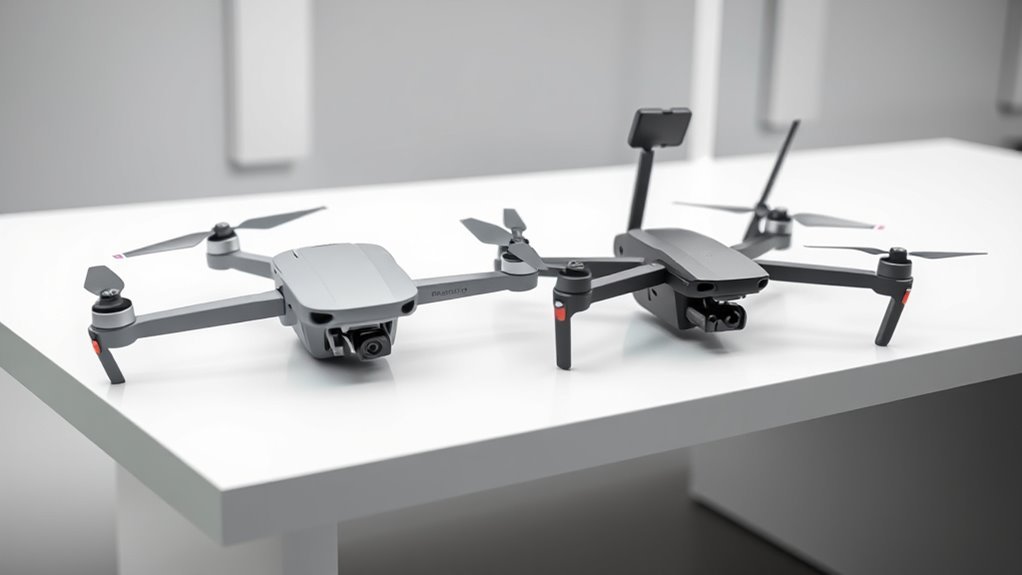
When you’re evaluating the Potensic Atom 3 against the Freefly Astro Prime for enterprise tasks, you’ll find the Atom 3’s 7.5km FPV range outpaces the Astro Prime’s 5km radio control, offering greater reach at a more budget-friendly price. It’s lighter at 249g with 30 minutes of flight time and a 4K camera, versus the Astro Prime’s 500g build and 1080p setup. Deeper comparisons await to refine your choice.
Key Specifications Comparison
When comparing the Potensic Atom 3 and Freefly Astro Prime, key differences emerge in weight, flight time, and camera capabilities. You’ll notice the Atom 3’s lighter build at around 249g, enabling you to transport and launch it effortlessly for unrestricted exploration. In contrast, the Astro Prime’s heavier 500g frame might weigh you down, demanding more effort in your adventures.
Flight duration plays a significant role in your freedom to roam. The Atom 3 delivers up to 30 minutes of flight, letting you extend your journeys without frequent interruptions. The Astro Prime offers about 20 minutes, which could limit your aerial pursuits.
Analytically, camera capabilities define your capture options. The Atom 3 boasts a 4K camera with advanced stabilization, empowering you to record high-resolution footage that captures the world’s vastness. The Astro Prime’s 1080p camera is competent but may constrain your ability to achieve that same level of detail and freedom in your visuals. Overall, these specs help you choose based on your need for mobility and endurance. Moreover, Potensic’s affordable pricing strategies ensure that enthusiasts can access quality drones without financial barriers.
Feature Highlights and Performance
While the Potensic Atom 3 excels in user-friendly features like automated flight paths and efficient battery management, the Freefly Astro Prime stands out with its enhanced wind resistance and customizable settings, enabling you to evaluate which drone’s performance best suits your aerial adventures. When it comes to camera capabilities, the Potensic Atom 3 offers intuitive 4K video with stabilized gimbals for smooth footage during dynamic flights, letting you capture expansive views with ease. In contrast, the Freefly Astro Prime’s advanced sensors deliver superior low-light performance and wider dynamic range, empowering you to explore remote areas freely. Regarding flight stability, the Atom 3’s GPS-assisted modes guarantee reliable hovering in varying conditions, while the Astro Prime’s robust algorithms provide better resilience against gusts, giving you more control for precise maneuvers. Additionally, both drones utilize AI object avoidance technology to enhance flight safety, ensuring worry-free exploration while capturing stunning visuals. This analytical comparison highlights how each drone’s features align with your quest for liberated exploration, allowing you to choose based on your specific needs. Ultimately, it’s about matching flight stability and camera capabilities to your adventurous spirit.
Value and Overall Suitability
Evaluating the value of the Potensic Atom 3 and Freefly Astro Prime requires weighing their price points against the performance features you’ve just reviewed. The Atom 3 offers superior cost efficiency at a lower entry price, making it ideal if you’re seeking budget-friendly options without sacrificing essential capabilities like its 7.5km FPV range. You’ll appreciate how this translates to more accessible aerial freedom, allowing you to explore without hefty investments. In contrast, the Astro Prime’s higher cost reflects its robust 5km radio control, but it may not deliver the same cost efficiency for everyday users.
When it comes to user experience, the Atom 3 stands out for its intuitive setup and lighter build, empowering you to fly with minimal hassle and greater independence. The Astro Prime, while reliable for enterprise tasks, demands more technical know-how, potentially limiting your freedom if you’re after seamless adventures. Overall, suitability hinges on your needs: choose the Atom 3 for cost-efficient, user-friendly exploration, or the Astro Prime for specialized, durable performance. Additionally, the Atom 3’s flight stability is further enhanced by its GPS and electronic image stabilization features, making it suitable for casual pilots in moderate winds.
Frequently Asked Questions
Is the Potensic Atom 3 Compatible With DJI Goggles?
Hit the ground running with your drone adventures, as compatibility can open new doors to freedom. You’re wondering if the Potensic Atom 3 is compatible with DJI goggles—let’s break it down analytically. Regarding Potensic compatibility, the Atom 3 uses its own FPV system, which doesn’t natively integrate with DJI’s proprietary technology. You’ll likely need third-party adapters or software hacks, but results aren’t guaranteed, potentially limiting your aerial exploration. Always check official updates for the latest.
What Is the Warranty Period for the Freefly Astro Prime?
You’re wondering about the warranty period for the Freefly Astro Prime, a key aspect of its warranty details. It typically comes with a one-year limited warranty, covering manufacturing defects and parts, which you’ll find reassuring for your aerial adventures. Through customer support, you’re able to extend coverage or get analytical assistance, empowering you to fly freely and make informed choices without unexpected constraints.
How Often Do These Drones Require Maintenance?
When you’re wondering how often your drones require maintenance, it’s essential to take into account maintenance frequency to guarantee drone longevity. Typically, you’ll need to perform checks every 20-50 flight hours, depending on usage and conditions. Factors like dust, crashes, or battery wear influence this—regular inspections let you fly freely without unexpected downtime. For peak performance, follow manufacturer guidelines analytically to balance costs and reliability. This approach maximizes your aerial freedom.
Can I Fly These in Rainy Weather?
Have you ever wondered if flying your drone in rainy conditions is worth the risk? It’s crucial to evaluate weather resistance first, as most models lack robust protection against water, potentially leading to electronic damage or malfunctions. You’ll want to check IP ratings for any resistance claims. For the freedom to explore the skies safely, always avoid rain, prioritizing clear days to prevent accidents and guarantee longevity.
Where Can I Buy Spare Batteries?
You’re wondering where to buy spare batteries, which are essential for extending your drone’s battery life and giving you the freedom to fly longer without interruptions. Explore spare battery options on reliable sites like the manufacturer’s official store, Amazon, or Best Buy for compatibility and variety. Analytically, compare capacities, prices, and reviews to select high-quality ones that enhance performance and guarantee safe, extended adventures.
