
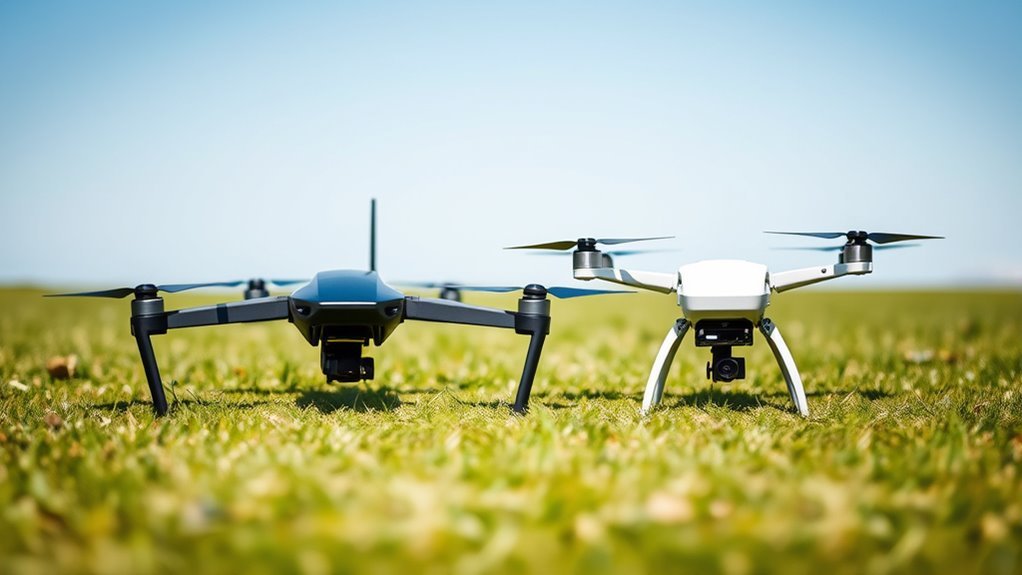
When you’re comparing the Potensic Atom 2 and HoverAir X1, the Atom 2’s 7.5km FPV range shines for long-distance adventures with its rugged build, 4K camera, and 30 minutes of battery life, ideal for serious users. In contrast, the X1’s 500m Wi-Fi setup offers budget-friendly ease for quick selfies, featuring a lightweight design, 1080p video, and 20 minutes of flight time at a lower $400 price versus the Atom 2’s $500. Further insights into these trade-offs lie ahead.
Design and Build Quality
The design and build quality of the Potensic Atom 2 and HoverAir X1 reflect their intended uses, with the Atom 2 featuring a rugged, weather-resistant frame for durability in outdoor conditions, while the HoverAir X1 opts for a lightweight, compact build that enhances portability and ease of handling. You’ll notice the Atom 2’s design aesthetics emphasize robust lines and a sturdy silhouette, appealing to adventurers seeking freedom in untamed environments. Its material durability, crafted from high-grade, impact-resistant plastics and reinforced components, guarantees you can explore without worry. In contrast, the HoverAir X1’s design aesthetics favor a minimalist, streamlined form that slips easily into your backpack, granting effortless mobility for spontaneous outings. You won’t sacrifice material durability entirely; its lightweight alloys and composites offer reliable everyday resilience, letting you chase horizons freely. Ultimately, these choices empower your aerial pursuits, balancing toughness with agility to match your lifestyle’s demands. Additionally, the Atom 2’s weather-resistant frame ensures it can withstand challenging environmental conditions, making it a reliable option for outdoor adventures.
Camera Features and Performance
While the Potensic Atom 2 equips a robust 4K camera with gimbal stabilization for smooth, high-quality aerial footage, the HoverAir X1 delivers solid performance through its 1080p lens and AI-assisted features that simplify capturing spontaneous shots. You’ll appreciate how the Atom 2’s superior image quality shines in well-lit conditions, offering crisp details that free you to explore creatively, while the X1 holds its own with reliable low light performance for impromptu adventures. Both drones let you capture the world on your terms, but differences in resolution and stabilization mean you can choose based on your needs.
- Image Quality Comparison: The Atom 2’s 4K resolution provides sharper, more detailed footage than the X1’s 1080p, empowering you to edit with greater precision.
- Low Light Performance: X1 excels in dim settings with its AI enhancements, whereas Atom 2 maintains better stability but may require more light for ideal results.
- Stabilization Benefits: Atom 2’s gimbal guarantees steady shots during dynamic flights, giving you freedom to focus on composition.
- Ease of Use: X1’s AI simplifies framing for quick captures, while Atom 2’s manual controls offer you more control over advanced settings.
Additionally, the Atom 2 features superior low-light performance due to its advanced sensor technology, making it a great option for evening photography.
Flight Range and Stability
As you evaluate flight range and stability, the Potensic Atom 2 delivers a longer reach—up to 10 km in ideal conditions—empowering you to explore expansive areas with reliable control. Its advanced flight stability guarantees smooth navigation, even in light winds, giving you the freedom to capture distant adventures without worry. However, range limitations like interference or regulatory restrictions can reduce this to safer distances, so you’ll want to check local laws.
In contrast, the HoverAir X1 offers only about 500 meters, limiting your aerial escapades to closer horizons. While it’s designed for quick, stable flights in controlled environments, its flight stability shines in tight spaces, making it ideal for urban flyers. Yet, range limitations mean you’re confined to shorter trips, potentially curbing your sense of liberation. Overall, both drones balance range and stability differently, letting you choose based on how far freedom calls you. Additionally, the Hubsan Zino 2+ provides superior GPS accuracy for precise positioning, showcasing how advanced features can significantly enhance flight experience.
Battery Life and Ease of Use
Battery life on the Potensic Atom 2 reaches up to 30 minutes per charge, letting you extend your sessions without frequent interruptions, though actual runtime depends on factors like wind and payload. In contrast, the HoverAir X1 offers around 20 minutes of battery longevity, giving you solid options for quick, freeing flights but requiring more planning for longer adventures.
To maximize your freedom in the skies, consider these key aspects:
- Battery Longevity Comparison: Potensic Atom 2’s extended runtime empowers you for broader explorations, while HoverAir X1’s efficiency suits spontaneous, hassle-free outings.
- User Interface Simplicity: You’ll appreciate the Potensic’s intuitive app for seamless control, enhancing your independent flying experience.
- Quick Charging Features: Both drones support fast recharges, allowing you to get back to liberating flights without long downtimes.
- Ease of Operation: The HoverAir X1’s straightforward user interface means you’re up and soaring with minimal setup, perfect for on-the-go freedom seekers.
- Advanced Features: Additionally, the Potensic Atom 2 offers enhanced range for operation in remote areas, giving you even more freedom to explore.
This analytical view highlights how these elements balance battery life and ease, letting you choose based on your aerial independence needs.
Price and Value Comparison
When evaluating the Potensic Atom 2 and HoverAir X1, you’ll notice their prices reflect differing levels of features and performance, with the Atom 2 typically retailing at around $500 and the X1 at about $400, making the latter a more budget-friendly option for entry-level users. Regarding cost effectiveness, the X1 delivers solid value for casual flyers seeking straightforward aerial fun without overspending, as its 500m Wi-Fi range supports spontaneous adventures. Conversely, the Atom 2’s higher price justifies its 7.5km FPV capabilities, appealing to those wanting extended exploration and advanced controls. Market positioning further differentiates them: the X1 targets budget-conscious beginners who prioritize ease and freedom in capturing moments, while the Atom 2 positions itself for enthusiasts desiring more range and precision to roam widely. Ultimately, your choice hinges on balancing these factors—opt for the X1 if affordability empowers your aerial liberty, or the Atom 2 for enhanced capabilities that amplify your adventures. This analysis helps you decide based on what truly frees your flying experience. Additionally, the Atom 2’s 7.5km FPV capabilities can significantly enhance your ability to capture stunning aerial footage.
Frequently Asked Questions
Is the Drone Compatible With Ios Devices?
Imagine releasing endless aerial adventures on your iOS device—it’s like having the skies at your fingertips! You’re checking if the drone’s iOS compatibility means seamless control, and yes, it supports iOS through dedicated apps for intuitive flying. App availability guarantees you’re free to explore features without restrictions, offering objective performance via stable connections. Analyze updates for ideal, liberating experiences in the air.
What Accessories Are Included in the Box?
When you’re curious about the accessories included in the box, you’ll typically find a remote controller, spare propellers, a rechargeable battery that boosts battery life for longer flights, and a carrying case to safeguard the drone’s camera quality. These items offer you analytical freedom to explore without constraints, ensuring objective performance and informative ease in your aerial adventures. It’s all about empowering your independent pursuits.
How Do I Update the Drone’s Firmware?
To update your drone’s firmware, you’ll first download the latest version from the manufacturer’s app or website. It’s straightforward: connect your drone, guarantee a stable Wi-Fi link, and follow the on-screen prompts to install the update. This firmware update boosts drone performance by fixing bugs, enhancing stability, and opening new features, giving you greater freedom to explore and capture adventures safely. Always back up your settings first for seamless upgrades.
Does It Have Automatic Return-To-Home?
When you’re asking if your drone has an automatic return-to-home feature, it’s typically tied to its GPS functionality, which guarantees safe navigation back to your starting point. This safety feature acts as a reliable guardian, allowing you to explore freely without constant worry about losing control. It’s designed for peace of mind, enhancing your aerial adventures by prioritizing security and ease. Always check your model’s specs for confirmation.
Can It Be Used in Rainy Conditions?
Rainy conditions raise risks regarding your drone’s waterproofing and flight stability. You’ll want to check if it’s built with effective drone waterproofing to handle moisture, as rain can seep in and damage components. Flight stability might falter in wet weather, affecting control and safety during your free-flying escapades. For peak performance, it’s best to wait for dry skies, ensuring worry-free exploration while minimizing hazards.
