
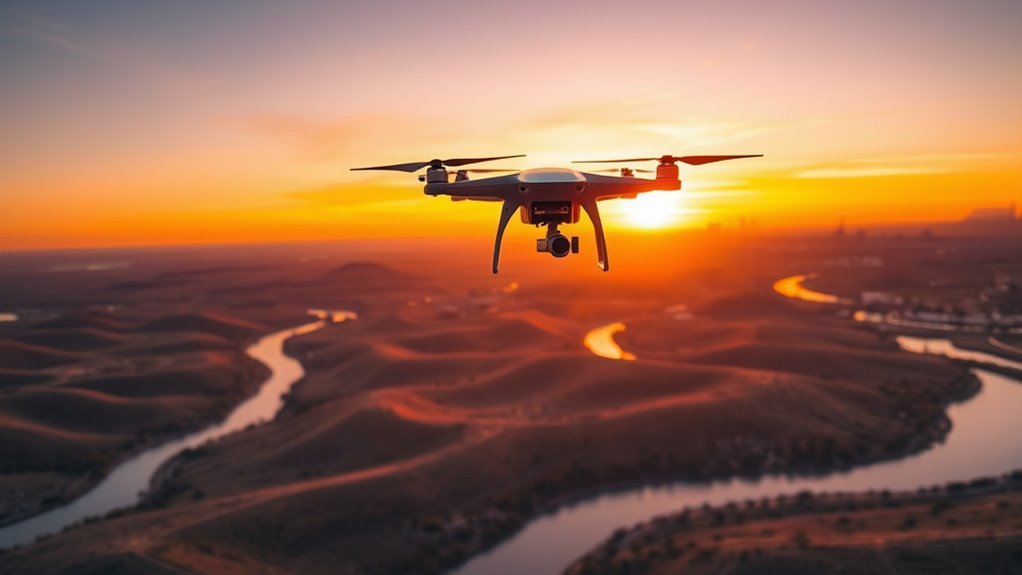
If you’re looking to find the best Lone Star drone, understanding each model’s strengths helps a lot. The Falcon X offers solid 4K video with stable GPS flight, while the SkyRanger Pro extends range and adds advanced flight modes. The HawkEye 4K excels in wide-angle shots but with less stabilization. For portability, the Thunderbolt Mini is lightweight yet durable. Voyager SE and Eagle Vision balance endurance with image quality. Phantom V2 suits both beginners and experts with versatile controls. Exploring these details reveals which drone fits your flying style and needs.
Lone Star Falcon X Review

When exploring the Lone Star Falcon X, you’ll find a drone designed to balance performance and accessibility. The Lone Star Falcon stands out with its solid Drone Specifications, including a 4K camera capable of capturing crisp aerial footage and a flight time of approximately 30 minutes. Its maximum range extends up to 3 kilometers, providing you the freedom to explore expansive areas without losing control. The drone’s GPS-assisted flight system offers stable hovering and precise navigation, essential for both beginners and experienced pilots. Additionally, its compact design and foldable arms make portability effortless, aligning with your desire for on-the-go freedom. While it doesn’t boast the highest speed compared to premium models, it delivers consistent performance that suits recreational and semi-professional use. By focusing on these core specifications, the Lone Star Falcon X presents itself as a versatile option that balances practical features without overwhelming complexity or cost. This makes it a compelling choice for those valuing reliable, unrestricted flight experiences.
Lone Star SkyRanger Pro Evaluation
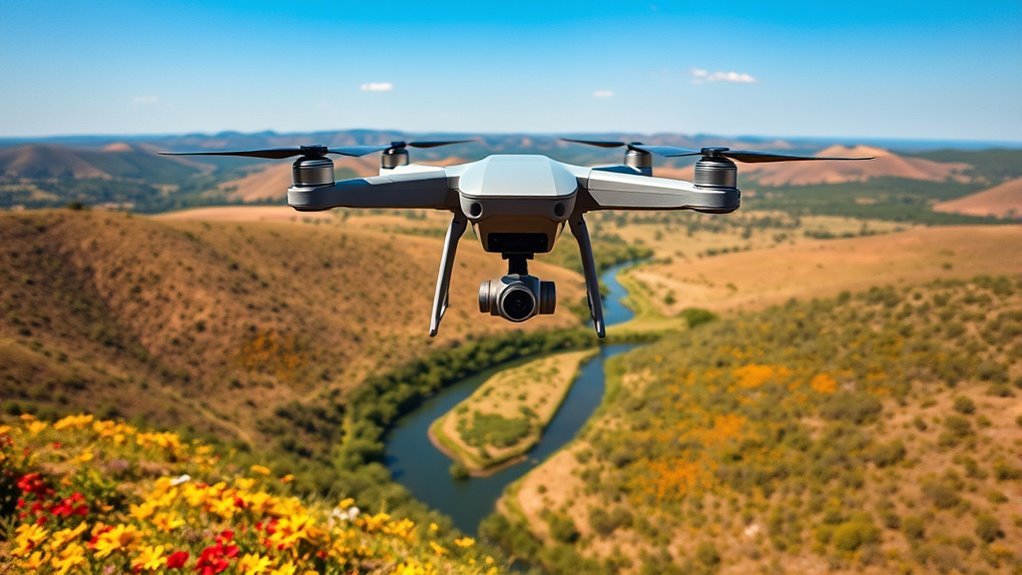
The Lone Star SkyRanger Pro offers a significant step up in capabilities compared to entry-level drones, making it a strong contender for serious hobbyists and professionals alike. When considering the lone star skyranger pro specifications, you’ll notice its advanced GPS-assisted flight modes, a robust 4K camera, and extended flight time that enhance both control and freedom. The lone star skyranger pro pricing reflects these enhancements, positioning it as a mid-to-high-tier choice without venturing into premium drone territory.
| Feature | Specification | Benefit |
|---|---|---|
| Camera | 4K UHD with gimbal stabilization | Crisp, stable aerial footage |
| Flight Time | Up to 30 minutes | Longer exploration |
| Control Range | 5 km | Expansive operational freedom |
| GPS & Sensors | Advanced GPS + obstacle avoidance | Safer, precise navigation |
| Price | $650 – $750 | Competitive for features |
This balance of specs and pricing gives you freedom to explore without compromise.
Lone Star HawkEye 4K Drone Analysis
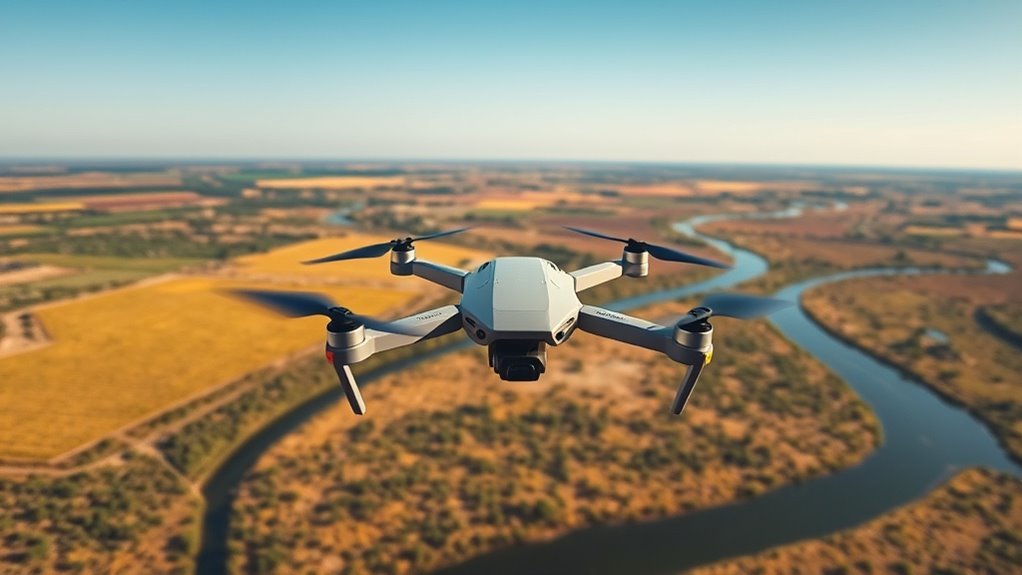
When evaluating the Lone Star HawkEye 4K, you’ll want to focus on its camera quality and available features to see if it meets your imaging needs. Judging its flight performance and stability is essential for understanding how it handles various conditions. Additionally, consider the battery life and overall durability to determine if it can support extended use without frequent interruptions.
Camera Quality and Features
Although the Lone Star HawkEye 4K drone boasts a high-resolution camera, you’ll want to assess its actual performance beyond specs. The drone features an impressive sensor paired with lens specifications optimized for wide-angle shots, capturing expansive landscapes with minimal distortion. Image stabilization is integrated, which helps reduce blurring during movement, though it’s not on par with advanced gimbal systems found in higher-end models. You’ll appreciate the ability to shoot in 4K at 30fps, offering solid video quality for casual and semi-professional use. However, dynamic range and low-light performance are average, so shooting in bright conditions yields the best results. Overall, the camera’s capabilities support creative freedom but may fall short if you require professional-grade footage.
Flight Performance and Stability
Since flight performance directly impacts your control and overall experience, evaluating the Lone Star HawkEye 4K’s stability and responsiveness is crucial. Its aerodynamic design reduces drag, allowing smoother maneuvers and enhanced wind resistance. Key stability factors include gyroscopic sensors and altitude hold, which keep the drone steady even in gusty conditions, offering you freedom to focus on creative flying.
| Feature | Description | Impact on Flight |
|---|---|---|
| Aerodynamic Design | Streamlined frame | Reduces air resistance |
| Gyroscopic Sensors | Multi-axis stabilization | Enhances control precision |
| Altitude Hold | Maintains constant height | Improves hover stability |
This combination guarantees consistent flight performance, giving you confidence during complex aerial tasks.
Battery Life and Durability
Understanding the Lone Star HawkEye 4K’s battery life and durability is essential for planning your flight sessions and ensuring the drone withstands regular use. Its battery longevity offers up to 28 minutes of continuous flight, giving you ample time to explore without frequent interruptions. Coupled with a rugged design, this drone stands up well to minor bumps and challenging outdoor environments. Here’s what you need to know:
- Battery Longevity: The high-capacity battery supports extended flights, balancing power and weight efficiently.
- Rugged Design: Built with durable materials, it resists wear, ideal for adventurous pilots craving freedom.
- Maintenance: Regular checks on battery health and frame integrity maximize lifespan and reliability in the field.
This balance of endurance and toughness makes the HawkEye 4K a reliable companion for your aerial pursuits.
Lone Star Thunderbolt Mini Overview
When you look at the Lone Star Thunderbolt Mini, you’ll notice its compact design paired with impressive flight capabilities. Its key features, including responsive controls and robust build quality, contribute to reliable performance in various conditions. Evaluating both its durability and functionality will help you understand how well it stands up to everyday use.
Key Features Highlight
Although compact in size, the Lone Star Thunderbolt Mini packs an impressive array of features that cater to both beginners and experienced drone pilots. When evaluating its key specifications, you’ll notice a blend of versatility and user-friendly design. Here are the standout features:
- High-Resolution Camera: Offers sharp 4K video capture, enabling you to explore creative aerial photography with excellent clarity.
- Advanced Flight Modes: Includes GPS-assisted positioning, follow-me, and waypoint navigation, giving you intuitive control and freedom during flight.
- Lightweight & Portable Design: Weighing under 250 grams, it’s easy to carry anywhere without sacrificing durability or functionality.
These features emphasize a balance between compactness and capability, allowing you to enjoy the thrill of flight without compromise.
Performance and Durability
Since the Lone Star Thunderbolt Mini is designed for both novices and seasoned pilots, its performance and durability are critical factors to evaluate. User feedback consistently highlights its responsive controls and stable flight, contributing to a positive user experience. Durability-wise, the drone’s robust frame withstands minor crashes, granting you the freedom to explore without constant worry.
| Aspect | Observations |
|---|---|
| Flight Stability | Smooth, reliable even in moderate winds |
| Frame Material | High-quality ABS plastic, impact-resistant |
| Battery Life | Approximately 15 minutes per charge |
This combination of sturdy build and consistent performance guarantees your investment supports long-term enjoyment and confidence in varied conditions.
Lone Star Voyager SE Assessment
If you’re considering the Lone Star Voyager SE, it’s important to examine its features and performance closely to determine whether it matches your drone needs. The Lone Star Voyager offers a compelling blend of advanced drone features designed for both enthusiasts and freedom seekers who want reliable aerial exploration.
Considering the Lone Star Voyager SE means weighing its advanced features for reliable and thrilling aerial adventures.
Here’s a breakdown to guide your assessment:
- Flight Time and Range: The Voyager SE provides a solid flight time of approximately 30 minutes and a control range exceeding 4 kilometers, giving you ample freedom to explore wide areas.
- Camera Quality: Equipped with a 4K stabilized camera, this model captures sharp, detailed footage, ideal for creative projects or surveying landscapes.
- User Interface and Controls: Its intuitive remote control and responsive app integration make piloting easier, even for those newer to drones.
Lone Star Eagle Vision Performance Review
Several key performance aspects distinguish the Lone Star Eagle Vision from other models in its class. When you examine eagle vision specifications, you notice a robust 4K camera paired with a 30-minute flight time, offering both clarity and endurance. Its GPS stability guarantees precise navigation, critical for those who want freedom in capturing aerial footage without constant manual control. Eagle vision comparisons reveal it excels in range and image quality but slightly trails in maximum speed.
| Feature | Lone Star Eagle Vision |
|---|---|
| Flight Time | 30 minutes |
| Camera Resolution | 4K |
| Max Speed | 40 mph |
This balance of endurance and image quality means you can rely on the Eagle Vision for extended, steady flights. If freedom to explore and capture stunning visuals matters to you, these specs put the Eagle Vision in a competitive position worth considering.
Lone Star Phantom V2 Flight Experience
While the Lone Star Eagle Vision impresses with its camera clarity and flight duration, the Phantom V2 offers a different set of flight characteristics that might better suit your needs. The Phantom V2’s design focuses on agile control and versatile flight modes, giving you freedom to explore various flying styles. Thanks to recent phantom upgrades, its responsiveness and stability have improved considerably, making it ideal for both beginners and seasoned pilots.
Here’s what you can expect from the Phantom V2 flight experience:
- Multiple flight modes, including beginner, sport, and GPS-assisted, allow you to tailor control sensitivity and autonomy.
- Enhanced maneuverability supports precise handling, perfect for dynamic aerial shots or obstacle navigation.
- Improved battery efficiency extends flight time, balancing power with endurance for longer explorations.
If you value adaptability and control, the Phantom V2’s flight experience provides a flexible platform that grows with your skill set.
