
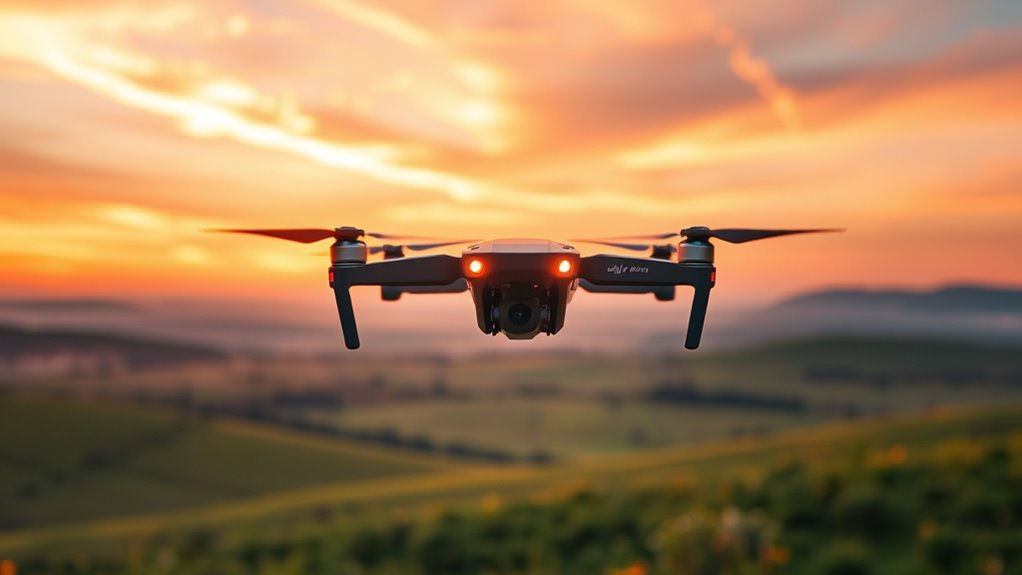
If you’re looking for a lightweight, compact drone, the DJI Mavic Mini offers up to 30 minutes of flight time and smooth 2.7K video with stable 3-axis gimbal support. Its intuitive controls and user-friendly DJI Fly app make it accessible for beginners, though it lacks advanced obstacle sensors. While it performs well in mild conditions, strong winds can pose challenges. Its solid design and affordable price strike a good balance, and exploring further reveals more about its features and limitations.
Design and Build Quality
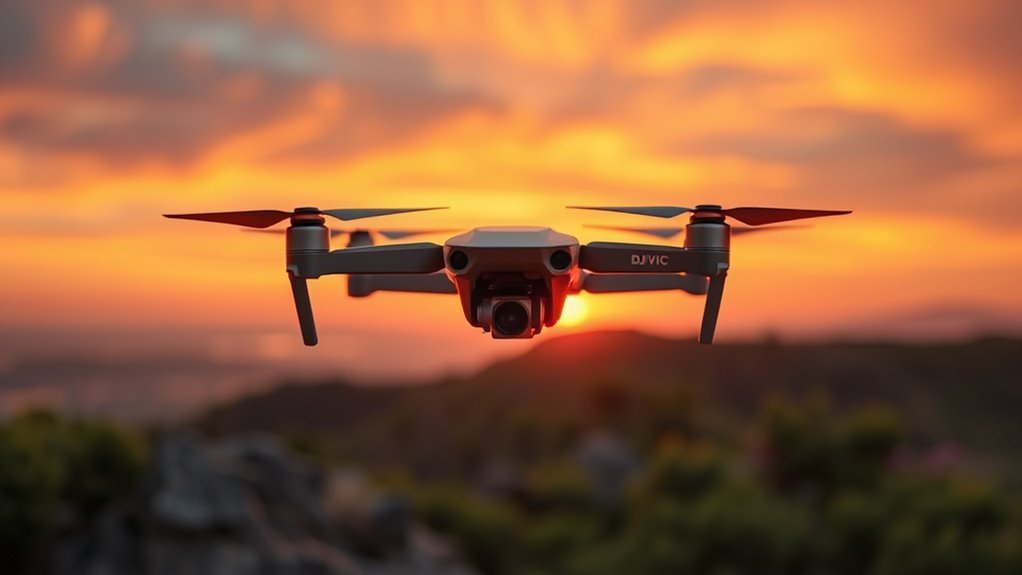
The design of the DJI Mavic Mini is a careful balance between portability and functionality, making it ideal for users who need a lightweight drone without sacrificing performance. When you hold it, you’ll notice its compact frame contributes to ease of transport, supporting your desire for unrestricted exploration. The aesthetic appeal is subtle yet modern, with clean lines and a matte finish that resists fingerprints. Material durability is a priority here; the drone’s plastic composite frame offers resilience against minor impacts and wear, ensuring longevity during your outdoor adventures. Its foldable arms lock securely, enhancing structural integrity without adding bulk. This meticulous design empowers you to carry freedom in your backpack, ready to capture moments without being weighed down by cumbersome equipment.
Camera Specifications and Performance
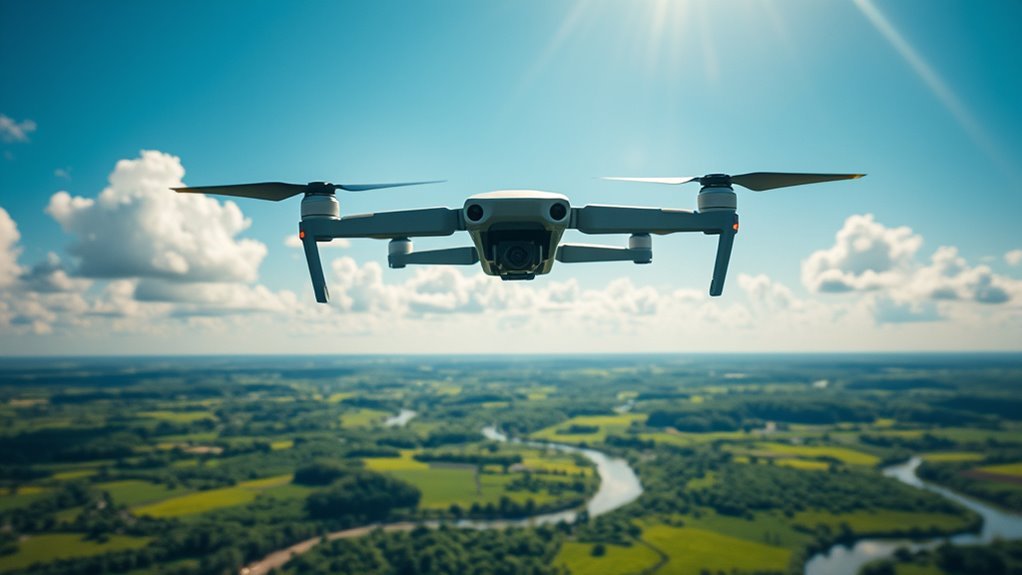
You’ll find the Mavic Mini’s camera delivers sharp images with accurate color reproduction, thanks to its 12MP sensor and 3-axis gimbal stabilization. When recording video, it supports 2.7K resolution at 30fps, providing smooth footage without excessive file sizes. Let’s examine how these specs translate into real-world performance for both photography and videography.
Image Quality Analysis
Image quality stands as a critical factor when evaluating the DJI Mavic Mini’s camera capabilities, especially given its compact design. When you compare images side-by-side, the Mavic Mini delivers sharp details and impressive color accuracy for its size. Its 12MP sensor captures vibrant, true-to-life colors, minimizing the need for post-processing. However, in low light, noise becomes more apparent, slightly affecting clarity. Below is a comparison of key image quality metrics to help you understand its strengths and limitations:MetricValueNotes
This balance offers you freedom without sacrificing essential image quality.
Video Recording Features
Among its video capabilities, the DJI Mavic Mini offers up to 2.7K resolution at 30 frames per second, striking a practical balance between quality and file size for casual users and hobbyists. This video resolution delivers sharp, detailed footage suitable for social media and moderate post-processing. The 30 fps frame rate guarantees smooth motion capture without taxing the drone’s storage or battery excessively. While it lacks 4K recording, the Mavic Mini’s video performance remains commendable for its compact size and weight. You’ll appreciate the freedom to shoot stable, high-quality videos without complex setups, thanks to its 3-axis gimbal stabilization. Overall, the Mavic Mini’s video recording features provide a reliable and versatile tool for those seeking effortless aerial videography with respectable clarity and fluidity.
Flight Time and Battery Life
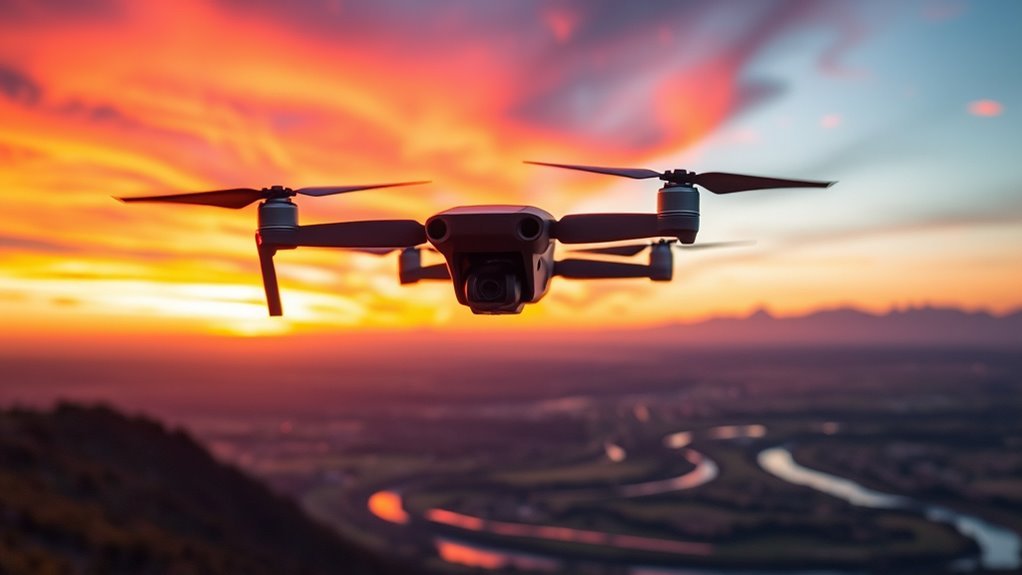
The DJI Mavic Mini offers up to 30 minutes of flight time on a single charge, which is impressive for a drone of its size and weight. This extended duration allows you to explore freely without frequent interruptions. Battery charging is straightforward, but keep in mind that fully recharging the battery takes around 90 minutes, so having spare batteries can maximize your airborne time. Flight modes also impact battery life; for example, Sport mode consumes more power due to increased speed, reducing overall flight time, while CineSmooth mode optimizes stability but may slightly decrease battery efficiency. Understanding these factors helps you plan your sessions effectively, ensuring you get the most out of each flight while balancing performance and endurance. The Mavic Mini’s battery system supports your desire to roam and capture without constant worry about power limits.
Ease of Use and Controls
Balancing flight time with user-friendly controls is key to getting the most from the DJI Mavic Mini. When you take control, the drone’s user friendly interface immediately stands out, offering seamless navigation through settings and flight modes. The intuitive controls respond precisely, making it easier to execute smooth maneuvers even if you’re new to drones. The remote’s layout is thoughtfully designed, minimizing the learning curve and allowing you to focus on capturing your surroundings freely. Additionally, the app integration enhances your command with real-time feedback and adjustable parameters, ensuring you stay in control without distraction. Overall, the Mavic Mini’s ease of use empowers you to explore confidently, blending advanced functionality with simplicity to unleash your aerial creativity.
Portability and Travel Friendliness
Though its compact size might seem unassuming at first, the DJI Mavic Mini excels in portability and travel friendliness, making it an ideal companion for on-the-go aerial photography. Its lightweight design guarantees you won’t be burdened during your adventures, while the foldable arms enhance travel convenience. Here’s what you’ll appreciate:
- Weighing just 249 grams, it’s easy to carry and often exempt from strict drone regulations.
- The foldable design reduces its size, fitting comfortably into small bags or backpacks.
- Quick setup and breakdown let you maximize your time capturing images rather than fumbling with gear.
- The included compact remote controller complements its portability for seamless travel.
This blend of features empowers you to explore freely without compromise.
Safety Features and Reliability
When flying the DJI Mavic Mini, you should understand its safety features, especially its flight stability and control mechanisms. While it lacks advanced collision avoidance systems found in higher-end models, its GPS and vision sensors work together to maintain steady flight and accurate positioning. This balance impacts the drone’s reliability, particularly in complex environments or challenging weather conditions.
Collision Avoidance Systems
Several drones on the market now come equipped with advanced collision avoidance systems, but the DJI Mavic Mini takes a more basic approach. It lacks thorough obstacle detection and sophisticated sensor technology found in higher-end models. Here’s what you should know:
- The Mavic Mini relies primarily on pilot skill rather than automated collision avoidance.
- It features downward vision sensors for basic ground detection but no forward or side sensors.
- Without multi-directional obstacle detection, you’ll need to stay vigilant to avoid crashes.
- This simplicity offers you greater freedom in flight but demands heightened awareness and manual control.
If you value lightweight design and freedom over autonomous safety features, the Mavic Mini suits you—just be prepared to fly carefully without advanced collision safeguards.
Flight Stability and Control
While the DJI Mavic Mini doesn’t boast the advanced obstacle avoidance systems found in more expensive models, its flight stability and control mechanisms remain impressive for its class. You’ll notice excellent flight responsiveness and control precision, which provide a freeing experience when piloting. The drone’s lightweight design, combined with GPS-assisted hovering, guarantees steady flight even in mild wind conditions. This balance allows you to focus on capturing smooth footage without constant corrections.
| Feature | Performance |
|---|---|
| GPS Stability | Maintains position within 1 m |
| Flight Responsiveness | Immediate response to controls |
| Control Precision | High accuracy in maneuvering |
| Wind Resistance | Stable up to 10 mph winds |
| Return-to-Home Function | Reliable and accurate |
These features create a reliable, safe flight environment that aligns with your desire for unrestricted aerial freedom.
Software and App Compatibility
The Dji Mavic Mini integrates seamlessly with the DJI Fly app, which serves as the central hub for controlling the drone and accessing its features. The app’s intuitive interface enhances your user experience, making navigation straightforward whether you’re a beginner or seasoned pilot. Regular app updates guarantee compatibility with evolving mobile operating systems and introduce new features, keeping your drone’s performance optimized. Here’s what you’ll appreciate:
- Real-time flight data and telemetry for precise control.
- Easy access to camera settings and quick editing tools.
- Automatic firmware updates for both drone and controller.
- Flight tutorials and safety guidelines embedded within the app.
This integration empowers you with freedom, offering reliable control and up-to-date software to maximize every flight.
Pricing and Value for Money
You’ll find that the DJI Mavic Mini strikes a compelling balance between cost and capability, making it an attractive option for both hobbyists and casual users. When evaluating affordability factors, its lightweight design and solid feature set justify the price point without unnecessary extras. Compared to competitors, the Mavic Mini offers a more accessible entry into drone photography without sacrificing essential functionalities like stabilized footage and user-friendly controls. While some rivals may undercut the price, they often compromise on build quality or flight performance. The value you get here is rooted in reliable hardware combined with a robust ecosystem, which supports your freedom to explore aerial creativity without overspending. This makes the Mavic Mini a smart investment for those prioritizing both budget and quality.
Pros and Cons Overview
Although the DJI Mavic Mini excels in portability and ease of use, it’s important to weigh both its strengths and limitations to determine if it fits your specific needs. Based on user experience and user feedback, here’s a balanced overview:
- Portability: Its compact design offers unmatched freedom to explore without bulky gear.
- Flight Time: Provides up to 30 minutes, ideal for extended sessions without frequent recharging.
- Camera Quality: Delivers decent 2.7K video but may fall short for professional-grade content.
- Wind Resistance: Struggles in strong winds, which may limit outdoor adventures.
