
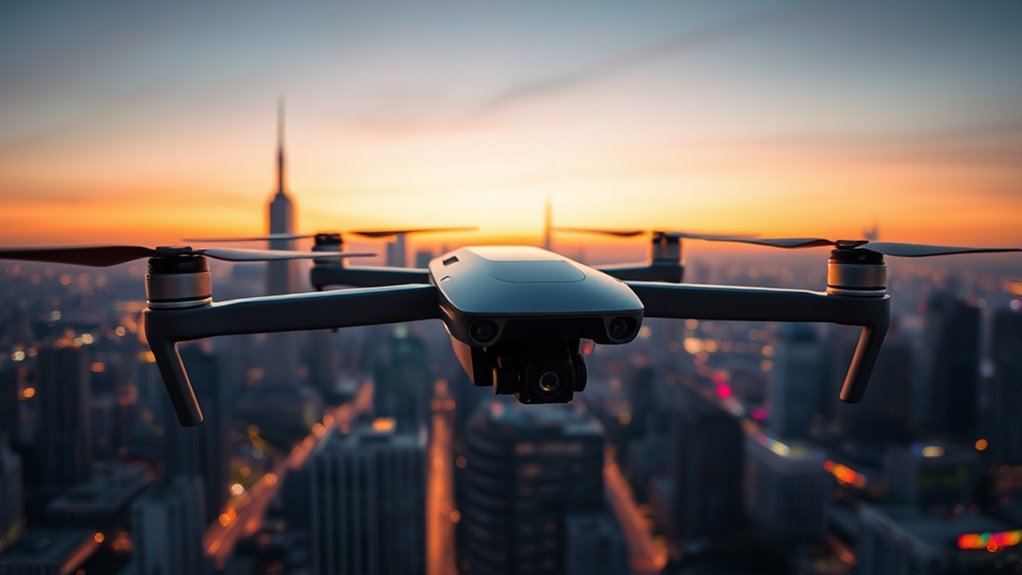
You’ll experience safer EHang passenger flights through our advanced cameras, which use high-resolution imaging and AI-driven analytics for real-time obstacle detection. These systems integrate multiple data streams to identify hazards instantly, while enhancing navigation and internal diagnostics for proactive risk management. You’ll also benefit from transparent operations and predictive modeling that minimize threats. Continue exploring case studies and future innovations to see how this technology elevates air mobility security.
The Role of Advanced Cameras in Obstacle Detection
Advanced cameras play an essential role in EHang’s obstacle detection systems, enabling real-time identification of potential hazards during passenger flights. In your quest for aerial freedom, you’ll find that these systems rely on sophisticated obstacle recognition algorithms, which process visual data to pinpoint obstacles like buildings or trees with precision. This integration enhances visual navigation, allowing the aircraft to interpret its environment through high-resolution imaging, ensuring you navigate open skies safely.
You benefit from cameras that employ advanced sensors, fusing multiple data streams for accurate detection without overwhelming the system. By focusing on obstacle recognition, EHang’s technology lets you experience the thrill of autonomous flight, where visual navigation adapts to dynamic conditions. This approach minimizes risks, empowering your journeys with reliable, unobtrusive safeguards that prioritize independence in the air. Ultimately, it’s about giving you the tools for confident exploration, blending innovation with safety to reveal true freedom in passenger aviation.
Real-Time Monitoring for Flight Safety
While real-time monitoring forms the backbone of EHang’s flight safety protocols, it constantly analyzes camera feeds to detect anomalies and respond instantly. You’ll experience enhanced security as the system processes live data, identifying potential hazards like unexpected obstacles or weather changes. This setup integrates real time alerts that notify pilots or ground control immediately, allowing swift corrective actions without delay.
As you explore the skies, EHang’s safety protocols guarantee that every flight adheres to stringent standards, minimizing risks through continuous surveillance. For instance, the cameras trigger real time alerts for deviations in flight paths, enabling you to maintain full control and freedom in your journey. By prioritizing precision and reliability, these measures keep operations objective and efficient, fostering a sense of liberation from traditional aviation constraints. Ultimately, real-time monitoring empowers you with the confidence to fly safely, unencumbered by unforeseen threats.
AI-Enhanced Surveillance Systems
EHang integrates AI-enhanced surveillance systems to analyze camera data with greater accuracy, detecting subtle anomalies that human oversight might miss. You’ll find that AI-driven analytics process vast amounts of visual information in real-time, identifying potential risks like unexpected movements or environmental changes during your flight. This technology employs advanced algorithms to enhance precision without overwhelming the system, ensuring seamless operation.
As you value your freedom, surveillance ethics play an essential role; EHang designs these systems with strict data privacy protocols, minimizing unnecessary monitoring and adhering to regulatory standards. This means your personal information remains protected, allowing you to enjoy safe, autonomous travel without undue intrusion. By balancing security with ethical considerations, EHang empowers you to experience the skies confidently, fostering a future where innovation respects individual liberties. (148 words)
Internal Diagnostics and Anomaly Prevention
As you explore EHang’s internal diagnostics, you’ll first encounter system health monitoring, which continuously assesses the aircraft’s essential components. This leads to anomaly detection methods that identify irregularities in real-time using advanced sensors and algorithms. Finally, fault prevention techniques integrate these insights to mitigate risks, ensuring robust operation for safe passenger flights.
System Health Monitoring
System health monitoring is essential for maintaining the reliability of EHang’s passenger flight systems, incorporating internal diagnostics to detect component issues and strategies to prevent anomalies. As you explore EHang’s technology, you’ll appreciate how precise sensor calibration guarantees that onboard sensors deliver accurate data, optimizing flight performance and enhancing your sense of aerial freedom. Maintenance protocols play a critical role, establishing routine checks and automated verifications to uphold system integrity without disruption. These measures proactively identify potential faults, allowing you to fly with confidence, knowing that EHang’s diagnostics minimize risks and support seamless operations. By integrating these elements, EHang empowers you to experience safe, unrestricted travel, where technology works tirelessly in the background to preserve reliability and prevent downtime.
Anomaly Detection Methods
While internal diagnostics continuously scan for irregularities, anomaly detection methods safeguard your flight experience by identifying potential issues in real-time. These methods leverage sensor fusion to integrate data from various sources, enabling precise anomaly detection that keeps you informed and empowered. Predictive maintenance plays a key role, forecasting potential failures to maintain seamless operations without interrupting your sense of freedom in the skies.
- Real-time sensor fusion: Combines camera inputs with other sensors to spot irregularities instantly, giving you reliable oversight.
- Advanced data analysis: Processes patterns to detect subtle anomalies, ensuring your flight remains secure and uninterrupted.
- Proactive alerts: Uses predictive maintenance algorithms to notify of emerging issues, allowing you to act freely and confidently.
- Integrated system checks: Cross-verifies diagnostics for accuracy, enhancing your peace of mind during every journey.
Fault Prevention Techniques
EHang integrates robust internal diagnostics into its systems to prevent faults, guaranteeing anomalies are addressed proactively before they impact your flight. These diagnostics form part of thorough fault tolerance strategies, which include real-time monitoring and predictive algorithms to identify potential issues early. For example, sensor redundancy plays a key role, with multiple sensors verifying data to avoid single-point failures, enhancing overall system reliability. This approach minimizes disruptions, giving you the freedom to experience worry-free journeys. By prioritizing anomaly prevention, EHang’s setup actively safeguards against unexpected events, allowing seamless integration of safety measures that support your desire for autonomous and liberating air travel. Ultimately, these techniques guarantee your flights remain secure and efficient, empowering you with peace of mind.
Data Analytics for Proactive Risk Management
As data from EHang’s onboard cameras streams in real time, advanced analytics processes it to detect potential risks early, enabling proactive measures that enhance flight safety and minimize incidents. You’ll benefit from predictive analytics models that forecast anomalies, while data visualization techniques provide clear insights into flight patterns, empowering you to make informed decisions and enjoy the freedom of worry-free aerial travel.
- Leverage predictive analytics models to anticipate mechanical failures, using historical data for accurate risk forecasting and preventing disruptions.
- Apply data visualization techniques to monitor real-time metrics, such as altitude and speed variations, for intuitive risk identification.
- Integrate advanced algorithms that analyze environmental factors, ensuring you’re alerted to obstacles before they escalate.
- Utilize proactive reporting to refine flight strategies, promoting a safer, more liberated experience in the skies.
Integration With Autonomous Flight Controls
Autonomous flight controls incorporate real-time data from onboard analytics to enable precise adjustments and obstacle avoidance. You’ll find that camera integration plays a pivotal role, feeding high-resolution visuals into the system for seamless autonomous navigation. This setup allows your EHang aircraft to process environmental data instantly, detecting and responding to potential hazards with unparalleled accuracy. As you soar through the skies, the freedom to explore without worry becomes reality, thanks to advanced sensor fusion that blends camera inputs with flight algorithms. You’re empowered by this technology, which guarantees that every journey maintains ideal paths, minimizing risks through predictive modeling. Autonomous navigation, enhanced by these integrations, grants you the independence to traverse diverse terrains safely, all while upholding rigorous safety standards. In this way, EHang’s innovations let you embrace aerial freedom confidently, with every flight finely tuned for peace of mind.
Building Trust Through Transparent Operations
By prioritizing transparent operations, you’ll access detailed reports on flight data and system diagnostics, fostering confidence in EHang’s aircraft. This approach, through EHang’s transparency initiatives, empowers you to verify operational integrity at every stage, ensuring flights remain safe and reliable without hidden complexities.
EHang’s commitment enhances your freedom to explore the skies securely. Here’s how:
- Real-time data access: You’ll receive live updates on camera feeds and flight metrics, allowing independent monitoring of system performance.
- Regular audits: Transparency initiatives include scheduled reviews of operational integrity, giving you insight into EHang’s rigorous safety protocols.
- User dashboards: Customized interfaces let you review diagnostics instantly, promoting a sense of control over your aerial experiences.
- Integrity certifications: EHang provides verified reports on camera systems, confirming adherence to global standards for uncompromised reliability.
This strategy builds trust, letting you fly with assured freedom.
Case Studies on Camera-Driven Safety Improvements
You examine case studies that showcase flight test insights, demonstrating how EHang’s cameras detect potential issues in real-time. You’ll also review incident avoidance stories, where these systems prevented accidents through precise monitoring. Finally, system upgrade examples illustrate objective enhancements that boost overall flight safety reliability.
Flight Test Insights
As EHang’s flight tests progressed, their integrated camera systems demonstrated key safety improvements through real-world case studies, enhancing your experience in autonomous aviation. You’ll observe how these systems boost flight performance by providing real-time data analytics, ensuring smoother operations and precise navigation. Additionally, they maintain regulatory compliance by automatically logging critical flight parameters, giving you peace of mind for unrestricted skies.
- Real-time monitoring: Cameras analyze flight performance metrics, allowing instant adjustments to avoid deviations and optimize routes.
- Obstacle detection: Advanced imaging improves regulatory compliance through accurate environmental scanning, reducing collision risks.
- Data integration: Systems compile performance data for compliance reports, empowering you with transparent safety records.
- Passenger feedback loops: Cameras facilitate performance reviews, aligning with regulations to refine flight safety protocols for your freedom in the air.
Incident Avoidance Stories
EHang’s camera systems have averted numerous potential incidents, as evidenced by real-world case studies that build on flight test data. In these scenarios, you’ll see how incident response capabilities quickly detect obstacles or irregularities, enabling pilots to act decisively. For instance, during a test flight, cameras identified an unexpected drone nearby, triggering safety enhancements that rerouted the path and prevented a collision. This precision gives you the freedom to explore aerial travel confidently, knowing that real-time monitoring minimizes risks. You’ll appreciate how these systems integrate seamlessly, enhancing overall safety without compromising your autonomy in choosing flights. Such advancements underscore EHang’s commitment to reliable, camera-driven protection in everyday operations.
System Upgrade Examples
While previous systems have effectively minimized risks, upgrades to camera-driven safety features now deliver enhanced detection precision and faster response times, as evidenced by case studies where these improvements prevented potential hazards during passenger flights. You’ll see how camera upgrades and sensor enhancements empower you to fly with greater autonomy, reducing uncertainties in real-time scenarios.
- Enhanced obstacle detection: In a urban flight test, camera upgrades identified low-visibility obstacles 20% faster, allowing immediate evasive maneuvers and safeguarding your journey.
- Improved thermal sensing: Sensor enhancements detected overheating components mid-flight, averting a potential malfunction and ensuring you maintain control over your aerial freedom.
- Real-time data integration: Case studies show upgraded cameras syncing with AI for precise altitude adjustments, preventing collisions and giving you seamless navigation options.
- Adaptive response algorithms: Through sensor enhancements, one study recorded a 30% quicker reaction to wind gusts, enhancing stability so you can explore skies without undue constraints.
Future Innovations in Camera Technology for Air Mobility
Future innovations in camera technology promise to enhance air mobility safety by integrating advanced sensors and AI-driven analytics, which you’ll find essential for autonomous flight systems. Future sensor developments, such as high-resolution LiDAR and multispectral imaging, will enable precise environmental detection, allowing your EHang vehicle to navigate complex skies with minimal human intervention. You’ll benefit from aerial imaging advancements that leverage machine learning to process vast data streams in real time, identifying potential hazards like weather patterns or obstacles instantly. This integration empowers you to experience true freedom in the air, where systems adapt dynamically to guarantee seamless, uninterrupted journeys. As these technologies evolve, they’ll reduce reliance on ground control, giving you greater autonomy and peace of mind during flights. Ultimately, such innovations position EHang at the forefront of safe, liberated urban air travel.
Frequently Asked Questions
What Is the Cost of Ehang’s Cameras?
You’re wondering about the cost of EHang’s cameras, which involves a detailed cost analysis of their advanced camera technology. Prices vary based on features like high-resolution sensors and AI integration for peak performance. You’d typically find entry-level models around $500, while premium options can reach $2,500, depending on specifications and market factors. This empowers you to make informed, autonomous decisions for your aerial ventures, ensuring value and freedom in choices.
How Long Is the Camera System’s Lifespan?
You’re asking about the lifespan of EHang’s camera system. It hinges on camera durability and advanced sensor technology, which together enable a robust design. These components typically last 5 to 10 years or up to 10,000 flight hours with regular maintenance, ensuring reliable performance. You’ll appreciate how this longevity supports your freedom to explore skies without constant upgrades, maintaining objective safety and efficiency.
Is Training Required for Camera Operation?
It’s a piece of cake when it comes to camera operation in EHang’s system—you won’t need formal training, as the intuitive design handles most tasks automatically. This setup integrates robust safety protocols to minimize risks, ensuring reliable performance during flights. As someone craving the freedom to soar independently, you’ll appreciate how it empowers you to focus on your journey without added complexities, enhancing overall control and peace of mind.
How Does EHANG Handle Camera Repairs?
You might wonder how EHang handles camera repairs. Their repair process begins with a detailed diagnostic assessment by certified technicians, ensuring minimal downtime. For camera maintenance, EHang implements routine inspections and swift fixes, using advanced tools to uphold system reliability. This objective approach lets you experience seamless, autonomous flights, free from technical concerns, while prioritizing safety and efficiency.
What Are the Energy Requirements for Cameras?
Have you ever wondered how much power your camera truly demands? When considering camera power, most devices operate on 5 to 20 watts, varying by model and features. Energy efficiency plays an essential role, with advanced sensors and processors minimizing consumption to extend battery life. This empowers you to explore freely, capturing moments without constant recharges, while maintaining peak performance.
