
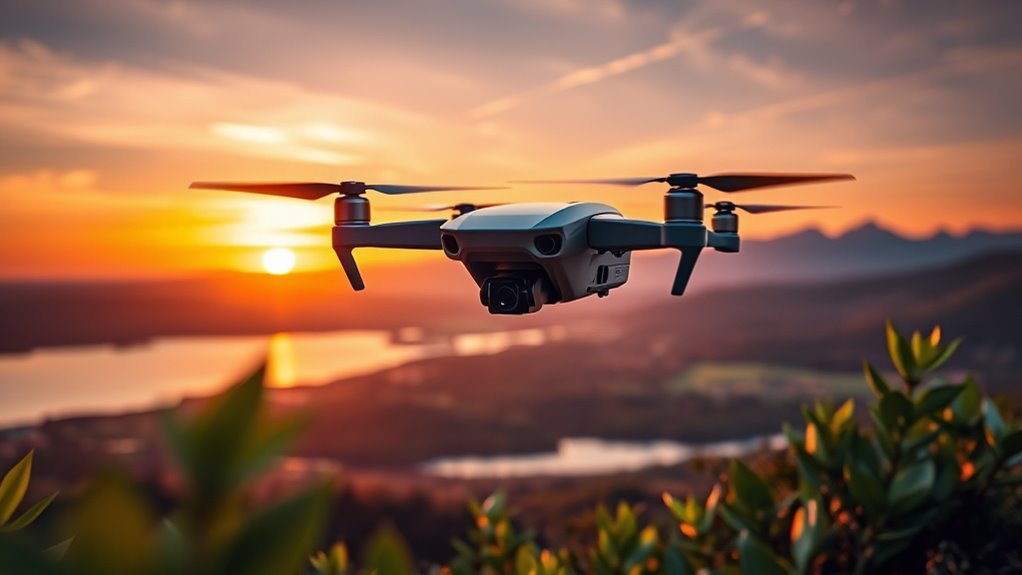
The HS260 drone offers a well-balanced mix of stable flight, intuitive controls, and solid 4K camera quality, making it suitable for both beginners and enthusiasts. Its ergonomic design and durable build withstand minor impacts and varied weather, though it’s not fully waterproof. You’ll get about 18 minutes of flight time with a 90-minute recharge, and a maximum control range near 300 meters under ideal conditions. If you want a deeper look at its features and performance, there’s more to explore.
Design and Build Quality
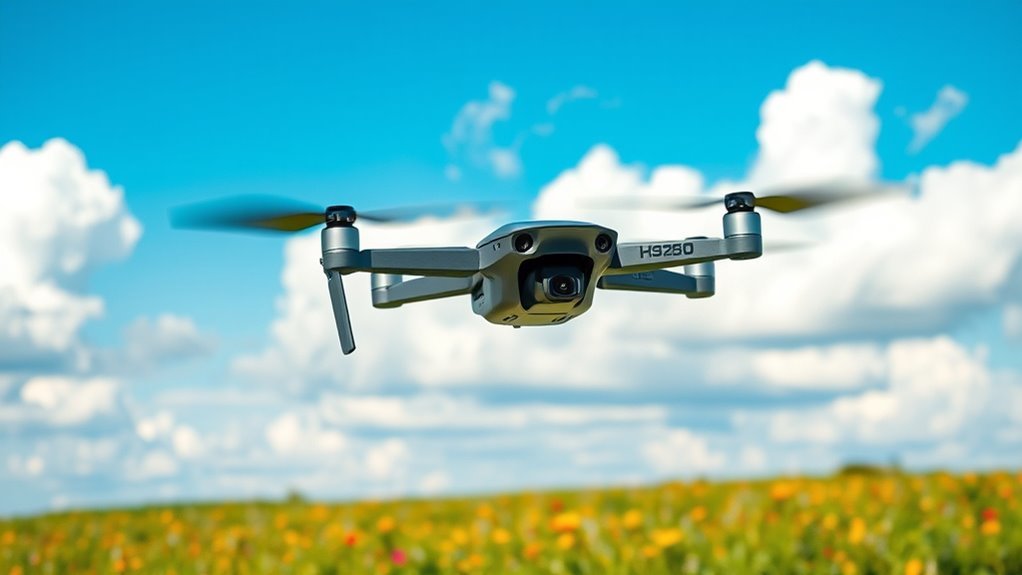
The Hs260 drone’s design strikes a balance between functionality and durability, ensuring it can withstand typical recreational use. You’ll appreciate its ergonomic design, which facilitates comfortable handling and ease of control during extended flights. The carefully contoured body minimizes fatigue, allowing you to focus on exploration rather than awkward grips. Material quality is another strong point; the drone employs lightweight yet robust composites that resist minor impacts without adding unnecessary weight. This combination enhances maneuverability and resilience, essential for outdoor freedom. The structural integrity supports stable flight in variable conditions, reinforcing confidence in your drone’s endurance. Overall, the Hs260’s thoughtful construction aligns with your desire for a reliable, user-friendly device capable of supporting unrestricted aerial adventures.
Camera Specifications and Performance
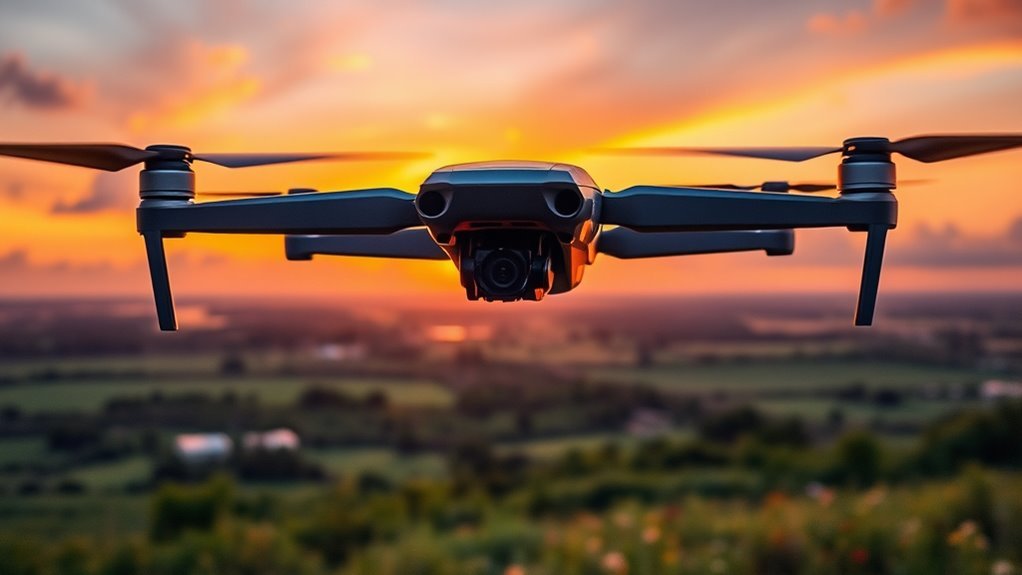
You’ll want to examine the camera resolution closely to understand the image quality you can expect from the Hs260. Pay attention to the image stabilization features, as they play a vital role in reducing blur and shakiness during flight. Also, consider how well the camera performs in low light conditions, since this affects usability in various environments.
Camera Resolution Details
Although many drones offer high-definition cameras, the HS260 distinguishes itself with a 4K resolution sensor that captures sharp and vivid footage. When you evaluate the lens quality, you’ll notice it employs a multi-element glass design, reducing distortion and enhancing clarity across the frame. In resolution comparison, the 4K sensor outperforms standard 1080p cameras by offering four times the pixel count, allowing you to zoom in or crop without significant quality loss. This level of detail is essential for capturing expansive landscapes or intricate subjects while maintaining crispness. The sensor’s color accuracy and dynamic range also contribute to realistic, vibrant images, granting you the freedom to explore creative angles and compositions confidently in diverse lighting conditions.
Image Stabilization Features
Since capturing smooth, professional-quality footage hinges on effective image stabilization, the HS260 integrates advanced electronic and mechanical systems to minimize shake and vibration. At its core, the drone employs three-axis gimbal technology, which mechanically stabilizes the camera, counteracting rapid movements and wind interference. Complementing this, the electronic vibration reduction algorithms further refine image steadiness by compensating for subtle vibrations that the gimbal can’t fully absorb. Together, these systems guarantee your footage remains crisp and fluid, even during dynamic flights. This dual approach to stabilization gives you the freedom to explore diverse environments without worrying about compromised video quality. By combining precise hardware with intelligent software, the HS260’s image stabilization strikes a balance between performance and reliability, essential for capturing smooth aerial shots with confidence.
Low Light Performance
Beyond stabilization, the HS260’s camera system is engineered to perform well in low light conditions, addressing a common challenge in aerial photography. Its sensor sensitivity is optimized to capture more light, enhancing image clarity during nighttime shooting. You’ll notice reduced noise and better color accuracy compared to similar drones in its class. While it doesn’t match professional-grade cameras, the HS260 provides a reliable balance between affordability and performance for dusk or dawn flights. Exposure settings are adjustable, allowing you to adapt to varying light levels effectively. This flexibility guarantees you maintain image sharpness without overexposing highlights or losing detail in shadows. Overall, the HS260 empowers you to explore creative freedom even when natural light is limited, expanding your aerial photography possibilities.
Flight Experience and Controls
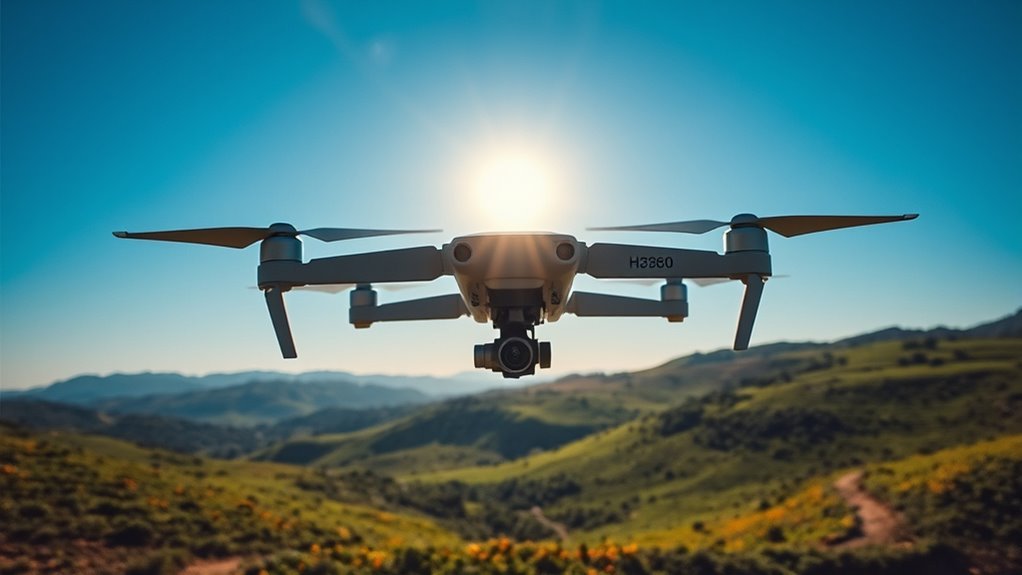
When you pilot the Hs260, you’ll notice how intuitive the controls are, making navigation straightforward even for beginners. The drone maintains impressive stability in the air, which helps with steady shots and smooth maneuvers. You’ll also find the responsiveness of the controls precise, allowing for accurate adjustments during flight.
Ease of Navigation
Maneuvering the Hs260 drone involves a combination of responsive controls and intuitive flight mechanics that cater to both beginners and experienced pilots. You’ll appreciate its user friendly interface, designed to minimize the learning curve and allow you to focus on exploration rather than technical hurdles. The intuitive controls provide precise input translation, enabling smooth directional changes and quick adjustments to flight paths. This ease of navigation means you can confidently pilot the drone in diverse environments, maintaining full command without feeling overwhelmed. Whether you’re capturing dynamic footage or simply enjoying the freedom of flight, the Hs260’s control system supports fluid, natural movements. Its thoughtful design balances accessibility with performance, ensuring that your experience remains engaging and unrestricted from the moment you take off.
Stability in Air
The Hs260 drone’s stability in the air is a critical factor that influences your overall flight experience and control precision. Thanks to its aerodynamic design, the drone maintains consistent flight stability even in moderate wind conditions, allowing you to focus on exploration rather than constant adjustments. Its frame minimizes drag and turbulence, which contributes to smoother, more predictable handling. This stability lets you enjoy a sense of freedom as you maneuver without worrying about sudden deviations or drops. The drone’s ability to hold its position steadily enhances both safety and confidence during flight. While external factors like wind still play a role, the Hs260’s design choices greatly reduce their impact, giving you a reliable platform for extended, controlled flight sessions.
Control Responsiveness
Building on its impressive stability, the Hs260 drone offers a control responsiveness that enhances your flight experience by providing immediate and accurate reactions to your inputs. Minimal control lag, aided by advanced sensor feedback, guarantees the drone feels intuitive and agile, letting you explore freely without delay or hesitation. This responsiveness is essential for precise maneuvers and quick adjustments, giving you confidence in diverse environments.
| Aspect | Performance |
|---|---|
| Control Lag | ~50 ms (low latency) |
| Sensor Feedback | Real-time, highly accurate |
| Input Precision | High, with smooth shifts |
| Response Time | Instantaneous control adjustments |
| Flight Agility | Enhanced by rapid sensor updates |
The synergy between controls and sensors empowers you with fluid, unrestricted flight.
Battery Life and Charging
Although the HS260 drone offers advanced features, its battery life remains a vital factor to evaluate, especially if you plan extended flights. The drone’s battery capacity is designed to deliver approximately 18 minutes of continuous flight, which may limit your exploration time. This duration is average compared to similar models but requires planning to maximize your flight sessions. Charging time is another essential consideration; the HS260 takes about 90 minutes to fully recharge, meaning downtime between flights can be significant. If you value freedom and uninterrupted aerial exploration, carrying extra batteries or a portable charger might be necessary to maintain your adventure. Understanding these limitations helps you manage expectations and optimize your drone usage for the best experience.
Range and Signal Strength
When you’re piloting the HS260 drone, understanding its range and signal strength is essential to maintaining control and ensuring safety. This model offers a maximum control distance of approximately 300 meters under ideal conditions, giving you considerable freedom to explore. However, real-world factors like signal interference from buildings, trees, or electronic devices can reduce this effective range. You’ll notice that distance limitations become critical when flying in urban or heavily wooded areas, where maintaining a steady connection requires careful line-of-sight awareness. The HS260’s signal transmission uses a 2.4 GHz frequency, which balances range and responsiveness but remains susceptible to interference. Staying mindful of these variables helps you maximize flight stability and prevent unexpected disconnections, ensuring a safer, more enjoyable flying experience.
Special Features and Modes
Maintaining a reliable signal is just one aspect of the HS260’s design; the drone also includes several special features and flight modes that enhance user control and adaptability. Its intelligent flight system leverages automated modes, allowing you to focus on creativity rather than manual adjustments. These modes simplify complex maneuvers, granting freedom while ensuring precision.
| Feature | Description | Benefit |
|---|---|---|
| Follow Me Mode | Drone autonomously tracks you | Hands-free operation |
| Waypoint Navigation | Pre-programmed GPS flight path | Precision and repeatability |
| Orbit Mode | Circles a subject at a set radius | Dynamic, cinematic shots |
| Gesture Control | Control via hand gestures | Intuitive user interaction |
These capabilities provide flexibility, making the HS260 suitable for various scenarios without sacrificing control.
Durability and Weather Resistance
Since drones are often exposed to varying environmental conditions, the HS260’s durability and weather resistance are essential elements to evaluate. You’ll appreciate that the HS260 features robust impact resistance, designed to withstand minor collisions and accidental drops without significant damage. Its frame uses reinforced materials that help absorb shocks, giving you confidence during adventurous flights. Additionally, the drone incorporates effective weather sealing, protecting sensitive components from dust and light moisture. While it’s not fully waterproof, the HS260 can handle light rain and windy conditions, expanding your flying opportunities. This balance of sturdy construction and weather protection guarantees the drone remains operational in diverse environments, empowering you to explore freely without constant worry about environmental hazards compromising your device.
Pricing and Value for Money
Although the HS260 isn’t the cheapest drone on the market, its pricing reflects a careful balance between advanced features and build quality. When you weigh its capabilities—such as stable flight, intuitive controls, and durable design—against the cost, it stands as a compelling choice for those wanting freedom in aerial exploration without overspending. While there are more affordable options available, many lack the integrated technology and reliability found here. A thorough value comparison highlights that the HS260 delivers consistent performance, reducing the need for frequent repairs or upgrades. So, if you value a drone that combines dependable construction with smart features, the HS260 offers an investment that aligns well with your desire for both quality and reasonable cost.
Comparison With Other Drones in Its Class
When evaluating the HS260 against other drones in its class, you’ll notice that it stands out regarding flight stability and ease of use. Performance benchmarks indicate the HS260 offers consistent hover precision and responsive controls, outperforming many competitors in similar price ranges. User reviews highlight its intuitive interface, which minimizes the learning curve, granting you immediate freedom to explore. Compared to peers, the HS260’s battery life and camera quality are competitive but not revolutionary, so consider your priorities carefully. If you value smooth, reliable flight and straightforward operation, this drone excels. However, for specialized features like advanced obstacle avoidance or ultra-high-resolution imaging, other models might better suit your needs. Overall, the HS260 balances core functionalities well, appealing to users seeking dependable performance without complexity.
