
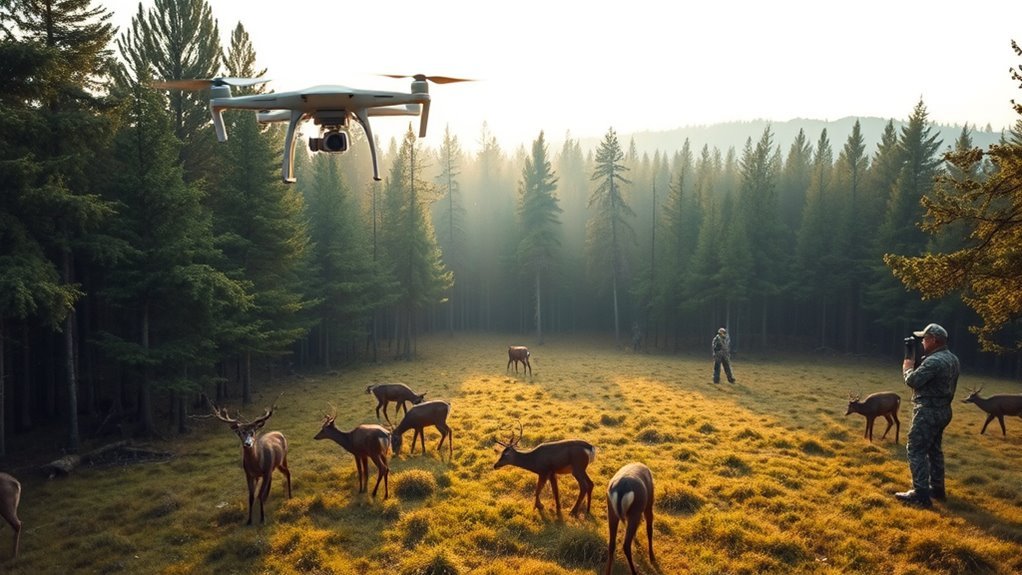
When using drones in hunting, you need to follow local laws and guarantee proper permits, choose a quiet drone with good battery life, and plan your flights to avoid disturbing wildlife. Always keep your drone within sight and respect private property boundaries. Operate ethically by minimizing stress on animals and preparing for weather changes to maintain safety. By following these key steps, you’ll enhance your hunting success while protecting wildlife and staying compliant—explore more to master these practices fully.
Understand Local Drone Regulations and Hunting Laws
Before you take your drone out for a hunt, it’s essential to familiarize yourself with the local drone regulations and hunting laws. You’ll want to verify your drone registration is current and complies with federal and state requirements. Many areas mandate specific rules about where and how you can fly drones, especially near wildlife refuges or populated zones. Likewise, securing the proper hunting permits is non-negotiable; hunting without them can lead to hefty fines or legal trouble. Understanding these laws safeguards your freedom to hunt responsibly while respecting wildlife and public safety. By staying informed and following regulations, you not only protect yourself but also help preserve ethical hunting traditions. Embrace this knowledge as the foundation for a successful and lawful hunting experience with your drone.
Choose the Right Drone for Hunting Applications

When choosing a drone for hunting, you’ll want to focus on features like camera quality, flight stability, and quiet operation to minimize disturbance. Battery life is essential since longer flights give you more time to scout and track game effectively. Make sure your drone balances these factors to support ethical and efficient hunting practices.
Drone Features for Hunting
Selecting the right drone for hunting involves understanding the specific features that enhance both efficiency and safety in the field. You’ll want a drone equipped with high-resolution cameras and thermal imaging to spot game discreetly, boosting hunting effectiveness without disturbing wildlife. Advanced GPS and obstacle avoidance systems guarantee precise navigation and reduce crash risks, preserving your equipment and the environment. Compact, lightweight designs offer easy transport and quick deployment, giving you the freedom to explore diverse terrains. Reliable communication range is essential so you can maintain control even in remote areas. By leveraging cutting-edge drone technology ethically, you maximize your success while respecting wildlife and legal boundaries, securing a responsible and rewarding hunting experience.
Battery Life Considerations
The features that make a drone ideal for hunting won’t mean much if its battery dies too quickly in the field. Effective battery management and smart charging strategies are crucial to maximize your drone’s flight time and guarantee you stay free to explore without interruption. Choose drones with high-capacity batteries and consider carrying spare batteries. Use charging solutions like portable power banks to recharge on the go. Here’s a quick guide:
| Battery Capacity | Average Flight Time | Charging Strategy |
|---|---|---|
| 3000mAh | 20 minutes | Rotate batteries, use power bank |
| 5000mAh | 35 minutes | Pre-charge, quick swap |
| 7000mAh | 50 minutes | Solar chargers, power banks |
| 10000mAh | 70 minutes | Extended charging setups |
Proper planning lets you keep your drone airborne, maximizing your hunting freedom.
Plan Your Flight Path to Minimize Wildlife Disturbance
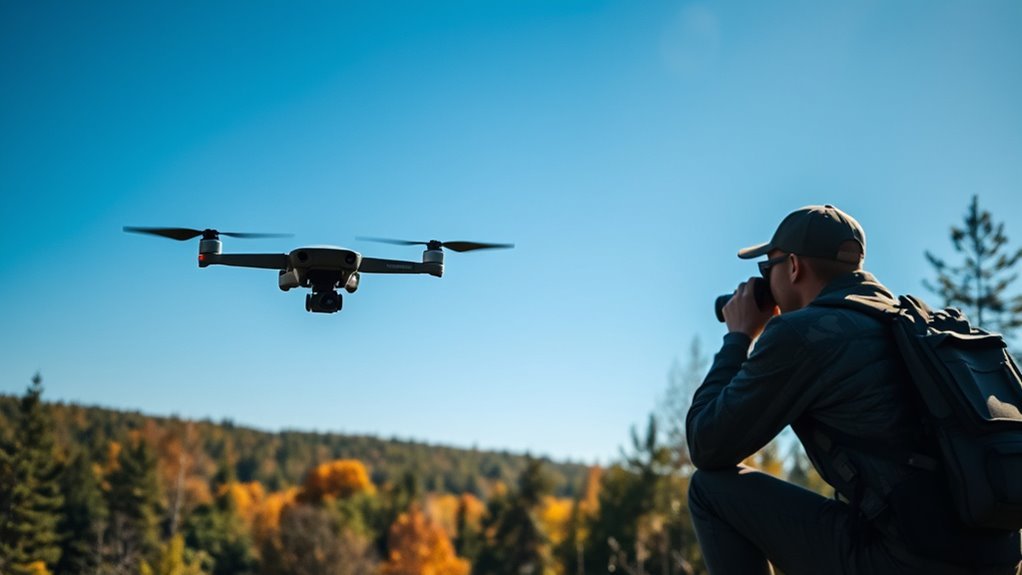
Although drones offer a powerful advantage in scouting, you need to carefully plan your flight path to avoid stressing or scattering wildlife. Understanding wildlife behavior is essential—animals are often sensitive to sudden movements and noise. Map out a route that maintains a respectful distance, flying at altitudes that minimize disturbance. Avoid direct approaches or hovering close over animal groups, as this can cause unnecessary stress and disrupt natural patterns. Consider wind direction and sun position to stay less noticeable. By thoughtfully designing your flight path, you’ll protect the wildlife’s well-being and maintain ethical hunting practices. This approach not only respects the freedom of the animals but also improves your chances of successful observation without compromising their habitat or behavior.
Use Drones Primarily for Scouting and Tracking
When you use drones primarily for scouting and tracking, you maximize their potential while minimizing impact on the environment. Employing effective scouting techniques allows you to locate game without disturbing their natural behavior. Ethical tracking methods guarantee you follow animals responsibly and respect their habitats. Here’s how you can apply this approach:
Using drones for scouting and tracking enhances efficiency while ensuring ethical wildlife observation and habitat respect.
- Use drones to cover large areas quickly, spotting movement or heat signatures from a safe distance
- Record flight data to analyze animal patterns and adjust your strategy accordingly
- Avoid hovering too close to prevent stress on wildlife
- Combine aerial observations with ground knowledge for a well-rounded understanding
Maintain Visual Line of Sight and Control at All Times
You should always keep your drone within your line of sight to guarantee safe and ethical operation. This helps you maintain responsive control, allowing you to react quickly to any unexpected changes. Staying visually connected prevents accidents and guarantees your drone supports your hunting without causing disturbance.
Keep Drone Within Sight
Maintaining a constant visual line of sight with your drone is essential for safe and responsible hunting practices. Keeping your drone within sight guarantees you’re aware of its exact position, preventing collisions and enhancing hunting safety. It also helps you respond quickly to any unexpected obstacles or wildlife behavior, preserving both your freedom to explore and the ethical use of technology.
To maintain ideal drone visibility:
- Fly during daylight or good lighting conditions to clearly see the drone.
- Avoid flying behind natural obstacles like trees or hills.
- Use brightly colored drone models or attach visible markers.
- Regularly scan the sky and your surroundings to keep track of your drone’s location.
Ensure Responsive Drone Control
Although keeping your drone within sight is essential, ensuring responsive control at all times is equally important for safe and effective hunting. You need to maintain complete command over your drone’s maneuverability, reacting swiftly to changing conditions or unexpected obstacles. Responsive controls allow you to adjust altitude, speed, and direction instantly, preventing potential crashes or disturbances to wildlife. Always test your drone’s responsiveness before heading out, and stay alert to any signal delays or interference. By doing so, you not only protect your equipment but also uphold ethical hunting practices, respecting the environment and wildlife. Remember, mastering responsive drone control enhances your freedom to explore while ensuring safety and precision throughout your hunting experience.
Respect Private Property and Hunting Boundaries
When operating drones for hunting purposes, it’s essential to stay clear of private property unless you have explicit permission from the landowner. Respecting property rights not only keeps you legal but also maintains good relationships with landowners. Boundary awareness is vital—knowing exactly where public lands end and private property begins prevents unintentional trespassing.
To respect private property and hunting boundaries, you should:
- Always research and mark property lines before flying your drone.
- Obtain clear permission from landowners in writing when possible.
- Use GPS and mapping tools to monitor your drone’s flight path closely.
- Avoid hovering near fences or boundary markers to prevent accidental incursions.
Practice Ethical Use to Avoid Stressing or Harassing Animals
Even if your goal is to gather valuable information, you should never use drones in a way that causes animals undue stress or disturbance. Maintaining respect for animal welfare is essential in ethical hunting, ensuring that your actions don’t disrupt natural behaviors or habitats. When operating drones, keep a safe distance to avoid startling wildlife, and limit flight time over sensitive areas. Avoid hovering directly above animals or making sudden movements that could cause panic. Remember, ethical hunting isn’t just about following laws—it’s about protecting the dignity and wellbeing of wildlife. By practicing restraint and mindfulness with your drone, you support sustainable hunting practices that honor both freedom and responsibility, preserving the balance between technology and nature.
Prepare for Battery Life and Weather Conditions During Flights
Since drone battery life is limited and weather conditions can change rapidly, you need to plan your flights carefully to avoid unexpected interruptions. Proper battery management and weather monitoring help you maximize flight time and maintain safety while respecting the environment.
Here are key tips to prepare:
- Charge batteries fully before heading out and carry spares to extend your flight window.
- Check weather forecasts and real-time updates to avoid strong winds, rain, or extreme temperatures.
- Plan shorter flight paths that consider battery capacity and allow for safe returns.
- Use apps or drone features that alert you to low battery or adverse weather during flights.
