

When using drones to scout for hunting, you must follow FAA rules like registering your drone, flying below 400 feet, and staying within visual line-of-sight. You also need landowner permission to fly over private property and comply with state hunting laws. Always keep a safe distance from wildlife to avoid disturbance, and operate your drone responsibly to guarantee safety and ethics. Understanding these basics sets the foundation for more effective and lawful drone scouting techniques.
Understanding FAA Regulations for Drone Use in Hunting
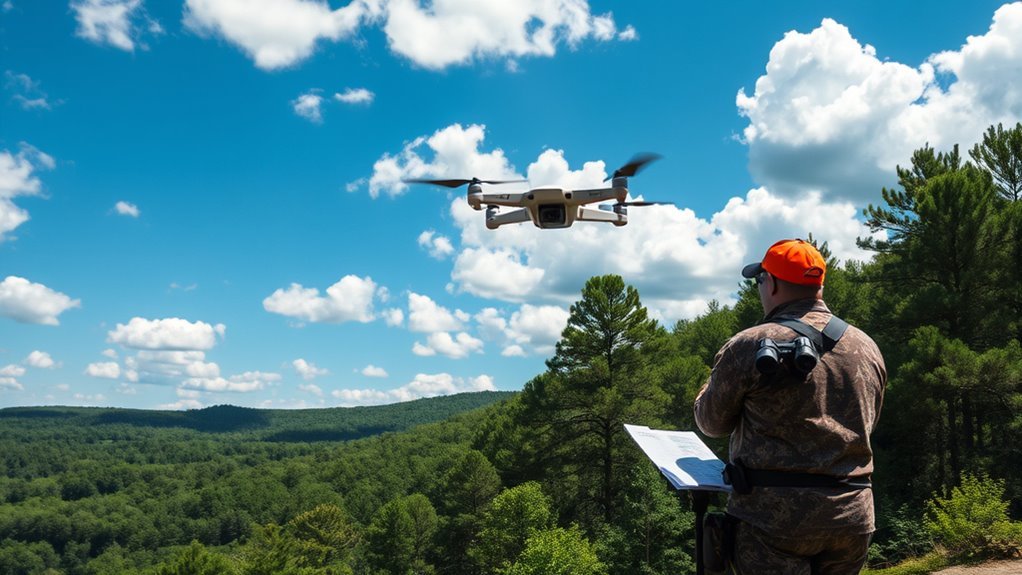
Before you take your drone out for a hunting trip, you need to understand the FAA regulations that govern its use. The FAA guidelines require that all drones weighing more than 0.55 pounds must be registered before flying, ensuring legal compliance. You must operate your drone within visual line-of-sight, avoid flying over people or moving vehicles, and limit altitude to 400 feet above ground level. These rules are designed to maintain safety and airspace order, giving you the freedom to scout effectively without risking penalties. Additionally, flying near airports or controlled airspace demands prior authorization. By following these FAA guidelines and completing drone registration, you protect yourself legally and keep your hunting expeditions free and responsible. Compliance is your key to enabling unrestricted, lawful drone use in the field.
Respecting Wildlife and Minimizing Disturbance
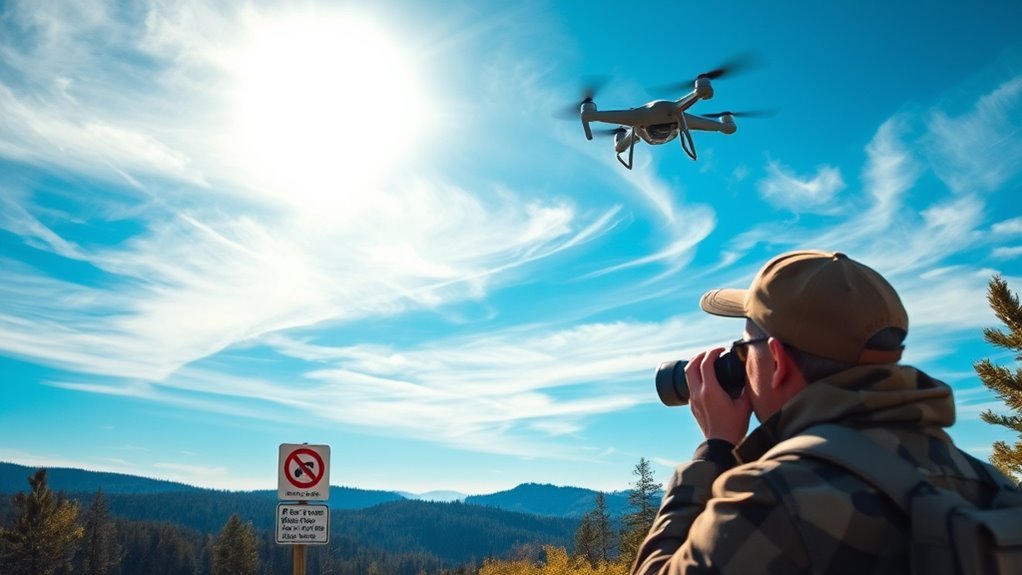
While drones offer incredible advantages for scouting, you must prioritize respecting wildlife and minimizing disturbance. Understanding wildlife behavior is key to reducing drone impact on animals. Flying too close or too frequently can stress wildlife, altering their natural patterns.
| Aspect | Best Practice | Reason |
|---|---|---|
| Distance | Maintain 100+ feet | Limits stress, avoids disruption |
| Flight Duration | Keep short flights | Minimizes prolonged disturbance |
| Noise Level | Use quiet drones | Reduces alertness in animals |
| Time of Day | Avoid sensitive periods | Respects feeding and resting |
Obtaining Permissions for Private Property
Before flying your drone on private property, you must obtain the landowner’s consent to avoid legal issues. Getting written permission not only protects you but also clearly defines your boundaries. Always respect property lines to maintain good relations and stay within the law.
Landowner Consent Required
Securing permission from landowners is essential whenever you plan to use drones on private property for hunting purposes. Landowner rights protect their privacy and control over their land, and respecting these rights isn’t just good manners—it’s the law. Before launching your drone, always seek explicit consent to avoid trespassing or legal issues. Practicing proper drone etiquette means communicating clearly and honoring any restrictions set by the landowner. Ignoring consent not only damages trust but can lead to penalties or bans from the property. Remember, your freedom to scout with drones comes with the responsibility to respect others’ property rights. Always prioritize obtaining landowner approval to guarantee your drone activities remain lawful, ethical, and welcomed.
Written Permission Benefits
Obtaining landowner consent is just the start; having that permission in writing offers significant advantages. When you secure written consent, you create a clear, undeniable record that protects your right to use the drone on private property. This documentation minimizes misunderstandings and shields you from potential legal implications, ensuring you can exercise your freedoms confidently. Without written permission, verbal agreements may be disputed, exposing you to risks such as trespassing claims or fines. Having a signed document clarifies the scope and limits of your drone use, providing peace of mind and reinforcing your accountability. In short, written consent isn’t just a formality—it’s your strongest safeguard for legally and responsibly scouting hunting grounds on private land. Always prioritize it to maintain your freedom within the law.
Respecting Property Boundaries
While drones offer unmatched advantages for scouting, respecting property boundaries is essential to avoid legal trouble and maintain good relationships with landowners. You must understand property rights and exercise strict boundary awareness when flying your drone. Crossing into private property without permission can lead to disputes or legal action, limiting your freedom to scout effectively.
To guarantee you stay within legal and ethical limits:
- Always obtain explicit permission from landowners before entering private airspace.
- Use maps and GPS tools to confirm property lines and avoid accidental trespass.
- Communicate clearly about your drone’s flight path to maintain trust and transparency.
Adhering to these principles protects your rights, respects others, and keeps your scouting efforts hassle-free.
Adhering to State and Local Hunting Laws
Because drone regulations vary widely across states and localities, you must familiarize yourself with the specific hunting laws in your area before using a drone. State regulations often dictate whether drones can be used for scouting or hunting purposes, and these rules can differ considerably from one jurisdiction to another. Additionally, local ordinances may impose stricter controls or outright bans on drone usage in certain areas. Ignoring these laws not only jeopardizes your freedom to hunt but may also result in fines or legal action. To stay compliant, consult your state’s fish and wildlife agency and review local government websites. Understanding and respecting these legal boundaries guarantees you enjoy drone-assisted hunting responsibly and within the law.
Ensuring Safe and Responsible Drone Operation
Although drones offer remarkable advantages for hunting, you must operate them with safety and responsibility to prevent accidents and legal issues. Prioritizing drone safety not only protects you and others but also preserves your freedom to use this technology for responsible scouting. Always maintain visual line of sight with your drone, avoiding restricted or crowded areas. Familiarize yourself with weather conditions to prevent loss of control, and guarantee your drone is well-maintained before each flight.
Key points for safe and responsible drone operation include:
- Fly below altitude limits and respect no-fly zones
- Avoid disturbing wildlife or other hunters
- Keep your drone within your control and avoid distractions
Best Practices for Ethical Drone Scouting in Hunting
When using drones for scouting in hunting, you must always respect wildlife habitats to avoid disturbing animals. Make certain you’re fully aware of and comply with all local regulations governing drone use. Following these guidelines guarantees your scouting is both ethical and legal.
Respect Wildlife Habitats
To guarantee ethical drone scouting in hunting, you must prioritize respecting wildlife habitats at all times. Your use of drones should support wildlife conservation efforts and contribute to habitat preservation, not disrupt them. Avoid flying too close to nesting areas or sensitive environments where animals may be stressed or displaced. Maintain a respectful distance and minimize noise to prevent altering natural behaviors.
- Limit drone flights over critical habitats during breeding or feeding seasons.
- Use drones only for scouting, not for chasing or harassing wildlife.
- Monitor your drone’s impact and adjust practices to reduce disturbance.
Follow Local Regulations
Because drone laws vary widely by location, you need to be fully aware of and comply with all local regulations before using drones for hunting scouting. Drone technology offers incredible freedom to enhance your hunting strategies, but this freedom comes with responsibility. Each jurisdiction may have distinct rules regarding drone flight zones, altitude limits, and restrictions near wildlife or protected areas. Adhering to these regulations isn’t just about avoiding fines—it’s about supporting wildlife conservation efforts that protect habitats and species. Ignoring legal boundaries can disrupt ecosystems and harm the very game you seek. By respecting local laws, you guarantee that drone use remains a sustainable, ethical tool for scouting while preserving your freedom to hunt responsibly and protect natural resources for future generations.
