

To enhance your drone use in hunting, pick a lightweight model with long flight time, quiet propellers, and thermal or night vision cameras for clear, ethical scouting. Follow local drone and hunting laws closely to avoid penalties. Master silent flight techniques and plan efficient flight paths to conserve battery and reduce wildlife disturbance. Keep batteries charged and integrate drone data with hunting apps for real-time insights. There’s much more to discover on optimizing your drone’s role in the field.
Selecting the Right Drone for Hunting
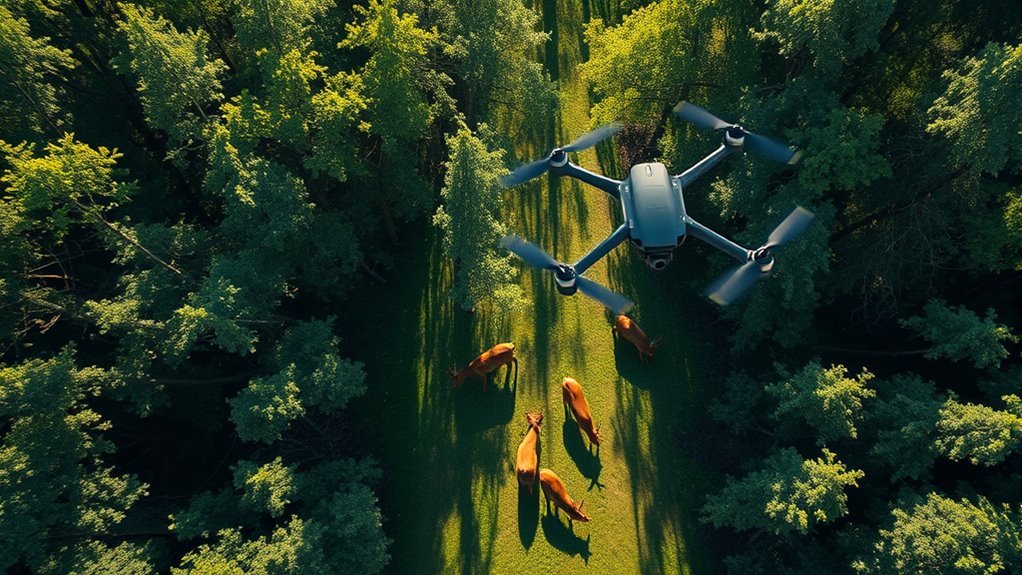
When selecting the right drone for hunting, you’ll want to focus on features that enhance your tracking and observation capabilities without disturbing wildlife. Start by examining drone specifications like flight time, range, and camera quality—these directly impact your ability to monitor game discreetly. Consider the hunting terrain; rugged or densely forested areas may require drones with advanced stabilization and obstacle avoidance systems. Lightweight drones offer greater maneuverability, while those with thermal imaging cameras provide an edge during low-light conditions. Battery life is essential, so choose a model that supports extended flights to cover vast hunting grounds. Ultimately, selecting a drone tailored to your environment and ethical hunting practices guarantees you maintain freedom in the field while respecting wildlife habitats.
Understanding Local Drone and Hunting Regulations
Before flying your drone for hunting, you need to know the specific drone laws in your area, including where and how high you can fly. It’s also essential to understand hunting restrictions that may affect drone use, like no-drone zones or seasonal limits. Make sure you have all required permits and licenses to stay compliant and hunt responsibly.
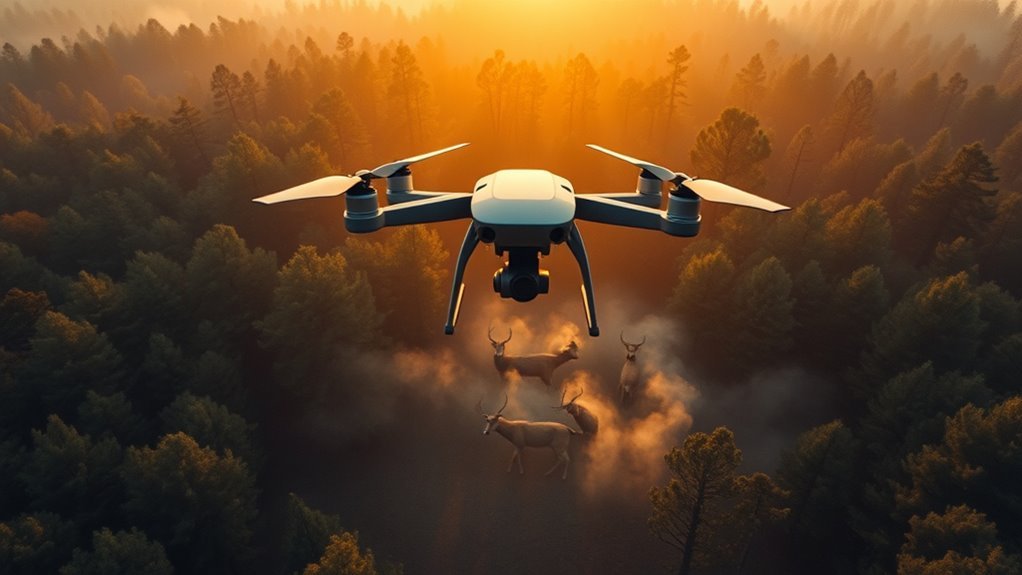
Drone Laws Overview
Although drones can greatly enhance your hunting experience, it’s crucial to understand the specific laws governing their use in your area. Drone regulations vary widely, so you need to research local, state, and federal rules before taking off. These legal restrictions often cover where you can fly, altitude limits, and whether you can use drones near wildlife or protected lands. Ignoring these laws not only risks fines but also threatens ethical hunting practices and wildlife safety. Stay informed about no-fly zones and any required drone registrations or certifications. By respecting drone regulations, you safeguard your freedom to explore the skies responsibly while maintaining fair, sustainable hunting traditions. Always prioritize compliance to enjoy your drone-assisted hunting without legal complications.
Hunting Restrictions Awareness
Because hunting regulations can differ markedly between regions, you’ll need to thoroughly understand both drone and hunting laws specific to your area. This knowledge is essential to practice responsible hunting ethics and respect wildlife conservation efforts. You should research local restrictions on drone flight zones, altitude limits, and times when drone use is prohibited, especially near protected habitats or during sensitive seasons. Additionally, familiarize yourself with rules about using drones to locate or stalk game, as many jurisdictions consider this unethical or illegal. Staying informed not only keeps you compliant but also preserves the natural balance and guarantees fair chase principles. By prioritizing awareness of these regulations, you uphold both your freedom to hunt and the ethical stewardship necessary for sustaining wildlife populations for future generations.
Permits and Licensing
Understanding the specific permits and licenses required for both drone operation and hunting in your area helps guarantee you stay within the law and hunt responsibly. Before taking your drone out, check local permit requirements to fly drones over hunting lands, as these vary widely. Some regions mandate special drone permits or have restrictions on drone use during hunting seasons. Similarly, make certain your hunting license is valid and covers the species and area you plan to hunt. Be aware of licensing fees, which may differ depending on your location and permit type. Staying informed about these regulations not only protects your freedom to hunt but also supports ethical practices and wildlife conservation. Always verify the latest rules with local wildlife agencies to avoid fines or legal issues.
Mastering Silent Flight Techniques
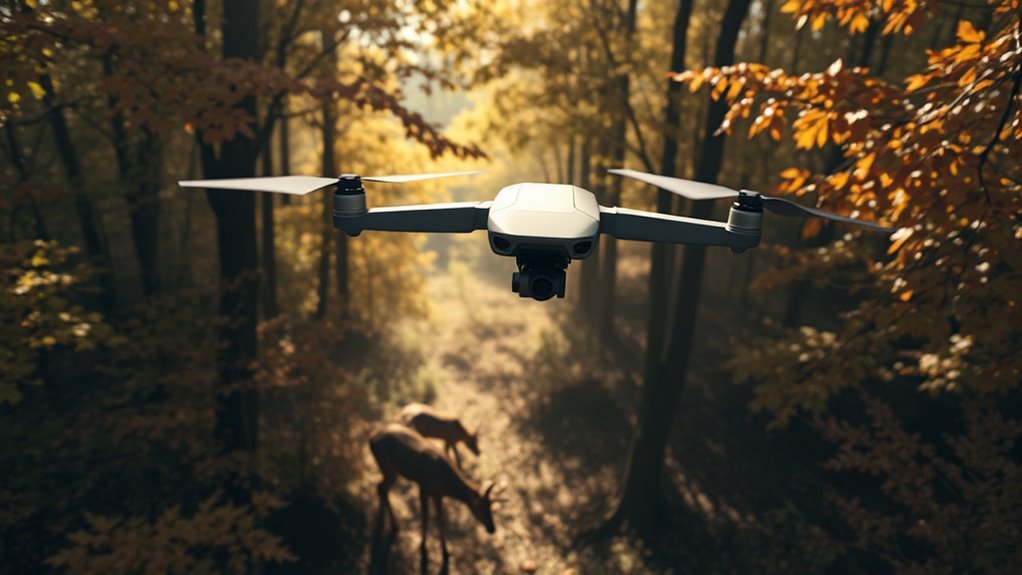
A key skill for successful hunting with drones is mastering silent flight techniques. To stay undetected and respect wildlife, you need to focus on noise reduction strategies. Start by selecting drones designed for quieter operation, such as those with low-noise propellers or brushless motors. Adjust your flight speed to minimize rotor noise—slower, steady movements often produce less sound. Additionally, fly at altitudes that keep the drone out of the animal’s immediate hearing range but still allow effective observation. Avoid sudden maneuvers that can spike noise levels. Regularly maintain your drone to prevent mechanical sounds from worn parts. By prioritizing silent flight, you guarantee ethical hunting practices and increase your chances of tracking game without disturbance, preserving the freedom and integrity of the natural environment.
Utilizing Thermal and Night Vision Cameras
When you use thermal imaging, you can easily spot animals by their heat signatures, even in complete darkness or dense foliage. Pairing this with optimized night vision settings lets you track movement without disturbing the wildlife. Understanding how to balance these tools will improve your effectiveness while respecting ethical hunting practices.
Benefits of Thermal Imaging
Thermal imaging offers hunters a powerful advantage by allowing you to detect heat signatures from animals even in complete darkness or dense foliage. This capability expands your thermal imaging applications, giving you freedom to hunt in conditions that would otherwise limit visibility. With enhanced tracking, you can follow elusive game without disturbing their natural behavior, promoting an ethical hunting approach. Using thermal cameras on drones, you’ll quickly identify targets while minimizing unnecessary disturbance to the environment. You’ll appreciate how this technology sharpens your situational awareness, helping you make informed decisions and improving overall safety. By integrating thermal imaging into your drone setup, you gain a precise, reliable tool that respects wildlife and supports responsible hunting practices.
Optimizing Night Vision Use
Although night vision cameras enhance your ability to see in low-light conditions, combining them with thermal imaging on your drone can greatly improve target detection and identification. To optimize night vision use while respecting wildlife and legal boundaries, consider these night vision techniques for enhancing visibility:
- Adjust Brightness and Contrast: Fine-tune settings to prevent glare and maintain a clear view of your target without disturbing the environment.
- Use Dual-Mode Viewing: Switch between thermal and night vision modes to differentiate animals from background foliage effectively.
- Practice Controlled Flight Paths: Fly at steady altitudes and speeds to maximize image clarity and minimize noise, preserving the natural habitat.
Planning Efficient Flight Paths for Scouting
Since efficient flight paths can save both time and battery life, carefully planning your drone’s route is critical for effective scouting. Flight path optimization helps you cover more ground with less effort, letting you spot game without disturbing natural habitats. Using aerial scouting techniques like grid or zigzag patterns guarantees thorough observation, maximizing your drone’s potential while respecting ethical hunting practices.
| Flight Path Type | Best Use | Advantage |
|---|---|---|
| Grid | Systematic area coverage | Complete area visibility |
| Zigzag | Following terrain features | Efficient energy use |
| Circular | Focused observation point | Detailed target analysis |
Plan your routes to align with legal boundaries and avoid sensitive areas, preserving your freedom and the environment.
Maintaining Drone Battery Life in the Field
When you’re out in the field, managing your drone’s battery life becomes crucial to guarantee uninterrupted scouting sessions. To maximize flight time, follow these battery conservation tips:
- Pre-flight, verify batteries are fully charged and stored at ideal temperatures to preserve capacity.
- Limit unnecessary maneuvers and avoid flying in extreme weather, as both drain battery faster.
- Utilize reliable field charging solutions like portable power banks or solar chargers to recharge on the go.
Integrating Drone Data With Hunting Apps
If you want to make the most of your drone footage, integrating that data with hunting apps can greatly enhance your tracking and planning efforts. By utilizing drone mapping features, you can upload aerial images directly into apps designed for hunters, creating detailed topographic maps of your hunting area. This integration allows you to analyze terrain, identify game trails, and mark key locations more efficiently. Data analysis tools within these apps help you interpret flight data, spotlighting patterns in animal movement and environmental changes. With this approach, you gain freedom to strategize smarter hunts based on precise, real-time insights instead of guesswork. Just confirm the app you choose supports seamless data imports from your drone to streamline your workflow and maintain ethical use throughout your hunting adventures.
Practicing Ethical and Responsible Drone Usage
Although drones offer powerful advantages for hunting, you’ve got to use them ethically and responsibly to protect wildlife and comply with regulations. Embracing ethical considerations guarantees your freedom to hunt sustainably without harming ecosystems. Here’s how to practice responsible usage:
- Respect Wildlife: Avoid disturbing animals with drone noise or proximity; this prevents stress and behavioral changes.
- Follow Legal Guidelines: Know and adhere to local drone and hunting laws to maintain your rights and avoid penalties.
- Limit Flight Times and Areas: Use drones during appropriate hours and stay clear of protected zones to minimize environmental impact.
