
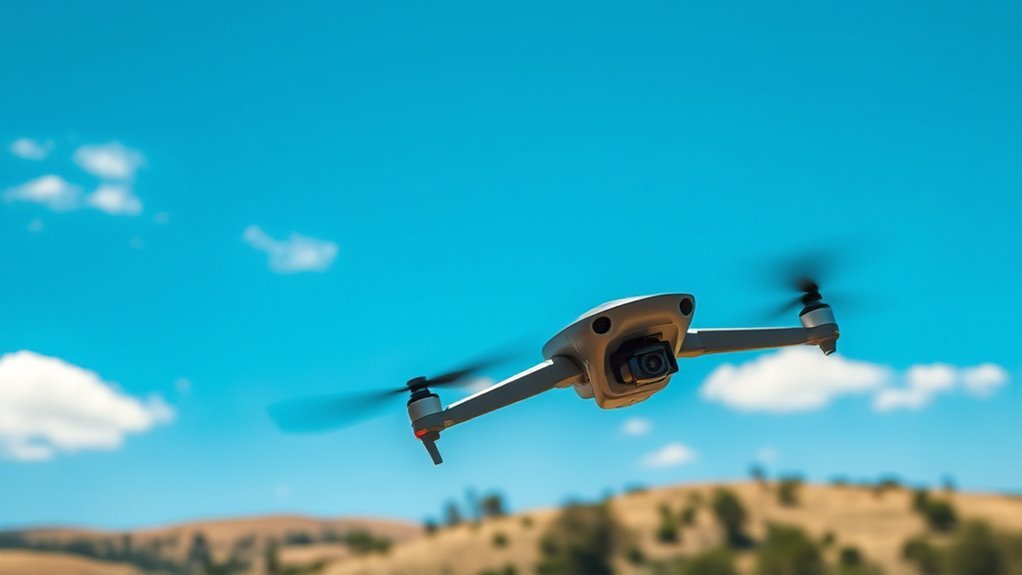
You can pilot drones reaching speeds up to about 180 miles per hour, thanks to advancements in materials like carbon fiber, efficient brushless motors, and optimized aerodynamics minimizing drag. High-speed models, such as the DRL RacerX, achieve this through lightweight design and powerful propulsion systems paired with high-capacity batteries balancing energy and weight. These innovations enable rapid acceleration and sustained velocity. Exploring the technologies behind these feats reveals how drones achieve such impressive speed and control.
Historical Development of Drone Speeds
Although drones have become synonymous with high-speed capabilities today, their early designs prioritized stability and endurance over velocity. In the early developments, the focus was on reliable flight control systems and extended operational range, essential for reconnaissance and surveillance missions. Military advancements markedly influenced drone evolution, emphasizing endurance and data transmission rather than outright speed. You’d notice that initial unmanned aerial vehicles (UAVs) were engineered to maintain steady flight patterns, allowing for precise intelligence gathering without risking pilot lives. As you explore this progression, it’s clear that speed was a secondary consideration, with aerodynamic efficiency and propulsion systems tailored for sustainable, controlled flight. This foundation laid the groundwork for later innovations, enabling drones to break speed barriers while maintaining the freedom of operation that early designs prioritized.
Record-Breaking Fastest Drones in the World
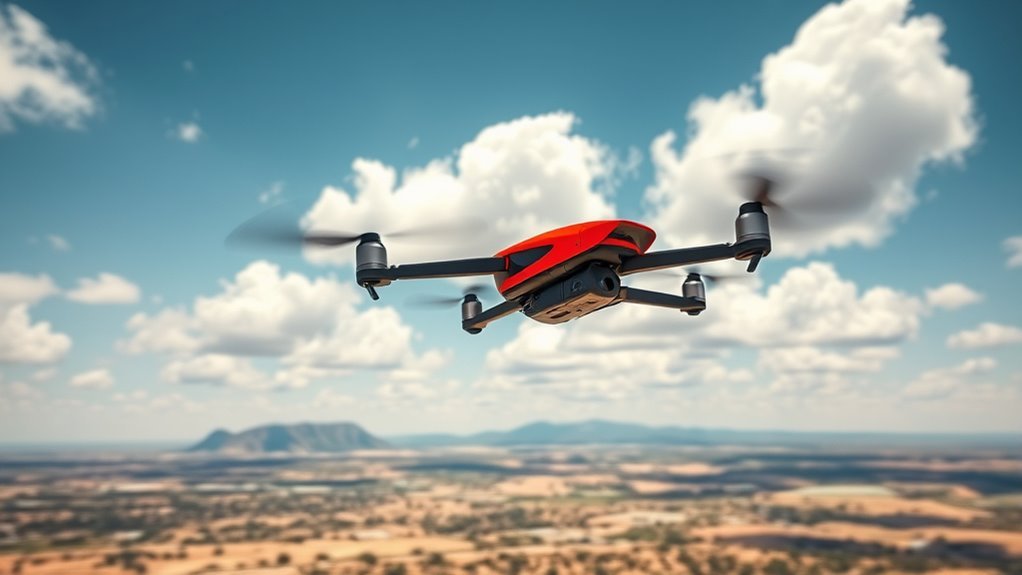
You’ll find that the fastest drones achieve remarkable top speeds through advanced aerodynamics and powerful propulsion systems. By analyzing leading drone models, you can identify the key design features contributing to their record-breaking performance. Understanding these specifications helps clarify how speed benchmarks continue to evolve in drone technology.
Top Speed Achievements
Speed is the defining metric when evaluating the performance of racing and experimental drones. You’ll find that top speed achievements are often documented through speed competitions, where racing drones are pushed to their mechanical and aerodynamic limits. These contests reveal how innovations in motor power, lightweight materials, and aerodynamic design converge to maximize velocity. For example, drones have surpassed speeds of 160 mph, illustrating a blend of precision engineering and pilot skill. This continuous progress in drone speed offers you the freedom to explore new frontiers in aerial agility and rapid response. By understanding these benchmarks, you can appreciate how speed competitions not only set records but also drive technological advancements, enabling drones to reach unprecedented velocities while maintaining control and stability.
Leading Drone Models
Understanding the benchmarks set by speed competitions helps you recognize which drone models have pushed the boundaries of velocity the furthest. When evaluating leading drone brands, speed comparisons reveal the technological advancements that enable unparalleled performance. Models like the DRL RacerX, known for its 179.6 mph top speed, exemplify precision engineering and aerodynamic optimization. Other contenders include the Vectron Vx2 and the F-46, each integrating lightweight materials and high-efficiency propulsion systems to maximize velocity. These drones represent the pinnacle of freedom in flight, allowing you to experience extreme speed without sacrificing control.
- DRL RacerX: World record holder, 179.6 mph
- Vectron Vx2: Advanced propulsion, lightweight frame
- F-46: Aerodynamic design, efficient powertrain
Key Technologies That Enable High-Speed Flight
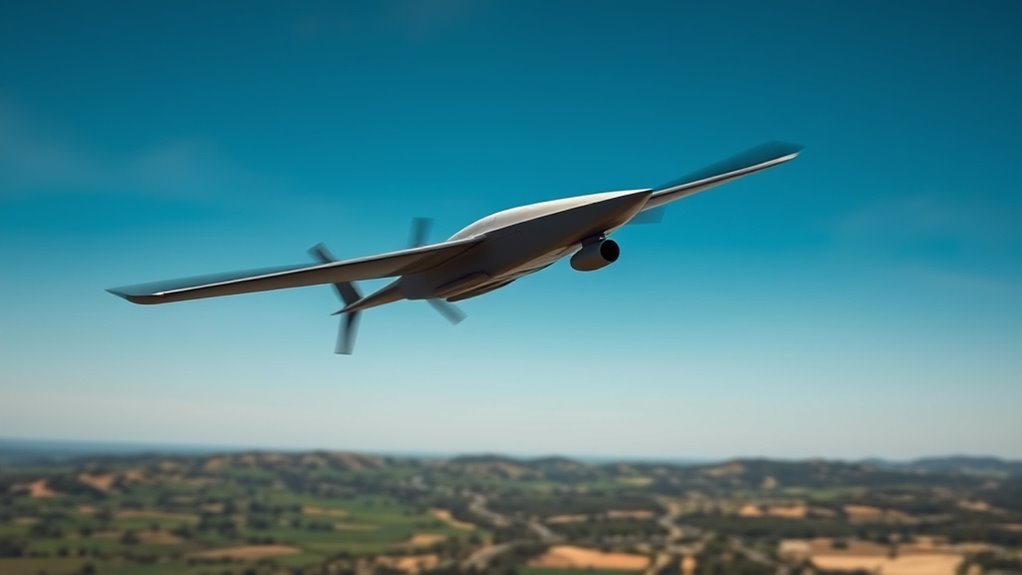
Although achieving high-speed flight in drones demands overcoming significant aerodynamic and mechanical challenges, several key technologies have emerged to make this possible. You’ll find that advanced materials like carbon fiber composites and lightweight alloys reduce structural mass without compromising strength, enabling quicker acceleration and higher top speeds. Propulsion innovations also play a critical role; cutting-edge brushless motors paired with high-efficiency, variable-pitch propellers maximize thrust while minimizing energy loss. Additionally, improvements in battery technology provide sustained power output essential for maintaining velocity. Together, these advancements grant you the freedom to push drone speed boundaries safely and reliably, balancing power and durability. Understanding these technologies helps you appreciate how drones achieve rapid flight while ensuring control, stability, and efficiency during high-speed maneuvers.
Aerodynamics and Design Factors Affecting Speed
You’ll find that a drone’s shape directly influences its aerodynamic drag, which in turn affects maximum speed. Material selection also plays a critical role by balancing weight reduction with structural strength. Understanding these design factors is essential to optimizing velocity without compromising stability.
Impact of Drone Shape
When optimizing a drone for maximum speed, its shape plays a vital role in minimizing aerodynamic drag and enhancing stability. You need to focus on drone aerodynamics and shape optimization to reduce air resistance while maintaining control at high velocities. A streamlined design cuts through air efficiently, allowing you to push boundaries freely.
Consider these key shape factors:
- Profile slenderness: A narrow cross-section lowers drag, essential for speed.
- Surface smoothness: Minimizes turbulence, improving airflow consistency.
- Wing and body integration: Seamless shifts reduce vortex formation and stabilize flight.
Material Choices and Speed
Efficiency in material selection greatly influences a drone’s top speed by affecting weight, strength, and aerodynamic performance. When you prioritize weight reduction through advanced composites like carbon fiber or lightweight alloys, you lower inertia and enhance thrust-to-weight ratio, enabling faster acceleration and higher maximum velocity. However, material choice isn’t just about shedding mass; it must maintain structural integrity under aerodynamic stress to avoid deformation that could increase drag. You also need to take into account surface finish and rigidity, as smoother, stiffer materials contribute to reduced air resistance and improved stability at high speeds. Balancing these factors guarantees your drone achieves ideal speed without compromising durability or control, granting you the freedom to push boundaries while maintaining reliable, high-performance flight. Material selection is therefore a critical design factor directly shaping your drone’s velocity potential.
The Role of Motors and Propulsion Systems
Although the airframe and aerodynamics greatly influence a drone’s speed, the motors and propulsion systems ultimately determine its maximum velocity and acceleration capabilities. When you seek freedom through speed, understanding motor efficiency and propulsion innovations is essential. High-efficiency brushless motors reduce energy loss, enabling longer, faster flights. Advanced propulsion designs, such as ducted fans or variable-pitch propellers, optimize thrust-to-weight ratios, pushing your drone beyond conventional limits. Consider these core factors:
- Motor efficiency: Directly impacts power conversion and heat dissipation, affecting sustained high-speed performance.
- Propulsion innovations: Enhance thrust control and aerodynamic integration, vital for rapid acceleration and stability.
- Power-to-weight ratio: Determines how effectively your drone converts energy into speed without sacrificing maneuverability.
Mastering these elements lets you access the drone’s true velocity potential and experience unrestrained flight.
Battery Life and Its Impact on Maximum Speed
Since battery life directly limits the power available to your drone’s motors, it plays a vital role in sustaining maximum speed. Your drone’s battery capacity determines how long it can deliver peak current without voltage drop, which is essential for maintaining top velocity. However, there’s an inherent speed trade off: pushing your drone to maximum speed demands higher current draw, rapidly depleting battery reserves and reducing flight time. To achieve sustained high speeds, you need batteries with both high capacity and high discharge rates, but these often increase weight, impacting maneuverability and efficiency. Balancing battery capacity against the speed trade offs is significant if you want freedom to fly fast without sacrificing endurance. Understanding this interplay helps you optimize battery selection for your drone’s performance goals.
Practical Applications of High-Speed Drones
When you harness high-speed capabilities, drones open up a range of practical applications that demand rapid response and precise navigation. You can leverage these speeds for critical missions like search and rescue, where every second counts. In agricultural monitoring, swift drones enable expansive field coverage efficiently, while in cinematic filmmaking, they capture dynamic aerial shots with unmatched fluidity. High-speed drones also empower military reconnaissance, infrastructure inspection, environmental research, and wildlife tracking by rapidly accessing challenging areas. Additionally, parcel delivery benefits from accelerated transit times, enhancing logistical freedom.
- Rapid deployment in emergency scenarios like search and rescue
- Expedited data collection for agricultural monitoring and environmental research
- Enhanced agility for cinematic filmmaking and military reconnaissance
Future Trends in Drone Speed Technology
As drone technology continues to evolve, you’ll see significant advancements aimed at pushing speed boundaries while maintaining stability and control. Emerging technologies like advanced aerodynamics, lightweight composite materials, and AI-driven flight systems are central to future predictions in drone speed. These innovations will allow drones to optimize power consumption and reduce drag, enabling higher velocities without compromising maneuverability. Additionally, breakthroughs in battery density and propulsion mechanisms will extend operational range, giving you more freedom to explore at unprecedented speeds. Developers are also focusing on integrating adaptive control algorithms that respond in real-time to environmental variables, ensuring precise handling at extreme velocities. As these trends converge, you’ll experience drones that not only go faster but do so with enhanced reliability and safety, redefining the potential of aerial mobility in the near future.
