
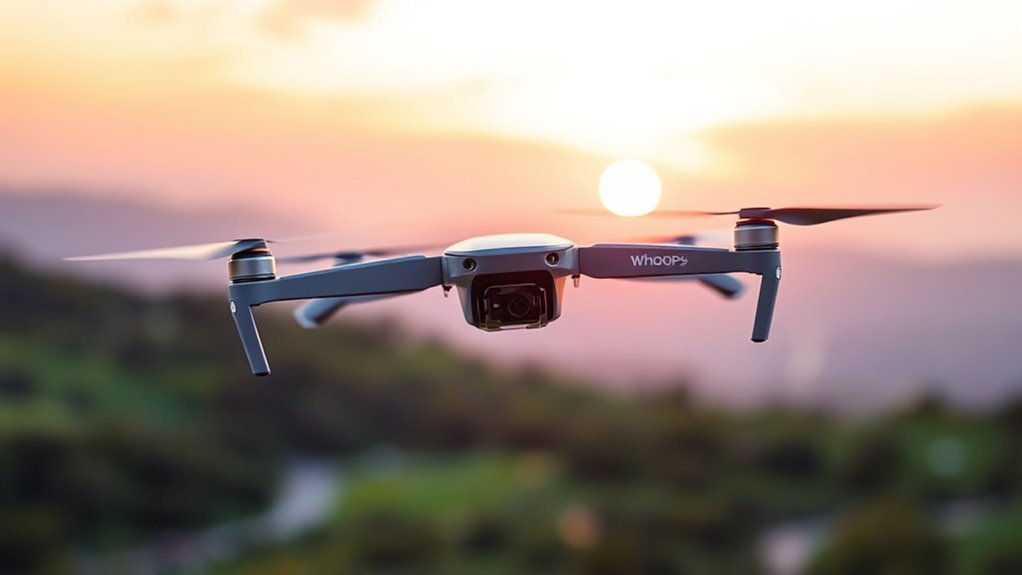
A Whoop drone is a small, lightweight quadcopter designed for agile indoor flying and racing. You’ll notice its compact frame, durable propeller guards, and brushless motors that make it safer and highly maneuverable in tight spaces. Unlike traditional drones, Whoops prioritize speed and portability over long battery life or payload capacity. They’re great for learning piloting skills or indoor exploration. Keep exploring and you’ll uncover more about their features, uses, and future advancements.
History and Evolution of Whoop Drones
Although whoop drones have only recently gained widespread popularity, their history dates back over a decade. You’ll find that whoop drone history traces back to early indoor racing drones designed for agility in tight spaces. As technology progressed, the whoop drone evolution focused on miniaturization, increased durability, and improved flight control systems. This evolution allowed you to experience unmatched freedom in confined environments, combining speed with maneuverability. The compact size and protective frames made whoop drones accessible and safe for beginners and enthusiasts alike. Understanding this history helps you appreciate the design choices that make whoop drones unique today. Their progression reflects a balance of innovation and user freedom, enabling you to explore and master flight with precision and confidence.
Key Features of a Whoop Drone
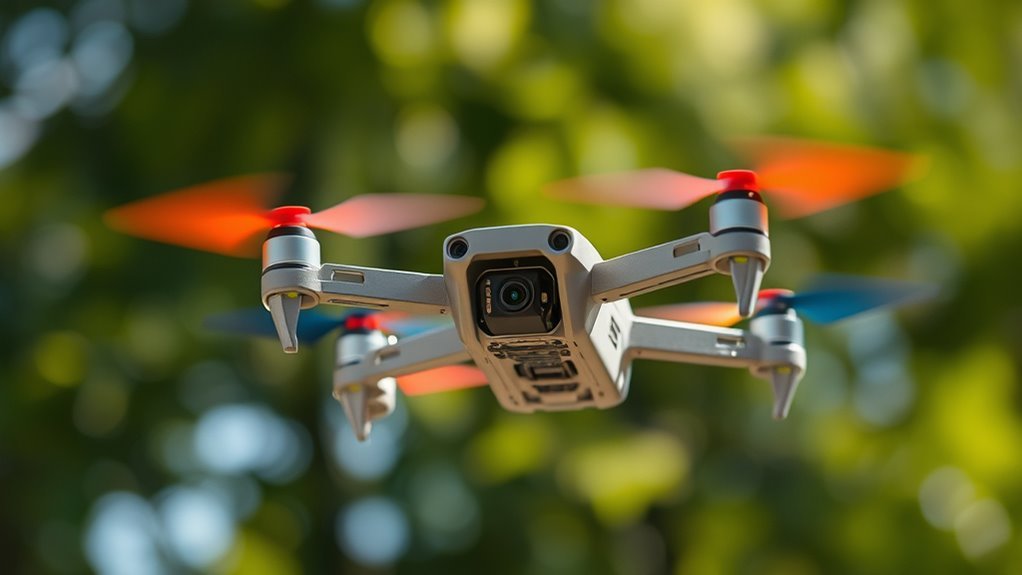
The advancements in whoop drone design have led to a set of distinctive features that define their performance and appeal. You’ll find that whoop drone specifications focus on compact size, lightweight frames, and durable propeller guards, making them ideal for indoor and close-quarters flying. Their brushless motors deliver impressive power without sacrificing efficiency, providing you with agile and responsive control. One of the main whoop drone benefits is their enhanced safety, allowing you to fly freely without worrying about damaging surroundings or yourself. Additionally, these drones often feature advanced flight controllers and modular components, enabling easy customization and repair. Understanding these key features helps you appreciate how whoop drones offer unmatched freedom, agility, and reliability in a small, user-friendly package.
How Whoop Drones Differ From Traditional Drones
When you compare whoop drones to traditional drones, you’ll notice key differences in size, design, and intended use. Whoop drones are ultra-compact and lightweight, providing agility and maneuverability that traditional drones often lack. This gives you the freedom to fly in tight spaces and perform swift, precise movements. The whoop drone advantages include ease of transport and safer indoor flying due to their small size and protected propellers. However, whoop drone limitations arise in battery life and payload capacity, restricting flight time and camera quality compared to larger drones. Traditional drones excel in stability and extended range, making them better for aerial photography or long-distance flights. Ultimately, your choice depends on whether you prioritize freedom of movement and portability or endurance and performance.
Components of a Whoop Drone
Understanding what makes up a whoop drone is essential to grasp how it achieves its unique agility and compactness. When you look inside, several key components stand out, each contributing to the drone’s freedom of movement and durability.
Key components inside a whoop drone enable its remarkable agility and compact design.
- Frame materials: Typically lightweight carbon fiber or plastic, balancing strength with minimal weight.
- Motors: Tiny but powerful brushless motors that enable swift, precise control.
- Battery types: Usually small LiPo batteries, optimized for quick bursts of energy without adding bulk.
- Flight controller: The brain managing stability and responsiveness for tight maneuvers.
Understanding First-Person View (FPV) Technology
When you pilot a Whoop drone, FPV technology lets you see exactly what the drone’s camera captures in real-time. This real-time video transmission is essential for precise control and immersive flying experiences. Understanding how this system works helps you maximize both performance and safety during flight.
FPV Drone Basics
One key feature that sets FPV drones apart is their ability to transmit live video directly to your goggles or screen, giving you a pilot’s-eye view during flight. This immersive perspective offers unmatched freedom but comes with responsibilities. To get started, you’ll want to:
- Understand fpv drone regulations to fly safely and legally.
- Join fpv drone communities for shared knowledge and support.
- Choose the right gear—goggles, controllers, and durable frames.
- Practice in open spaces to hone your skills without risks.
FPV drone basics revolve around mastering control and awareness while respecting rules that protect you and others. Engaging with communities helps you stay updated on regulations and innovative techniques. Embracing these fundamentals guarantees your FPV experience is both thrilling and responsible, letting you explore new horizons with confidence.
Real-Time Video Transmission
Because real-time video transmission is at the heart of FPV drone flying, it’s crucial to grasp how this technology works to fully appreciate its capabilities. When you pilot a whoop drone, real time streaming sends live video from the drone’s camera directly to your goggles or screen, giving you an immersive first-person view. This instant feedback loop lets you navigate tight spaces and react quickly, fueling your sense of freedom. However, maintaining high video quality during real time streaming can be challenging due to interference and signal loss. That’s why efficient transmission protocols and low-latency systems are essential—they guarantee smooth, clear visuals without delay. Understanding these elements helps you access the full potential of FPV technology and truly experience flight from the drone’s perspective.
Common Uses for Whoop Drones
Although Whoop drones are small and lightweight, they offer versatile applications that make them popular among hobbyists and professionals alike. You’ll find them especially favored for indoor racing due to their agility and compact size, allowing you to navigate tight spaces with ease. Their ability to capture smooth aerial photography also opens creative doors without the bulk of traditional drones.
You might use a Whoop drone for:
- Indoor racing competitions where precision and speed matter
- Capturing dynamic aerial photography in confined environments
- Learning drone piloting skills in safe, controlled spaces
- Exploring and inspecting hard-to-reach indoor areas
These uses highlight the freedom Whoop drones provide, giving you the flexibility to fly confidently indoors and experiment with new perspectives.
Tips for Flying a Whoop Drone
Mastering the flight of a Whoop drone enhances the experience, especially given their agility and responsiveness in tight indoor spaces. To get the most out of your drone, focus on precise flying techniques like smooth throttle control and gentle yaw movements, which help maintain stability and prevent crashes. Practice hovering and slow, controlled turns to build confidence. Battery management is essential; always monitor your battery levels closely to avoid sudden power loss mid-flight. Charge batteries fully before use and carry spares for uninterrupted sessions. Additionally, calibrate your drone regularly to guarantee peak sensor performance. By combining refined flying techniques with vigilant battery management, you’ll reveal the true freedom these compact drones offer, giving you the confidence to explore complex environments with ease.
Popular Whoop Drone Models on the Market
When you’re ready to choose a Whoop drone, understanding the popular models on the market can help you find one that matches your skill level and flying style. The best Whoop models offer a balance of size, speed, and durability, making them ideal for both beginners and seasoned flyers. Checking whoop drone comparisons will reveal differences in battery life, control range, and camera quality. Here are four standout options to contemplate:
Choosing the right Whoop drone means balancing size, speed, and durability for your flying style.
- BetaFPV Meteor65: Compact and beginner-friendly with solid flight time
- EMAX Tinyhawk 2: Durable and agile, great for indoor flying
- iFlight CineBee 75HD: Offers HD camera and smooth video transmission
- Happymodel Mobula7: Lightweight with impressive speed and control
Choosing the right model guarantees your freedom to explore and master the skies.
Maintenance and Care for Whoop Drones
Since Whoop drones are small and delicate, proper maintenance is essential to keep them flying smoothly and extend their lifespan. Start with regular inspection routines; check propellers for chips or cracks, as damaged blades affect flight stability. Battery care is vital—avoid overcharging and store batteries at recommended charge levels to preserve capacity. Use gentle cleaning techniques, like soft brushes or compressed air, to remove dust and debris without damaging components. Implement storage practices that protect your drone from moisture and extreme temperatures, ensuring readiness when freedom calls. If issues arise, rely on troubleshooting tips: recalibrate sensors, verify firmware updates, or replace worn parts promptly. By following these focused steps, you’ll maintain your Whoop drone’s performance and enjoy uninterrupted, liberating flight experiences.
The Future of Whoop Drone Technology
Although Whoop drones have already made significant strides in agility and compact design, their future promises even more groundbreaking advancements. As you look ahead, emerging applications and technological advancements will redefine what these tiny drones can do. You’ll see improvements that enhance both freedom and functionality, allowing you to explore new possibilities with ease. Key developments to watch include:
- Enhanced battery life for longer flight times
- Advanced AI integration for smarter navigation
- Improved materials for greater durability and lighter frames
- Expanded use in industries like search and rescue, agriculture, and entertainment
These innovations will empower you to push boundaries and take full advantage of Whoop drones’ capabilities, revealing new levels of freedom in flight and application.
