
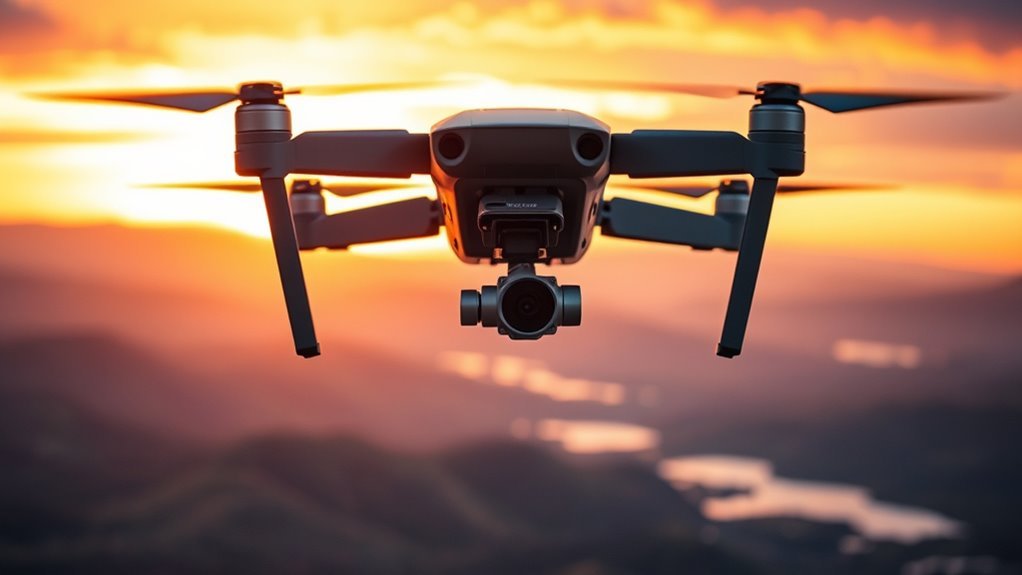
A gimbal on your drone is a pivoted support that stabilizes your camera by counteracting drone motion across three axes—pitch, roll, and yaw. It uses sensors and brushless motors to detect vibrations and adjust the camera position in real time, ensuring smooth, blur-free aerial footage. Different types like mechanical and electronic gimbals offer varying stabilization methods tailored to your needs. Understanding its features and maintenance will help you optimize your drone’s performance and video quality.
What Is a Gimbal and How Does It Work?
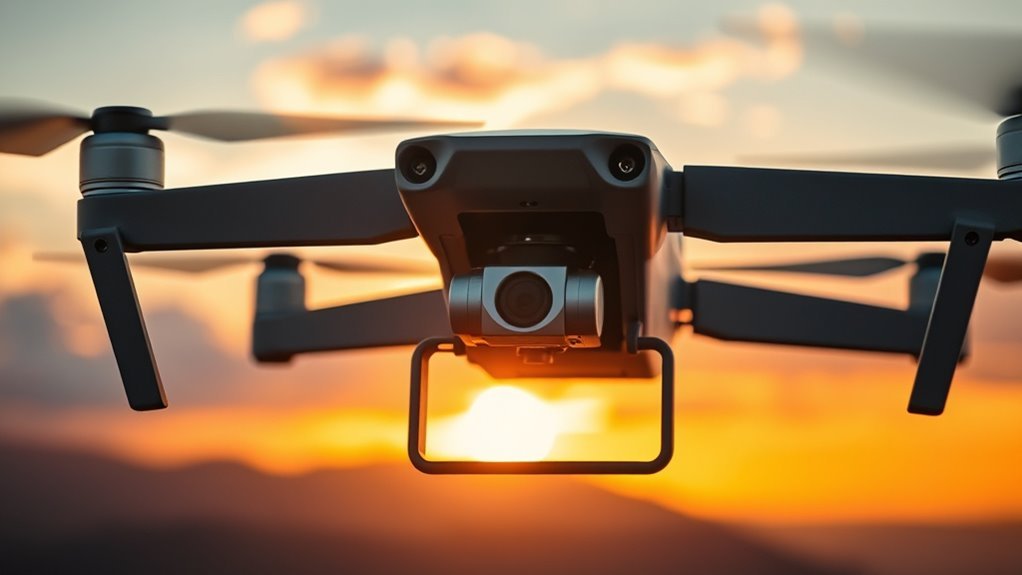
A gimbal is a pivoted support mechanism that allows your drone’s camera to remain stable and level despite the drone’s movements. By utilizing advanced gimbal mechanics, it counteracts unwanted motion through multiple axes—typically three: pitch, roll, and yaw. This stabilization technology uses sensors and motors to detect and correct vibrations or sudden shifts, ensuring the camera’s orientation stays steady. When you fly freely, the gimbal compensates for your drone’s tilts and rotations, delivering smooth, blur-free footage. Understanding how this system works is essential if you want to maximize your aerial creativity without being tethered by shaky visuals. The precise interaction between mechanical components and electronic controls gives you the freedom to capture stable images, regardless of external forces acting on your drone.
Types of Gimbals Used in Drones
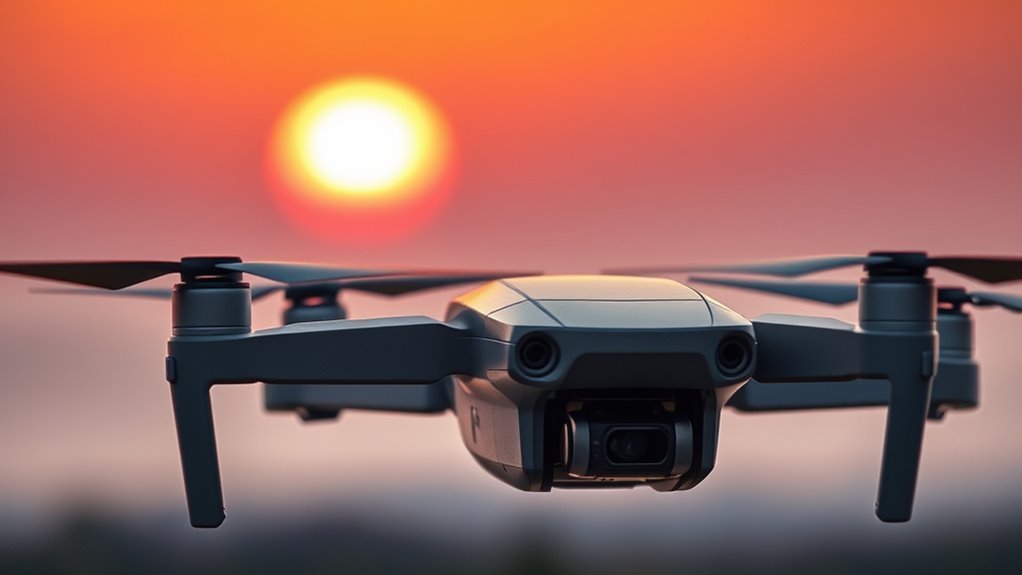
When selecting a drone gimbal, you’ll encounter several types designed to meet various stabilization needs and camera configurations. Mechanical gimbals rely on physical components—motors and bearings—to counteract drone movements, providing precise, real-time stabilization. Electronic gimbals, on the other hand, use sensors and software algorithms to adjust camera orientation, often integrating with mechanical parts for enhanced performance. Multi axis gimbals, commonly three-axis, stabilize pitch, roll, and yaw, ensuring smooth footage regardless of drone motion. Handheld gimbals, while primarily designed for ground use, share similar stabilization principles and can be adapted for drone cameras in some setups. Understanding these types helps you choose the right gimbal, balancing factors like payload, flight time, and desired footage freedom, ensuring your aerial shots remain steady and immersive.
Benefits of Using a Gimbal for Aerial Footage
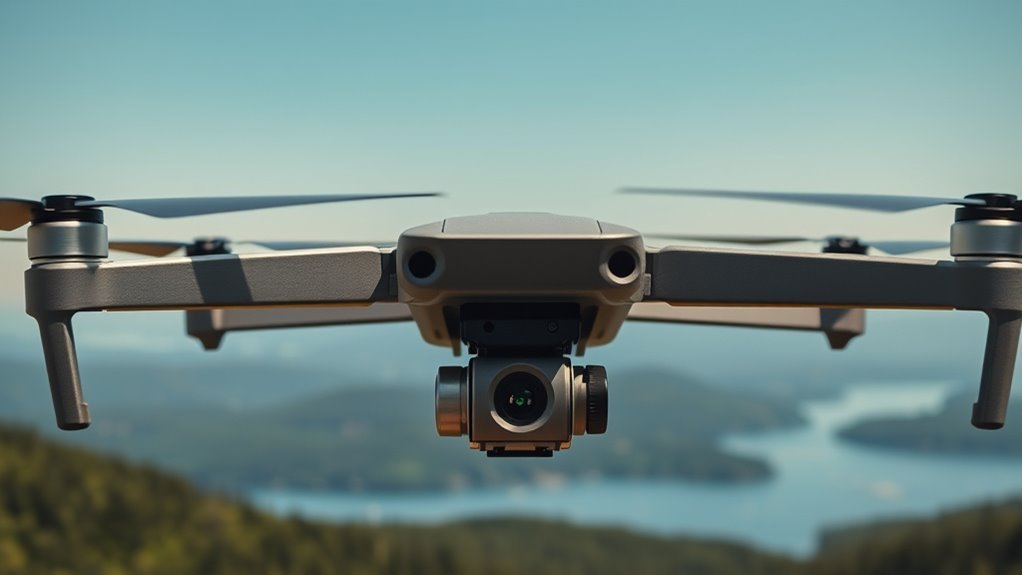
Choosing the right gimbal type sets the stage for capturing stable and professional aerial footage. By integrating a gimbal, you greatly enhance aerial stability, counteracting drone vibrations and sudden movements. This stability directly impacts video quality, ensuring your shots remain sharp and smooth, even in windy or turbulent conditions. Without a gimbal, footage often appears shaky and unprofessional, limiting your creative freedom. A gimbal lets you focus on composition and storytelling without worrying about mechanical disturbances. It also enables precise control over camera angles, expanding your visual possibilities. Ultimately, using a gimbal provides the freedom to capture cinematic, high-quality aerial imagery that meets demanding professional standards and elevates your drone videography to new heights.
Common Features Found in Drone Gimbals
Gimbals on drones come equipped with several key features designed to optimize camera stability and control. Central to this is gimbal stabilization, which counteracts unwanted motion by dynamically adjusting the camera’s position along multiple rotating axes—typically three: pitch, roll, and yaw. This multi-axis rotation guarantees your footage remains smooth and steady, even during rapid drone maneuvers or windy conditions. Many gimbals incorporate brushless motors for precise, silent movement and advanced sensors that detect subtle shifts, allowing real-time corrections. Additionally, you’ll often find customizable control settings enabling you to fine-tune responsiveness according to your flight style. These features collectively grant you the freedom to capture professional-grade aerial imagery without sacrificing agility or control. Understanding these components helps you maximize your drone’s performance and creative potential.
Tips for Maintaining and Calibrating Your Drone Gimbal
Maintaining the precision and responsiveness of your drone’s gimbal starts with regular care and calibration. For effective gimbal maintenance, routinely inspect for dust, debris, or loose components that could impair smooth movement. Use a soft brush or compressed air to clean delicate parts without causing damage. Avoid exposing your gimbal to extreme temperatures or moisture, which degrade its sensors and motors. Gimbal calibration is essential after firmware updates, crashes, or physical adjustments. Follow your drone’s calibration protocol precisely, ensuring the gimbal’s axes reset accurately to their neutral positions. Perform test flights post-calibration to confirm stability and responsiveness. By integrating consistent gimbal maintenance and precise calibration into your routine, you’ll sustain peak performance, granting you the freedom to capture fluid, professional-grade footage every flight.
