

You can’t legally shoot a drone flying over your property because federal law protects all aircraft, including drones, from damage or destruction. The FAA controls navigable airspace and prohibits interference with drone operations. Doing so could lead to criminal charges, including felony destruction of property, and serious safety risks. State and local laws may add restrictions, but none permit shooting drones. Understanding your rights and legal alternatives helps you handle drone issues safely and effectively.
Understanding Property Airspace Rights
Although you own the land beneath your feet, your rights to the airspace above it are limited and regulated by federal law. Property rights traditionally include the space above your land, but these rights don’t extend indefinitely upward. Airspace boundaries delineate where your private domain ends and public or navigable airspace begins. Courts have established that you control the immediate reaches of airspace necessary for your use and enjoyment, but beyond that, the federal government governs the skies to guarantee safe and free air navigation. Understanding these constraints is essential if you seek to assert control over drones or other airborne objects. Recognizing that your property rights in airspace are not absolute helps you navigate conflicts without infringing on federal authority or risking legal repercussions.
Federal Aviation Administration (FAA) Regulations
Since drones operate within regulated airspace, the Federal Aviation Administration (FAA) plays an essential role in overseeing their use. You should understand that airspace ownership doesn’t extend indefinitely upward; the FAA governs navigable airspace, including where drones fly. Here’s what you need to evaluate under current drone regulations:
- The FAA controls all navigable airspace above your property, limiting your rights to interfere with drones legally operating there.
- Shooting down a drone risks violating federal laws, including destruction of government property or aircraft.
- Drone operators must register their drones and follow FAA rules, such as altitude limits (typically 400 feet).
- The FAA enforces penalties for unauthorized interference, emphasizing public safety over individual property claims.
Respecting FAA regulations preserves your freedoms while ensuring safe airspace use.
State and Local Drone Laws
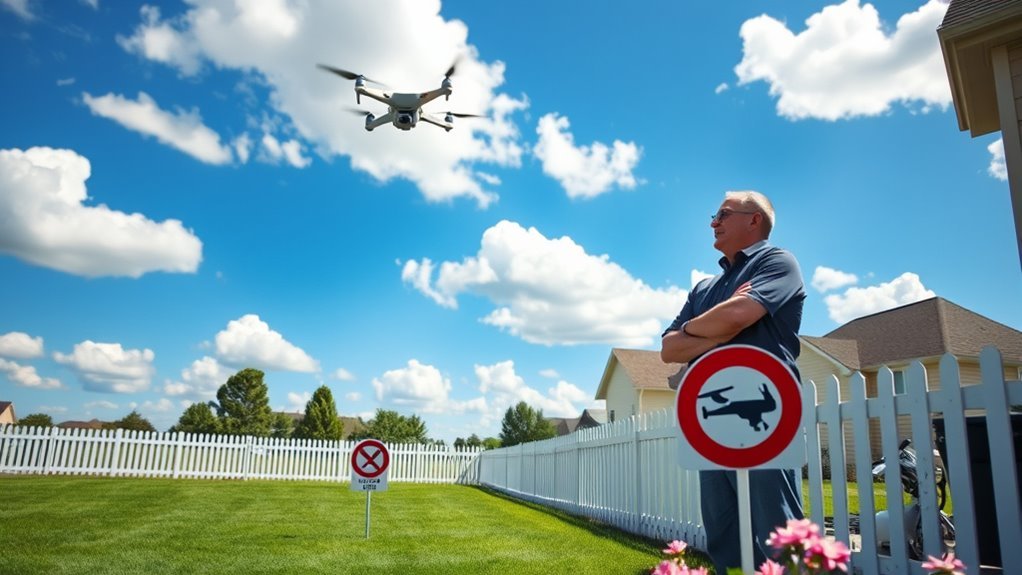
You need to understand that state regulations can vary greatly and may impose restrictions beyond federal rules. Local ordinances could further limit where and how drones operate over your property, affecting your rights. Staying compliant with these laws is essential, as enforcement can result in serious legal consequences.
Understanding State Regulations
When flying a drone over your property, it’s crucial to recognize that state and local regulations can vary considerably, impacting what you’re allowed to do. State laws often intersect with federal airspace regulations, creating a complex legal landscape. To navigate this effectively, consider:
- Confirming your state’s specific drone statutes, as they dictate permissible flight zones and restrictions.
- Understanding privacy laws within your state that protect neighbors and private spaces.
- Recognizing how your state integrates federal airspace rules, which generally govern altitude and flight paths.
- Staying updated on any state-imposed registration or licensing requirements for drone operation.
Local Ordinances Impact
Although state laws provide a general framework for drone use, local ordinances can impose additional restrictions that directly affect your ability to fly over your property. You need to carefully review local drone regulations, as municipalities may enact rules limiting drone flight paths, altitude, or times of operation to address privacy and safety concerns. These local rules often intersect with your property rights, sometimes narrowing what you can legally do in defending your airspace. While property owners traditionally hold rights up to certain altitudes, local ordinances can redefine permissible drone activities, potentially restricting your freedom to manage unwanted drone flights. Understanding these layered regulations is critical to guarantee you don’t inadvertently violate local laws while asserting control over your property’s airspace.
Compliance and Enforcement
Maneuvering the complex interplay between state and local drone laws requires a clear understanding of how compliance is monitored and enforced. When dealing with drone enforcement, you must be aware that compliance issues often hinge on jurisdictional nuances. To navigate this effectively, consider:
- Identifying which state and local laws apply to your property.
- Understanding the specific enforcement agencies responsible for drone regulations in your area.
- Recognizing the penalties and legal consequences tied to unlawful drone operation or interference.
- Staying informed about evolving drone legislation and enforcement practices.
Privacy Considerations When Flying Drones
Since drones can capture detailed images and video, you need to carefully consider privacy laws before flying over any property. Drone privacy isn’t just about respecting boundaries; it involves understanding how aerial surveillance intersects with legal protections. You have the right to operate your drone freely, but that freedom comes with responsibilities to avoid infringing on others’ reasonable expectations of privacy. Unauthorized recording or persistent surveillance over private spaces can lead to legal challenges. To maintain this balance, familiarize yourself with local regulations governing drone use and refrain from capturing footage where individuals have a clear expectation of privacy, such as inside homes or fenced yards. By doing so, you protect your freedom to fly while respecting others’ privacy rights, ensuring responsible and lawful drone operation.
Potential Legal Consequences of Shooting at Drones
You might think shooting a drone over your property is a simple solution, but it can expose you to serious criminal charges, including destruction of property or reckless endangerment. Additionally, you could face civil liability if the drone owner pursues damages for loss or injury. Understanding these risks is essential before taking any action against a drone.
Criminal Charges Risk
How risky is it to shoot at a drone hovering over your property? Quite high, actually. Even if you believe it’s an act of property defense, criminal intent can be inferred by law enforcement, leading to serious charges. Consider these risks:
- Destruction of Property: Drones are often valued possessions; damaging one can be classified as vandalism or destruction of property.
- Reckless Endangerment: Bullets or projectiles fired pose risks to neighbors or passersby.
- Federal Offenses: Shooting at drones may violate federal laws protecting aircraft, leading to felony charges.
- Criminal Intent: Your actions can be interpreted as intentional harm, regardless of your defense claim.
Understanding these points is essential before taking any drastic measures against drones.
Civil Liability Issues
Although criminal charges are a significant concern, shooting at a drone can also expose you to civil liability, especially if the drone’s owner decides to pursue damages. When you damage or destroy someone’s drone, you may be held financially responsible for property damage, which can include repair or replacement costs. Even if you believe the drone is invading your privacy, the law often prioritizes property rights through established channels, not self-help measures like shooting. Civil liability claims can lead to costly lawsuits, and courts typically assess whether your response was reasonable and lawful. So, while protecting your property is important, resorting to shooting drones risks significant legal and financial consequences that can undermine your freedom rather than secure it.
Alternatives to Shooting at a Drone Over Your Property
While it might be tempting to take matters into your own hands, shooting at a drone over your property is both dangerous and illegal in many jurisdictions. Instead, consider these alternatives that preserve your freedom responsibly:
- Deploy drone jamming devices designed to create controlled signal interference, disrupting the drone’s communication without physical harm.
- Use geofencing technology to establish no-fly zones around your property, proactively preventing drone intrusion.
- Employ commercial drone detection systems that alert you when an unauthorized drone is nearby, allowing timely, non-destructive responses.
- Engage with local authorities or aviation regulators to report persistent drone trespassing, ensuring legal enforcement.
These methods prioritize safety and legality while asserting your property rights effectively.
How to Handle Unwanted Drone Activity Responsibly
Taking a responsible approach to unwanted drone activity means balancing your rights with legal boundaries and safety concerns. You can start by employing reliable drone detection tools to identify unauthorized drones over your property. This technology helps you document any potential privacy invasion without escalating conflict. Rather than reacting impulsively, gather evidence and report the intrusion to local authorities or the FAA, who regulate drone operations. Remember, shooting at a drone is illegal and poses significant risks to people and property. By handling these incidents methodically, you protect your freedom while respecting legal limits and public safety. Responsible management of drone activity not only safeguards your privacy but also reinforces your standing if legal action becomes necessary. Prioritize measured, lawful responses over force.
Best Practices for Safe and Legal Drone Use on Your Property
If you plan to operate a drone over your property, it’s essential to understand the legal frameworks and safety measures that govern its use. Respecting property boundaries and prioritizing drone safety guarantee your freedom to fly without legal complications. Follow these best practices:
- Verify local and federal drone regulations to guarantee compliance.
- Maintain clear visibility of your drone at all times to avoid accidents.
- Avoid flying over neighboring properties without explicit permission to respect privacy and property rights.
- Regularly inspect and maintain your drone to prevent malfunctions that could cause harm or property damage.
