
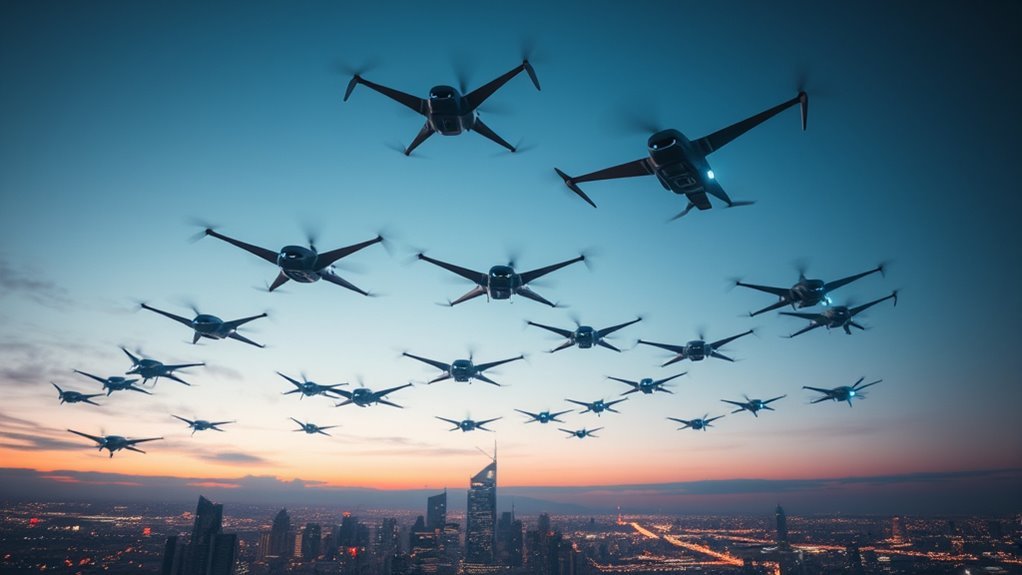
You’ll see how Intel’s AI-driven flight coordination technology is reshaping aviation by processing real-time data to optimize routes and predict hazards, potentially slashing human error by up to 90%. It’s tackling urban aerial traffic with predictive algorithms that manage congestion and guarantee safer drone operations in delivery, agriculture, and emergencies. With enhanced real-time analytics, autonomous flights promise a more efficient future. As you consider these advancements, you’ll glimpse even greater possibilities ahead.
Innovations in AI-Driven Flight Systems
As Intel advances its AI-driven flight systems, you’ll see how these innovations are transforming aviation by processing real-time data to optimize routes and enhance safety. With AI advancements at the forefront, you’ll experience enhanced flight safety through predictive analytics that detect potential hazards before they escalate, freeing you from unnecessary risks during travel. These systems analyze vast datasets in real time, allowing for autonomous adjustments that prioritize your security without compromising efficiency.
Imagine a future where machine learning algorithms not only streamline operations but also empower pilots to make informed decisions, granting you greater freedom in the skies. By integrating robust AI advancements, Intel is pioneering safer, more reliable flights, reducing human error and ensuring seamless journeys. This forward-thinking approach positions you to embrace aviation’s evolution, where flight safety becomes an intuitive, liberating norm, opening new horizons for exploration.
Tackling Urban Aerial Traffic Challenges
While urban aerial traffic intensifies, Intel’s AI innovations are optimizing congestion management and safety in densely populated skies. You’ll find that urban congestion, once a bottleneck for drone and aircraft operations, is now being tackled through predictive algorithms that forecast traffic flows and reroute flights in real-time. This empowers you to experience freer movement above bustling cities, minimizing delays and collision risks.
Analytically, Intel integrates with evolving regulatory frameworks, ensuring compliance while pushing boundaries for autonomous navigation. As regulations adapt, you’ll benefit from AI systems that balance oversight with flexibility, fostering innovation without stifling progress. Looking ahead, this technology promises a future where you’re liberated from ground-level constraints, with safer, more efficient aerial pathways that redefine urban mobility. By harmonizing data-driven insights with policy, Intel’s solutions not only address today’s challenges but pave the way for your unrestricted aerial freedom.
Expanding Applications for Drone Operations
Beyond basic traffic management, Intel’s advancements are propelling drones into diverse sectors like agriculture and emergency response. You’ll find that drone delivery transforms your supply chains, enabling swift, autonomous transport of goods to remote areas, freeing you from traffic snarls and delivery delays. Imagine overseeing packages zipping through the skies with precision, cutting costs and boosting efficiency for e-commerce and humanitarian aid.
In agriculture, aerial surveying lets you map vast fields effortlessly, analyzing crop health and soil conditions to optimize yields and reduce waste. For emergency response, it provides real-time insights into disaster zones, empowering you to act faster and save lives. As Intel pushes these innovations forward, you’re on the cusp of a freer world where drones enhance your autonomy, fostering sustainable growth and rapid problem-solving without traditional barriers. This evolution promises to redefine how you interact with technology, opening endless possibilities for innovation.
Enhancing Real-Time Data Processing Capabilities
Intel’s innovations in real-time data processing are transforming how you manage drone operations, allowing instantaneous analysis of incoming data streams for quicker, more accurate decisions. Through advanced data integration, you’ll seamlessly combine inputs from sensors, GPS, and environmental sources, empowering you to operate with unprecedented fluidity and independence. This capability lets you break free from delays, as integrated data flows effortlessly into a unified system, enhancing your control over complex flights.
Moreover, predictive analytics takes things further by anticipating potential issues before they arise, giving you the edge in dynamic scenarios. You’ll forecast weather impacts or traffic patterns, making proactive adjustments that safeguard missions and optimize efficiency. As you embrace these tools, you’re not just processing data—you’re revealing a future where your drone operations feel truly liberated, responsive, and adaptive to your needs. This forward-thinking approach guarantees you’re always one step ahead, fostering a sense of freedom in the skies.
Implications for the Future of Autonomous Aviation
As you integrate Intel’s flight coordination technologies, autonomous aviation is poised to revolutionize operations by enabling fully self-reliant drones that navigate complex environments with minimal human intervention. You’ll encounter evolving regulatory frameworks that must balance innovation with oversight, ensuring these systems comply while fostering your freedom to explore uncharted skies. Safety standards, such as those from the FAA, will adapt to incorporate AI-driven protocols, reducing collision risks and enhancing reliability. This means you’re not just piloting drones; you’re revealing a future where autonomy empowers efficient, widespread applications like emergency response and cargo transport. As these technologies mature, you’ll benefit from streamlined certifications, minimizing bureaucratic hurdles and maximizing your independence. Ultimately, this shift promises a safer, more liberated aviation landscape, where human ingenuity and machine precision converge to redefine possibilities.
Frequently Asked Questions
How Much Does Intel’s Flight Coordination Software Cost?
You’re curious about the cost of Intel’s flight coordination software, aren’t you? Conducting a cost analysis reveals that pricing models vary based on factors like scale and features—you might pay $500 to $5,000 per user annually. It’s all about choosing what’s right for your freedom to innovate. Stay analytical: evaluate long-term value to guarantee it aligns with your forward-thinking strategies for seamless operations.
What Regulations Apply to Intel’s Flight Technology?
As you ponder the regulations governing Intel’s flight technology, picture ancient Icarus maneuvering today’s skies – it’s a modern twist on old dreams. You’ll face regulatory challenges from bodies like the FAA and EASA, enforcing rigorous safety standards to protect airspace and users. Analytically, these rules demand innovation while safeguarding freedom, evolving to let you soar responsibly into a forward-thinking aerial future.
How Does Intel’s Tech Compare to Other Companies’?
When you’re evaluating how Intel’s flight coordination technology compares to other companies’, you’ll find it offers key competitive advantages like enhanced scalability and real-time data processing, setting new industry benchmarks for efficiency. Unlike rivals’ more rigid systems, Intel’s approach gives you greater flexibility, empowering innovative, freedom-oriented applications that could redefine aerial operations in the years ahead. This analytical edge keeps you ahead.
What User Training Is Required for This System?
When you’re considering what user training is required for this system, you’ll find it’s designed for minimal upfront effort. Basic user training focuses on the intuitive system interface, helping you quickly grasp navigation and controls. It’s analytically streamlined for efficiency, letting you adapt forward-thinking features with ease, empowering your freedom to manage flights independently and innovate on the go. Stay proactive in your learning!
What Environmental Impact Does This Technology Have?
When you consider the environmental impact of advanced flight systems, you’ll notice they boost environmental sustainability by optimizing routes and reducing fuel use, which shrinks the ecological footprint through lower emissions. This empowers you to travel freely while protecting our planet. Analytically, forward-thinking innovations promise even greater efficiencies, fostering a greener future where your adventures align with ecological balance.
