
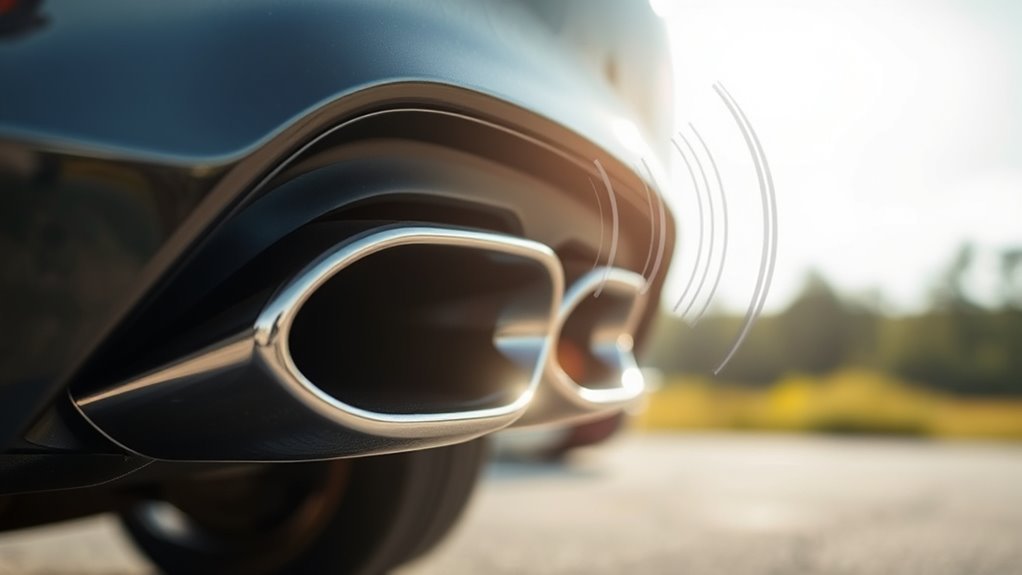
Exhaust drone is a low-frequency hum caused by resonance in your vehicle’s exhaust system at certain engine speeds. You can identify it by a steady, persistent tone and vibrations during steady throttle or highway cruising. Common causes include mismatched pipe diameters, poor muffler design, and pipe length issues. Fixes involve inspecting for leaks, adjusting pipe dimensions, adding resonators, or upgrading mufflers. If you want to optimize comfort and performance, understanding more about drone management helps greatly.
Understanding the Basics of Exhaust Drone

Exhaust drone is a low-frequency resonance that occurs when sound waves inside your vehicle’s exhaust system amplify at certain engine speeds. You’ll notice this persistent, monotonous hum, which stems from the exhaust acoustics interacting with engine load and RPM. The drone frequency depends on the length and diameter of your exhaust pipes, as well as muffler design. When these parameters align unfavorably, sound waves reflect and reinforce each other, creating that uncomfortable vibration you feel inside the cabin. Understanding the drone frequency is essential because it directly influences the comfort and freedom you experience while driving. By mastering the basics of exhaust acoustics, you gain control over unwanted resonances, enabling you to make informed decisions about modifications or fixes to restore a quieter, more enjoyable ride.
Common Causes of Exhaust Drone

You’ll often find exhaust drone caused by mismatched pipe diameters that disrupt airflow and create pressure waves. Resonance frequency effects can amplify specific sound waves, leading to persistent droning at certain RPMs. Additionally, muffler design flaws may fail to adequately cancel or absorb these frequencies, making drone unavoidable.
Pipe Diameter Issues
Although it might seem minor, the diameter of your exhaust pipe plays a critical role in generating drone. If the pipe diameter is too narrow, it restricts exhaust flow, increasing backpressure and causing turbulent sound waves that amplify drone frequencies. Conversely, an excessively wide diameter reduces exhaust velocity, disrupting ideal flow dynamics and allowing low-frequency drone to develop. The choice of pipe materials also impacts how vibrations transmit and resonate within the system, influencing drone intensity. When selecting or modifying your exhaust, you must balance pipe diameter to maintain efficient exhaust flow while minimizing sound amplification. A properly sized pipe matched to your engine’s output and pipe materials can greatly reduce drone, granting you the freedom to enjoy a powerful yet smooth exhaust note without unwanted resonance.
Resonance Frequency Effects
When sound waves reflect within your exhaust system at specific frequencies, they can reinforce each other, creating resonance that manifests as drone. This phenomenon arises from resonance tuning where certain engine speeds align with the natural frequency of the exhaust components. Through detailed frequency analysis, you can identify these problematic frequencies to target fixes effectively. Common resonance frequency effects include:
- Amplification of low-frequency tones causing prolonged drone
- Standing waves forming in exhaust pipes due to length and shape
- Interaction between engine firing pulses and exhaust geometry
- Sensitivity to RPM ranges where resonance peaks occur
Understanding and addressing these resonance frequency effects gives you control over unwanted drone, enabling a freer, more enjoyable driving experience without intrusive cabin noise.
Muffler Design Flaws
Resonance frequency issues often point to deeper problems within the exhaust system, with muffler design flaws being a primary contributor to persistent drone. Different muffler types—chambered, turbo, or straight-through—affect sound wave reflection and absorption uniquely. When design materials lack appropriate density or acoustic properties, they fail to dissipate sound energy effectively, intensifying drone at specific RPMs. If your muffler’s internal baffles or packing aren’t engineered to disrupt resonant frequencies, you’ll experience unwanted vibrations and noise. Understanding how muffler types and design materials interact lets you pinpoint the root cause of drone. Upgrading to a muffler with optimized internal geometry and high-quality acoustic materials can greatly reduce resonance, restoring your vehicle’s freedom from exhaust drone without sacrificing performance.
How to Recognize Exhaust Drone in Your Vehicle
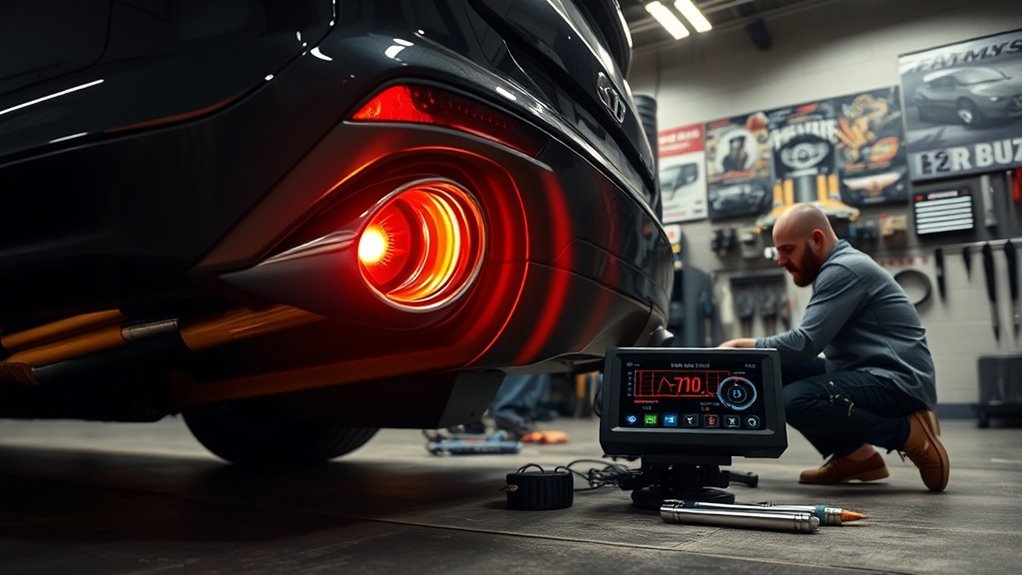
You’ll notice exhaust drone as a persistent, low-frequency hum that often occurs at steady speeds or specific RPM ranges. It typically emerges during highway cruising or consistent throttle application, making it distinct from random engine or road noise. Learning to differentiate this tonal resonance from other sounds is key to accurately diagnosing and addressing the issue.
Common Sound Characteristics
Although exhaust drone can vary between vehicles, it typically manifests as a low-frequency, monotone hum that intensifies at specific engine speeds or RPM ranges. You’ll notice this drone frequency often aligns with the engine’s harmonic vibrations, affecting your sound perception inside the cabin. Recognizing these common sound characteristics helps you pinpoint the issue more accurately.
Key sound characteristics of exhaust drone include:
- Persistent, steady tone without fluctuation in pitch
- Noticeable increase in volume at certain RPM bands
- Vibrations that seem to resonate through the vehicle’s interior
- Distinct from engine noise or road sounds due to its monotone quality
Understanding these traits enables you to identify exhaust drone confidently and take steps toward restoring your driving freedom.
Typical Driving Conditions
When do you typically notice exhaust drone in your vehicle? It often emerges during steady highway speeds or cruising at constant RPMs, where your driving habits maintain a consistent throttle. This persistent low-frequency vibration becomes more pronounced depending on your vehicle type—sports cars with performance exhausts or trucks with modified systems are especially prone. The drone intensifies when the engine’s firing frequency aligns with the resonant frequency of the exhaust components. If you spend significant time at those speeds or in specific gears, the drone may dominate your cabin environment, undermining your driving freedom. Recognizing these typical driving conditions helps you isolate when and why the drone occurs, enabling targeted fixes that restore comfort without compromising your vehicle’s performance or your driving style.
Differentiating Drone Vs Noise
Exhaust drone manifests as a consistent, low-frequency vibration that differs fundamentally from random or intermittent noise. When identifying drone versus other noises, focus on drone frequency stability and your noise perception over time. Drone produces a steady hum, usually at a specific RPM range, whereas noise tends to be sporadic or fluctuating.
Key points to differentiate include:
- Frequency consistency: Drone frequency remains constant; noise varies.
- Duration: Drone persists during steady throttle; noise is brief or irregular.
- Source localization: Drone often resonates through the cabin; noise may be localized externally.
- Impact on comfort: Drone causes fatigue due to its monotony; noise is less intrusive.
Recognizing these traits helps you isolate exhaust drone and take effective corrective measures.
The Impact of Exhaust Drone on Driving Comfort
Since you’re spending extended periods behind the wheel, the persistent low-frequency drone produced by your vehicle’s exhaust system can considerably degrade driving comfort. This unwanted resonance directly lowers your comfort levels, causing fatigue and irritation during long drives. The drone’s intensity often interferes with cabin acoustics, masking important auditory cues and diminishing the overall driving experience. For someone who values freedom on the road, this disruption can turn leisure or commute into a stressful task. Understanding how exhaust drone affects comfort is essential because it impacts your focus and enjoyment. Addressing drone issues not only enhances acoustic comfort but also restores the pleasure of driving, ensuring your vehicle’s performance aligns with your desire for a smooth, uninterrupted ride.
Differences Between Exhaust Drone and Normal Exhaust Noise
Although both exhaust drone and normal exhaust noise originate from your vehicle’s exhaust system, they differ markedly in their acoustic characteristics and effects on the driving experience. Normal exhaust noise is a byproduct of combustion and exhaust flow, generally broad in sound frequency and often refined through exhaust tuning for a pleasant tone. Exhaust drone, however, is a persistent, low-frequency resonance that amplifies at specific RPM ranges, causing discomfort and fatigue.
Exhaust drone is a persistent low-frequency resonance that disrupts comfort, unlike the broader, pleasant normal exhaust noise.
Key differences include:
- Frequency Range: Normal noise spans a wider frequency spectrum; drone is concentrated in a narrow, low-frequency band.
- Duration: Drone persists steadily, while normal noise fluctuates with engine load.
- Cause: Drone results from resonance waves; normal noise is standard exhaust output.
- Impact: Drone disrupts comfort and focus; normal noise is typically non-intrusive.
Understanding these distinctions is vital for effective exhaust tuning and drone mitigation.
Assessing Your Exhaust System for Sources of Drone
Identifying the root causes of drone requires a systematic evaluation of your exhaust system’s components and design. Begin by inspecting for exhaust leaks, as even minor breaches can amplify drone by disrupting flow and creating resonance. Check all joints, clamps, and welds under your vehicle, using a smoke test if necessary to detect hidden leaks. Next, assess the muffler and resonator conditions, confirming they haven’t deteriorated internally. Evaluate the routing and length of exhaust piping; improper dimensions can induce standing waves that contribute to drone frequencies. Finally, consider your vehicle’s existing sound insulation around the exhaust tunnel and cabin interface. Lack of adequate sound insulation allows drone frequencies to penetrate the cabin, compromising your driving freedom. A thorough assessment lets you pinpoint and plan effective interventions.
Modifications That Can Reduce or Eliminate Exhaust Drone
When you address exhaust drone, targeted modifications to your system can greatly reduce or even eliminate unwanted frequencies. Start by selecting exhaust tips designed to disrupt resonance patterns, which can alter sound waves and reduce drone. Incorporating sound deadening materials around the exhaust path helps absorb vibrations and minimize noise transmission. Additionally, upgrading to a resonator or a muffler with engineered chambers can target specific drone frequencies. Finally, adjusting pipe diameters or adding bends may change the exhaust flow dynamics, effectively reducing drone.
- Install exhaust tips optimized for resonance control
- Apply sound deadening wraps or coatings on exhaust components
- Upgrade to a resonator or muffler designed for drone cancellation
- Modify pipe geometry to alter flow and acoustic characteristics
These techniques empower you to regain control over your exhaust sound.
When to Consult a Professional About Exhaust Drone
How do you know if your exhaust drone issue requires professional attention? When basic fixes don’t eliminate the persistent low-frequency noise, it’s time for expert intervention. A professional assessment guarantees precise exhaust tuning tailored to your vehicle’s dynamics, restoring your driving freedom.
| Symptom | Professional Action Needed? |
|---|---|
| Drone persists after mods | Yes, requires exhaust tuning |
| Uncertain source of drone | Yes, diagnostic expertise needed |
| Impact on driving comfort | Yes, assessment to prevent damage |
If drone disrupts your ride or worsens despite adjustments, consult a specialist. They’ll analyze exhaust harmonics and recommend targeted solutions, guaranteeing your vehicle sounds right without compromising performance or freedom.
Preventative Measures to Avoid Exhaust Drone in the Future
Although exhaust drone can be challenging to eliminate once established, taking proactive steps during installation and maintenance can greatly reduce its occurrence. By focusing on preventative maintenance and integrating sound insulation techniques early on, you can preserve your vehicle’s quiet freedom.
To avoid exhaust drone in the future, consider these key measures:
- Use high-quality, drone-resistant exhaust components designed to minimize resonance.
- Incorporate sound insulation materials around the exhaust system to absorb and dampen vibrations.
- Schedule regular preventative maintenance to detect and address loose fittings or damaged parts before drone develops.
- Optimize exhaust pipe routing and diameter to prevent frequency ranges prone to drone.
