
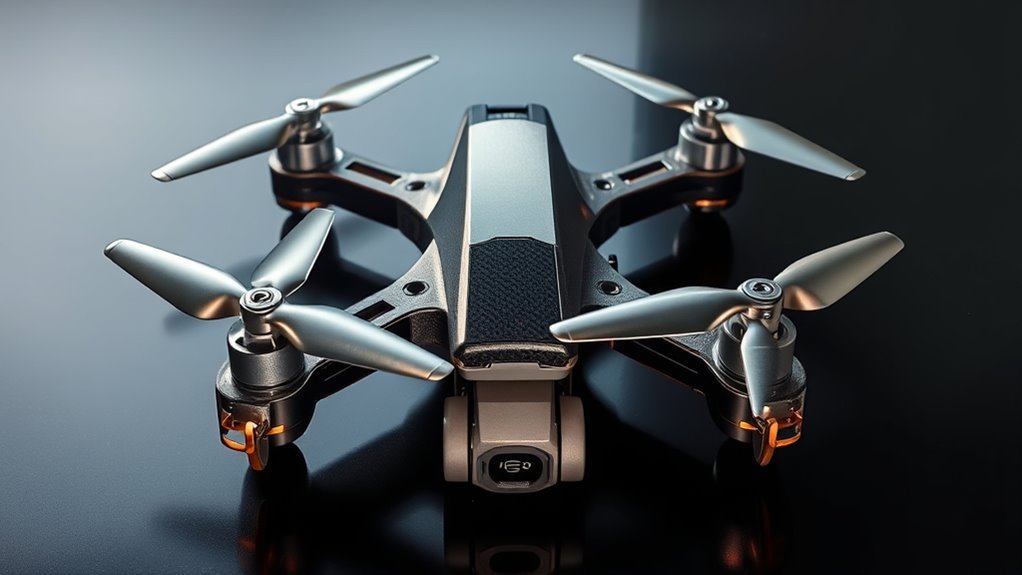
Drones are made from advanced carbon fiber composites, offering high strength-to-weight ratio, and durable aluminum alloys like 6061-T6 for structural integrity. You’ll find specialized plastics and polymers used in propellers and housings to balance flexibility and weight. Intricate electronic circuits with sensors enable precise control, while lithium-polymer batteries deliver high energy density for extended flight. Precision motors and propellers guarantee efficient propulsion, all protected by coatings that enhance durability. Exploring further reveals how each material optimizes drone performance and safety.
Carbon Fiber Composites
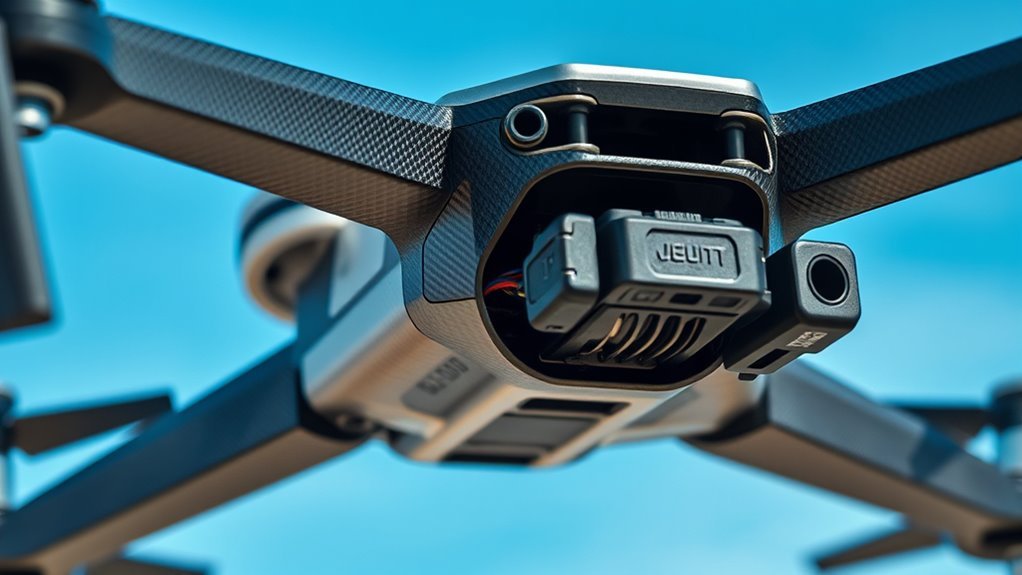
Carbon fiber composites stand out as a critical material in drone construction due to their exceptional strength-to-weight ratio. When you choose carbon fiber, you benefit from its superior tensile strength and stiffness, which enable drones to maintain structural integrity while minimizing mass. This translates directly to longer flight times and enhanced maneuverability—key freedoms for any drone operator. However, you should also consider carbon fiber drawbacks: its high cost and complexity in manufacturing can limit accessibility and repair options. Additionally, its brittleness under certain impact conditions demands careful design considerations to avoid sudden failure. Despite these challenges, the carbon fiber advantages often outweigh the drawbacks when performance and agility are paramount, making it a preferred choice for drones where freedom of movement and endurance are essential.
Aluminum Alloys
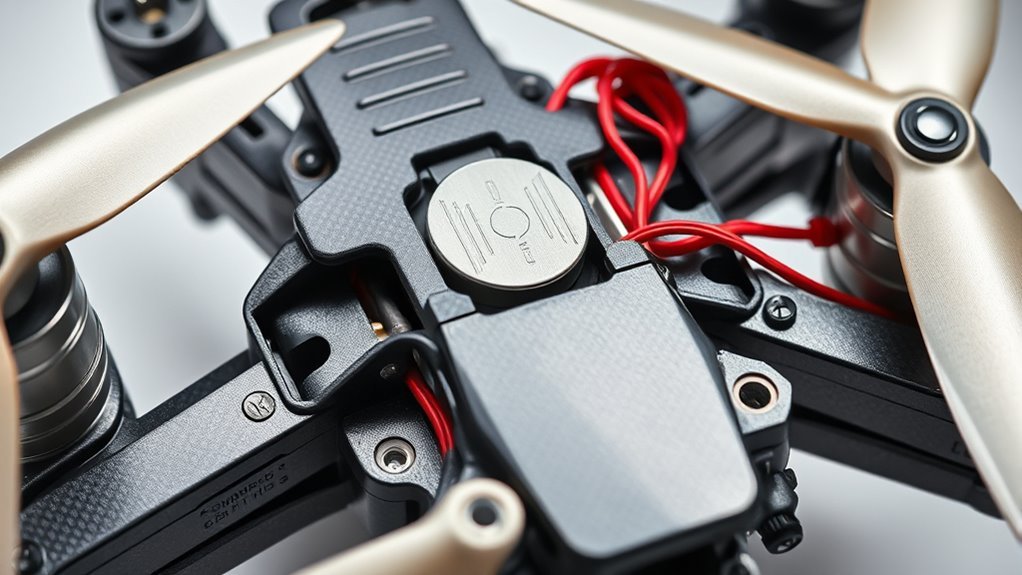
While carbon fiber composites offer impressive strength-to-weight benefits, their cost and brittleness lead many manufacturers to contemplate aluminum alloys as an alternative. Aluminum alloys provide a blend of favorable aluminum properties—such as corrosion resistance, machinability, and durability—making them ideal for aerospace applications and drone frames. You’ll find aluminum alloys grant enhanced impact resistance and easier repairability, key for operational freedom.
| Aluminum Alloy | Density (g/cm³) | Tensile Strength (MPa) | Corrosion Resistance | Typical Use in Drones |
|---|---|---|---|---|
| 6061-T6 | 2.70 | 290 | High | Frame and structural parts |
| 7075-T6 | 2.81 | 570 | Moderate | High-stress components |
| 2024-T3 | 2.78 | 470 | Low | Aerospace-grade frames |
| 5052-H32 | 2.68 | 210 | Very High | Protective casings |
| 3003-H14 | 2.73 | 130 | High | Lightweight panels |
Plastic and Polymer Components
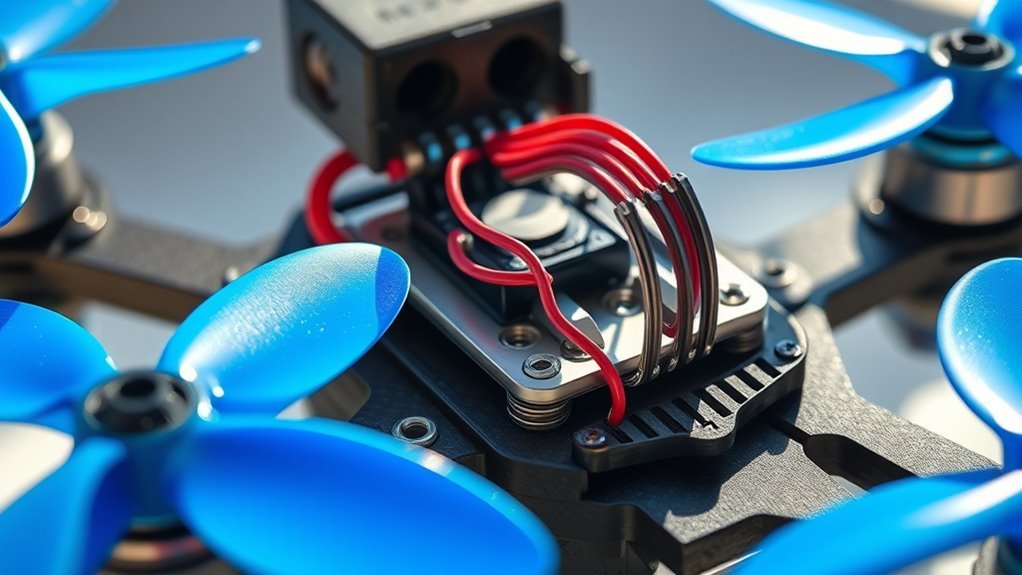
Polymers and plastics play a vital role in drone manufacturing, offering lightweight, flexible, and cost-effective solutions for various components. When you choose drones made with advanced polymer composites, you benefit from materials engineered to withstand mechanical stresses while minimizing weight. The lightweight advantages directly enhance flight time and maneuverability, essential for unrestricted aerial freedom. Rigorous durability testing guarantees these plastics maintain structural integrity under impact, vibration, and environmental exposure. Components like propeller blades, housings, and landing gear often utilize high-performance polymers such as nylon, ABS, and carbon-fiber-reinforced composites. These materials provide a balance of strength and flexibility, reducing overall mass without compromising resilience. By integrating carefully selected plastic and polymer components, drone manufacturers optimize performance parameters vital for users who demand both endurance and agility.
Electronic Circuit Boards and Sensors
When examining drones, you’ll find that electronic circuit boards are composed of intricate components like microcontrollers, capacitors, and resistors that manage power and data processing. Various sensors—such as accelerometers, gyroscopes, and GPS modules—are integrated to provide real-time environmental and positional feedback. Understanding how these elements connect and communicate is essential for optimizing drone functionality and responsiveness.
Circuit Board Components
Several critical components make up the circuit boards in drones, each designed to optimize performance and reliability. When you consider circuit board manufacturing, the choice of circuit board materials—typically FR4, polyimide, or ceramic—directly affects thermal management and signal integrity. You’ll find resistors, capacitors, microcontrollers, and power regulators precisely placed to control power flow and data processing efficiently.
| Component | Function |
|---|---|
| Microcontroller | Central processing unit |
| Capacitor | Energy storage and filtering |
| Resistor | Current regulation |
| Inductor | Signal conditioning |
| Voltage Regulator | Power supply stabilization |
Understanding these elements lets you appreciate how advanced circuit boards free drones from common electronic limitations.
Sensor Types Utilized
Why do drones rely on a diverse array of sensors integrated with their electronic circuit boards? Because sensor accuracy directly impacts flight stability, navigation, and obstacle avoidance. You’ll find accelerometers, gyroscopes, magnetometers, barometers, and GPS modules working together to provide precise environmental and positional data. The exact sensor placement on the drone’s frame is critical; even minor misalignment can degrade data fidelity, compromising control algorithms. For example, placing inertial measurement units near vibration sources can distort readings, reducing accuracy. You must consider sensor fusion techniques that combine inputs from multiple sensors to enhance reliability and minimize errors. By carefully selecting and positioning sensors on electronic circuit boards, you guarantee the drone operates with the freedom and precision necessary for autonomous flight and mission success.
Integration and Connectivity
Although sensor selection is essential, seamless integration and connectivity with electronic circuit boards determine how effectively these sensors communicate and function within a drone’s system. You rely on precise data transmission to maintain control and situational awareness, which depends on robust wireless communication protocols and well-designed circuitry. When analyzing integration, consider:
- Circuit board layout minimizing signal interference.
- Sensor placement optimizing data flow speed.
- Use of high-quality connectors ensuring stable links.
- Implementation of efficient wireless modules for real-time communication.
Mastering these elements guarantees your drone operates with minimal latency, delivering accurate sensor data for autonomous navigation or manual control. This integration enables you to experience true operational freedom, where your drone responds instantly to environmental inputs and commands, maintaining reliability and performance in diverse conditions.
Lithium-Polymer Batteries
You’ll find that lithium-polymer batteries consist of a polymer electrolyte which facilitates a lightweight and flexible design compared to traditional lithium-ion cells. Their energy density and discharge rates greatly affect drone flight time and responsiveness. However, you must also consider thermal stability and protective circuitry to guarantee operational safety.
Battery Composition Details
When selecting power sources for drones, understanding the composition of lithium-polymer (LiPo) batteries is essential due to their impact on performance and safety. LiPo batteries consist of:
- Cathode: Typically lithium cobalt oxide or lithium iron phosphate, dictating energy density and stability.
- Anode: Usually graphite, enabling efficient lithium-ion intercalation.
- Electrolyte: A lithium salt solution in an organic solvent, facilitating ion transport between electrodes.
- Separator: A microporous polymer membrane preventing short circuits while allowing ion flow.
This precise structure directly affects battery lifespan and the feasibility of battery recycling. Knowing these components helps you appreciate how material choices influence drone freedom—how long you fly and how responsibly you dispose of or recycle spent batteries to minimize environmental impact.
Performance and Safety
Three critical factors define the performance and safety of lithium-polymer (LiPo) batteries in drones: energy density, thermal stability, and charge-discharge efficiency. These influence how your drone’s aerodynamic design and weight distribution optimize flight time and maneuverability. Balancing battery capacity with minimal weight is key to releasing freedom in the air without compromising safety.
| Factor | Impact on Drone Performance |
|---|---|
| Energy Density | Maximizes flight duration and power output |
| Thermal Stability | Prevents overheating, ensuring operational safety |
| Charge-Discharge Efficiency | Maintains battery health and consistent energy delivery |
Motors and Propellers
Although motors and propellers might seem straightforward, their material composition critically impacts a drone’s performance and efficiency. You’ll find that different motor types and propeller designs rely on specific materials to balance weight, strength, and durability. For example:
- Brushless motors often use lightweight aluminum or copper windings for maximum electromagnetic efficiency.
- Propellers are commonly crafted from carbon fiber composites, offering rigidity without excess mass.
- Plastic-based propellers provide cost-effective flexibility but sacrifice some precision and lifespan.
- High-performance drones utilize magnesium or titanium components in motors to endure stress while minimizing weight.
Choosing the right materials in motors and propellers directly influences thrust, battery life, and maneuverability, granting you the freedom to fly longer and more responsively in diverse conditions.
Protective Coatings and Finishes
Since drones operate in varied and often harsh environments, selecting appropriate protective coatings and finishes is essential to preserving their structural integrity and functionality. These coatings provide critical protective benefits against corrosion, UV degradation, moisture, and abrasion. You’ll find that finishing techniques like powder coating, anodizing, and specialized polymer films are commonly applied to drone frames and components. Powder coating offers a durable, uniform layer that resists chipping and weathering, while anodizing enhances aluminum parts by increasing surface hardness and corrosion resistance without adding weight. Polymer-based finishes can further improve hydrophobic properties, reducing water damage risks. By understanding these finishing techniques, you guarantee your drone maintains peak performance and longevity, granting you the freedom to operate confidently in diverse conditions without compromising reliability or safety.
