
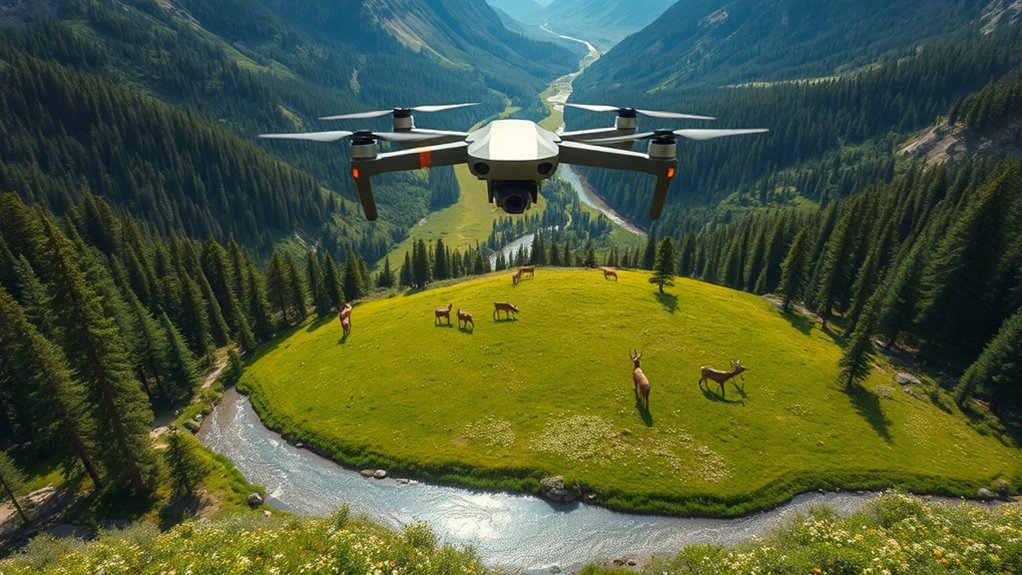
You can’t fly drones in national parks because their noise stresses wildlife, disrupting feeding, mating, and nesting behaviors. Drones also risk damaging fragile habitats through crashes or pollution from batteries. Their presence can fragment habitats and disturb other visitors seeking quiet nature experiences. Strict regulations like no-fly zones and permit requirements protect these ecosystems. Understanding these environmental impacts is key to appreciating why drone use is so limited in protected natural areas.
Impact of Drone Noise on Wildlife Behavior
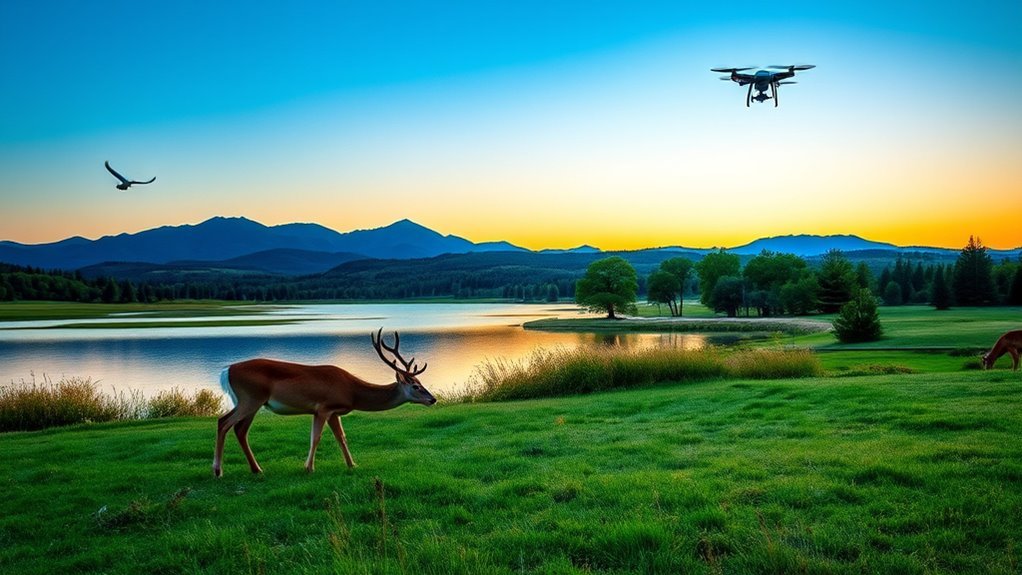
Although drones offer unique opportunities for capturing aerial footage, their noise can greatly disrupt wildlife behavior in national parks. When you fly a drone, the generated soundscapes—comprising mechanical buzzing and whirring—introduce an unnatural auditory presence in habitats typically characterized by silence or natural sounds. Studies show that these drone soundscapes cause measurable wildlife stress, triggering altered feeding, mating, and nesting behaviors. Animals may perceive drone noise as a threat, leading to increased heart rates and flight responses, which can reduce their ability to conserve energy. Understanding these effects is vital if you value the freedom to explore while preserving the integrity of natural ecosystems. Minimizing drone noise or choosing specific flight paths can reduce stress on wildlife, balancing your aerial freedom with environmental responsibility.
Risks of Habitat Disruption From Drone Activity
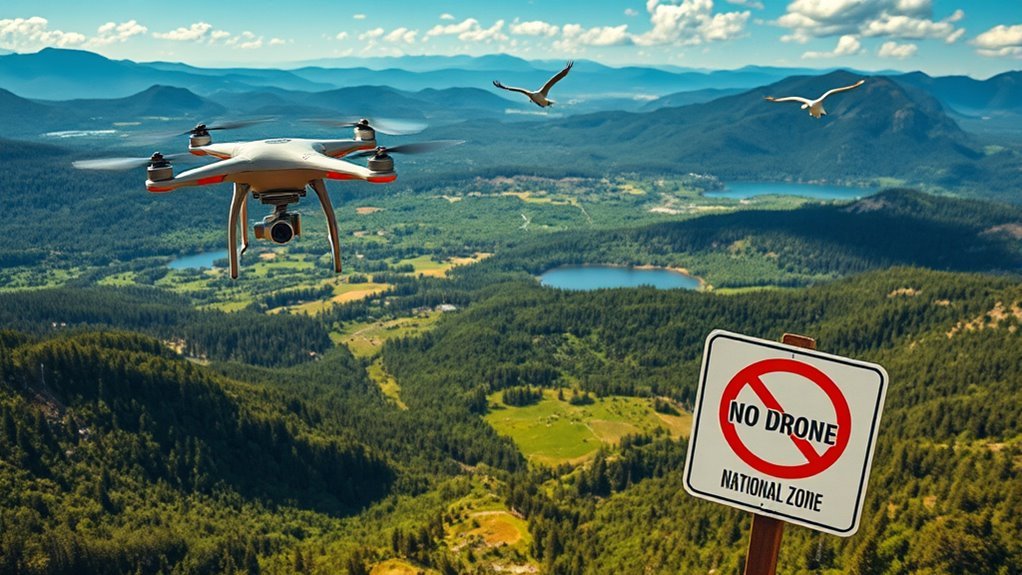
When you operate drones in national parks, the physical presence and movement of these devices can disturb sensitive habitats. Drone flights may contribute to habitat fragmentation by creating artificial barriers or altering animal movement patterns. This fragmentation can reduce the availability of continuous habitat, affecting species that rely on large, undisturbed areas. Additionally, drone activity often induces wildlife stress, as animals perceive drones as potential threats. This stress can lead to altered feeding, mating, or nesting behaviors, ultimately impacting population health. Studies have documented increased heart rates and escape responses in various species exposed to drones. If you value freedom to explore, it’s important to recognize these risks and minimize drone flights in critical habitats to protect ecological integrity and avoid unintended consequences on wildlife and their environment.
Potential for Drone Accidents and Environmental Damage
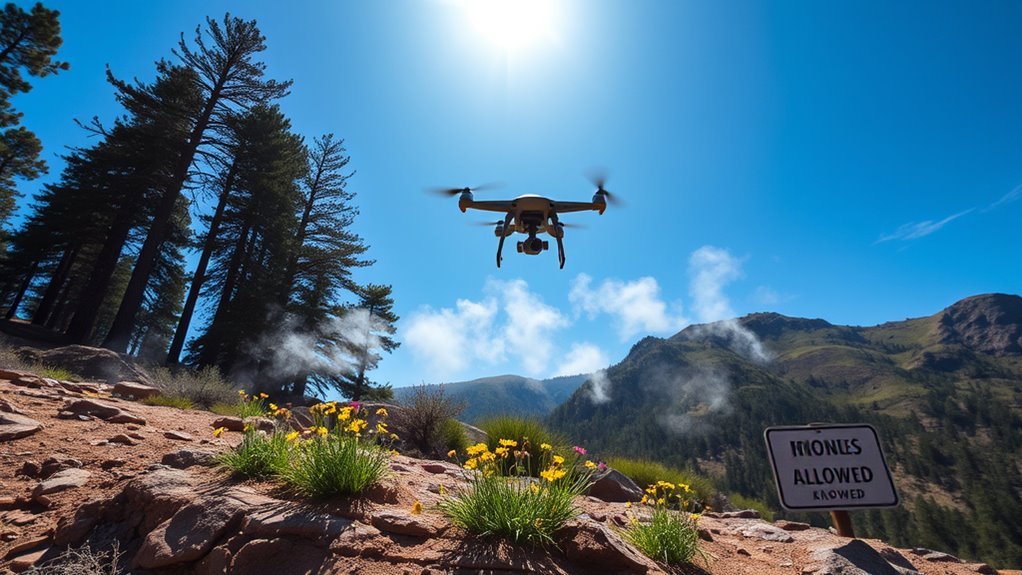
Because drones operate in complex natural environments, the risk of accidents that cause environmental damage is significant. You need to evaluate that a crash can harm fragile ecosystems or disturb wildlife habitats. Maintaining strict drone safety protocols reduces these risks, but unpredictable factors like sudden weather changes or technical failures remain. Wildlife interaction is also a concern; a drone strike or noise can stress animals, impacting their behavior and reproduction.
| Risk Factor | Potential Environmental Impact |
|---|---|
| Drone crash | Damage to plants, soil, water |
| Battery leakage | Toxic contamination |
| Noise pollution | Stress and displacement of wildlife |
| Propeller injury | Physical harm to animals |
| Human error | Unintended accidents and disturbances |
You must prioritize safety to protect these natural treasures while flying drones.
Effects of Drone Presence on Visitor Experience
While drones offer unique perspectives and can enhance your experience by capturing stunning aerial footage, their presence in national parks often affects other visitors’ enjoyment. You might not realize that the noise and movement of drones create visitor distraction, disrupting the park’s natural ambiance. Studies show that many visitors seek peaceful enjoyment and solitude, which drones can compromise by intruding on the environment’s quiet. This distraction reduces the quality of the experience for those wanting to connect with nature uninterrupted. Even if you fly responsibly, the mere sight or sound of drones can shift attention away from the landscape and wildlife. Recognizing these impacts helps you appreciate why many parks restrict drone use to preserve the serene setting that visitors value.
Regulatory Measures to Protect National Park Ecosystems
Although drones provide innovative ways to explore national parks, regulatory measures have been established to safeguard these ecosystems from potential harm. You must understand that regulatory compliance is essential to guarantee ecosystem preservation, as unrestricted drone use can disrupt wildlife and damage sensitive habitats. Authorities enforce specific rules limiting drone flights to protect these areas. Here’s a concise overview:
| Regulation Aspect | Purpose |
|---|---|
| No-fly zones | Prevent disturbance in critical habitats |
| Flight altitude limits | Minimize noise and visual impact |
| Permit requirements | Control and monitor drone activity |
| Time restrictions | Avoid interference during wildlife breeding seasons |
