
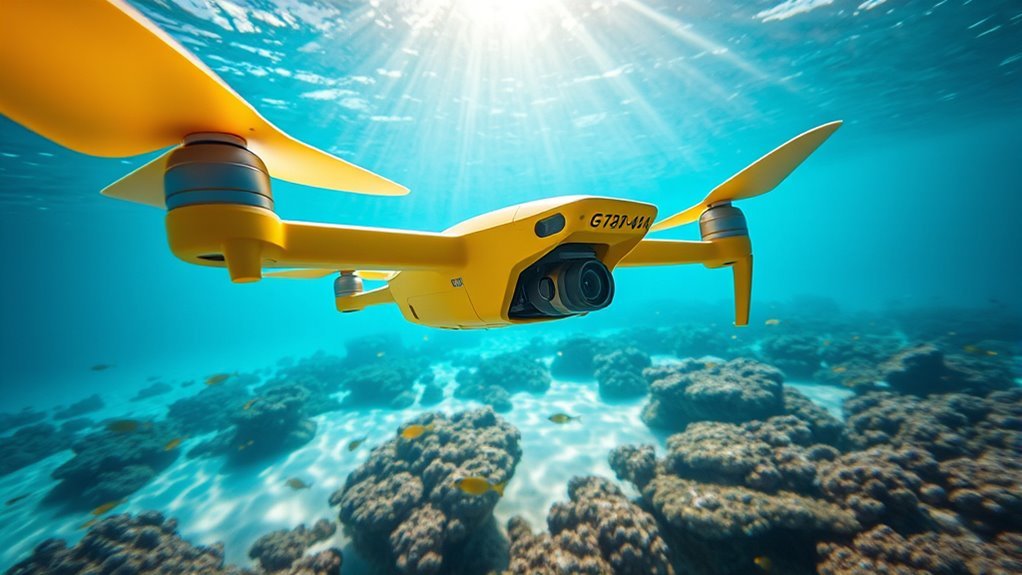
Underwater drones are cutting-edge tools transforming marine exploration for both research and industry. You’ll find various types tailored for specific tasks, from commercial surveying to recreational footage. These drones come equipped with advanced features like high-definition cameras and GPS navigation, maximizing efficiency in underwater environments. Whether you’re monitoring biodiversity or mapping habitats, choosing the right drone depends on your mission’s needs. Curious about emerging technologies that will shape the future of underwater drones? There’s so much more to uncover!
Types of Underwater Drones
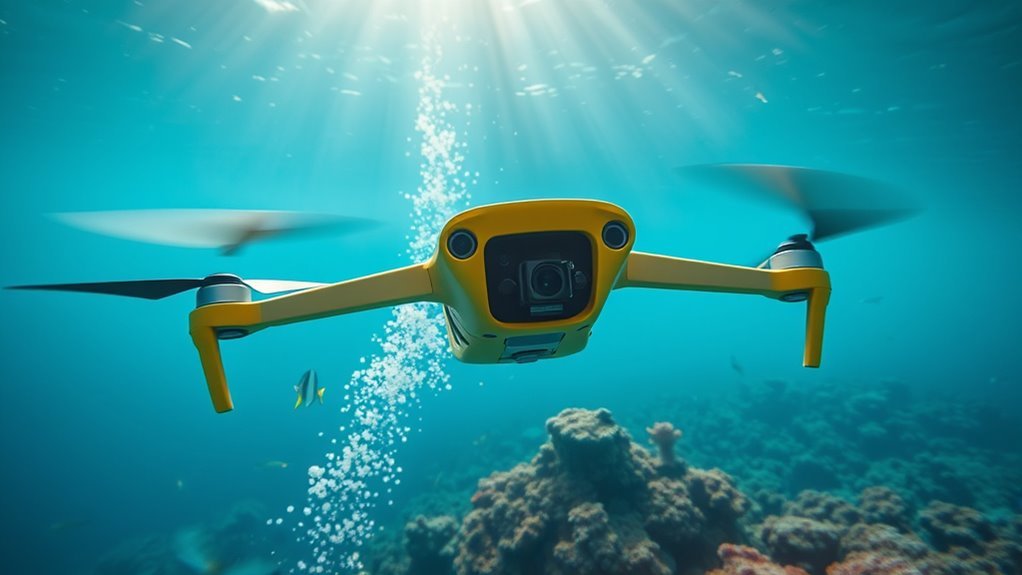
When exploring the world of underwater drones, you’ll encounter a diverse range of types, each designed for specific applications and environments. For commercial use, you’ll find drones equipped for tasks such as surveying, inspection, and research, making them invaluable for industries like oil and gas, marine biology, and underwater construction. These drones typically feature advanced sensors and imaging capabilities to gather critical data efficiently. On the other hand, if you’re into recreational exploration, you’ll likely prefer smaller, user-friendly models that allow you to capture stunning underwater footage or navigate coral reefs with ease. These drones often emphasize portability and ease of use, empowering you to plunge into underwater adventures without extensive training. Choose the right type for your needs, and release your aquatic freedom!
Key Features and Functionalities
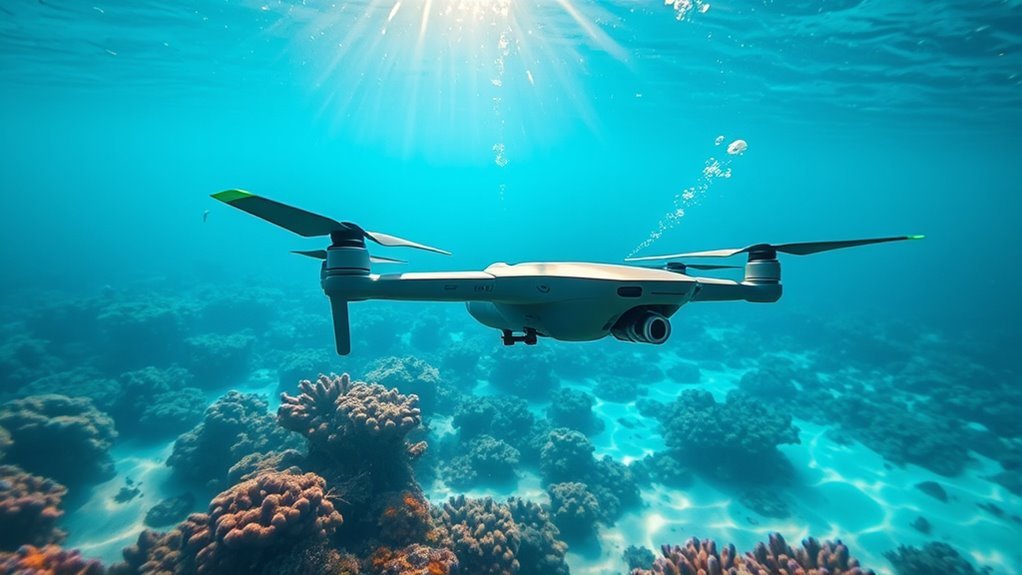
Understanding the key features and functionalities of underwater drones can greatly enhance your experience, whether you’re using them for commercial purposes or recreational exploration. One critical aspect is their camera capabilities; many drones come equipped with high-definition cameras, enabling you to capture stunning underwater visuals. This feature is essential for documenting marine life or surveying underwater structures.
Equally important are navigation systems, which often include GPS and sonar technology. These systems allow you to maneuver through complex underwater environments with precision. With features like depth sensors and real-time data streaming, you can explore freely while maintaining control over your drone. By leveraging these capabilities, you can truly maximize your underwater adventures and achieve your specific goals with ease and efficiency.
Applications in Marine Research and Industry
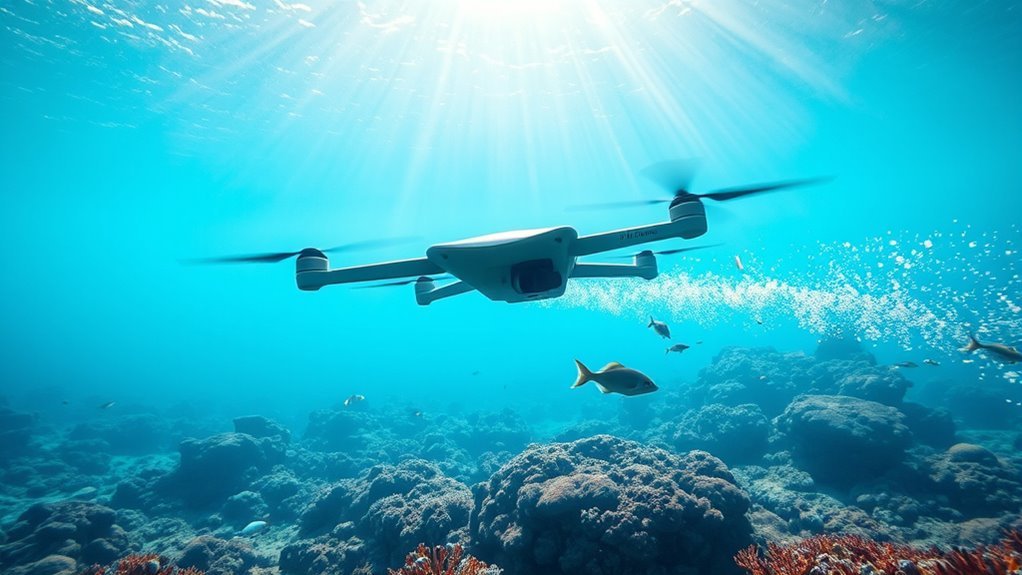
As underwater drones continue to evolve, their applications in marine research and industry have become increasingly essential. These innovative tools enhance marine conservation efforts by allowing for thorough data collection in previously inaccessible areas. You can deploy them for habitat mapping, monitoring biodiversity, and even evaluating the health of coral reefs.
Here’s a quick overview of their applications:
| Application | Purpose | Benefit |
|---|---|---|
| Marine Conservation | Protect ecosystems | Preserve biodiversity |
| Data Collection | Gather environmental data | Inform policy decisions |
| Habitat Mapping | Identify critical areas | Focus conservation efforts |
| Species Monitoring | Track populations | Enhance research accuracy |
Such advancements empower researchers and industries to safeguard our oceans.
Considerations for Choosing the Right Underwater Drone
Choosing the right underwater drone requires careful consideration of several factors that align with your specific needs and objectives. First, assess your mission requirements, such as depth rating, stability, and camera quality. Different missions demand varying capabilities, so make sure the drone can handle your tasks efficiently. Next, consider your budget constraints; there’s a wide range of options available, but balancing performance and cost is vital. Don’t forget about the support and warranty offered by manufacturers, as these can affect your long-term experience. Finally, think about the drone’s ease of use and maintenance—especially if you value freedom in your underwater explorations. By weighing these elements, you’ll find a drone that truly meets your requirements and enhances your underwater adventures.
Future Trends in Underwater Drone Technology
While the underwater drone industry has already made significant strides, emerging technologies promise to reshape its future even further. You’ll find innovative developments in autonomous navigation and enhanced data collection capabilities are paving the way for more efficient underwater exploration and monitoring.
| Trend | Description | Impact |
|---|---|---|
| Advanced AI Algorithms | Improved decision-making in navigation | More efficient route planning |
| Enhanced Battery Life | Longer operational times for data collection | Greater exploration range |
| Real-time Data Streaming | Instant access to underwater metrics | Immediate analysis and response |
| Modular Design | Customizable drones for specific missions | Versatility in applications |
These trends not only enhance functionality but also expand the possibilities for research, environmental monitoring, and commercial applications, ultimately granting you more freedom to explore the underwater world.
Frequently Asked Questions
How Do Underwater Drones Communicate With Operators?
Like a whisper traveling through water, underwater drones use signal transmission and specialized communication protocols to relay data to operators. These methods guarantee effective control and monitoring, granting you the freedom to explore underwater domains.
What Are the Legal Regulations for Using Underwater Drones?
When using underwater drones, you need to follow international regulations and safety protocols. Make certain you’re aware of local laws, as they can vary greatly, affecting your freedom to explore underwater environments safely and legally.
Can Underwater Drones Be Used for Recreational Purposes?
Yes, you can use underwater drones for recreational activities, like capturing stunning underwater photography. Imagine exploring a vibrant coral reef, effortlessly documenting marine life with your drone, all while enjoying the freedom of the open water.
How Deep Can Underwater Drones Operate Safely?
Underwater drones typically operate safely at maximum depths ranging from 100 to 3,000 meters, depending on their pressure resistance. This allows you to explore diverse underwater environments while ensuring the drone remains functional and intact.
What Is the Average Lifespan of an Underwater Drone?
You’ll find that the average lifespan of an underwater drone is around three to five years, but with proper maintenance tips and maximizing battery lifespan, you could stretch that to an impressive six years or more!
