
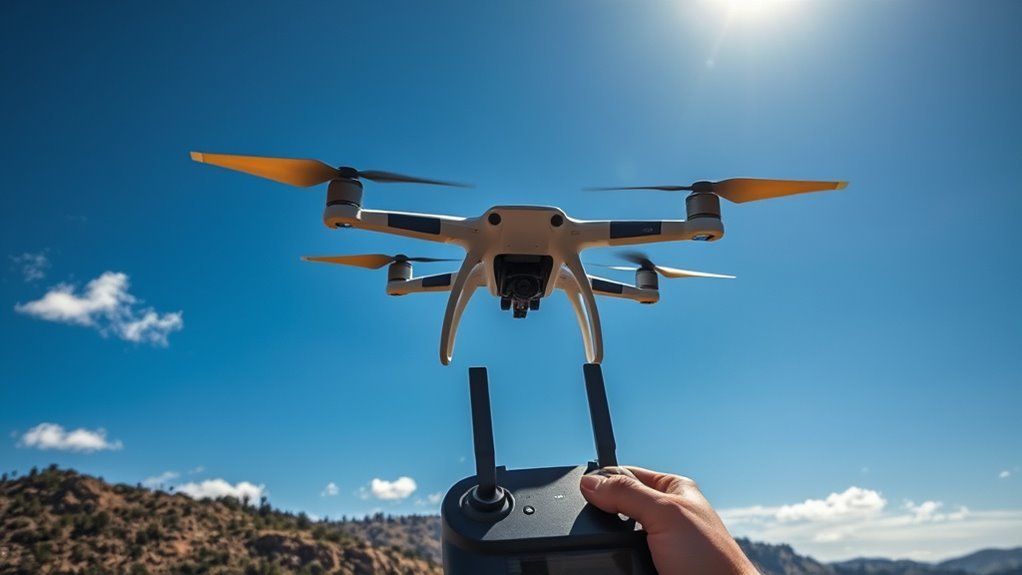
Several factors determine how far your drone can fly from its controller. Signal strength and transmission technology greatly influence range, while environmental conditions like wind and temperature affect stability. Battery life and drone design impact efficiency, and obstacles like buildings can hinder signal transmission. Legal regulations and your experience as a pilot play crucial roles, too. Understanding these elements will help you optimize your drone’s performance and expand its operational range effectively.
Signal Strength and Transmission Technology
How does signal strength impact the distance a drone can fly? The answer lies in the effective signal modulation and transmission frequency. A stronger signal enhances communication between your drone and controller, allowing for greater operational range. When signal modulation is optimized, data transmission becomes more efficient, minimizing interference and maintaining a stable connection. Additionally, drones like the Draganfly Vital Intelligence benefit from advanced technologies that enhance their operational autonomy, further extending their flight capabilities.
Transmission frequency also plays a significant role; higher frequencies can support faster data rates but might have limited range due to increased attenuation. On the other hand, lower frequencies can penetrate obstacles better, extending your drone’s reach. Ultimately, understanding these dynamics empowers you to maximize your drone’s flight distance, enabling you to explore freely while maintaining control over your aerial companion. Additionally, advanced communication protocols can further enhance signal reliability and range, ensuring a smoother flying experience.
Environmental Conditions
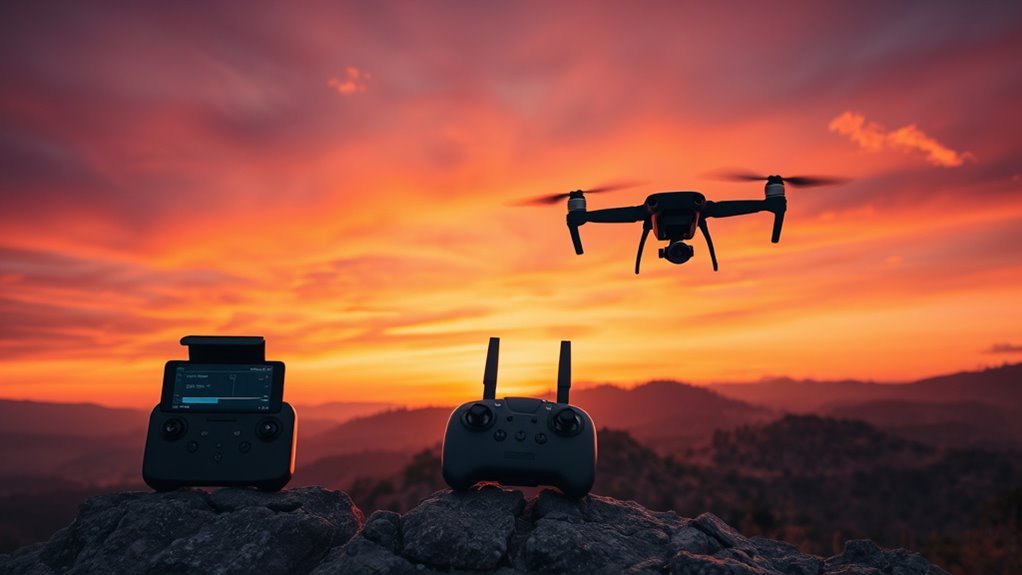
While many factors influence drone flight distance, environmental conditions can greatly impact performance and range. Understanding these elements is vital for maximizing your drone’s capabilities. Key aspects include:
- Wind turbulence: Strong winds can destabilize your drone, affecting control and distance.
- Temperature effects: Extreme temperatures can alter battery efficiency and motor performance.
- Humidity levels: High humidity can lead to moisture-related issues, impacting electronics.
- Altitude variations: Higher elevations can decrease air density, affecting lift and flight endurance.
- Terrain types: Hilly or uneven landscapes can complicate navigation and signal transmission.
- Snow and moisture: Moisture ingress poses a significant risk, as it can compromise internal electronics and sensors, further affecting flight reliability.
These factors collectively shape your drone’s operational range and reliability, making awareness essential for effective usage in diverse environments.
Battery Life and Efficiency
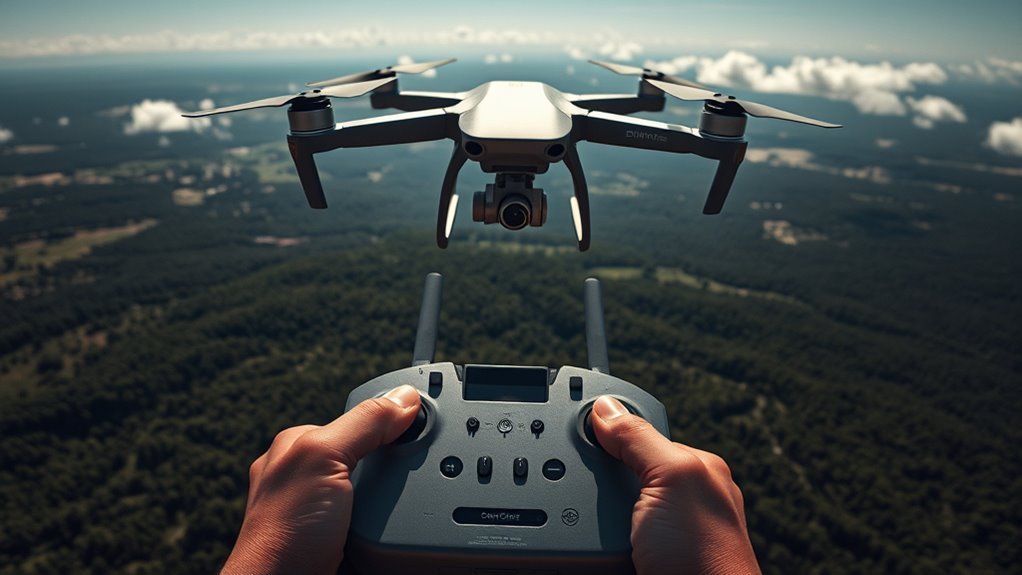
Battery life and efficiency play an essential role in determining how far your drone can fly before it needs to return or recharge. The energy efficiency of your drone’s battery directly impacts flight time and range. By practicing proper battery maintenance—like keeping terminals clean and avoiding extreme temperatures—you can maximize performance. High-quality batteries often feature advanced technology that provides longer durations and quicker recharges. Additionally, understand the trade-offs of battery capacity versus weight; a heavier battery might diminish efficiency, reducing your overall flight distance. Regularly monitoring battery health and utilizing smart charging techniques can also enhance longevity. Ultimately, prioritizing battery life and efficiency allows you to explore more freely, extending your drone’s reach and capabilities. Moreover, the XG Neith Drone’s high-capacity lithium-polymer battery design provides stable power output, enabling longer flights without interruptions. Another factor influencing flight distance is the drone’s battery capacity which directly correlates with the duration it can stay airborne before needing a recharge.
Drone Design and Weight
When designing a drone, both its structure and weight are critical factors that influence flight distance. The choice of design materials directly impacts the overall drone weight, which in turn affects performance. Here are key considerations:
- Material Selection: Lightweight composites can enhance agility.
- Frame Design: Aerodynamic shapes minimize drag.
- Weight Distribution: Balanced weight guarantees stability in flight.
- Component Choices: Heavier batteries may limit range.
- Structural Reinforcement: Excessive support can add unnecessary weight. The robust construction of a drone like the Exo X7 ensures durability while maintaining a lightweight frame for optimal flight performance.
Additionally, optimizing the aerodynamic efficiency of the drone’s design can significantly extend its flight range.
Interference From Obstacles
Although obstacles in the flight path can greatly diminish a drone’s effective range, understanding their impact is essential for optimizing performance. Various obstacle types, such as buildings in urban environments or natural barriers like hills, can act as interference sources that lead to signal blockage. Terrain effects play a significant role; uneven landscapes can disrupt transmission between the drone and controller. Reflective surfaces, commonly found in cities, can cause signal distortion, further complicating communication. Additionally, crowd density can introduce more interference, as numerous devices may share frequencies. Weather conditions can also exacerbate these issues, impacting the overall connectivity and performance of the drone. Being aware of these factors allows you to strategically plan flight paths that minimize disruptions, enhancing your drone’s operational freedom while ensuring reliable connectivity over greater distances. Moreover, understanding battery performance can help in choosing drones that better withstand signal loss during extended flights.
Controller Features and Range
When evaluating drone flight distance, the controller’s signal strength and quality play vital roles. You’ll find that the antenna design and type directly influence these factors, impacting how far your drone can operate effectively. Understanding these features can help you optimize your flight experience. Additionally, the choice between LTE vs. radio communication methods can significantly affect range capabilities and reliability in various environments.
Signal Strength and Quality
As you navigate the complexities of drone operation, understanding signal strength and quality is essential, particularly regarding the controller’s features and range. Signal quality directly influences how far your drone can fly without losing connection, and factors like signal interference can drastically affect performance. When evaluating your controller, consider these aspects:
- Radio frequency: Higher frequencies can offer better data rates but may have shorter range.
- Environmental obstacles: Trees, buildings, and other structures can cause signal degradation.
- Controller power output: Stronger signals generally provide better range.
- Interference sources: Other electronic devices may disrupt your signal.
- Antenna position: Proper orientation can enhance signal clarity.
Antenna Design and Type
Signal strength and quality are greatly affected by the design and type of antennas used in drone controllers. When you consider antenna materials, they play a vital role in signal transmission efficiency. High-quality materials, like carbon fiber or specialized alloys, can minimize signal loss. Additionally, the choice of frequency bands influences range; 2.4 GHz offers longer distances but is more prone to interference, while 5.8 GHz provides less range with better clarity. Antenna design, including gain and polarization, also impacts performance—higher gain antennas can extend your control distance considerably. Ultimately, understanding these factors helps you optimize your drone’s capabilities, granting you the freedom to explore further and capture stunning aerial footage with confidence.
Firmware and Software Updates
While many factors influence a drone’s flight distance, firmware and software updates play a critical role in optimizing performance. The upgrade importance can’t be overstated, as these updates guarantee your drone operates efficiently and effectively. Regular updates can enhance your drone’s capabilities by addressing software compatibility and improving communication between the controller and the drone. Here are key aspects to reflect on:
- Enhanced signal strength
- Improved battery management
- Bug fixes and stability enhancements
- New features and functionalities
- Compatibility with new hardware
Additionally, firmware updates can significantly impact a drone’s battery performance, allowing for longer flight times during your aerial adventures. Moreover, optimizing power management through firmware can lead to further energy efficiency and improved overall range.
Weather Conditions Impact
When considering your drone’s flight distance, it is essential to account for weather conditions, since they can greatly affect performance and stability. Wind impact is a significant factor; strong gusts can destabilize your drone, reducing its effective range. If you’re flying in high winds, your drone might struggle to maintain its position, leading to battery drain and loss of control. Additionally, temperature effects play a role; cold weather can reduce battery efficiency, limiting how far your drone can fly. Conversely, extreme heat may cause overheating issues, affecting components and overall performance. By understanding these elements, you can make informed decisions about when and where to fly, maximizing your drone’s potential while enjoying the freedom of flight. Aerodynamic design is crucial for maintaining stability in varying weather conditions.
Legal Regulations and Restrictions
Understanding the legal regulations and restrictions surrounding drone usage is essential for guaranteeing compliance and maximizing flight distance. To navigate the complexities of airspace and maintain legal compliance, consider the following factors:
- Federal Aviation Administration (FAA) guidelines: Confirm your drone adheres to all FAA regulations.
- Local laws: Be aware of state and municipal laws that might impose additional restrictions, including drone registration requirements based on weight and use in Iceland.
- Airspace restrictions: Know where you can and cannot fly, especially near airports or restricted zones.
- Flight altitude limitations: Follow altitude caps to avoid interfering with manned aircraft.
- Registration requirements: Verify your drone is registered as required by law. Additionally, ensure that you are familiar with drone safety regulations to avoid potential legal issues during your flights.
Pilot Experience and Skill
Your understanding of drone controls greatly impacts flight distance, as precise maneuvers can optimize battery usage and guidance. Steering through complex environments requires not only skill but also experience to avoid obstacles and maintain stability, essential factors in managing flight range. Ultimately, a skilled pilot can maximize a drone’s potential by effectively adapting to varying conditions. Additionally, factors like battery life and drone stability play crucial roles in determining how far a drone can fly from its controller.
Understanding Drone Controls
Although many factors influence drone flight distance, the pilot’s experience and skill level play an essential role in maximizing performance. A skilled pilot can greatly enhance drone maneuverability and control responsiveness, allowing for greater flight distances. Here are key aspects to evaluate:
- Familiarity with controls: Knowing your drone’s control layout enhances reaction times.
- Understanding of flight modes: Different modes offer varying levels of assistance and responsiveness.
- Practice in diverse conditions: Experience in various environments improves adaptability.
- Ability to anticipate drone behavior: Predicting how the drone reacts aids in precise control.
- Knowledge of battery management: Efficient energy use extends flight range.
Navigating Complex Environments
When maneuvering complex environments, a pilot’s experience and skill can greatly influence a drone’s operational success. In urban environments, where obstacles such as buildings and power lines are prevalent, effective aerial navigation becomes essential. A skilled pilot can assess risks and make split-second decisions to avoid hazards, enhancing the drone’s flight distance and safety.
| Skill Level | Impact on Flight Distance | Key Techniques |
|---|---|---|
| Beginner | Limited | Basic maneuvering |
| Intermediate | Moderate | Obstacle avoidance |
| Advanced | Significant | Precision control |
| Expert | Maximum | Complex route planning |
| Professional | ideal | Real-time adjustments |
Ultimately, your proficiency in maneuvering these challenges directly correlates with your drone’s capabilities in urban settings.
Frequently Asked Questions
How Do Different Drone Models Affect Flight Range?
Different drone models impact flight range greatly, as their specifications, such as battery capacity and signal strength, dictate performance. Advanced flight technology enhances distance, allowing you more freedom to explore diverse areas from afar.
Can Flying at High Altitudes Extend Range?
Flying at high altitudes is like soaring above the clouds; it can enhance range due to reduced atmospheric conditions. However, altitude effects, such as thinner air, can also impact battery performance and signal reliability.
Do Specific Frequencies Improve Drone Range?
Yes, specific frequencies can enhance drone range. Utilizing frequency modulation minimizes signal interference, allowing for clearer communication between the controller and drone. This precision enables you to explore greater distances without compromising control or safety.
How Does the Terrain Impact Flight Distance?
Picture a bird soaring through varied landscapes; similarly, your drone’s flight distance hinges on terrain types and elevation changes. Rough terrain and steep hills can obstruct signals, limiting your drone’s range and operational freedom.
Can Using Antennas Enhance Drone Signal Range?
Using antennas can greatly enhance your drone’s signal range. Different antenna types reduce signal interference, improving connectivity. Choosing the right antenna optimizes performance, allowing you to explore further without compromising control or safety.
