
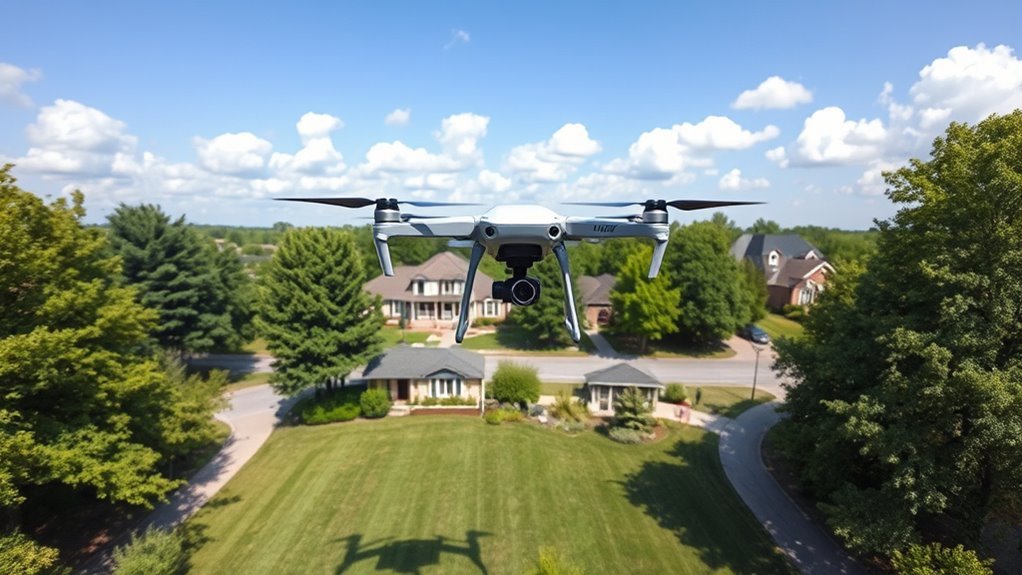
To fly a drone over your house, you must follow FAA guidelines and comply with state and local laws. Verify your drone is registered if it weighs over 0.55 pounds. Respect privacy by avoiding flights over neighbor properties without permission, and be aware of any no-fly zones or altitude restrictions. Always maintain line of sight with your drone and conduct pre-flight checks. For a complete understanding of all regulations and best practices, further exploration is essential.
Understanding Drone Regulations
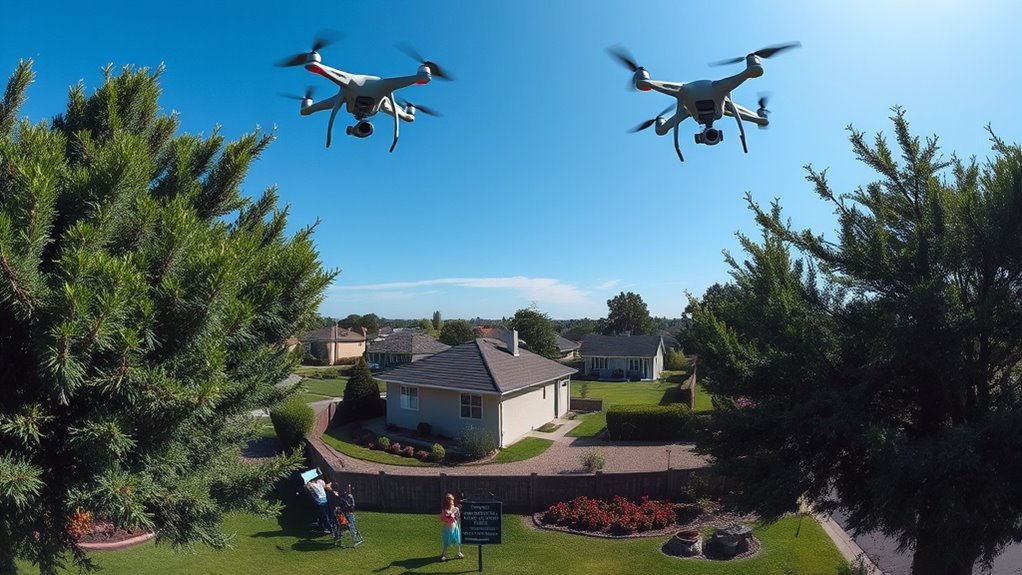
When it comes to flying a drone over your property, understanding the relevant regulations is essential, especially since failing to comply can lead to legal issues. Drone technology has advanced rapidly, enabling stunning aerial photography that enhances various applications—from real estate to recreational use. However, it’s vital to recognize that your freedom to operate a drone is balanced by laws governing airspace and privacy. Familiarize yourself with local ordinances, as some jurisdictions impose restrictions on flight altitudes and areas deemed sensitive, such as near schools or hospitals. Additionally, respect your neighbors’ privacy to avoid potential disputes. By staying informed about these regulations, you can fully enjoy the benefits of your drone while minimizing legal risks and fostering a harmonious community. Additionally, obtaining explicit consent from property owners when flying over their land can help maintain goodwill and avoid disputes. Furthermore, be aware of no-fly zones that may affect your ability to fly legally in certain areas.
Federal Aviation Administration (FAA) Guidelines
When flying a drone, you need to understand the FAA guidelines that govern registration requirements and flight restrictions. These regulations are essential for ensuring safety and respecting privacy considerations. Ignoring them could lead to serious legal repercussions and conflicts with your neighbors.
Registration Requirements
The Federal Aviation Administration (FAA) mandates that all drones weighing more than 0.55 pounds must be registered before flight. This drone registration process is vital for ensuring that your aircraft is classified appropriately within the national airspace system. By registering your drone, you not only comply with legal requirements but also contribute to safe flying practices. The FAA provides a streamlined online registration system, making it easy for you to secure your drone’s identification. Remember, failure to register can lead to significant penalties. Understanding these requirements empowers you to exercise your freedom responsibly. Stay informed about your obligations and embrace the opportunities that drone flying offers, all while adhering to these essential registration guidelines.
Flight Restrictions
Understanding registration requirements is just the beginning of responsible drone operation; you must also be aware of flight restrictions set forth by the Federal Aviation Administration (FAA). These guidelines are essential for maintaining safety and order in airspace. You’ll need to adhere to specific flight paths, especially near airports or populated areas, where drone operation could interfere with manned aircraft. Additionally, altitude limits are strictly enforced—generally, you’re not allowed to fly above 400 feet unless you’re within 400 feet of a structure. Ignoring these regulations can lead to serious consequences, including fines or grounding of your drone. So, stay informed and compliant to enjoy the freedom of flying while respecting the established rules.
Privacy Considerations
While flying a drone can be an exhilarating experience, it’s essential to contemplate the privacy implications that come with it. The Federal Aviation Administration (FAA) emphasizes that while you have the right to fly, you must respect others’ personal space. Aerial surveillance can easily infringe on someone’s privacy, particularly if you’re capturing images or video of their property without consent. It’s vital to be aware of local laws and regulations, which may further restrict drone use over private residences. Always consider the potential for distress or discomfort among your neighbors; maintaining a respectful distance fosters good community relations. Ultimately, freedom in drone flying comes with the responsibility of upholding others’ privacy rights.
State and Local Laws Impacting Drone Use
Maneuvering through state and local laws regarding drone use can be complex, especially since regulations vary greatly from one jurisdiction to another. You’ll need to familiarize yourself with specific state regulations that govern where and how drones can be operated. Some states impose strict rules on altitude and no-fly zones, while others may have more lenient guidelines. Additionally, local ordinances can further complicate your ability to fly freely. Cities or counties might have their own restrictions, often influenced by community safety concerns. Understanding flight time can also be crucial when planning your drone operations, as varying restrictions may impact how long you can remain airborne. Ignoring these laws can lead to fines or other penalties, so it’s essential that you research and understand the governing laws in your area before taking to the skies. Your freedom to fly depends on your compliance with these regulations. It’s also important to remember that obtaining necessary permits is crucial for legal drone operation in many areas, especially if you intend to fly in restricted zones.
Privacy Concerns When Flying Drones
As drones become increasingly popular for recreational and commercial use, privacy concerns have emerged as a significant issue that pilots must navigate. Drone surveillance can infringe on personal boundaries, raising ethical questions about what’s acceptable. You need to understand how your flight activities might affect others’ privacy.
| Aspect | Consideration |
|---|---|
| Surveillance Potential | High |
| Personal Boundaries | Easy to Violate |
| Legal Consequences | Varies by Location |
| Public Perception | Often Negative |
| Ethical Responsibility | Vital for Pilots |
Balancing your freedom to fly with respecting others’ privacy is essential. Always be aware of your surroundings and the impact your drone may have on those nearby.
Safety Precautions for Drone Operators
Operating a drone comes with inherent risks that demand careful attention to safety precautions. To guarantee your freedom in flying, you must invest in quality safety gear, such as goggles and protective clothing, to shield yourself from potential accidents. Always perform pre-flight checks to verify that your drone is in peak condition, reducing the likelihood of malfunctions. Establish clear emergency procedures, including a designated landing area and a plan for dealing with unexpected situations, like losing signal or battery failure. Staying informed about local regulations is vital, as it helps you avoid legal complications and enhances the safety of your operation. Additionally, understanding drone registration requirements ensures you comply with the necessary legal obligations before taking to the skies. Moreover, registering your drone helps to promote drone safety, as it establishes accountability for your operations and compliance with legal standards. By prioritizing these precautions, you empower yourself to fly confidently while minimizing risks to yourself and others.
Neighborly Etiquette and Communication
How can you guarantee a harmonious relationship with your neighbors while flying your drone? Practicing good drone etiquette and maintaining open neighbor communication is essential. Here’s how you can achieve this:
- Inform Your Neighbors: Let them know when you plan to fly, especially if it’s a new hobby.
- Respect Their Privacy: Avoid flying over their property without permission—this shows consideration and builds trust.
- Listen to Concerns: If a neighbor expresses discomfort, take their feelings seriously and adjust your flying schedule or locations.
- Invite Feedback: Encourage neighbors to share their thoughts on your drone use, fostering a collaborative environment.
No-Fly Zones and Restricted Areas
While flying a drone can be an enjoyable activity, it’s crucial to be aware of no-fly zones and restricted areas that may impact your operations. No-fly zones are designated spaces where drone flights are prohibited, often due to safety and security concerns, such as near airports, military bases, or critical infrastructure. Restricted areas may allow drone use under specific conditions, but they often require prior authorization. Ignoring these regulations can lead to serious consequences. To maintain your freedom to fly, you must familiarize yourself with local regulations and airspace classifications. Always check resources like the FAA’s B4UFLY app, which provides up-to-date information on no-fly zones and restricted areas, helping you navigate your drone activities responsibly and legally. Additionally, understanding federal aviation regulations helps ensure compliance and safety in your drone operations.
Consequences of Violating Drone Laws
Violating drone laws can lead to severe repercussions that extend beyond mere fines. The consequences of ignoring these regulations can be serious, impacting your freedom to fly. Here’s what you might face:
Ignoring drone laws can result in serious consequences, jeopardizing your ability to fly legally and freely.
- Legal Repercussions: You could face criminal charges, which may include hefty fines or even imprisonment.
- Civil Penalties: You may be liable for damages if you infringe on someone’s privacy or property.
- Loss of Drone Certification: Your drone license could be revoked, limiting your ability to operate legally in the future.
- Drone Enforcement Actions: Authorities may confiscate your drone, making it impossible to fly until compliance is assured.
Being aware of these consequences is vital for maintaining your rights and freedoms when operating a drone.
Best Practices for Responsible Drone Use
To guarantee a positive experience for both drone operators and the communities they fly over, it’s essential to adhere to best practices for responsible drone use. First, always respect privacy; avoid flying over private property without permission. Leverage drone technology to capture breathtaking aerial photography while being mindful of noise levels and potential disturbances. Stay informed about local regulations and airspace restrictions, ensuring you’re compliant at all times. Additionally, maintain a line of sight with your drone and avoid flying near crowded areas or emergency sites. By fostering goodwill through responsible practices, you can enjoy the freedom of drone flying while minimizing conflicts and enhancing community relations. Remember, responsible use reflects your respect for both the technology and those around you. Furthermore, understanding federal guidelines is crucial for ensuring safe and legal drone operations. To enhance your sanitization efforts, consider using drones with advanced features like AI-driven navigation for more effective cleaning in high-risk environments.
Frequently Asked Questions
Can I Fly a Drone at Night Over My House?
Did you know that around 1% of drone operators fly at night? If you’re considering night flying, you’ll need to comply with regulations and guarantee your drone has proper light requirements for visibility.
Do I Need Insurance to Fly a Drone Over My Property?
You don’t legally need insurance to fly a drone over your property, but obtaining drone insurance requirements can protect you from potential liabilities. Property liability coverage is advisable for safeguarding against damages or accidents while flying.
What Is the Maximum Altitude for Flying a Drone?
Ever wondered how high you can fly your drone? Drone regulations typically set altitude restrictions at 400 feet above ground level, ensuring safety while allowing you the freedom to explore the skies responsibly.
Are There Specific Drone Models Prohibited for Residential Use?
When considering drone regulations, it’s essential to know that some models may be prohibited under residential guidelines. Always check local laws to guarantee your drone complies, protecting your freedom to fly responsibly in your neighborhood.
How Can I Report a Drone Flying Illegally Over My House?
If you see a drone hovering like an unwanted shadow, familiarize yourself with drone regulations and follow reporting procedures. Document details like time and location, then contact local authorities to address the intrusion effectively.
