
Recharge drones enhance repo systems by automating asset recovery processes, which reduces human intervention and boosts efficiency. They utilize advanced navigation technologies and battery management systems to optimize operations while adhering to ethical considerations. These drones can quickly respond to repossession needs, thereby minimizing risks associated with confrontations. Additionally, machine learning and real-time analytics enable precise decision-making during recovery. There’s much more to explore about their technological advancements and impact on the repo landscape.
Overview of Recharge Drones in Repo Systems
As the demand for efficient asset recovery continues to rise, recharge drones have emerged as a significant element in repo systems. These drones facilitate quick retrieval of collateral, maximizing the efficacy of the repossession process. However, their integration must navigate complex drone regulations that vary by jurisdiction, ensuring compliance while minimizing operational disruptions. You’ll find that repossession ethics also plays an essential role; balancing the need for asset recovery with respect for individual rights is critical. By utilizing recharge drones, you can enhance recovery efforts while adhering to these ethical standards. This technology not only streamlines operations but also aligns with an increasing emphasis on responsible repossession practices, providing a pathway to reclaim assets without infringing on personal freedoms.
Key Technologies Behind Recharge Drones
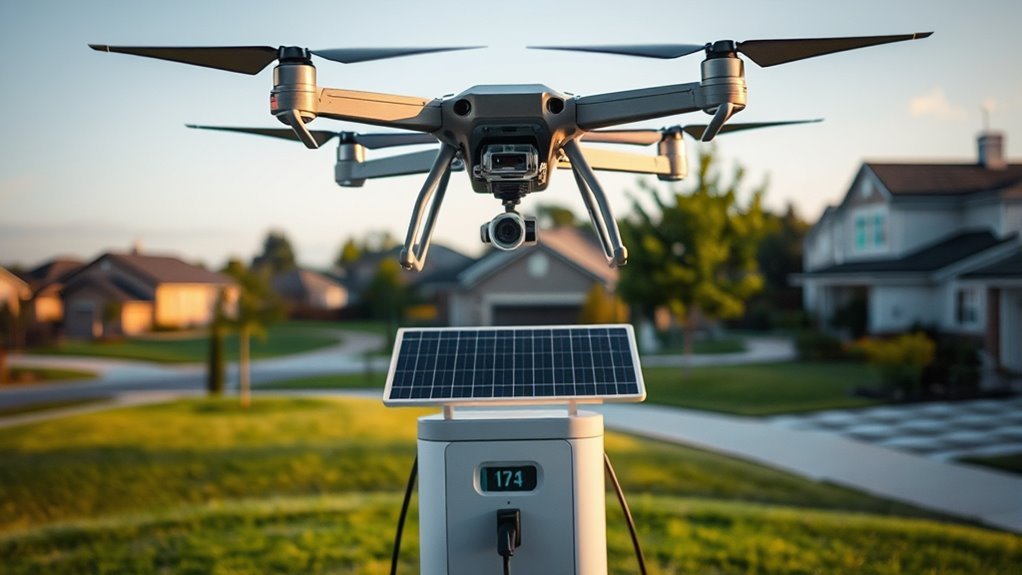
To understand recharge drones in repo systems, you need to take into account two critical technologies: Battery Management Systems and Autonomous Navigation Technology. These systems guarantee efficient energy use and enable precise maneuvering in complex environments. Analyzing their functionalities reveals how they enhance the operational capabilities of recharge drones.
Battery Management Systems
Battery Management Systems (BMS) play an essential role in the efficiency and reliability of recharge drones, guaranteeing ideal performance during operations. These systems implement battery optimization techniques to maximize energy storage and extend operational lifespan. By precisely monitoring voltage, current, and temperature, a BMS can prevent overheating and over-discharge, which are critical for maintaining battery health.
Moreover, BMS employs energy efficiency strategies, allowing drones to calculate best power usage based on real-time data, thereby enhancing overall performance. This capability not only extends the range of recharge drones but also assures they can efficiently manage their energy needs in various scenarios. Ultimately, an effective BMS is pivotal in achieving the autonomy and reliability that modern repo systems demand.
Autonomous Navigation Technology
Efficient energy management through Battery Management Systems is complemented by advanced autonomous navigation technology in recharge drones. These autonomous systems utilize sophisticated algorithms and sensors to enable precise drone navigation, guaranteeing optimal routes for energy replenishment. This technology allows drones to operate independently, enhancing their utility in repo systems.
| Feature | Description |
|---|---|
| GPS Integration | Enables real-time positioning |
| Obstacle Avoidance | Uses sensors to navigate safely |
| Path Planning | Calculates the most efficient route |
| Machine Learning | Adapts navigation strategies |
| Real-time Data Processing | Guarantees responsive adjustments |
Benefits of Using Recharge Drones for Repossession
Although traditional methods of repossession can be cumbersome and time-consuming, utilizing recharge drones markedly enhances operational efficiency. These drones address numerous repossession challenges, providing a streamlined approach to vehicle recovery.
- Increased drone efficiency: They operate autonomously, reducing the manpower required for each recovery. Additionally, their superior flight control responsiveness allows for precise maneuvering in challenging environments.
- Faster response times: Drones can quickly reach remote locations, minimizing delays associated with traditional repossession methods.
- Reduced risk and liability: By leveraging drone technology, you minimize human involvement in potentially confrontational situations. Additionally, the integration of advanced AI allows for enhanced decision-making during the recovery process.
How Recharge Drones Locate Vehicles
Recharge drones utilize advanced GPS technology to pinpoint the location of vehicles in real-time. By employing sophisticated data analysis algorithms, they can process location data efficiently to identify patterns and trends. This integration of real-time tracking systems enhances the accuracy and speed of vehicle recovery efforts.
GPS Technology Utilization
To effectively locate vehicles in repo systems, GPS technology plays an essential role by providing real-time positioning data. This technology enhances drone navigation, ensuring that recharge drones can efficiently track and retrieve vehicles.
- High GPS Accuracy: It allows drones to pinpoint vehicle locations with minimal error.
- Dynamic Routing: Drones can adjust their paths based on changing environments or obstacles.
- Remote Monitoring: Users can oversee the entire process from a distance, ensuring freedom in operations.
Data Analysis Algorithms
While tracking vehicles, data analysis algorithms play an essential role in enabling recharge drones to efficiently process and interpret vast amounts of location data. You’ll find that these algorithms utilize various data collection methods, such as satellite imagery and historical vehicle movement patterns, to refine their understanding of vehicle locations. By employing algorithm optimization techniques, recharge drones can quickly adapt to changing conditions, ensuring accurate vehicle identification in real-time. This combination of advanced analytics and responsive methodologies allows drones to pinpoint vehicles with remarkable precision. Ultimately, as you navigate the complexities of vehicle recovery, understanding these data-driven processes empowers you to leverage recharge drones effectively, enhancing your operational capabilities and ensuring a streamlined repossession experience.
Real-Time Tracking Systems
In the domain of vehicle recovery, real-time tracking systems are essential for the effective operation of recharge drones. These systems leverage advanced technology to guarantee ideal asset tracking and location accuracy. By utilizing GPS and other sensor technologies, recharge drones can perform real-time monitoring of vehicles, streamlining the recovery process.
- Enhanced precision in locating assets
- Reduced recovery time through efficient tracking
- Increased autonomy and operational freedom for drones
With these systems, you can improve the efficiency of vehicle repossession while maintaining control over the operational parameters. The integration of real-time tracking not only boosts the effectiveness of recharge drones but also aligns with the principles of freedom and accessibility in asset management.
The Role of Machine Learning in Repo Operations
As financial markets evolve, the integration of machine learning in repo operations is becoming increasingly essential for enhancing efficiency and accuracy. By leveraging advanced machine learning algorithms, you can analyze vast datasets to identify trends and anomalies within repo transactions. This capability enables predictive analytics, allowing you to forecast market movements and optimize collateral management. The insights gained through these algorithms facilitate better decision-making, reducing risks and improving liquidity management. Furthermore, machine learning enhances automated processes, making them more adaptive to market changes. Embracing this technology empowers you to navigate the complexities of repo markets with greater agility, ensuring you remain competitive while maintaining the freedom to make informed choices based on data-driven insights.
Real-Time Data Analysis and Decision Making
Machine learning’s impact on repo operations sets the stage for real-time data analysis and decision-making capabilities that are essential in today’s fast-paced financial environment. By leveraging real-time analytics, you can enhance decision optimization, ensuring agile responses to market fluctuations.
Machine learning revolutionizes repo operations, enabling real-time data analysis for swift, informed decision-making in a dynamic financial landscape.
- Identify trends and anomalies instantly
- Increase efficiency through automated insights
- Improve risk management with timely data
Incorporating these elements into your repo strategy allows you to make informed decisions that align with market dynamics. The synergy between machine learning and real-time data empowers you to act swiftly, reducing operational risks while maximizing profitability. Embracing these technologies isn’t just a choice; it’s a necessity for maintaining competitive advantage in the repo landscape.
Comparison of Traditional Repo Methods vs. Recharge Drones
While traditional repo methods have long been the backbone of financing and liquidity management, the emergence of recharge drones presents a transformative alternative that enhances operational efficiency. Traditional repossession methods often involve extensive manual labor, legal hurdles, and time-consuming logistics. In contrast, drone delivery systems streamline the repossession process, reducing both time and costs. Recharge drones can autonomously navigate to locations, minimizing the need for human intervention and increasing speed in asset recovery. Additionally, drones provide real-time tracking, improving transparency and accountability. By leveraging advanced technology, recharge drones offer a flexible and responsive solution, allowing you to adapt to dynamic market conditions while maintaining control over your assets, ultimately fostering a more liberated operational framework.
Future Trends in Recharge Drone Technology for Asset Recovery
The evolution of recharge drone technology is poised to revolutionize asset recovery processes in the coming years. As you explore future innovations, you’ll discover several trends driving drone advancements in this field:
The future of recharge drone technology promises to transform asset recovery with enhanced autonomy and improved capabilities.
- Enhanced Autonomy: Future drones will employ AI algorithms for real-time decision-making, reducing human intervention. These advancements in flight time efficiency will further enhance operational effectiveness during asset retrieval.
- Improved Payload Capacity: Advances in battery technology will allow drones to carry heavier loads, increasing efficiency in asset retrieval.
- Advanced Surveillance Capabilities: Integration of high-resolution imaging and thermal sensors will enhance tracking and recovery of assets.
These innovations will not only streamline operations but also empower repossession agents, providing them with the tools to navigate complex environments and reclaim assets swiftly. The future holds exciting possibilities for those embracing these technologies in asset recovery, especially with the advanced imaging capabilities similar to those found in drones like the DJI Mini 3 Pro and Autel EVO Nano+ V2.
Frequently Asked Questions
How Are Recharge Drones Maintained and Serviced?
While drones buzz freely above, their maintenance is essential. You’ll need to follow strict service protocols, ensuring every component functions at its best. Regular inspections and timely repairs keep drone efficiency high, safeguarding both performance and longevity.
What Regulations Govern the Use of Recharge Drones in Repossession?
You’ll need to guarantee regulatory compliance when using recharge drones, focusing on drone safety standards. Adhering to these regulations not only protects your operations but also upholds public trust in drone technology’s evolving role.
Can Recharge Drones Operate in Adverse Weather Conditions?
Recharge drones can face weather challenges, but their resilience varies. In adverse conditions, their operational capabilities might be limited. You’ll need to assess environmental factors to guarantee effective and safe drone deployment during repossession tasks.
What Is the Cost of Implementing Recharge Drone Technology?
When considering the cost of implementing recharge drone technology, you should conduct a thorough cost analysis. This technology investment can yield significant long-term savings, enhancing operational efficiency and ultimately providing greater autonomy in your operations.
How Do Recharge Drones Communicate With Repo Agents During Operations?
During operations, recharge drones utilize advanced drone communication protocols to relay real-time data to repo agents. This synergy enhances repo efficiency, enabling agents to optimize resource allocation and respond swiftly to dynamic operational demands.
