
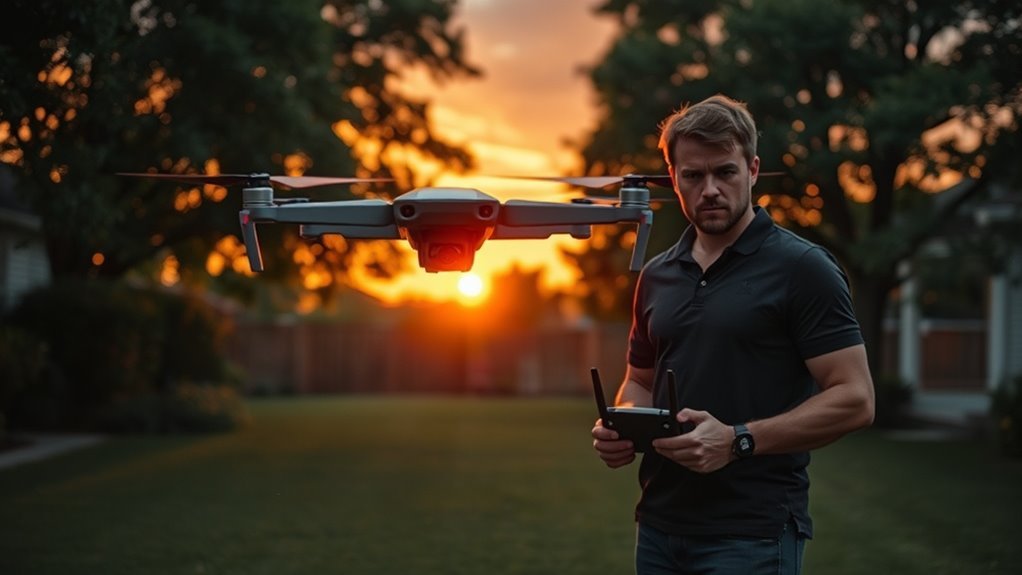
You can’t simply destroy a drone flying over your property due to complex legal and ethical issues. While you may feel an invasion of privacy, ownership of airspace doesn’t grant full rights to remove perceived threats. Destroying a drone can lead to charges such as vandalism or endangerment, and federal regulations often protect drone operators. Alternatives to destruction exist, and understanding your legal rights is vital. More insights on traversing these situations await.
Understanding Property Rights and Airspace
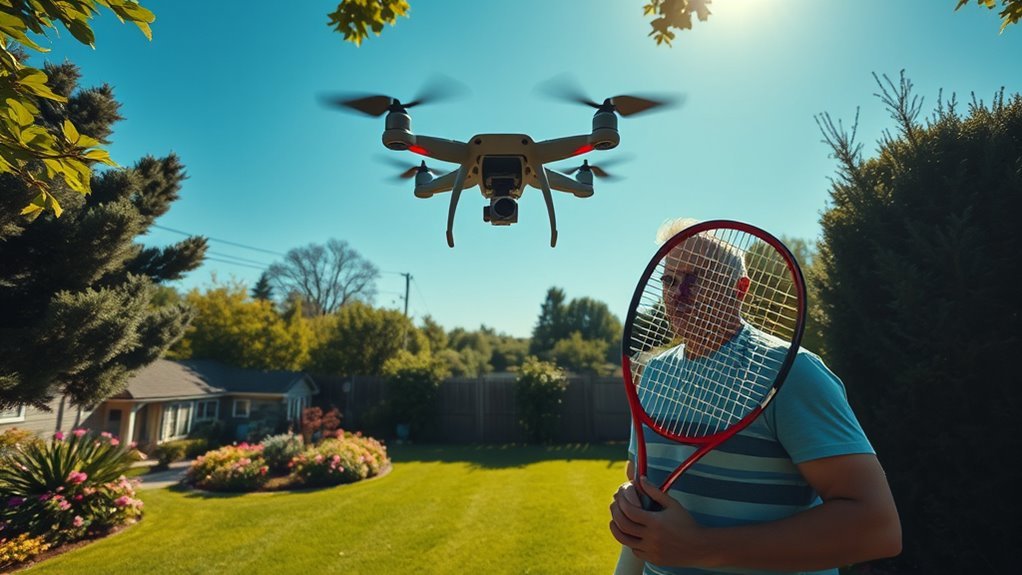
When considering the intersection of property rights and airspace, it’s vital to understand that ownership doesn’t extend indefinitely into the sky above your land. Property rights typically grant you control over the surface of your property and a limited vertical space, often defined by airspace boundaries. These boundaries can be ambiguous, as the law generally protects your rights up to a certain altitude, typically around the height necessary for aviation. However, this doesn’t mean you have the right to destroy any aerial objects encroaching upon your property. Understanding these limits is essential for maneuvering disputes involving drones and their operation. Balancing your desire for freedom with the legal realities of airspace regulation is key to managing potential conflicts effectively.
Legal Framework Governing Drones
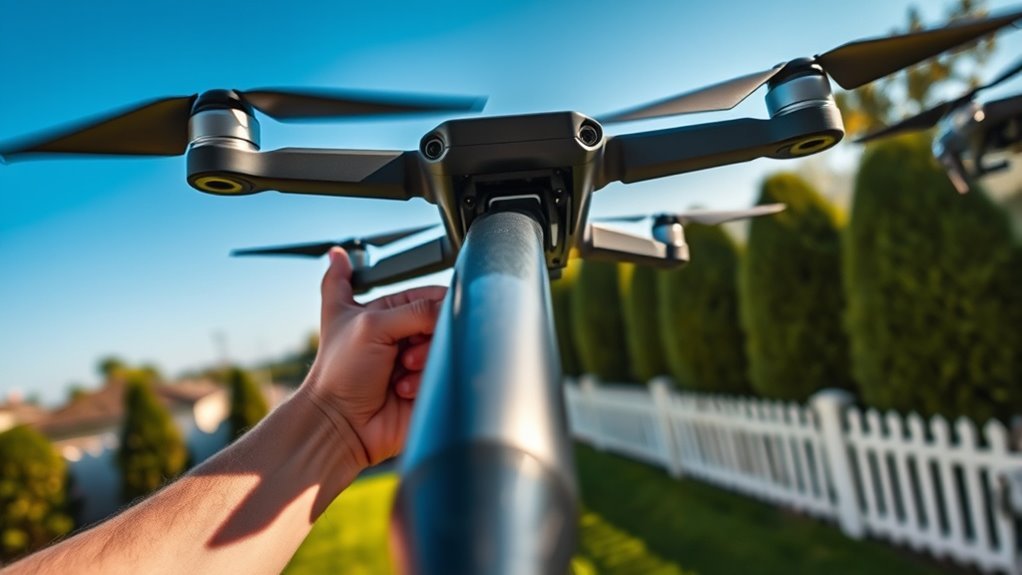
Although drones have become increasingly popular for recreational and commercial use, the legal framework governing their operation remains complex and multifaceted. You’ll find that drone legislation varies considerably by region, often influenced by federal, state, and local regulations. Understanding airspace boundaries is vital, as these laws typically delineate where drones can fly. Generally, the Federal Aviation Administration (FAA) has jurisdiction over airspace use, but property owners may assert rights to control activities within their airspace. This creates a tension between individual freedoms and regulatory oversight. As you navigate these laws, it’s essential to remain informed about evolving drone legislation to protect your interests while respecting others’ rights in shared airspace. Obtaining consent from homeowners is a crucial aspect when operating drones over private property. Furthermore, it is important to note that shooting a drone can lead to potential criminal consequences under federal law.
Potential Risks of Destroying a Drone
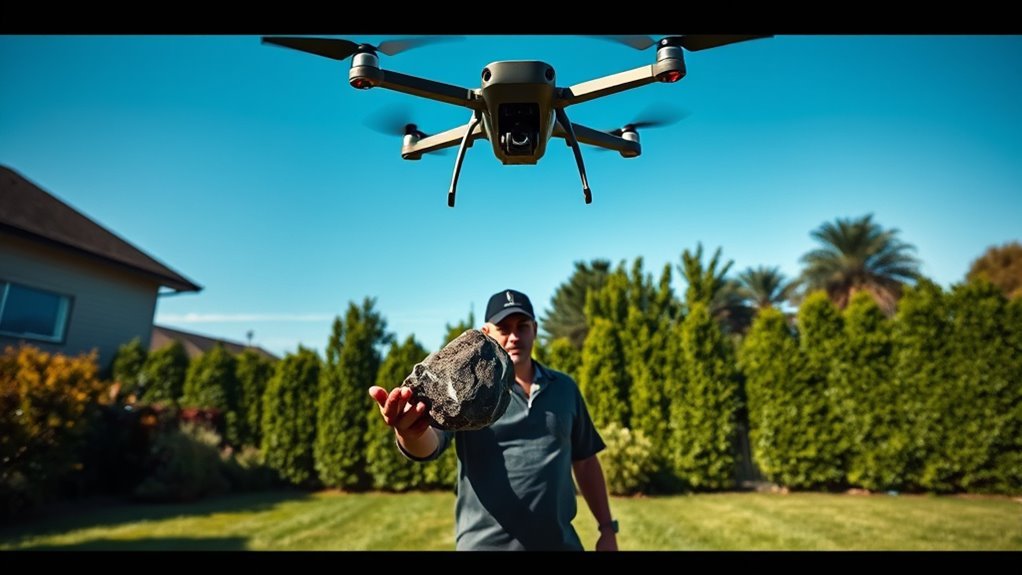
When considering destroying a drone over your property, it’s vital to weigh the potential risks involved. You could face legal consequences, safety hazards, and the possibility of property damage. Understanding these factors is essential before taking any action.
Legal Consequences Involved
Destroying a drone over your property can lead to significant legal repercussions, especially if you act impulsively. You might view the drone as an invasion of your privacy, but laws regarding airspace and property rights are complex. If you harm the drone, you could face charges ranging from vandalism to destruction of personal property. Even if you believe you’re protecting your rights, the owner may claim damages, leading to costly legal battles. In addition, federal regulations often protect drone operators, complicating any defense you might attempt. To navigate these situations effectively, it is crucial to understand that while you value your freedom, actions taken in the heat of the moment can result in unforeseen consequences that limit it further.
Safety Hazards Present
Before taking any action against a drone, it’s essential to contemplate the potential safety hazards involved. Destroying a drone can lead to unintended consequences, such as drone collisions with people, vehicles, or property. Such incidents can result in serious injuries or damage, which could further complicate your situation legally. It’s vital to adhere to safety protocols, ensuring that you don’t put yourself or others at risk. Additionally, the method you choose to disable the drone can create flying debris or create a fire hazard, amplifying the danger. Understanding these risks helps you make informed decisions about how to handle unwanted drones while prioritizing safety and minimizing harm to yourself and others.
Property Damage Risks
Taking action against a drone can lead to significant property damage risks. If you decide to destroy a drone, the method you choose could inadvertently cause damage to your own property or that of your neighbors. For instance, projectiles or electrical interference might impact surrounding structures or vehicles. In addition, any resulting damage could raise liability concerns, where you may be held responsible for repairs or compensation.
Moreover, the legal ramifications of such actions can exacerbate your financial exposure. It’s important to reflect on whether the perceived threat justifies the potential costs involved. Weighing these property damage risks against your desire for privacy is essential in making an informed decision that respects both your rights and the rights of others.
Ethical Considerations of Drone Interference
The ethical landscape surrounding drone interference often reveals a complex interplay between personal rights and technological advancements. When a drone invades your privacy, it raises significant moral dilemmas. You might feel justified in wanting to protect your space, yet retaliating could infringe upon the rights of the drone operator. This situation prompts questions about ownership and autonomy. Is your right to privacy absolute, or does it extend only to certain boundaries? Additionally, consider the implications of your actions; destroying a drone could escalate conflicts and lead to legal repercussions. Balancing your desire for freedom with respect for others’ rights is essential. In this evolving landscape, understanding these ethical considerations can guide your response to drone interference while preserving personal liberties.
Alternatives to Physical Destruction
When faced with an intrusive drone, many might instinctively consider physical destruction as a solution. However, there are more effective and lawful alternatives that guarantee privacy protection without escalating conflict. Here are some drone deterrents you could consider:
Consider lawful alternatives to handle intrusive drones, ensuring privacy without escalating conflict.
- Signal Jammers: These can disrupt the drone’s control signal, forcing it to return to its operator or land. Additionally, AI integration in some drones can make them more challenging to disrupt, so it’s important to stay informed about the technology being used.
- Privacy Screens: Installing physical barriers can obstruct the drone’s line of sight, enhancing your privacy.
- Awareness Devices: Use devices that alert you when a drone is nearby, giving you the chance to respond appropriately.
- Legal Notices: Posting signs about your property rights may deter operators from flying over your land.
Additionally, understanding the impact of 5G connectivity on drone operations can help you better navigate privacy concerns and potential solutions. These alternatives prioritize your freedom while respecting the boundaries of the law.
Reporting Drone Activity to Authorities
Although it may be tempting to confront a drone directly, reporting drone activity to authorities is often the more prudent approach. Engaging with the drone can escalate tensions and create legal repercussions. Instead, document the drone’s behavior and any potential privacy concerns it raises. Local law enforcement or aviation authorities can then assess the situation appropriately. Furthermore, understanding the legal boundaries surrounding federal oversight can help you navigate the complexities of drone-related issues. Additionally, being aware of local laws can inform your reporting process and enhance the effectiveness of your concerns.
| Action | Description |
|---|---|
| Document | Note the date, time, and details |
| Contact | Report to local authorities |
| Provide Evidence | Share photos or videos |
| Follow Up | Check for updates on the case |
| Know Your Rights | Understand local drone laws |
Emerging Trends in Drone Regulation
As concerns about privacy and safety continue to rise, regulatory bodies are increasingly focused on establishing thorough frameworks for drone usage. You should be aware of the following emerging trends in drone regulation that address drone privacy and regulatory challenges:
- Enhanced Privacy Protections: New laws are being crafted to safeguard individuals from invasive surveillance. These regulations are likely to involve drone insurance coverage to protect operators against liability claims related to privacy violations.
- Flight Restrictions: Specific no-fly zones, especially near critical infrastructure, are becoming standard.
- Licensing Requirements: More stringent regulations are being introduced for commercial drone operators to guarantee accountability.
- Public Engagement: Authorities are seeking public input to shape regulations, promoting transparency and community trust.
These trends reflect a growing recognition of the need to balance innovation with the rights of individuals, guaranteeing freedom while maintaining safety. Additionally, global regulations are evolving to ensure that drone technology aligns with safety standards and community expectations.
Frequently Asked Questions
Can I Fly a Drone Over Someone Else’s Property Legally?
Flying a drone over someone else’s property might feel like soaring through the sky like a superhero, but you’ve gotta be aware of drone regulations. It can lead to aerial trespassing issues, so proceed with caution.
What Are My Rights if a Drone Invades My Privacy?
If a drone invades your privacy, you’ve potential legal recourse. Document the incident and consult local laws; privacy invasion often allows for claims against the operator, depending on jurisdiction and specific circumstances surrounding the situation.
How Do I Identify the Owner of a Drone?
To uncover a drone’s owner, think of a detective piecing together clues. Check drone registration databases, as they often link to the operator. This step’s essential for identifying who’s piloting that airborne intruder.
What Are the Penalties for Shooting Down a Drone?
Shooting down a drone can lead to severe legal repercussions, including fines or criminal charges, as it violates drone regulations. Understanding these laws is essential for protecting your rights while ensuring compliance with aviation safety standards.
Can I Use a Jammer to Disable a Drone?
Using a jammer to disable a drone is like throwing a wrench into a well-oiled machine; drone regulations prohibit signal interference. You could face serious legal repercussions, so think carefully before acting impulsively.
