
In Michigan, you can’t fly a drone over private property without permission from the owner. It’s essential to respect privacy rights and avoid capturing images without consent. Always keep your drone within visual line-of-sight and below 400 feet to maintain safety. Be aware of local ordinances and guarantee compliance with FAA guidelines. Violating these rules may lead to legal consequences, including fines or liability for damages. There’s more to explore about maneuvering these regulations effectively.
Understanding Drone Regulations in Michigan
When you fly a drone in Michigan, it’s important to understand the regulations governing its use, as failing to do so can lead to legal complications. Michigan has specific laws regarding drone technology that prioritize public safety and privacy. You must avoid flying over private property without permission, as this can infringe on property rights. Implementing safety measures, like maintaining visual line-of-sight and avoiding crowded areas, is vital. Additionally, confirm your drone is registered if it exceeds the weight limit set by state authorities. By staying informed and adhering to these regulations, you can enjoy the freedom of flying while respecting others’ rights and maintaining safety in the skies. Always consult local laws for the most current regulations.
Federal Aviation Administration (FAA) Guidelines
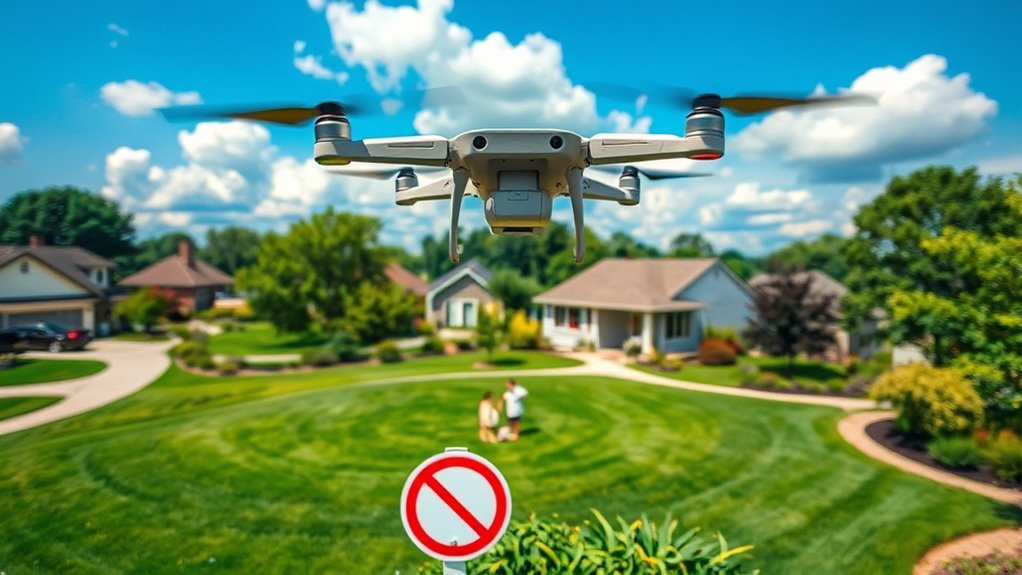
Although you might be enthusiastic to take to the skies, it is crucial to adhere to the Federal Aviation Administration (FAA) guidelines that govern drone operations in the United States. Following these rules guarantees drone safety and effective airspace management. Here are some key points to remember:Adhering to FAA guidelines is essential for safe and responsible drone operations in the skies.
- Fly below 400 feet to maintain safe distances from manned aircraft.
- Keep your drone within visual line-of-sight to avoid accidents and maintain control.
- Avoid flying over crowds or moving vehicles to reduce risks to people and property.
- Register your drone if it weighs over 0.55 pounds to comply with FAA regulations. Additionally, be mindful of signal attenuation that can affect the performance of your drone when flying near structures.
Michigan State Laws on Drone Use
While understanding FAA guidelines is fundamental, it’s equally important to recognize Michigan’s specific state laws governing drone use. Michigan law emphasizes drone safety while respecting property rights. You must avoid infringing on others’ privacy and guarantee your drone operations don’t interfere with their enjoyment of their land.
Here’s a quick reference table to keep in mind:
| Law Aspect | Description | Implication |
|---|---|---|
| Property Rights | Drones can’t capture images on private property without consent | Respecting boundaries is essential |
| Safety Regulations | Drones must be flown below 400 feet and away from airports | Compliance guarantees safe flying |
| Privacy Protections | Avoid surveilling individuals without permission | Protecting others’ privacy is critical |
| Liability | Operators are liable for damages caused by their drone | Responsible usage is expected |
Stay informed to fly safely and legally!
Navigating Local Ordinances
As you explore the regulations surrounding drone operation in Michigan, understanding local ordinances is essential since they can vary considerably by municipality. Local zoning laws can impose specific drone restrictions that may limit where and how you can fly. To maneuver through these regulations effectively, consider the following:
- Check Local Zoning Codes: Research your city’s or county’s zoning ordinances for any restrictions on drone usage.
- Contact Local Authorities: Always reach out to local law enforcement or aviation departments for clarification on rules.
- Stay Updated: Ordinances can change; keep yourself informed about any amendments.
- Join Local Drone Communities: Engage with local drone enthusiasts who can share insights on maneuvering through local regulations.
Understanding these elements can help guarantee your drone flying experience remains enjoyable and lawful.
Respecting Privacy Rights
When flying a drone over private property in Michigan, it’s essential to respect the privacy rights of individuals. Engaging in drone surveillance can raise significant privacy concerns, especially if you’re capturing images or videos of people in their own spaces without consent. Be aware that homeowners may feel their personal space is being invaded, leading to potential legal issues. To maintain a respectful approach, avoid hovering over residential areas or focusing on private backyards. Always prioritize transparency and ethical considerations in your drone operations. Understanding and adhering to these privacy rights not only fosters goodwill but also upholds your own rights as a drone operator. Ultimately, balancing your freedom to fly with the need for privacy is vital.
Obtaining Permission From Property Owners
When flying a drone over private property in Michigan, obtaining permission from property owners is essential to avoid legal issues. While verbal agreements may be valid, securing written permission is highly recommended for clarity and protection. Understanding the importance of consent can help you maintain positive relationships and comply with local regulations.
Importance of Consent
Obtaining consent from property owners is essential when flying a drone over private property in Michigan, since trespassing laws apply to aerial as well as ground-level activities. Respecting others’ rights not only adheres to drone etiquette, but also mitigates privacy concerns. Here are some key points to reflect on:
- Legal Compliance: Verify you’re following local laws regarding drone operation.
- Respect Boundaries: Understand that property lines exist in the airspace as well.
- Build Trust: Gaining permission fosters good relationships with neighbors and property owners.
- Avoid Conflict: Prevent potential disputes by communicating openly before your flight.
Written Permission Recommended
While it’s possible to verbally request permission from property owners before flying a drone, having written consent is strongly recommended. This guarantees you’re protected should any disputes arise regarding property boundaries. Written agreements not only establish clear communication but also demonstrate respect for drone etiquette, reinforcing your commitment to responsible flying. Additionally, it mitigates potential misunderstandings about your intentions and the nature of your flight. In Michigan, even though laws may allow certain aerial activities, obtaining written permission creates a solid foundation for your drone operations. It’s a proactive step that empowers you to enjoy your freedom while respecting the rights of others. Always prioritize clear documentation to foster positive relationships with property owners.
Verbal Agreements Valid?
Having a conversation with property owners about drone flights can sometimes lead to verbal agreements. While these agreements may seem convenient, it’s vital to understand their limitations regarding property boundaries and legal enforceability. Here are key points to bear in mind:
- Document the Discussion: Always take notes detailing what was agreed upon during the conversation.
- Follow-Up in Writing: Send a written confirmation of the verbal agreement to guarantee clarity and reduce misunderstandings.
- Know the Law: Familiarize yourself with Michigan’s laws regarding drone use and property rights.
- Trust but Verify: Even with verbal agreements, think about obtaining written permission to protect yourself legally.
Ultimately, while verbal agreements can provide a quick solution, they may not always offer the security you need.
Consequences of Violating Drone Regulations
Violating drone regulations in Michigan can lead to significant civil penalties and fines, which vary based on the severity of the infraction. Additionally, you may face legal action from property owners whose rights have been infringed upon, resulting in potential litigation costs. Finally, if your drone causes property damage, you could be held liable for repairs or compensation.
Civil Penalties and Fines
In Michigan, you could face significant civil penalties and fines if you violate drone regulations while flying over private property. Understanding the fines structure is essential for avoiding unnecessary civil liabilities. Here are some potential consequences:
- Monetary Fines: Fines can range from minor amounts for first-time offenses to substantial sums for repeated violations.
- Injunctions: Courts may issue injunctions to prevent further unauthorized flights.
- Restitution: You may be required to compensate property owners for any damages incurred.
- Suspension of Drone Use: Authorities could temporarily or permanently revoke your right to operate a drone.
Being aware of these penalties can help you navigate the skies responsibly and maintain your freedom while flying.
Legal Action Possibilities
Understanding the legal ramifications of flying a drone over private property is crucial for any operator. If you violate drone regulations, you could face serious consequences, including lawsuits from property owners. They may claim invasion of privacy, trespassing, or other damages, leading to costly legal battles. Without proper drone insurance and liability coverage, you could be financially liable for any claims against you. This means your personal assets might be at risk if a court rules against you. It’s important to stay informed about local laws and guarantee you have adequate insurance to protect yourself. By understanding these legal possibilities, you can operate your drone more freely, and with less fear of repercussions.
Property Damage Liability
Although operating a drone can be an exciting venture, it comes with significant responsibilities, particularly regarding property damage liability. If you cause damage while flying over private property, you could face serious consequences. Here are some key points to take into account:
- Liability: You’re responsible for any property damage caused by your drone.
- Insurance Coverage: Having adequate insurance can protect you from financial loss due to claims.
- Legal Action: Property owners may pursue legal action against you for damages.
- Regulatory Compliance: Violating drone regulations can exacerbate liability issues.
Understanding these aspects of property damage liability is essential for enjoying the freedom of flying your drone responsibly and legally in Michigan.
Tips for Responsible Drone Flying
When operating a drone, adhering to responsible flying practices is essential for guaranteeing safety and respecting the rights of others. Prioritize drone etiquette by maintaining a safe distance from private properties and avoiding intrusive flights. Always be aware of your surroundings and adhere to local regulations, including altitude limits and no-fly zones. Conduct pre-flight checks to verify your drone is in prime condition, as safe flying starts with a well-maintained aircraft. Additionally, understanding drone registration is crucial to ensure compliance and avoid legal issues while flying in residential areas. Avoid flying over crowds and sensitive areas, and seek permission if necessary. Remember to respect the privacy of individuals by not capturing images or videos without consent. By following these tips, you can enjoy the freedom of flying while maintaining a responsible approach that fosters trust and safety in the community.
Frequently Asked Questions
Can I Sell Aerial Footage Captured Over Private Property?
You can sell aerial footage captured over private property, but consider aerial photography ethics and commercial drone regulations. Always guarantee you have permission from property owners to avoid legal issues and respect their privacy rights.
What Altitude Restrictions Apply When Flying Near Private Properties?
When flying a drone near private properties, you must respect altitude restrictions, generally staying below 400 feet. Adhering to these drone altitude limits helps you avoid infringing on property rights and potential legal issues.
Are There Drone Insurance Requirements in Michigan?
In Michigan, you’re not required to have drone insurance policies, but obtaining liability coverage options is highly advisable. It protects you from potential damages and legal issues, ensuring you can fly with peace of mind.
How Do Noise Complaints Affect Drone Flying in Residential Areas?
When it comes to noise complaints, remember: “Silence is golden.” In residential areas, you’ve gotta adhere to noise regulations for residential compliance. Excessive drone noise can lead to complaints, impacting your flying freedom considerably.
What Is the Penalty for Flying a Drone Without Permission?
Flying a drone without permission can lead to penalties like fines or legal action. Infringing on drone privacy and property rights can result in serious consequences, so it’s essential to understand and respect these regulations.
