
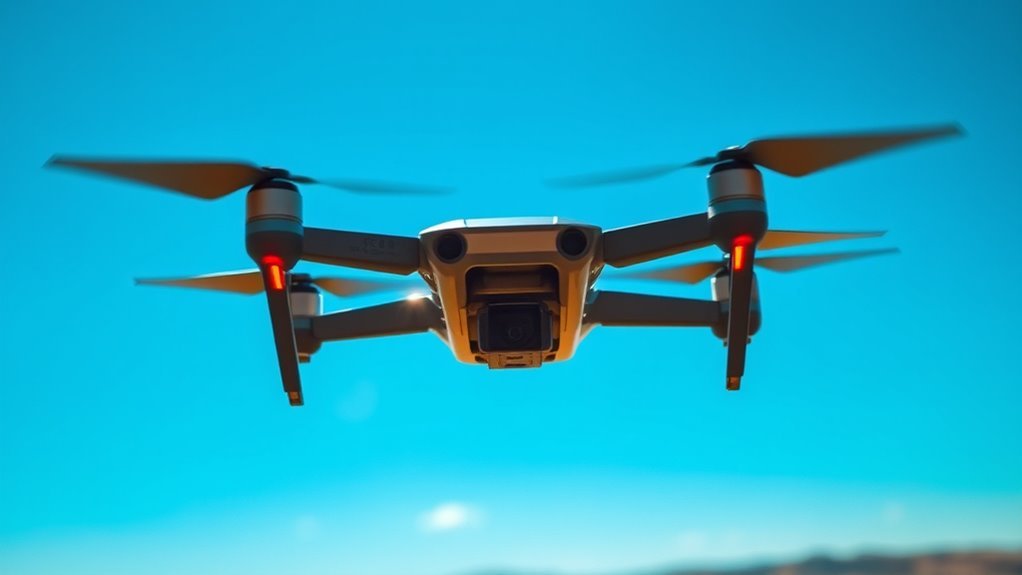
Drones primarily rely on batteries for power, with lithium polymer (LiPo) batteries being favored for their high energy density and lightweight nature. Other battery types include lithium iron phosphate (LiFePO4) and nickel metal hydride (NiMH), each with unique advantages and applications. While batteries offer cleaner energy sources, challenges like recharge times can limit operational efficiency. Advances in solar and fuel cell technologies are emerging to enhance flight duration and reduce environmental impact. Discover more advanced power options and innovations.
The Role of Batteries in Drone Technology
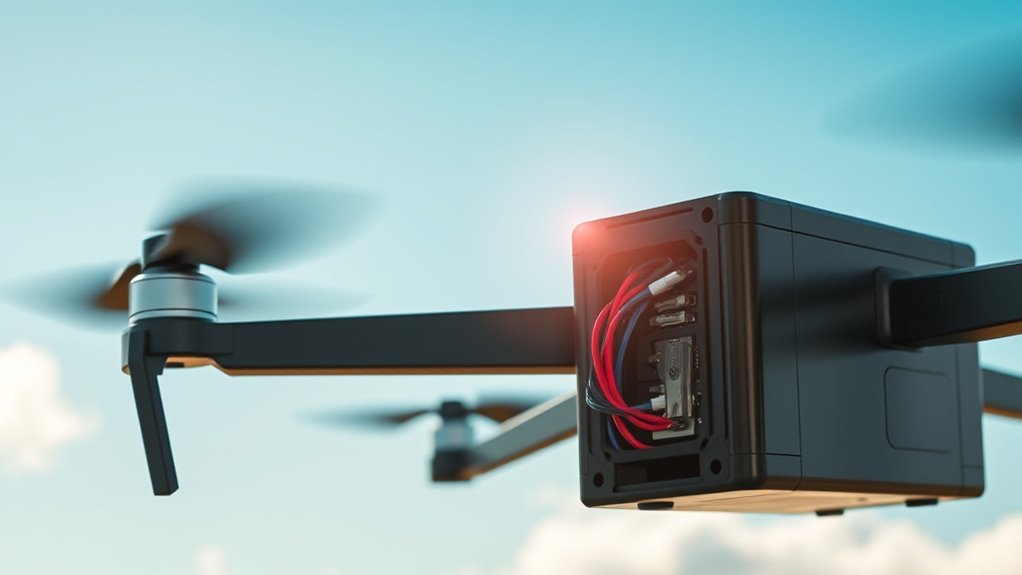
While many components contribute to a drone’s performance, batteries stand out as the most critical element driving their functionality. The battery lifespan directly influences how long you can operate your drone before needing a recharge. High energy density batteries allow for longer flight times without adding excessive weight, which ultimately enhances your freedom to explore. When selecting a battery, consider its capacity and discharge rates, as these factors determine the drone’s agility and endurance. As technology advances, improvements in battery chemistry and design continue to push the limits of energy density, offering you greater flexibility in flight missions. Ultimately, understanding these aspects helps you make informed choices to optimize your drone’s performance. Additionally, the XG Neith Drone features high-capacity lithium-polymer batteries that provide stable power output and resist degradation over multiple cycles.
Types of Batteries Used in Drones
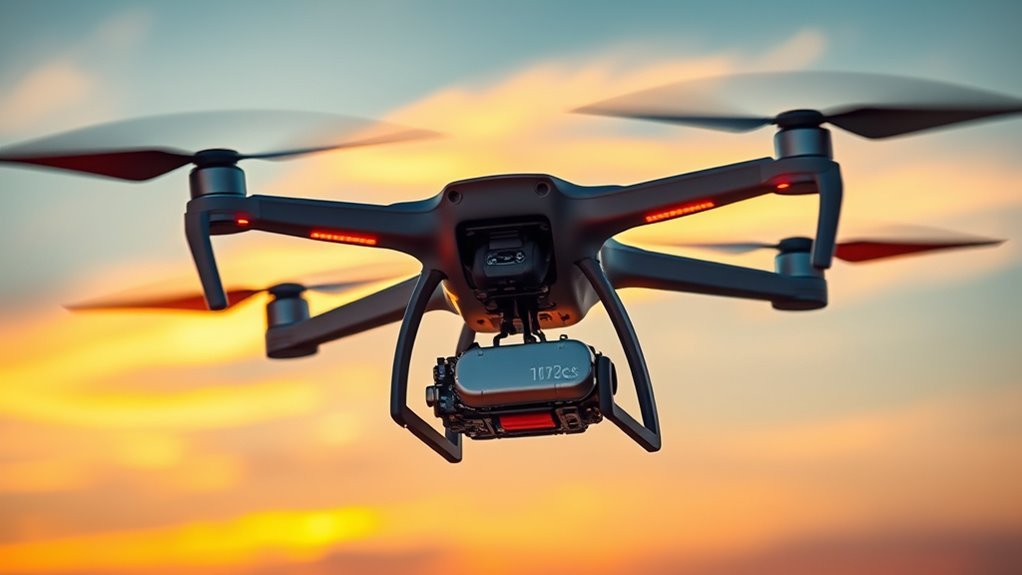
Batteries come in various types, each offering unique advantages and drawbacks for drone applications. Understanding these options can help you choose the right power source for your needs. Here are four common types:
- Lithium Polymer (LiPo): Known for their high energy density and lightweight, LiPo batteries are popular but require careful handling.
- Nickel Metal Hydride (NiMH): These batteries are more environmentally friendly but tend to be heavier and have lower energy density compared to LiPo.
- Lithium Iron Phosphate (LiFePO4): These provide excellent thermal stability and safety, making them suitable for larger drones.
- Lead Acid and Alkaline Batteries: While less common in modern drones due to weight, they can be used for specific applications where cost is a concern.
Advantages and Disadvantages of Battery Power
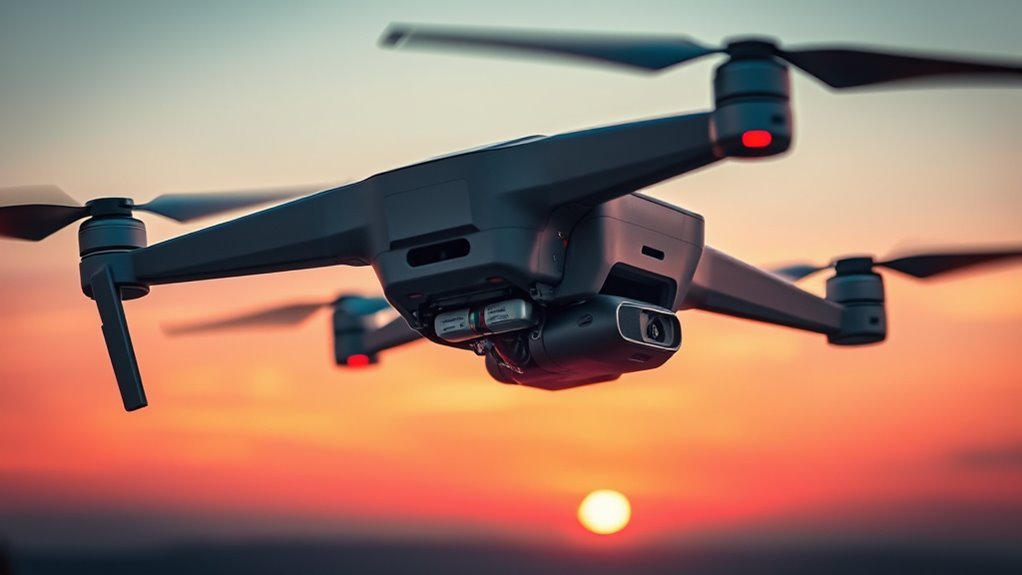
When considering battery power for drones, you need to weigh efficiency and runtime against weight and portability. While batteries can provide a cleaner energy source and can enhance flight time, their weight can considerably impact overall drone performance. Understanding these trade-offs is essential for optimizing your drone’s design and functionality. Additionally, proper battery management practices can significantly extend their lifespan and improve overall drone efficiency.
Efficiency and Runtime
Although battery power is a popular choice for drones, its efficiency and runtime present both advantages and disadvantages that can considerably impact performance. Understanding these factors is essential for optimizing your drone’s capabilities. Here are some key points to take into account:
- Energy Consumption: Battery-powered drones often have lower energy consumption compared to gas-powered models, enhancing overall efficiency.
- Runtime Optimization: With advancements in battery technology, runtime can be extended, but this often requires careful management of flight modes and load.
- Recharge Times: Battery recharge times can limit operational uptime, necessitating downtime for recharging.
- Weight Implications: The weight of batteries can affect flight efficiency, influencing overall drone performance.
Being aware of these factors allows you to make informed decisions regarding battery-powered drones.
Weight and Portability
Weight and portability are vital considerations in the design and functionality of battery-powered drones. You’ll find that effective weight optimization directly impacts a drone’s flight performance and endurance. Lighter drones can achieve longer flight times and improved maneuverability, allowing for greater freedom during operation. However, this pursuit of lightweight design can compromise battery capacity and overall power.
While smaller batteries reduce weight, they also limit the drone’s operational range and payload capabilities, which might restrict your intended applications. Furthermore, the trade-off between battery life and portability must be carefully managed to maintain functionality without sacrificing performance. Ultimately, understanding these dynamics is fundamental for optimizing drone design to guarantee you achieve the desired balance between weight, portability, and power efficiency.
Exploring Solar-Powered Drones
When considering solar-powered drones, you’ll need to evaluate solar panel efficiency and how it impacts overall performance. The effectiveness of the solar cells directly influences flight duration, as it determines how much energy can be harvested during operation. By understanding these factors, you can better assess the viability of solar technology in drone applications.
Solar Panel Efficiency
Solar-powered drones are revolutionizing the field of aerial technology, and their efficiency largely hinges on the effectiveness of solar panels. To achieve ideal performance, consider these factors:
- Solar Panel Advancements: New materials and designs enhance energy conversion rates, maximizing output.
- Surface Area: Larger panels capture more sunlight, increasing energy production, especially in low-light conditions.
- Angle of Incidence: Proper alignment with the sun improves absorption, particularly during varying flight paths.
- Solar Energy Storage: Efficient batteries are essential for storing excess energy, ensuring drones can operate even when sunlight isn’t available.
Flight Duration Factors
The efficiency of solar panels directly influences the flight duration of drones, as the energy harvested determines how long they can stay airborne. To maximize this duration, effective energy management is essential. You’ll need to take into account various factors, including battery lifespan, which can greatly affect overall performance. High-quality batteries with longer lifespans allow for prolonged flights, enabling your drone to cover greater distances. Additionally, the integration of advanced energy management systems optimizes power usage, ensuring that energy is directed efficiently to critical functions. By balancing solar energy collection with battery performance and intelligent management, you can achieve impressive flight durations. Fundamentally, understanding these dynamics empowers you to push the limits of solar-powered drone capabilities.
The Future of Solar Energy in Drone Flight
As advancements in solar technology continue to evolve, the potential for integrating solar energy into drone flight becomes increasingly viable. You can expect the following developments in this area:
- Increased Efficiency: Enhanced solar panel advancements will lead to higher energy conversion rates, maximizing power generation.
- Lighter Materials: The use of lightweight solar panels will reduce the overall weight of drones, improving flight efficiency.
- Extended Flight Times: With effective solar energy integration, drones could achieve considerably longer operational durations, reducing the need for frequent recharges.
- Autonomous Operations: Drones powered by solar energy can operate in remote areas, providing freedom from conventional charging stations.
These innovations will help realize the full potential of renewable energy integration, paving the way for a more sustainable future in drone technology.
Hybrid Energy Systems: A Combination of Power Sources
In hybrid energy systems for drones, integrating solar power with fuel cell technology enhances efficiency and extends flight time. You’ll find that this combination allows for continuous energy generation and minimization of reliance on a single power source. Understanding how these systems work together can reveal significant advancements in drone performance and sustainability.
Solar Power Integration
While traditional battery systems have dominated drone power solutions, integrating solar power can greatly enhance operational efficiency and endurance. By harnessing solar energy benefits, you can extend flight times and reduce reliance on conventional batteries. Here are four key advantages of solar panel integration in drones:
- Extended Range: Solar panels allow for longer missions without frequent recharges.
- Reduced Weight: Lighter battery loads can improve flight dynamics.
- Sustainability: Utilizing renewable energy decreases environmental impact.
- Cost Efficiency: Lower energy costs can enhance the overall operational budget.
Embracing solar power not only maximizes your drone’s potential but also aligns with a growing demand for innovative, eco-friendly technologies. This hybrid approach can redefine how you think about drone capabilities and sustainability.
Fuel Cell Technology
Fuel cell technology represents a significant advancement in drone power systems, combining the benefits of multiple energy sources to enhance performance and efficiency. By integrating fuel cells, you can achieve higher fuel cell efficiency, enabling longer flight times and better reliability. The use of hydrogen storage allows for quick refueling and reduced environmental impact.
Here’s a quick comparison of fuel cell technology and traditional energy systems:
| Aspect | Fuel Cell Technology | Traditional Energy Systems |
|---|---|---|
| Efficiency | High | Moderate |
| Emissions | Low | High |
| Refueling Time | Quick | Longer |
| Weight | Lightweight | Heavier |
Adopting fuel cells in drone design empowers you to explore new horizons with greater freedom and sustainability.
The Impact of Energy Efficiency on Drone Performance
Energy efficiency plays an essential role in determining a drone’s overall performance, as it directly affects flight time, payload capacity, and operational range. By prioritizing energy conservation, you can achieve significant performance optimization. Here are four key impacts of energy efficiency on drone performance:
Energy efficiency is crucial for optimizing drone performance, influencing flight time, payload capacity, and operational range.
- Extended Flight Time: Increased energy efficiency allows drones to fly longer, maximizing operational potential.
- Enhanced Payload Capacity: Efficient energy use enables you to carry heavier loads without compromising flight stability.
- Greater Operational Range: Improved energy management extends the distance a drone can cover, broadening its application scope.
- Reduced Operational Costs: Energy-efficient drones consume less power, leading to lower fuel or battery replacement expenses. Moreover, AI tools can optimize flight paths and energy usage, further enhancing overall drone efficiency.
Innovations in Drone Energy Storage Solutions
As advancements in technology continue to reshape the drone industry, innovations in energy storage solutions are becoming increasingly essential for enhancing drone performance. One promising area is energy harvesting, where drones can capture ambient energy—like solar or kinetic—reducing reliance on traditional batteries. Advanced materials, such as graphene and lithium-sulfur, are paving the way for lighter, more efficient batteries with improved energy density. These materials not only extend flight times but also support faster charging cycles, giving you greater flexibility in operations. By integrating these innovations, you can greatly enhance the autonomy of your drones, allowing for longer missions and more complex tasks without frequent recharging, ultimately liberating you from operational constraints.
Environmental Considerations of Drone Energy Use
The advancements in energy storage solutions not only enhance drone performance but also raise important environmental considerations. As you integrate drones into your operations, it’s essential to assess their environmental impact. Embracing sustainable practices can mitigate potential harm. Here are four key considerations:
- Energy Source: Opt for renewable energy sources to power drones, reducing carbon emissions. Utilizing precision agriculture practices can also enhance the efficiency of drone operations, optimizing energy use.
- Battery Disposal: Implement proper recycling methods for drone batteries to minimize toxic waste.
- Material Use: Choose lightweight, eco-friendly materials for drone construction to decrease energy consumption.
- Flight Patterns: Optimize flight paths to lower energy usage and lessen noise pollution, benefiting both nature and communities. Additionally, advanced drone innovations can further enhance energy efficiency, ensuring that the technology remains sustainable in its application.
The Future of Drone Energy Sources: Trends and Predictions
While traditional battery technologies have dominated the drone industry, emerging innovations are reshaping the landscape of drone energy sources. You can expect significant advancements in energy innovations, particularly with solar and hydrogen fuel cells. These technologies promise longer flight times and greater operational flexibility.
| Energy Source | Future Predictions |
|---|---|
| Solar Panels | Increased efficiency and miniaturization |
| Hydrogen Fuel Cells | Greater adoption in commercial applications |
As these energy sources evolve, drones will become more versatile, enabling longer missions and reducing reliance on conventional batteries. The future holds exciting possibilities that not only enhance drone capabilities but also align with a growing desire for sustainable and efficient energy solutions.
Frequently Asked Questions
How Do Weather Conditions Affect Drone Energy Sources?
Weather conditions greatly impact drone performance. Wind resistance can reduce flight efficiency, while temperature fluctuations affect battery energy output. You’ll find that understanding these factors can enhance your drone’s operational capabilities and maximize its potential.
Can Drones Recharge While in Flight?
Drones can incorporate in flight charging through energy harvesting techniques like solar panels or kinetic energy converters. However, current technology often limits efficiency, making sustained airborne recharging challenging but not impossible. Future advancements may improve this considerably.
What Safety Regulations Exist for Drone Energy Systems?
You might not realize it, but safety standards for drone energy systems are essential. Compliance with energy regulations guarantees not just operational efficiency, but also safeguards against potential hazards, ultimately enhancing the freedom you seek in drone usage.
How Do Energy Sources Impact Drone Design?
Energy sources greatly impact drone design, influencing energy efficiency and driving design innovation. You’ll find that optimizing power systems enhances flight capabilities, extends operational range, and ultimately increases the drone’s versatility and autonomy for your needs.
Are There Alternative Fuels for Drones Besides Batteries and Solar?
When exploring alternatives, you’ll find hydrogen fuel and biofuel options offer promising pathways. They not only enhance operational freedom but also reduce environmental impact, paving the way for innovative drone designs and sustainable aviation futures.
