

The maximum range of drones varies considerably and depends on factors like drone type, battery capacity, weight, and environmental conditions. Fixed-wing drones typically achieve longer distances due to their aerodynamic design, while rotary-wing models are more versatile but usually have shorter ranges. Innovations in technology, such as autonomous navigation and swarm capabilities, further enhance operational efficiency. Understanding these elements can help you choose the right drone for your needs and uncover essential insights for optimizing performance.
Understanding Drone Types
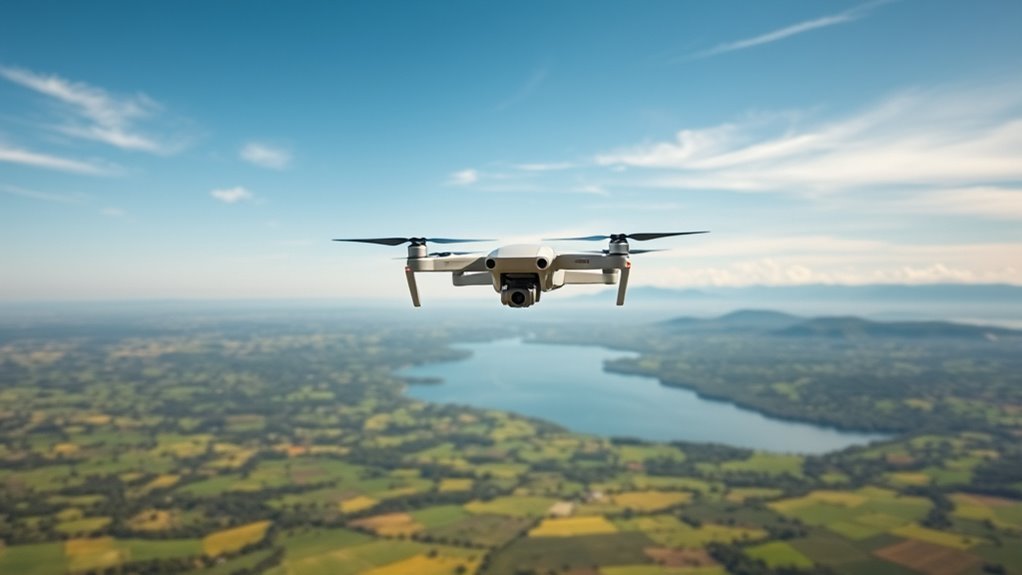
While you might be familiar with drones in a general sense, understanding the various types is essential for grasping their maximum range capabilities. Drone classification systems categorize these aerial vehicle types primarily into fixed-wing, rotary-wing, and hybrid models. Fixed-wing drones excel in long-distance flight due to their aerodynamic design, making them ideal for extensive surveillance. Rotary-wing drones, such as quadcopters, offer versatility and maneuverability but typically have a shorter range, which can be influenced by factors like battery life and environmental conditions. Hybrid drones combine the advantages of both, providing the best of both worlds. Each type’s specific design influences its range, payload capacity, and operational flexibility. By comprehending these distinctions, you can make informed decisions about which drone best suits your needs, especially if freedom of operation and distance is a priority. Additionally, understanding the maximum flight range of specific drones, like those from Amazon Prime Air and Guardian Agriculture, can help you select the right drone for your logistical requirements.
Battery Life and Its Impact on Range
Battery life directly affects a drone’s operational range, as a higher capacity can extend flight time considerably. You’ll need to take into account various factors, such as weight and power consumption, that influence overall performance. Understanding these elements is essential for optimizing your drone’s range during missions. Additionally, selecting the ideal battery chemistry can significantly enhance energy density and overall flight duration. For instance, professional drones typically utilize larger batteries with enhanced energy density, allowing them to achieve longer flight ranges compared to consumer models.
Battery Capacity Considerations
As you consider the maximum range of drones, understanding battery capacity is vital since it directly influences both flight time and operational limits. The advancements in battery technology have greatly enhanced drones’ energy efficiency, allowing them to achieve longer distances. Higher capacity batteries store more energy, translating to extended flight durations, but they also add weight, which can negatively affect range. It’s important to balance battery size with the drone’s design to maintain agility and speed while maximizing operational distance. When evaluating drones, consider how battery capacity interacts with energy consumption rates and overall performance. This understanding empowers you to select models that best fit your intended applications, ultimately enhancing your freedom in drone operations.
Flight Time Factors
Understanding the various factors that influence flight time is essential for optimizing a drone’s maximum range. Battery life plays a significant role, as it directly affects how long your drone can stay airborne. Flight efficiency is paramount; the more aerodynamic your drone, the less energy it consumes, extending its range. Additionally, altitude impact cannot be overlooked—flying at higher altitudes often requires more power due to thinner air, which can reduce overall flight time. Wind conditions also affect efficiency; headwinds can drain battery life faster, while tailwinds may enhance it. By considering these elements, you can better strategize your drone’s operations, ensuring you maximize its range while enjoying the freedom of flight.
Environmental Factors Affecting Drone Range
While many factors influence a drone’s maximum range, environmental conditions play an essential role in determining performance. Weather conditions, such as wind speed and precipitation, can greatly impact your drone’s ability to maintain stability and endurance. High winds can lead to increased energy consumption, reducing effective range. Additionally, temperature affects battery efficiency; colder temperatures can diminish flight time. Altitude effects also come into play, as drones operating at higher elevations may encounter thinner air, which can reduce lift and overall performance. Understanding these factors is important for maximizing your drone’s range and ensuring ideal flight conditions. By considering weather and altitude, you can better navigate the complexities of aerial freedom. Moreover, wind resistance significantly influences power consumption, leading to further reductions in flight duration. In particular, efficient power management helps optimize energy use, allowing drones to extend their range even in challenging conditions.
Weight and Payload Considerations
When considering the maximum range of drones, weight and payload are critical factors that directly influence performance. You need to pay close attention to payload restrictions, as exceeding them can greatly reduce range. Each drone has specific weight limits that, when exceeded, compromise battery life and flight stability. Ideal weight distribution is essential; uneven loading can lead to inefficient energy consumption and reduced maneuverability. You should balance payload with overall weight to maintain aerodynamic efficiency, making sure your drone operates within its designed parameters. By adhering to these guidelines, you can maximize your drone’s range and guarantee it performs reliably across various missions, granting you the freedom to explore and utilize aerial technology effectively. Additionally, long battery life is crucial for extending the operational range of drones, allowing for more extensive missions without frequent returns to base. Understanding motor torque and propeller thrust is also vital to ensure that your drone can sustain weight without compromising its range.
Communication Technology in Drones
As drones operate in increasingly complex environments, robust communication technology is essential for ensuring reliable control and data transmission. The effectiveness of a drone’s communication system hinges on signal strength and transmission distance. Higher signal strength enhances the drone’s ability to maintain stable connections, even in challenging terrains or urban areas. Different communication technologies, such as RF, Wi-Fi, and satellite links, offer varying ranges and reliability, influencing how far a drone can operate from its controller. For instance, the Harris Aerial HX8’s radio range is particularly advantageous for remote operations. To maximize your drone’s range, you’ll want to select a system that balances signal strength with the desired transmission distance. By understanding these technologies, you can enhance your drone’s operational capabilities while maintaining the freedom to explore diverse environments. Additionally, flight range is a crucial factor to consider when evaluating a drone’s performance.
Legal Regulations and Range Limitations
Understanding legal regulations is essential for drone operators, especially since these laws often dictate range limitations that can greatly affect flight operations. Adhering to drone regulations guarantees you’re operating within established safety standards, which can protect your freedom to fly.
Understanding drone regulations is crucial for operators to ensure safety and maintain their freedom to fly.
Consider these key range limitations:
- Visual Line of Sight (VLOS): Many regulations require you to keep the drone within your line of sight. This is crucial for ensuring operational safety during flights.
- Altitude Restrictions: Certain areas impose height limits, restricting your operational ceiling.
- Geofencing Zones: No-fly zones, like airports and military bases, can notably hinder your range.
- Remote Pilot Certification: Some jurisdictions mandate certification, impacting the legality of long-range flights. Moreover, restricted zones such as airports and military installations are critical to understand, as unauthorized flights in these areas can result in serious penalties.
Innovations in Drone Technology
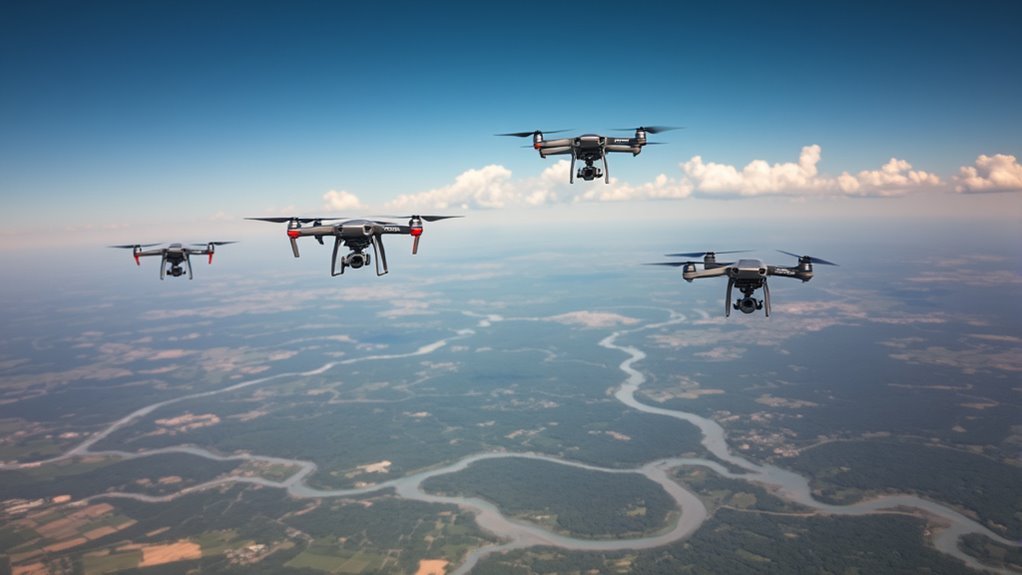
While many drone operators grapple with legal limitations, innovations in drone technology are rapidly expanding the potential range and capabilities of these devices. One key advancement is autonomous navigation, enabling drones to fly complex routes without constant human input. This technology enhances operational efficiency and extends range, as drones can adapt to real-time conditions. Additionally, swarm technology allows multiple drones to communicate and coordinate their movements, considerably increasing data collection and coverage area. By deploying swarms, you can achieve tasks faster and more effectively, whether for surveillance or delivery. These innovations not only enhance performance but also offer you greater freedom to explore previously unreachable territories, pushing the boundaries of what’s possible in drone applications.
Real-World Range Examples and Use Cases
In exploring real-world range examples, you’ll find that commercial drone applications often push the limits of operational distance. For instance, delivery services leverage drones that can cover several miles to streamline logistics. Conversely, recreational users typically operate within shorter ranges, focusing on local areas for photography or racing. Additionally, advancements in drone efficiency enable longer flight capabilities, which are transforming delivery logistics and expanding operational ranges. Drones like the Brinc Responder demonstrate impressive 7km LTE range that enhances delivery route planning in rural areas.
Commercial Drone Applications
As commercial drone technology evolves, their range and applications have expanded considerably, offering innovative solutions across various industries. You’ll see drones transforming how businesses operate with impressive versatility. Here are some key applications:
- Delivery services streamline logistics and reduce transit times.
- Aerial photography captures stunning visuals for marketing and real estate.
- Agricultural monitoring enables precision farming, enhancing crop yields.
- Infrastructure inspection guarantees safety and maintenance of critical structures.
Moreover, drones are pivotal in emergency response, wildlife conservation, mapping surveys, and construction management, providing real-time data and operational efficiency. With advancements in battery life and connectivity, you can expect these applications to grow, pushing the boundaries of what’s possible with drone technology.
Recreational Use Cases
Recreational drone use is rapidly gaining popularity, showcasing the technology’s versatility beyond commercial applications. Whether you’re capturing breathtaking landscapes through drone photography or competing in adrenaline-fueled aerial racing, drones offer a diverse range of experiences. For instance, hobbyists often utilize drones with a range of up to 4 miles for stunning visual captures, allowing you to explore remote locations and document your adventures from unique perspectives. In aerial racing, drones equipped with advanced technology can achieve speeds exceeding 80 mph while maintaining a reliable control range, enhancing the thrill. These use cases highlight how drones empower you to push boundaries, explore creativity, and engage in exhilarating activities, all while enjoying the freedom that comes with piloting your own aircraft.
Frequently Asked Questions
How Do I Increase My Drone’s Range Effectively?
You might think range isn’t easily improved, but with battery upgrades and signal boosters, you can greatly enhance your drone’s performance. These modifications allow for extended flight times and stronger communication, maximizing your aerial freedom.
Can I Fly My Drone Beyond Visual Line of Sight?
You can fly your drone beyond visual line of sight, but you must adhere to drone regulations and safety guidelines. Ensuring compliance is essential for safe operation and avoiding potential legal repercussions during your flights.
What Are the Risks of Flying Drones at Maximum Range?
Flying drones at maximum range increases risks like losing signal, potential battery limitations, and violating drone regulations. These factors can lead to crashes, legal issues, or loss of your aerial freedom, so weigh your options carefully.
How Does Weather Impact Drone Performance at Long Distances?
Weather greatly impacts drone performance at long distances. Wind resistance can reduce flight stability, while temperature effects can alter battery efficiency. Understanding these factors helps you maximize your drone’s capabilities and achieve greater operational freedom.
Are There Drones Specifically Designed for Long-Range Flights?
Yes, there are long range drones specifically designed for extended flights. Endurance models optimize battery life and aerodynamics, allowing you to cover vast distances efficiently, making them ideal for various applications like surveillance and delivery.
